
2027 BS in Business Administration and Financial Planning: How to Compare Internship and Capstone Requirements
Audited and Verified:
Our Editorial and Data Verification Process
Research.com uses government datasets, official education statistics and primary institutional information to support its career and degree guides. Our review process checks factual accuracy, occupational definitions, source dates and the requirements associated with the credentials discussed.
How This Article Was Fact-Checked
Our editorial team verifies salary estimates, employment projections, education requirements and program information against original data providers and official organizations. Salary figures are checked against the relevant occupational definitions and reporting periods. Information about licensure, accreditation and required in-person training is reviewed separately.
Fact-checked and verified on:

Co-Founder and Chief Data Scientist
Two financial planning degrees can look similar on a course list but demand very different work before graduation. One may require a supervised internship with a planning firm; another may rely on a classroom financial-plan capstone. For students balancing classes, employment, and a possible CFP certification path, that difference affects scheduling, cost, and the evidence of skill they can show employers. This guide explains how to compare the requirements, identify what each experience actually teaches, and get the right approvals before enrolling.
Key Things You Should Know
- Compare internship credit, site approval, supervision, and required hours separately from capstone deliverables; neither automatically substitutes for the other.
- A typical bachelor's degree is designed around roughly 120 semester credits, but an internship's placement schedule or a final-term capstone can extend completion if required courses are unavailable.
- If CFP certification is the goal, verify the exact program's CFP Board registration and current education and experience rules; a business degree or financial planning concentration alone is not sufficient.
What Is a BS in Business Administration and Financial Planning?
A BS in Business Administration with a financial planning concentration combines a general business core with courses focused on advising individuals and households. The credential on the diploma may still be "BS in Business Administration"; a concentration, minor, or elective cluster is not necessarily a separately awarded financial planning degree. Schools also offer BBA degrees and specialized financial planning bachelor's degrees, so compare the transcript designation and required courses rather than the marketing name.
The distinction matters most when comparing applied work. A broad business program may permit a finance-related internship or general strategy capstone, while a financial planning curriculum may require a supervised planning placement and an integrated client financial plan. Students comparing the broader degree choices can use business administration degrees compared by cost duration and outlook as a starting point, then request each school's financial planning course map and applied-learning rules.
How Do Internship Requirements Differ Among Financial Planning Programs?
An internship is supervised work assessed for academic credit; relevant employment is not automatically an internship. Some programs require a placement, others offer elective credit, and some use a practicum or another experience. A comparison should establish whether the student must find the site, whether paid or remote work qualifies, and whether the duties involve planning rather than primarily sales or clerical work.
The following distinctions reveal whether an opportunity is feasible and professionally useful. Obtain answers from the internship coordinator before accepting an offer.
- Approval and timing: Must the school approve the site and learning agreement before work begins, and is the internship restricted to certain terms?
- Work and supervision: What client-analysis, research, meeting-preparation, or compliance tasks qualify, and who evaluates them?
- Evidence and cost: What hour logs, reflections, evaluations, credit charges, travel, or unpaid time are required?
- Existing employment: Can a current job qualify only after a new, approved set of learning objectives is established?
A placement focused on scheduling client meetings may build workplace familiarity but offer less planning practice than a supervised role preparing cash-flow analyses. If an internship also involves managing a deliverable or workflow, economical project management education online offers a separate pathway to compare; project-management coursework itself does not replace a required planning internship.
What Is Required in a Financial Planning Capstone Project?
A financial planning capstone is usually an assessed academic assignment that integrates topics such as cash flow, insurance, investments, taxes, retirement, and estate planning into recommendations for a case. The exact format depends on the course: it might require a written plan, calculations, a presentation, revisions, or a defense. Ask whether the course is a general business capstone or a financial-plan development course that satisfies the program's stated CFP education pathway.
For a case-based plan, a workable structure identifies the client's goals and assumptions, analyzes available financial information, compares options and trade-offs, explains recommendations, and documents limitations. Faculty should confirm the required format and grading rubric. Never use identifiable client records or employer materials without permission; a fictional or properly authorized case can demonstrate reasoning without exposing private information.
Capstone costs can include software, books, or presentation requirements in addition to tuition. A checklist such as project management fees books and aid considerations illustrates categories to ask about, but the financial planning department must confirm its own charges. Before enrolling, request a sample assignment and ask whether revisions are possible if a student's initial plan does not meet the standard.
The decisive difference is often access to supervised work, not where lectures are delivered. An online student may be able to complete a local internship but still face fixed meeting times, a scheduled presentation, or restricted capstone software. A campus student may have easier access to local recruiting events but still need to secure a placement independently.
This comparison separates delivery claims from requirements that can affect graduation. Confirm the details for the specific concentration and enrollment term.
| Requirement to check | Online program | Campus-based program |
| Internship access | Ask whether local or remote sites qualify and who arranges supervision. | Ask whether nearby employer relationships lead to placements or only introductions. |
| Capstone participation | Check live sessions, team meetings, software access, and presentation times. | Check scheduled class meetings, team work, and any off-campus obligations. |
| Career support | Confirm virtual advising and access to planning employers in your region. | Confirm recruiting availability and whether it reaches your intended market. |
For broader comparisons, affordable school choices for online business students can help identify questions about delivery and cost. Do not assume "online" means self-paced or that an advertised internship network guarantees placement.
The business core commonly covers accounting, economics, statistics, finance, management, and business law. Financial planning coursework may add investments, insurance and risk management, tax planning, retirement planning, estate planning, professional conduct, and a financial-plan development course. Check the official curriculum: a corporate finance class, for example, is not a substitute for learning to assess an individual client's retirement needs.
Course sequence affects the internship and capstone decision. Prerequisites may prevent a student from taking a planning course until late in the degree, while a capstone may be offered only after the planning sequence. Ask an adviser to mark the earliest eligible term for each applied requirement on a degree plan. A student whose target is logistics rather than client advice may find the coursework in supply chain bachelor's degrees in three years or less more relevant than adding financial planning electives to a business major.
Start by confirming that the institution holds recognized institutional accreditation. Business-school accreditation, such as AACSB, ACBSP, or IACBE, is a separate question: check the accreditor's listing to see whether the relevant business unit and program are within its scope. Neither institutional nor business accreditation, by itself, establishes that a curriculum meets CFP Board education requirements.
If CFP certification is a goal, check the exact degree or certificate pathway in CFP Board's registered-program directory and ask the school which courses fulfill its requirements. Confirm whether the financial-plan development capstone is included in the registered curriculum and whether the program's registration applies to your delivery format. When exploring cheaper business administration college programs, make these checks before comparing tuition: a low-cost general business degree could require additional planning coursework later.
Schools generally request evidence of secondary-school completion or previous college study, but GPA thresholds, math preparation, transfer policies, and admission to the business major vary. Admission to the university does not necessarily mean immediate access to the financial planning concentration, internship, or upper-level capstone. Applicants with previous coursework should obtain an official evaluation showing which credits satisfy general education, business core, and planning requirements.
Before accepting an offer, ask admissions and the program adviser whether prerequisites delay the planning sequence and whether an internship must begin after a minimum amount of coursework. For returning students, ranked US colleges for faster business degree completion may suggest programs to investigate, but only a school-specific degree audit can establish a realistic graduation date.
A bachelor's degree is often planned as roughly four years of full-time study, with approximately 120 semester credits, but transfer credit, course availability, and enrollment pace change the timeline. An internship can add a placement search or fixed work schedule; a capstone can delay graduation if prerequisites or its final course are offered infrequently. Neither experience should be assumed to add credits beyond the published degree total.
Compare programs using the remaining credits on your approved audit, tuition and mandatory fees, internship-credit charges, books and planning software, travel or campus visits, and potential unpaid work time. Request a term-by-term estimate rather than multiplying an advertised annual price by a standard duration. Affordable accredited business administration programs accepting FAFSA provide a starting point for cost research; confirm each school's current aid eligibility and whether grants, scholarships, loans, or employer benefits actually apply to you.
Graduates may pursue planning-assistant, client-service, paraplanner, or other entry-level financial-services roles. An internship involving supervised research and client-plan preparation can supply stronger evidence for these jobs than a placement devoted mostly to prospecting. A capstone can demonstrate analytical writing and recommendations, although it does not prove performance with real clients. Ask employers which tasks new hires perform and whether the role requires selling products, obtaining licenses, or working under a registered firm.
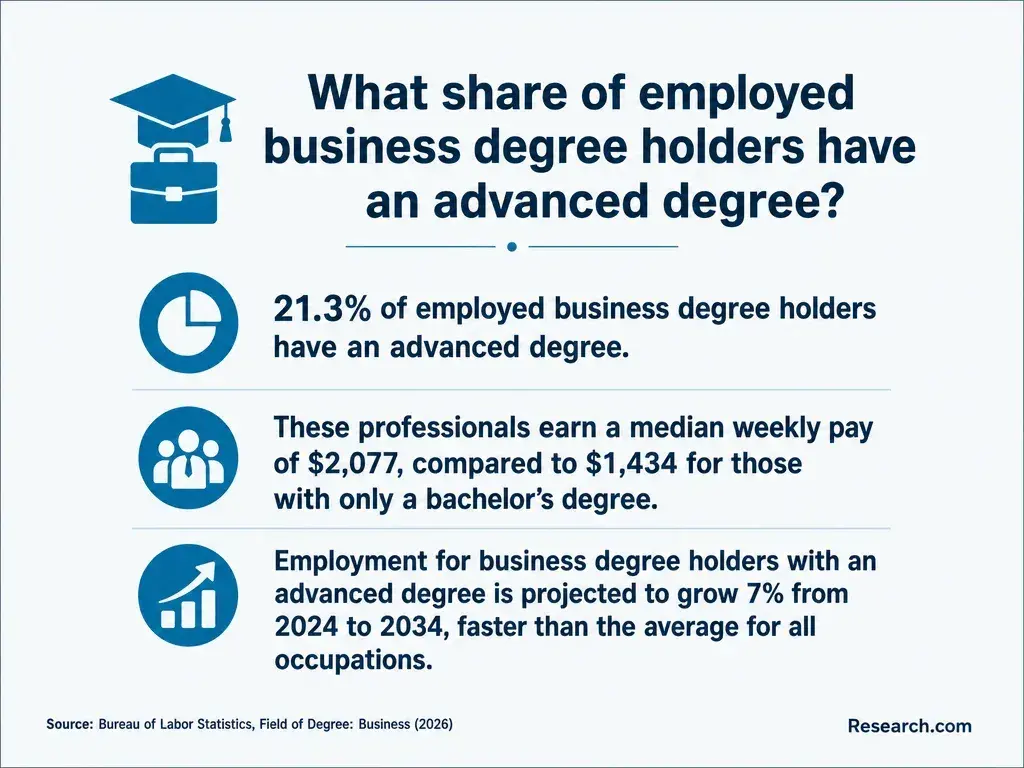
Salary comparisons require care: the closest commonly discussed occupations do not necessarily represent a new financial planning graduate's first job. For example, the US Bureau of Labor Statistics reports a May 2025 median annual wage of $102,740 for financial and investment analysts; that is an occupation-wide figure for a different role, not an entry-level financial planner salary. Use local postings and the duties of the specific position for a more relevant pay comparison.
If the student is more interested in employee benefits administration than advising households, a human resources degree subject guide can help compare that route with financial planning. In either field, the degree supports preparation but does not replace employer training or role-specific experience.
Does This Degree Meet CFP Certification and Licensing Requirements?
Not automatically. CFP certification is a separate credential administered by CFP Board. Its requirements include qualifying education, an examination, experience, and ethics standards; holding a bachelor's degree alone does not complete them. A required program internship may help a student gain relevant experience, but academic credit and CFP Board experience eligibility are separate determinations. Likewise, a capstone counts toward the education pathway only when it meets the applicable registered-program requirements.
Before relying on a school's claims, ask its CFP program contact which enrolled courses satisfy CFP Board education requirements and how completion is reported. Check CFP Board's current experience rules separately. If a target job involves securities transactions, investment advice, or insurance sales, ask the prospective employer and relevant regulator which registrations or state licenses apply; neither the BS nor CFP certification automatically grants every such authorization.
Additional qualifying coursework may affect the total budget. Compare available funding before borrowing; grants versus loans for project management bachelor's study explains the general funding distinction, but its project-management focus should not be treated as guidance on CFP eligibility or financial planning program aid.
Other Things You Should Know About Business Administration
Only if the course permits it and the student has appropriate client, employer, and data-use permissions. A fictional case is often safer when those approvals are unavailable.
Describe your responsibilities and methods, and share only work you have permission to disclose. Remove personal information and proprietary material from portfolio samples.
No. Compare the actual planning tasks, supervision, affordability, and school approval. Relevant paid work may be more sustainable, though it will not automatically earn internship credit.
The school has authority over academic credit and graduation requirements. Obtain a written decision from the internship coordinator or academic department before relying on a placement or substitution.
- Earn Credit For Your Internship, Practicum, or Research Experience - UConn Center for Career Readiness and Life Skills https://career.uconn.edu/earn-credit-for-your-internship/
- Internships for Academic Credit - BMCC - CUNY https://www.bmcc.cuny.edu/academics/experiential/students/
- What Is a Capstone Project? Types, Examples, and Tips | SCU https://www.scu.edu/business/blog/business-concepts/what-is-a-capstone-project/
- Guidelines for Internships - Academic Affairs https://uwm.edu/academicaffairs/policies/guidelines-for-internships/
- B.S. in Business Administration & Data Analysis - Financial Planning | School of Business | Liberty University https://www.liberty.edu/business/bachelors/business-administration-data-analysis/financial-planning/
- What Is a Capstone Project? - Boston University Questrom https://www.bu.edu/questrom/blog/what-is-a-capstone-project/
- Internships - College of Arts & Science - New York University https://cas.nyu.edu/internships.html
- Certified Financial Planner Capstone | Creighton Lifelong Education https://lifelong.creighton.edu/courses/cfp-capstone
- Academic Internships | SUNY Purchase https://www.purchase.edu/live/blurbs/1029-academic-internships


