2027 Choosing an Online BS in Business Administration Around Working Two Part-Time Jobs
Audited and Verified:
Our Editorial and Data Verification Process
Research.com uses government datasets, official education statistics and primary institutional information to support its career and degree guides. Our review process checks factual accuracy, occupational definitions, source dates and the requirements associated with the credentials discussed.
How This Article Was Fact-Checked
Our editorial team verifies salary estimates, employment projections, education requirements and program information against original data providers and official organizations. Salary figures are checked against the relevant occupational definitions and reporting periods. Information about licensure, accreditation and required in-person training is reviewed separately.
Fact-checked and verified on:

Co-Founder and Chief Data Scientist
Two part-time jobs can make your availability less predictable than one full-time schedule. An online BS in Business Administration may fit, but only if its deadlines, exams, group work, and required courses fit the hours you can protect for school.
This guide helps working adults test that fit before enrolling. You'll learn how to compare program policies, choose a manageable pace, estimate the cost of finishing, and judge whether the degree supports your next career step.
Key Things You Should Know
- Choose by required attendance and deadline flexibility, not the word "online." Asynchronous courses can still require live group meetings or scheduled exams.
- Build your first term around a realistic weekly study schedule and your jobs' busiest periods. Taking fewer courses may improve feasibility but extend completion time.
- Compare the cost of remaining required credits after a formal transfer evaluation, not advertised tuition alone; an accepted credit may count only as an elective.
What Is an Online BS in Business Administration for Working Adults?
An online BS in Business Administration is an undergraduate degree covering business functions such as accounting, management, marketing, finance, and operations. "Online" describes how courses are delivered; it does not mean self-paced. "For working adults" may describe scheduling or support services, but it does not establish a standard set of policies.
A BS may emphasize quantitative work, but the curriculum not the degree initials, shows what you will study. A BBA or another business bachelor's degree could fit just as well if its requirements and schedule serve your goal.
Start by identifying the job or advancement requirement you want the degree to meet, then use resources that compare nationally ranked online business programs as a starting point for checking each school's actual policies.
Can You Earn a Business Degree While Working Two Part-Time Jobs?
You can earn a business degree while working if you can reserve dependable study time despite changes in either job's schedule. The key constraint is often not total work hours but schedule control: overlapping shifts, travel between jobs, and last-minute coverage requests can make a fixed exam window or team presentation difficult.
Before choosing a course load, put both jobs' known shifts, commutes, sleep, and other obligations on a weekly calendar. Then mark study blocks you could keep during a busy week, not just an average one.
Compare those blocks with instructors' estimated workload and the dates of major assignments. Start with a lighter load if the plan depends on every shift ending on time; you can increase your pace after testing one term.
Ask whether classes have live sessions, timed tests, proctoring, group meetings, or deadlines that cannot be moved. Asynchronous access may help with changing shifts, while online colleges offering accelerated bachelor's may demand more concentrated work during each shorter term. A faster calendar is useful only if its weekly workload is sustainable.
How Do You Choose an Accredited Online Business Administration Program?
First, verify the institution's recognized accreditation and confirm that it applies to the school awarding the degree. Separately, check whether any advertised AACSB, ACBSP, or IACBE business accreditation covers the relevant business unit or program. Institutional and business accreditation have different scopes; neither proves that courses will fit your work schedule.
Next, compare the policies most likely to affect completion. Request a current catalog and a sample course sequence, then ask an adviser which required classes run every term, whether you can take one course at a time, how far ahead exam windows are published, and what happens if you must pause enrollment. Confirm any campus visit, internship, software, or accessibility requirements in writing.
If application costs matter while you narrow your choices, you can explore fee-free online university applications. An application fee is only one cost, though; scheduling rules and the number of credits you must complete will matter more over the life of the degree.
Expect general education alongside a business core that may include financial and managerial accounting, economics, statistics, marketing, management, finance, business law, and operations. Programs can differ substantially in prerequisites, elective choice, and whether a capstone or internship is required.
For someone holding two jobs, course format matters as much as course title. An accounting course may require frequent problem sets; a management course may involve team meetings; a capstone may require a long project with fixed milestones. Ask for recent syllabi and plan prerequisite-heavy courses before assuming you can take classes in any order.
If human resources is your target, compare the general business core with the specialized topics described in HR degree coursework and entry requirements. An HR elective may be worthwhile without adding an official concentration, but verify whether either option adds courses or changes your graduation date.
Completion time depends on credits that apply to the degree, your course load, prerequisite order, and when required classes are offered. A school may accept prior credits yet apply some only as electives, leaving business-core courses unfinished. Request a program-specific degree audit before relying on an estimated graduation date.
Ask an adviser to map a part-time sequence through graduation, including terms when your jobs are busiest. Check whether taking a term off changes your catalog requirements or access to required courses.
If you are considering the fastest online business bachelor's programs in the US, compare their remaining-course requirements and weekly demands against your own availability. An accelerated calendar cannot eliminate required learning or resolve a course that is offered infrequently.
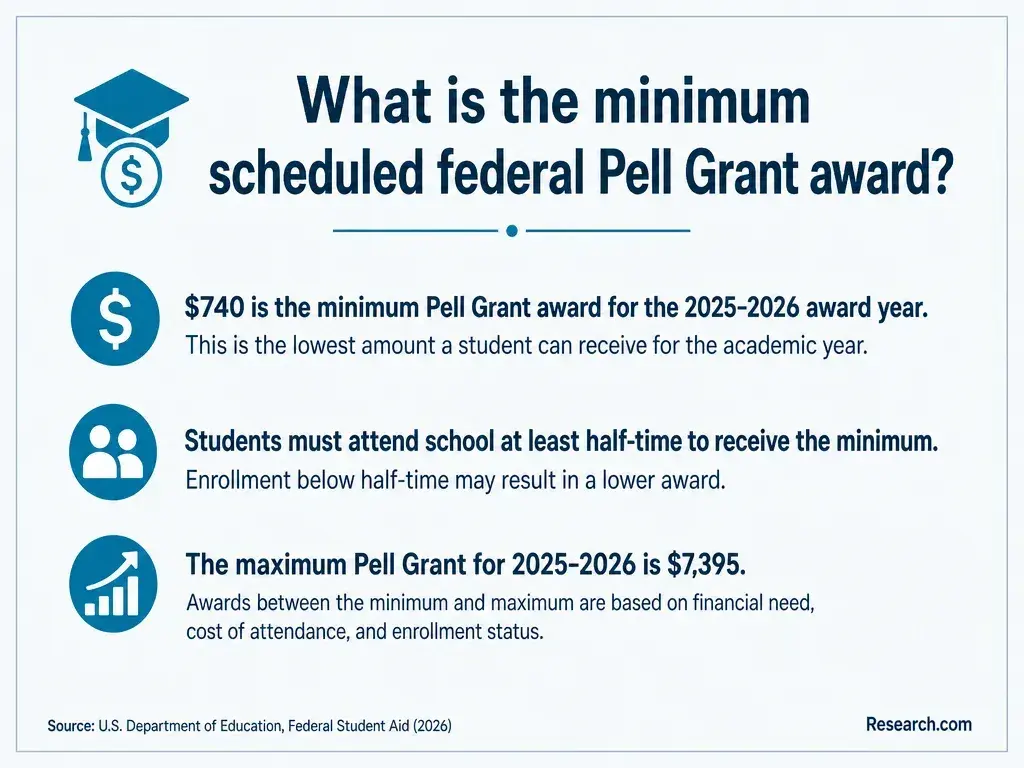
The useful figure is your estimated cost to finish, not a school's advertised price for one credit or term. Compare tuition for courses still required after your official credit evaluation, plus mandatory technology, online-service, proctoring, books, software, and any travel costs. Ask whether charges are per credit, course, or term and whether a slower pace changes fees.
Financial aid eligibility, loan terms, and employer tuition benefits also affect what you must pay and when. Employer reimbursement may arrive only after grades are posted, so it may not solve an upfront cash-flow problem.
Use financial aid planning for low-cost business administration degrees to frame your comparison, then obtain a school-specific aid offer and confirm your employer's written benefit rules.
Consider lost work hours as well as billed costs. If a heavier course load forces you to decline shifts, a shorter degree timeline may cost more than a sustainable part-time plan.
Requirements vary by school and by whether you apply as a first-time or transfer student. Schools commonly request prior academic transcripts; some business majors have additional entry rules or require certain coursework before upper-level classes. Admission to the university, admission to the major, and credit toward graduation are separate decisions.
Gather transcripts from every college attended and ask admissions which documents and deadlines apply to you. Then ask the business adviser or transfer office to identify missing prerequisites and how prior courses would apply.
For a closer look at possible preparation issues, see what to check before applying for a business administration degree. Do not register for a prerequisite elsewhere until your intended school confirms it will satisfy the requirement.
The degree can support applications for roles such as operations coordinator, administrative specialist, marketing coordinator, or HR assistant.
Which roles are realistic depends on your existing responsibilities, work samples, local openings, and employers' requirements, not on online delivery alone. Two part-time jobs may already provide useful evidence of customer service, scheduling, inventory, reporting, or team communication.
Translate that experience into specific examples on your résumé, then use coursework to address a gap relevant to your target role. If you have an associate degree and want to focus on HR, online human resources programs for associate degree holders offer a comparison with a general business pathway. Check how each school applies your credits before assuming the specialized route is shorter.
Graduation does not automatically qualify someone to manage staff or budgets. For a management goal, look for opportunities to document increasing responsibility at work while completing the degree.
There is no single salary for business administration graduates. Pay depends on occupation, experience, location, and industry. The U.S. Bureau of Labor Statistics reports a $75,940 median annual wage for human resources specialists in May 2025. That is an occupation-wide midpoint, not a starting salary or an expected outcome for someone with this degree.
For a useful return-on-investment estimate, compare pay in jobs you could plausibly pursue with your current experience against openings that require a bachelor's degree in your area. Then weigh any likely change against the degree's remaining cost, borrowing, and shifts you may need to give up.
A lower-cost, slower program can be a better financial fit than a faster option that disrupts both jobs. Be sure to look into business administration program length and salary context as well for a better insight into pay expectations.
Do Business Administration Graduates Need Certifications or Licenses?
A general business administration role usually does not require a license simply because you hold this degree. Particular occupations are different: accounting licensure, some financial-services work, and certain other regulated activities have separate requirements.
Voluntary HR or project-management certifications have their own eligibility rules; a business course or concentration does not award the certification.
Check the requirements of your target job and the responsible licensing board or certifying organization before choosing electives for that purpose. If your goal is mainly to develop leadership skills rather than meet a bachelor's-degree requirement, compare the time and cost of a full BS with employer training, a certificate, or leadership bachelor's degrees with accelerated pacing.
The best choice depends on the credential your target employer asks for and the responsibilities you can demonstrate.
Other Things You Should Know About Business Administration Programs
Not automatically. Ask the program whether either position meets its learning objectives, supervision, and approval rules before expecting internship credit.
Some reading and discussions may work on a phone, but spreadsheets, exams, and presentations may require a computer and dependable internet. Check course technology requirements before enrolling.
Ask the school about approved testing locations, available exam windows, and any alternatives or accommodations that apply. Resolve this before the course begins.
Diploma and transcript wording is set by the institution. Ask the registrar how the degree and delivery format appear on each document.
- Cost of Attendance (Budget) | 2025-2026 Federal Student Aid Handbook https://fsapartners.ed.gov/knowledge-center/fsa-handbook/2025-2026/vol3/ch2-cost-attendance-budget
- Program Integrity Questions and Answers - Credit Hour http://www.ed.gov/laws-and-policy/higher-education-laws-and-policy/program-integrity-information-questions-and-12
- Estimate your college cost | usa.gov https://www.usa.gov/estimate-college-cost
- Online Bachelor's Degree in Business Administration | Purdue Global https://www.purdueglobal.edu/degree-programs/business/bachelor-business-administration/
- Credit Hours and Time Equivalencies | Office of the Provost https://provost.wvu.edu/curriculum-development-and-review/course-proposals/credit-hours-and-time-equivalencies/
- Online College Costs and Financial Aid | Colorado State University Global https://csuglobal.edu/tuition-aid
- Time-to-Graduation Too Often Overlooked | Brookings https://www.brookings.edu/articles/time-to-graduation-too-often-overlooked/
- Online Bachelor of Science in Business Administration (BSBA) | Vols Online https://volsonline.utk.edu/business-admin-management-sales-bsba/
- Course Credit Hours and Student Workload Expectations | umn.edu https://evcaa.d.umn.edu/course-credit-hours-and-student-workload-expectations