2027 BS in Business Administration and Healthcare Administration: Choosing Courses for Your First Related Job
Audited and Verified:
Our Editorial and Data Verification Process
Research.com uses government datasets, official education statistics and primary institutional information to support its career and degree guides. Our review process checks factual accuracy, occupational definitions, source dates and the requirements associated with the credentials discussed.
How This Article Was Fact-Checked
Our editorial team verifies salary estimates, employment projections, education requirements and program information against original data providers and official organizations. Salary figures are checked against the relevant occupational definitions and reporting periods. Information about licensure, accreditation and required in-person training is reviewed separately.
Fact-checked and verified on:

Co-Founder and Chief Data Scientist
A healthcare administration course list can look promising without showing whether it will prepare you for an actual first job. If you are considering a BS in Business Administration with a healthcare focus, start with the work you want to do: scheduling, revenue-cycle support, operations, HR, or another function.
This guide connects those entry routes to courses and work samples, then covers the program, cost, and credential checks that could change your choice. The goal is to help you graduate with evidence of useful skills - not just a healthcare-related label on your transcript.
Key Things You Should Know
- For a first healthcare operations role, prioritize accounting, spreadsheets or statistics, operations, healthcare systems, and an approved applied project; add specialized courses that match the job posting.
- A healthcare concentration may help you understand the setting, but entry-level employers can also value relevant work, internships, and demonstrated proficiency with common administrative tasks.
- Do not use management pay as a starting-salary estimate: the Bureau of Labor Statistics reports a May 2025 median of $114,130 for administrative services managers, an occupation generally requiring prior experience.
What Is a BS in Business Administration and Healthcare Administration?
Usually, this means a BS in Business Administration with a healthcare administration concentration or elective cluster - not two bachelor's degrees. The business core develops accounting, management, operations, and analytical skills; healthcare courses add context such as care delivery, reimbursement, regulation, and patient-facing processes. A school may instead offer a separate bachelor's in healthcare administration. Check the exact award on the transcript and how much healthcare coursework it requires.
For a student unsure which healthcare function to enter, the business degree can preserve options outside the sector. A dedicated healthcare administration degree may offer more sector-specific study. If your real target is employee relations or recruiting rather than clinic operations, compare human resources qualifications and degree routes before committing to healthcare electives.
What Jobs Can You Get With This Degree?
Look for roles where you can learn healthcare workflows while applying business skills. Possible first-job titles include patient access coordinator, scheduling coordinator, revenue-cycle assistant, clinic operations coordinator, and administrative specialist. Titles vary by employer: read the duties and minimum qualifications rather than assuming every "coordinator" job is entry-level.
A patient access role may involve registration, scheduling, and careful handling of patient information. Revenue-cycle support may involve insurance verification, billing workflows, and payment follow-up. An operations coordinator might track supplies, schedules, or process measures. These are distinct from running a department: supervising staff, managing major budgets, and directing clinical operations generally call for substantial experience.
If you prefer timelines, vendors, and implementation work, project coordination may be another entry route. Compare the required skills and total cost of project management schools with competitive tuition before choosing a separate degree for work you might enter through an internship or coordinator position.
Which Courses Prepare You for Your First Healthcare Job?
Choose courses backward from the tasks in your target postings. Accounting helps with budgets and revenue-cycle vocabulary; statistics and spreadsheets help you interpret wait times, staffing patterns, or claims reports; operations courses help you map handoffs and identify delays. Healthcare systems, reimbursement, and privacy coursework explain why a seemingly simple business decision can affect patients, payers, and compliance.
The table connects common first-job interests to useful course combinations and the kind of evidence you could develop. Course names and prerequisites vary by school.
| First-job interest | Courses to prioritize | Useful evidence of learning |
| Clinic operations | Operations, spreadsheets or statistics, healthcare systems | A de-identified process map and a clearly labeled improvement proposal |
| Revenue-cycle support | Financial and managerial accounting, healthcare reimbursement, information systems | A classroom analysis of a hypothetical billing workflow |
| Patient access | Service operations, communication, healthcare privacy | A scheduling case analysis that accounts for patient needs and privacy |
| Healthcare HR support | HR management, employment law, organizational behavior | A staffing or onboarding case study that distinguishes policy from legal advice |
Sequence introductory accounting and quantitative courses before advanced analytics or a capstone. An internship with approved supervision can provide stronger evidence than another elective, but a current job or classroom simulation does not automatically earn internship credit. For a student deciding between healthcare operations and HR, using existing credits in a human resources degree may also be worth comparing before selecting a concentration.
Neither format is automatically better. Online study can reduce commuting and make it easier to keep a healthcare job, while campus study may provide easier access to local employers and scheduled collaboration. In either format, an internship may require a separate placement and approval process.
Ask for sample course schedules and assessment rules: Are classes live or asynchronous? When do group meetings, presentations, and exams occur? Can you complete applied work near home, and who finds the site? Compare those answers - not the word "online" - when reviewing leading US colleges for online business study. If you already work in a clinic, also ask whether an approved project can use your workplace without exposing patient or employer-confidential information.
First, verify that the institution holds recognized accreditation and that the status covers the school awarding your degree. Then check any claimed business accreditation - such as AACSB, ACBSP, or IACBE - and confirm whether it covers the relevant business program. A separate healthcare-program claim must likewise be checked for its actual scope and degree level. Accreditation does not, by itself, establish internship access or employment outcomes.
Check the accreditor's listing and the institution's current catalog rather than relying on a search-result badge. The same verification matters when considering application-cost-free online school options: waiving an application fee says nothing about program coverage, course availability, or fit for healthcare work.
Requirements depend on the school and whether you enter as a first-year, transfer, or returning student. Schools commonly request prior transcripts and evidence that applicants meet their academic standards; a business major or healthcare concentration may have additional entry or course-progression rules. Do not assume you need prior healthcare employment, and do not assume admission to the university guarantees a place in every concentration.
If you have college credits, request a written evaluation showing which apply to general education, the business core, healthcare requirements, and electives. Accepted credit that fills only a free elective may not shorten the route to your chosen courses. This distinction also matters if you are comparing healthcare study with transfer policies at online project management colleges. Ask an adviser which accounting, statistics, or other prerequisites must be completed before the healthcare courses you want.
A bachelor's degree is commonly planned as four years of full-time study, but your remaining time depends on applicable transfer credit, course sequencing, and enrollment pace. A concentration can extend the plan if required courses are offered infrequently or do not fit within your remaining electives. An accelerated calendar is not necessarily a lighter workload.
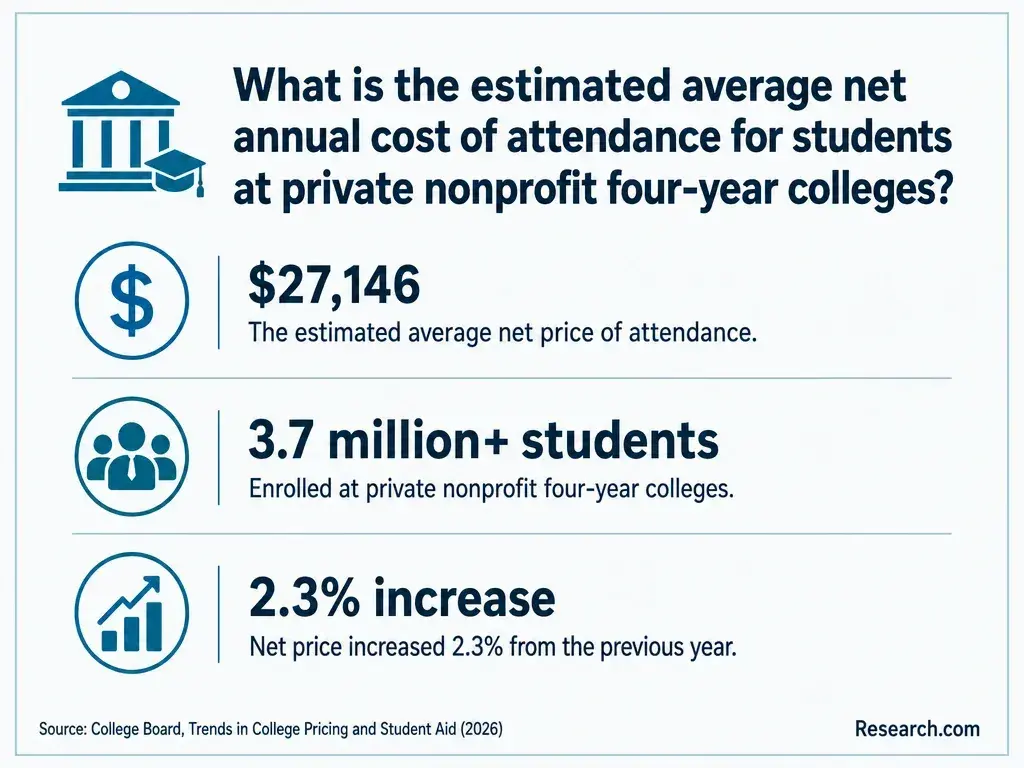
Compare written estimates of remaining required credits, tuition, mandatory fees, books or software, and any internship-related travel. Then consider earnings you may give up to attend classes or unpaid training. Listings of economical online college programs in business can help identify candidates, but an institution-specific degree audit and current cost estimate are necessary before treating one as the least expensive route for you.
Many entry-level healthcare administrative support roles do not require a general "healthcare administrator" license. Requirements depend on the job and setting. For example, leadership of certain long-term-care facilities is regulated by state licensing rules; a business bachelor's alone does not meet those rules. Employers may also ask for role-specific training, software familiarity, or a voluntary credential.
Check actual job postings and the relevant state regulator before paying for a credential. If you are considering a separate project-management degree or training path for healthcare implementation work, distinguish its occupational value from its financing: grants versus loans for project management bachelor's study is a separate decision from whether a certificate or degree is required for your first job.
There is no single reliable starting salary for graduates of a business degree with a healthcare focus. Entry pay depends on the position, location, employer, schedule, and your prior experience. The Bureau of Labor Statistics reports a May 2025 median annual wage of $114,130 for administrative services managers, but that is an occupation-wide midpoint, not a new graduate's likely offer; managers generally bring relevant experience.
For a usable expectation, compare local postings for the entry titles you would actually accept, noting their stated pay, required experience, and benefits. Do not justify a higher-cost program using managerial wages or the promise of reaching management sooner. Even three-year organizational leadership bachelor's options should be judged by their total cost, applicable credits, and relevance to the first role - not an assumed management salary.
What Is the Job Outlook for Healthcare Administration Careers?
Outlook figures describe occupations, not placement rates for a degree. For example, the Bureau of Labor Statistics projects 5% employment growth for administrative services managers from 2025 to 2035, compared with approximately 3.5% across all occupations. That indicates projected demand for the occupation; it does not mean new graduates will move directly into those management positions.
For your first job, a better near-term test is whether local healthcare employers advertise the coordinator or specialist duties you are preparing to perform - and whether you can show relevant experience or work samples. If speed matters, compare short-term classes toward a bachelor's degree against course availability and internship timing. Finishing classes faster is useful only if the sequence still builds evidence for the jobs you intend to seek.
Other Things You Should Know About Business Administration
Yes, if it gives you relevant, describable responsibilities such as scheduling support or process documentation. Obtain permission before discussing organizational details, and do not present volunteer duties as paid management experience.
Start with spreadsheet competence and the systems named in local postings. Employers may train new staff on their own platforms; familiarity with one product is less valuable than accurately handling information and learning workflows.
Do not use identifiable patient information without the required organizational authorization and safeguards. A hypothetical or properly approved, de-identified example is usually a safer way to demonstrate your method.
Check whether target employers require another degree at all. Relevant healthcare experience, selected business courses, or role-specific training may be more direct; if you do pursue another bachelor's, ask about second-degree and transfer-credit rules first.
- Applying Experiential Learning to Career Development... - PMC https://pmc.ncbi.nlm.nih.gov/articles/PMC8711830/
- ONC - Office of the National Coordinator for Health IT https://healthit.gov/
- A Guide To Experiential Learning, Internships, Capstones, and Practicums - UOnline - The University of Utah https://online.utah.edu/blog/posts/learning-experiences.php
- Bureau of Labor Statistics (BLS): Occupational Outlook Handbook - Career Advising & Professional Development | MIT https://capd.mit.edu/resources/bureau-of-labor-statistics-bls-occupational-outlook-handbook/
- Health Care Revenue Cycle and Data Analytics Undergraduate Certificate | Ohio State Online https://online.osu.edu/undergraduate-certificates/health-care-revenue-cycle-data-analytics-undergraduate-certificate/
- Occupational Outlook Handbook | Emory University https://cpd.emory.edu/resources/occupational-outlook-handbook/
- How to Read a College Degree Plan Before You Enroll | Florida National University (FNU) https://www.fnu.edu/how-to-read-college-degree-plan/
- 10 Experiential Learning Examples for Graduate Students | Northeastern University Graduate Programs https://graduate.northeastern.edu/knowledge-hub/experiential-learning-examples/
- Best Healthcare Courses & Certificates [2026] | Coursera https://www.coursera.org/courses
- What Are Employers Looking for When Reviewing College Students' Resumes? | NACE https://www.naceweb.org/talent-acquisition/candidate-selection/what-are-employers-looking-for-when-reviewing-college-students-resumes