2027 BS in Business Administration: A Career Coach Before Choosing a Concentration
Audited and Verified:
Our Editorial and Data Verification Process
Research.com uses government datasets, official education statistics and primary institutional information to support its career and degree guides. Our review process checks factual accuracy, occupational definitions, source dates and the requirements associated with the credentials discussed.
How This Article Was Fact-Checked
Our editorial team verifies salary estimates, employment projections, education requirements and program information against original data providers and official organizations. Salary figures are checked against the relevant occupational definitions and reporting periods. Information about licensure, accreditation and required in-person training is reviewed separately.
Fact-checked and verified on:

Co-Founder and Chief Data Scientist
A concentration can shape your coursework, but it cannot choose a career for you. Before selecting one in a BS in Business Administration, start with the work you want to do and the experience you already have.
This guide takes a career coach's approach: connect possible roles to skills, test whether a concentration adds useful depth, and check its effects on graduation time and cost. You will leave with a practical way to make the choice - or decide that general business electives are better.
Key Things You Should Know
- Choose a concentration for the tasks you want to perform, not the job title you hope to hold immediately after graduation.
- Compare the concentration's required courses and applied work with the general business option; an official concentration may add depth without being necessary for an entry-level role.
- Use occupation data as context, not a starting-salary promise: the May 2025 median for market research analysts was $78,760 across workers in that occupation.
What Is a Bachelor's Degree in Business Administration?
A BS in Business Administration is an undergraduate degree combining general education with a business core. Depending on the school, students may add an official concentration, choose electives, or complete a general business pathway. A concentration is part of the bachelor's degree - not a separate degree or professional certification.
Do not assume a BS, BBA, and specialized business bachelor's have the same quantitative requirements or functional depth. If your goal is specifically HR, for example, compare the business curriculum with understanding human resources degree levels before deciding how much specialization you need.
What Can You Do With a Business Administration Degree?
The degree can support applications for roles in operations, marketing, HR, sales support, procurement, and project coordination. Your strongest route usually builds on work you have already done. A customer-service employee might pursue marketing operations; someone who has tracked inventory might explore purchasing or logistics. In either case, employers may want evidence of spreadsheet work, clear communication, process documentation, or relevant industry knowledge alongside the degree.
A management concentration can teach leadership concepts, but graduation does not normally substitute for supervising people or owning a budget. If advancement in an existing role is your goal, compare the proposed coursework with employer training and leadership bachelor's degrees with accelerated pacing; the best route depends on the qualifications your target employer actually requires.
How Do You Choose the Right Business Administration Concentration?
Start with a target role and identify its recurring tasks. Then compare those tasks with the additional courses you would take beyond the business core. This keeps an appealing concentration name from obscuring a thin curriculum.
The comparison below connects common interests to useful learning and a limitation worth testing before you commit. Course titles and concentration requirements vary by school.
| Interest | Useful added learning | Check before choosing |
| Marketing | Customer research, campaign measurement, and communication | Whether you can produce work samples using appropriate data |
| Finance | Financial statements, forecasting, and spreadsheet modeling | Whether target roles expect more specialized finance study |
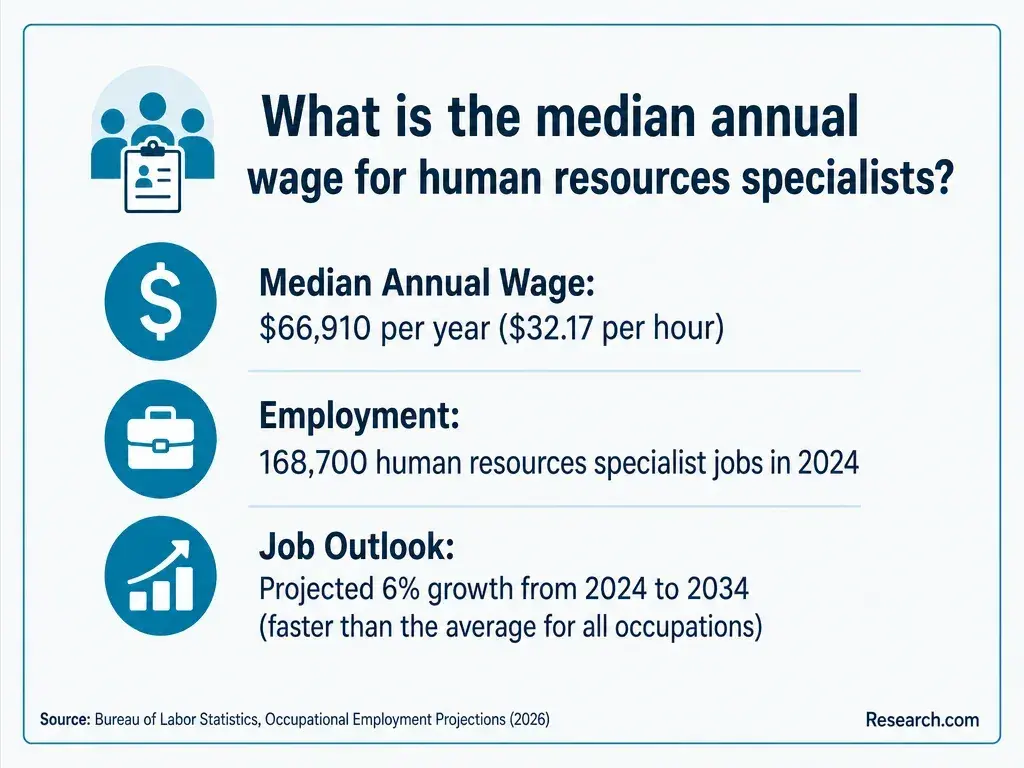
| HR | Recruiting processes, employment practices, and HR operations | Whether a dedicated HR program better fits your target role |
| Operations or analytics | Process analysis, statistics, and data interpretation | Prerequisites, software access, and opportunities for applied work |
Next, ask an adviser which courses are required, when they run, and whether the concentration changes your remaining credits. If you are transferring and leaning toward HR, compare credit acceptance at online HR schools as an alternative - but rely on each school's official evaluation to determine which credits satisfy its requirements.
Neither format is inherently better for choosing a concentration. Campus study may make scheduled collaboration and local employer contact easier; online study may reduce travel and allow you to keep working. The deciding issue is whether you can complete the specific concentration courses and applied assignments on a workable schedule.
Ask whether classes require live attendance, proctored exams, group meetings, an internship, or campus visits. Also check when required electives are offered: a flexible business core does not help if your final concentration course is unavailable when you need it. Compare actual course calendars - not just advertised completion times - when reviewing accelerated online business degree programs.
Most programs combine general education, a business core, upper-level requirements, and electives or concentration courses. The core commonly introduces accounting, economics, finance, marketing, management, operations, statistics, and business communication. A concentration should build on that foundation rather than merely repeat introductory material.
Read course descriptions and prerequisites in sequence. An analytics option may depend on statistics; a finance option may build on accounting. If your intended work is project scheduling and delivery rather than broad operations, compare the available electives with low-cost project management degree options before assuming a general business concentration provides the depth you want. One project course does not itself establish professional certification eligibility.
Requirements depend on whether you are entering as a first-year student, transferring, returning to college, or applying to a business major after institutional admission. Schools may request prior transcripts and may set separate GPA or prerequisite rules for the major. Admission does not mean previous courses will satisfy the business core or your preferred concentration.
Before applying, send each school your academic history and ask which requirements remain and who makes the final transfer decision. If application costs are a concern, you can find online colleges with free admissions applications; a waived application fee says nothing by itself about program fit or total tuition.
Time and cost depend on applicable transfer credit, enrollment pace, tuition and fees, course availability, and whether a concentration adds requirements. A student who can take only evening courses may face a different timeline from one studying full time, even within the same program.
Request a written degree audit and build a term-by-term plan for both the concentration and general business option. Compare remaining tuition, fees, books or software, and any travel or reduced work hours. When you compare shorter business administration college programs, check whether their published timelines assume credits you have, courses offered every term, or a pace you can sustain. Do not count projected savings until the school confirms how your credits apply.
First verify the institution's current accreditation through the accreditor and the U.S. Department of Education's recognition information. Then check any claimed business-school or programmatic accreditation - such as AACSB, ACBSP, or IACBE - directly with the accreditor. Confirm that the claim covers the school, degree level, and program you are considering; institutional accreditation and business accreditation are different checks.
Accreditation alone does not establish affordability, federal aid eligibility, or career outcomes. If financing will determine your choice, investigate business administration college affordability and FAFSA participation, then confirm aid eligibility and your estimated costs with the school's financial-aid office.
A concentration is not a salary category. The Bureau of Labor Statistics reports wages and employment projections by occupation, including workers with different degrees and experience levels. Match a role to its actual duties before using its figures to weigh a concentration.
For example, the BLS reports a May 2025 median annual wage of $78,760 for market research analysts and projects 7% employment growth from 2025 to 2035. Those figures may help a marketing-minded student investigate the field, but they are neither an entry-level offer nor an outcome attributable to a business degree. Compare job postings for the skills you still need, then weigh education costs against realistic entry routes. If project work is your alternative, examine project management college costs after financial aid rather than comparing occupation-wide wages with tuition alone.
Do Business Administration Careers Require Licenses or Certifications?
Many entry-level business roles do not require a license, although employers may prefer job-specific skills or credentials. Requirements change when you target regulated work: a business administration degree or accounting concentration does not by itself qualify you for CPA licensure, and financial-services activities can require separate licenses. Voluntary HR and project management certifications have their own eligibility rules.
Check the regulator or certifying organization for your target role before choosing courses around a credential. If you mainly need one skill now, employer training or short-term classes toward a bachelor's degree may be more useful than selecting a concentration solely for its name. Confirm in advance whether any such classes will count toward your program.
Other Things You Should Know About Business Administration
Check your school's deadline, then decide early enough to complete prerequisites and access required courses. You need not settle on a career for life, but waiting can narrow your course options.
Yes. A clearly labeled class project can demonstrate your reasoning and communication. Explain your assumptions and contribution; do not present hypothetical findings as employer results or share confidential information.
No. Advertised or occupation-wide pay may reflect experienced workers. Choose based on the work you want, your preparation, local opportunities, and the cost of gaining missing skills.
Compare the courses unique to each and ask whether electives can cover your second interest without delaying graduation. Confirm that plan in your degree audit before enrolling.
- O*NET Career Exploration Tools | dol.gov https://www.dol.gov/agencies/eta/onet/tools
- Informational Interviews - Center for Career Education - Offices https://offices.vassar.edu/career-education/explore-and-plan/informational-interviews/
- Informational Interviews - Career Center https://career.sa.ua.edu/explore/informational-interviewsjob-shadowing/
- Career coach Q&A: Answers about essential support for online business degree students | UW-Madison Online https://online.wisc.edu/blog/career-coach-qa-for-online-students/
- Career Assessments | Columbia Career Education https://www.careereducation.columbia.edu/career-exploration/career-assessments
- Informational Interviewing - MSU Career Services Network https://careernetwork.msu.edu/resources/informational-interviewing/
- What Can You Do With a Business Administration Degree? | snhu.edu https://www.snhu.edu/about-us/newsroom/business/what-can-you-do-with-a-business-administration-degree
- 6 Questions to Ask Yourself When Considering Concentrations for your MBA Program - Gary W. Rollins College of Business https://blog.utc.edu/business/2023/01/11/mba-concentrations-questions-to-ask/
- 10 Types of Business Majors and the Differences Between Them | Indeed.com https://www.indeed.com/career-advice/finding-a-job/types-of-business-majors
- Business Administration Degrees (Types, Courses & FAQ) | allbusinessschools.com https://www.allbusinessschools.com/business-administration/degrees/