2027 BS in Business Administration and Marketing: What Math and Data Skills Should You Compare?
Audited and Verified:
Our Editorial and Data Verification Process
Research.com uses government datasets, official education statistics and primary institutional information to support its career and degree guides. Our review process checks factual accuracy, occupational definitions, source dates and the requirements associated with the credentials discussed.
How This Article Was Fact-Checked
Our editorial team verifies salary estimates, employment projections, education requirements and program information against original data providers and official organizations. Salary figures are checked against the relevant occupational definitions and reporting periods. Information about licensure, accreditation and required in-person training is reviewed separately.
Fact-checked and verified on:

Co-Founder and Chief Data Scientist
Two marketing-focused business degrees can have similar names but prepare students for very different work with numbers and data. One may stop at introductory statistics; another may require students to analyze customer research and explain campaign results.
If you are comparing programs or planning electives, the distinction matters more than the degree label alone. This guide shows which math requirements to check, which data skills are useful in marketing, and how to judge whether coursework gives you credible practice - not just exposure to software.
Key Things You Should Know
- Compare the required math sequence first: college algebra or quantitative reasoning, statistics, and any prerequisites for marketing research or analytics.
- Look for assignments that require students to clean data, choose meaningful measures, explain uncertainty, and recommend a decision - not merely produce charts.
- The U.S. Bureau of Labor Statistics reports a May 2025 median wage of $78,760 for market research analysts; that occupation-wide figure is not an expected starting salary for graduates.
What Is a BS in Business Administration and Marketing?
Typically, this is a bachelor's degree combining a broad business core with a marketing concentration or another defined group of marketing courses. The exact credential matters: a school might award a BS in Business Administration with a marketing concentration, a BBA with a marketing major, or a specialized BS in Marketing. Similar titles do not establish identical quantitative requirements.
For this comparison, ask what appears on the transcript and what the curriculum actually requires. A general business program with two marketing electives may offer less depth in research and analytics than a formal concentration with required methods courses. If your goal is people operations rather than customer analysis, compare the marketing sequence with HR education costs and career planning instead of assuming a business degree's concentrations are interchangeable.
What Math Courses Are Required for a Business Administration and Marketing Degree?
Requirements vary by institution, but the courses to inspect are quantitative reasoning or college algebra, introductory statistics, economics, accounting, and business finance. Some programs require calculus; others do not. Accounting and finance are not substitutes for statistics: they develop different ways to interpret costs, financial statements, and decisions.
The sequence matters as much as the course titles. A statistics course that must be completed before marketing research can delay your concentration if it is offered infrequently. Transfer students should ask whether an accepted math credit fulfills the specific prerequisite, not just a general-education requirement. If you want deeper optimization or forecasting than the marketing pathway offers, compare its quantitative sequence with shorter supply chain degrees and career value; those programs may emphasize different operational measures and methods.
Request the current degree map and course descriptions. Check whether statistics covers sampling, confidence intervals, and regression, and whether later marketing courses require students to apply those ideas. A course labeled "business analytics" might instead be an introduction to dashboards.

Which Data and Analytics Skills Should Marketing Students Learn?
Marketing analysis starts with a decision: which audience to reach, which message to test, or whether a campaign deserves more spending. Useful measures depend on that decision. Website visits and clicks describe activity; conversions, acquisition cost, revenue, and contribution to profit address different business questions. Revenue is not profit, and a change after a campaign does not, by itself, prove that the campaign caused it.
Compare programs against the progression below. It distinguishes introductory tool use from the ability to support a defensible recommendation.
| Skill | Evidence to seek in coursework | Limit to recognize |
| Spreadsheet and data preparation | Students reconcile sources, handle missing values, and document calculations. | A polished chart cannot repair unreliable inputs. |
| Research and statistics | Students assess samples, compare groups, and interpret uncertainty. | A survey of convenient respondents may not represent a market. |
| Campaign measurement | Students define a goal, denominator, time period, and comparison. | Higher engagement need not mean higher profit. |
| Communication and ethics | Students explain assumptions, limitations, and data-use permissions. | Access to customer-level data is not automatic. |
SQL, visualization software, and experimentation can add value, but first establish whether the program teaches students to frame questions and interpret results. If your preferred work is tracking schedules, resources, and delivery risks rather than customer behavior, value-focused project management degree choices offer a more relevant comparison than software lists alone.
The business core commonly introduces accounting, economics, finance, management, operations, and business communication. Marketing coursework may then cover consumer behavior, research, digital channels, branding, and strategy. What distinguishes a strong fit for a data-oriented student is the connection between those subjects: for example, using research to select a target audience, a budget to constrain the campaign, and a measurement plan to evaluate the outcome.
Look beyond the catalog's list of topics. Ask to see descriptions of required assignments and whether students complete a research design, an analysis of an appropriately sourced dataset, and a written recommendation. A simulation, internship, and employer-approved capstone offer different forms of practice; none automatically provides access to real customer records.
If you already have substantial business credits and are comparing concentrations, project management bachelor's completion using existing credits illustrates an important alternative: compare how your credits apply to each major's requirements, not merely how many a school accepts.
Neither format is inherently stronger for marketing analytics. Compare access to datasets, statistical software, faculty feedback, team projects, and presentations. An online course may still require live meetings, proctored exams, or group work at fixed times; a campus course may provide easier access to a research lab or local employer project, but require travel.
Students balancing work with study should examine weekly deadlines and the availability of prerequisite courses, not just whether lectures are recorded. A review of degree options for working business administration students can help generate questions, but the school's current schedule and assessment rules should decide whether its marketing sequence fits your calendar.
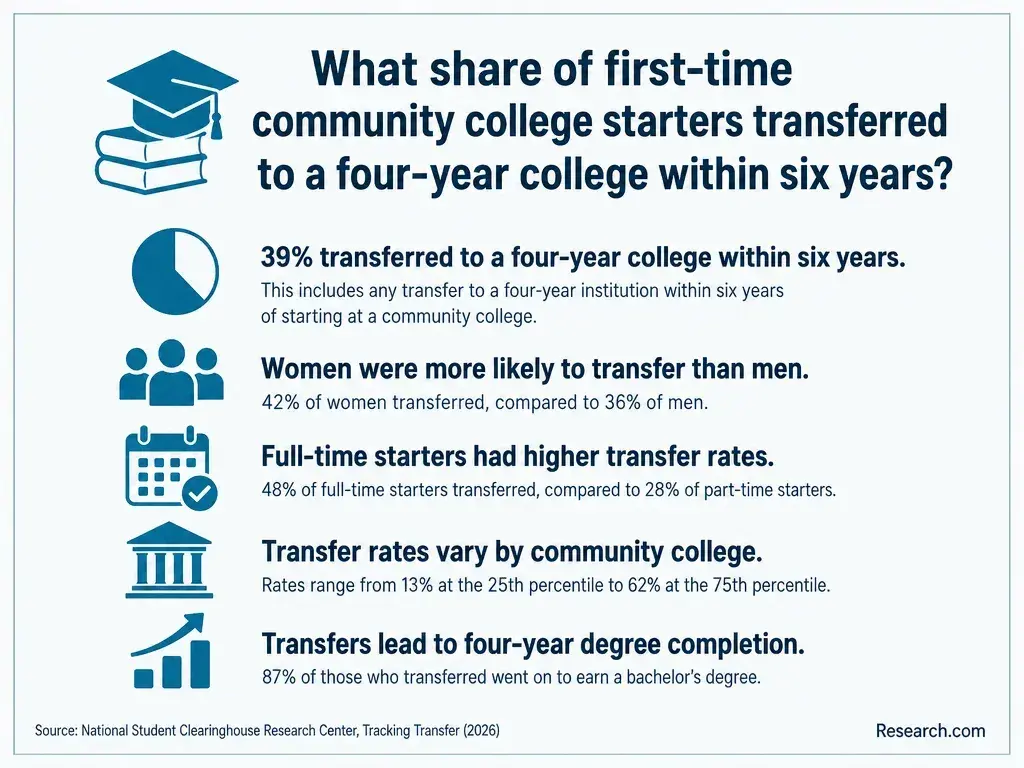
Admission to the university, entry to the business major, and eligibility for upper-level marketing courses may be separate steps. Schools can consider prior academic records and require specific grades or prerequisites before advanced coursework. Requirements vary, so confirm them with the institution rather than assuming that an interest in marketing - or prior work using analytics tools - waives a math course.
Before applying, obtain the current catalog and ask admissions or a business adviser to identify the first math course you would take. If you have college credit, request an official evaluation showing where each course applies. Application cost is a separate consideration; online universities with no application charge may be worth comparing, provided their actual marketing and quantitative requirements fit your goal.
Completion time depends on required credits, applicable transfer work, enrollment pace, prerequisites, and how often required courses run. Cost depends on more than advertised tuition: include mandatory fees, software or materials, travel or proctoring, and the financial effect of an additional term if a required course is unavailable. Do not assume an accelerated calendar reduces total charges or workload.
For a useful comparison, obtain a written degree audit and a term-by-term course plan from each school. Price the remaining requirements under the same enrollment assumptions, then check financial aid and employer-benefit conditions that apply to you. Economical online business administration college programs can provide candidates to investigate, but the lowest advertised tuition may not produce your lowest completion cost.
Verify the institution's accreditation and, if the school advertises AACSB, ACBSP, or IACBE accreditation, check the accreditor's stated scope for the business program. Institutional accreditation and business-specific accreditation answer different questions; neither proves that a particular marketing analytics course teaches the skills you need.
Quality evidence for this decision includes a published course sequence, access to required tools, substantive feedback on analyses, appropriately supervised applied work, and timely access to required classes. Short sessions may fit your schedule, but they can compress statistics practice and group assignments. If you are considering online bachelor's programs with short sessions, ask how quantitative prerequisites and research projects are paced before treating speed as an advantage.
Potential starting points include marketing coordinator, research assistant, and campaign-support roles. Duties can involve preparing reports, checking campaign data, coordinating materials, or helping conduct customer research. More independent analyst work generally requires stronger evidence of research and data skills; marketing management normally also requires relevant professional experience.
The U.S. Bureau of Labor Statistics reports a $78,760 median annual wage in May 2025 for market research analysts and projects 7% employment growth from 2025 to 2035. These figures describe an occupation across experience levels, industries, and locations - not pay or job placement for new graduates. For entry-level applications, a clearly explained research or measurement project and relevant internship or work experience may be more persuasive than the concentration name alone.
If your objective is supervising staff rather than analyzing customers, assess the experience a target employer expects. Faster bachelor's routes in organizational leadership may suit a different skill gap, but neither degree title substitutes for demonstrated management responsibility.
Do Marketing Graduates Need Licenses or Professional Certifications?
Typical marketing and market research roles do not require an occupational license solely because the work involves marketing. Employers may value training on a particular advertising, analytics, or customer-management platform, but a vendor certificate is separate from a degree and does not establish that its holder can design sound research or interpret results responsibly.
Choose additional training only after identifying a target role's tasks and the tools its employers use. A focused certificate may address a narrow software gap without another degree; conversely, fastest bachelor's-level business study options matter if completing a bachelor's credential is itself your goal. Check the current job posting and the credential provider's requirements rather than assuming either route grants professional authority.
Other Things You Should Know About Business Administration
Ask for the syllabus and prerequisite for your first required quantitative course. A placement assessment, tutoring, or a refresher course may help you prepare; the school decides whether any course can satisfy a degree requirement.
No. Some roles rely mainly on spreadsheets and reporting platforms, while others require querying databases. Compare job descriptions for the roles you want before prioritizing SQL over statistics or research design.
Yes. Publicly available or clearly labeled synthetic data can demonstrate your method. State where the data came from and what conclusions it cannot support; do not present a simulated analysis as a real campaign result.
Not alone. Tools change, while skills such as defining measures, checking data quality, and explaining uncertainty transfer between platforms. Favor electives that require those skills alongside practical tool use.
- Math Placement | STLCC https://stlcc.edu/testing-centers/math-placement/
- Business Statistics | Drexel University Catalog https://catalog.drexel.edu/coursedescriptions/quarter/grad/stat/
- Business Analytics " Academics | Boston University https://www.bu.edu/academics/questrom/courses/business-analytics/
- Math Placement | Mathematics - The University of Iowa https://math.uiowa.edu/undergraduate/advising/math-placement
- Top Skills Business School Grads Need in 2025 and Beyond | UC Davis Graduate School of Management https://gsm.ucdavis.edu/blog/what-employers-really-want-top-skills-business-school-grads-need-2025-and-beyond
- Does Business Administration Require Math? | MVNU https://mvnu.edu/blogs/does-business-administration-require-math/
- Data Analytics Program for Beginners NJ - Rutgers University https://techcareers.professional.rutgers.edu/programs/data-analytics
- Lombardo College of Business Online Bachelor's in Business Administration Degree. | Millersville University https://www.millersville.edu/mgmtmktg/general-business-admin-online.php
- Establishing Learning Outcomes for UCLA Capstone Majors https://learningoutcomes.ucla.edu/process-guidelines/establishing-learning-outcomes-for-ucla-capstone-majors/index.html
- Bachelor of Business Administration in Marketing | walshcollege.edu https://walshcollege.edu/programs/bachelor-of-business-administration-marketing/