2027 Online BS in Business Administration vs. an Entrepreneurship Certificate: Which Route Fits Your Career Plan?
Audited and Verified:
Our Editorial and Data Verification Process
Research.com uses government datasets, official education statistics and primary institutional information to support its career and degree guides. Our review process checks factual accuracy, occupational definitions, source dates and the requirements associated with the credentials discussed.
How This Article Was Fact-Checked
Our editorial team verifies salary estimates, employment projections, education requirements and program information against original data providers and official organizations. Salary figures are checked against the relevant occupational definitions and reporting periods. Information about licensure, accreditation and required in-person training is reviewed separately.
Fact-checked and verified on:

Co-Founder and Chief Data Scientist
If you want to build a business or move into a business role, an online BS in Business Administration and an entrepreneurship certificate can look like two routes to the same goal. They are not interchangeable. One provides broad undergraduate preparation and a bachelor's credential; the other usually concentrates on developing a venture or entrepreneurial skills. This comparison is for prospective founders, career changers, and working adults deciding where to invest their time and money. It shows how to match each route to your career goal - and what to verify before enrolling.
Key Things You Should Know
- Choose the BS if your target jobs call for a bachelor's degree or you need broad preparation across business functions; choose a certificate if you already have the necessary credentials and need focused venture-building skills.
- A certificate does not ordinarily replace a bachelor's degree, and neither credential substitutes for customers, operating experience, or evidence that a business idea works.
- The U.S. median annual wage for market research analysts was $78,760 in May 2025, according to the Bureau of Labor Statistics (BLS). That occupation-wide figure is not an expected salary for graduates of either pathway.
What is the difference between an online business administration degree and an entrepreneurship certificate?
An online BS in Business Administration is a bachelor's degree covering multiple business functions, generally alongside general education and electives. An entrepreneurship certificate is a shorter, focused credential that may be offered for undergraduate credit, graduate credit, or noncredit professional development. Its official status depends on the provider.
The distinctions below matter most when an employer requires a degree or you hope to apply certificate coursework toward one later.
| Decision factor | Online BS in Business Administration | Entrepreneurship certificate |
| Credential awarded | Bachelor's degree | Certificate; not a bachelor's degree |
| Typical scope | Accounting, finance, marketing, operations, management, and related subjects | Venture development, such as customer discovery, business models, and startup finance |
| Best use | Meeting a degree requirement while building broad business knowledge | Addressing a specific entrepreneurship skill gap without pursuing a full degree |
| Credit portability | Prior college credits may apply after institutional evaluation | Credit may or may not be awarded or accepted toward a later degree |
Do not assume a certificate is embedded in a degree or that its courses will transfer. Ask for the certificate's credit status and a written degree audit. If you are also considering a specialized bachelor's, compare project management bachelor's credit transfer rules rather than assuming credits will apply equally to different majors.
Which career goals fit an online business administration degree or entrepreneurship certificate?
Choose the BS when a bachelor's credential is part of the goal. It is usually the stronger route for someone without a degree who wants to qualify for degree-requiring openings while exploring marketing, operations, finance, or other functions. A prospective founder may also value that breadth if they expect to manage budgets, staff, suppliers, and customers. The degree does not, by itself, make someone ready to supervise a team.
Choose a certificate when the gap is specific. Someone who already has a bachelor's degree or substantial business experience may get more immediate value from structured work on customer discovery, pricing assumptions, or a venture plan. For an existing small-business owner, targeted accounting instruction, mentorship, or customer research could be more useful - and less costly - than either credential.
Start with the work you want to do. A person targeting logistics or procurement should compare function-specific preparation, including online supply chain programs balancing cost and completion time, rather than choosing entrepreneurship simply because it sounds practical. If an employer requires a bachelor's degree, confirm whether a completed degree in any field suffices before starting a second one.
How do online and campus-based business programs compare?
Online delivery can remove a commute, but it does not necessarily remove scheduled obligations. Both online degrees and certificates may include live sessions, group projects, presentations, proctored exams, or fixed weekly deadlines. Campus programs may offer easier in-person access to classmates and local events, while online programs may better fit employment or distance - provided their actual schedules work for you.
If you need to study business administration without leaving your job, request a sample course schedule for each option. Check live-attendance times, assessment rules, required visits, and the availability of advising and career services for online students. For venture-oriented work, also ask how remote students receive feedback from mentors or prospective customers; a flexible format is less useful if it limits the applied work you need.
A BS in Business Administration generally combines foundational courses in accounting, economics, marketing, finance, management, operations, and quantitative methods with general education and electives. An entrepreneurship concentration, where officially offered, may add venture-focused courses within the degree. A stand-alone entrepreneurship certificate more often concentrates on opportunity assessment, customer research, business models, pitching, and financing assumptions. Check the catalog: titles alone do not establish course depth or an official concentration.
Applied work is a useful differentiator. A degree might require a broad business capstone, while a certificate might culminate in a venture proposal. Neither a proposed business plan nor a classroom revenue projection proves that customers will buy. Ask what evidence students must gather, who evaluates their work, and whether a current workplace project requires employer permission.
If a curriculum emphasizes coordinating projects more than testing a venture, compare it with project-focused study and its total cost. A guide to comparing project management tuition and mandatory fees can help frame that alternative without treating project management and entrepreneurship as the same subject.
Bachelor's applicants generally provide evidence of secondary education and any prior college coursework; schools set their own admission, transfer, and business-major requirements. A certificate may admit nondegree learners, require undergraduate standing, or restrict enrollment to degree holders. "Online" does not establish open admission, and admission does not establish that prior courses will satisfy degree requirements.
Before applying, ask the school whether the certificate is credit-bearing, whether prerequisite business or quantitative courses apply, and whether you can enroll without joining a degree program. Returning students should request an evaluation showing which prior credits satisfy general education, the business core, and electives - not merely how many credits were accepted. If you are comparing application expenses, colleges that waive online application costs may be worth considering, but verify the policy for your intended program and application term.
A bachelor's requires substantially more coursework than a focused certificate. Your actual completion time depends on accepted credits that apply to the BS, prerequisite sequences, course availability, and how many courses you can take while working. A certificate can often be completed sooner, but a cohort schedule or infrequently offered final course may extend its calendar time.
Request a term-by-term plan for each pathway before comparing advertised durations. Confirm whether required courses are offered every term and whether an accelerated schedule changes the workload rather than simply compressing it. Listings of American colleges offering fast-track business bachelor's can provide starting points, but only the school's evaluation and course plan can establish your likely timeline.
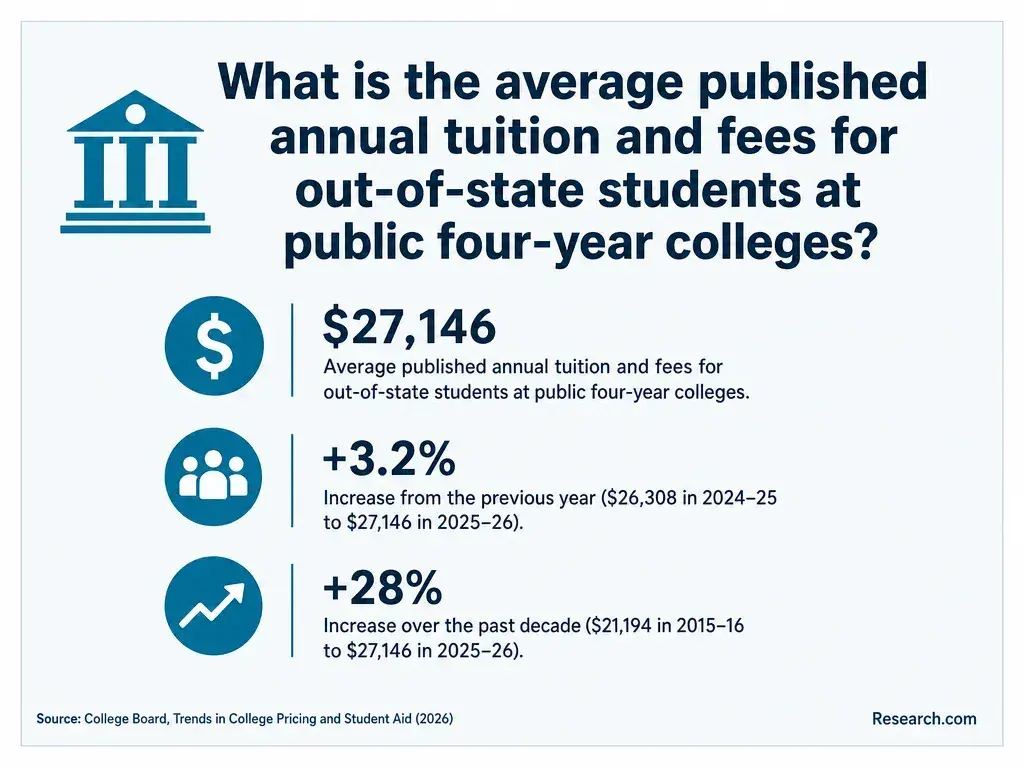
A certificate usually involves fewer courses, but fewer courses do not automatically mean better value. Compare the cost of reaching your goal: a low-priced noncredit certificate will not satisfy a bachelor's requirement, while a degree may involve coursework you do not need if your only objective is to test a venture idea. Published prices vary by institution and program; there is no reliable universal price for either pathway.
For each school, obtain an itemized estimate based on your enrollment plan. Include tuition, mandatory and technology fees, materials, any travel or proctoring costs, and the courses remaining after an official credit evaluation. Then subtract only grants or employer benefits you are confirmed to receive; distinguish reimbursement paid after a course from money available when tuition is due. When comparing low-tuition pathways to a business administration degree, check the total cost to complete, not just the advertised charge per course or credit.
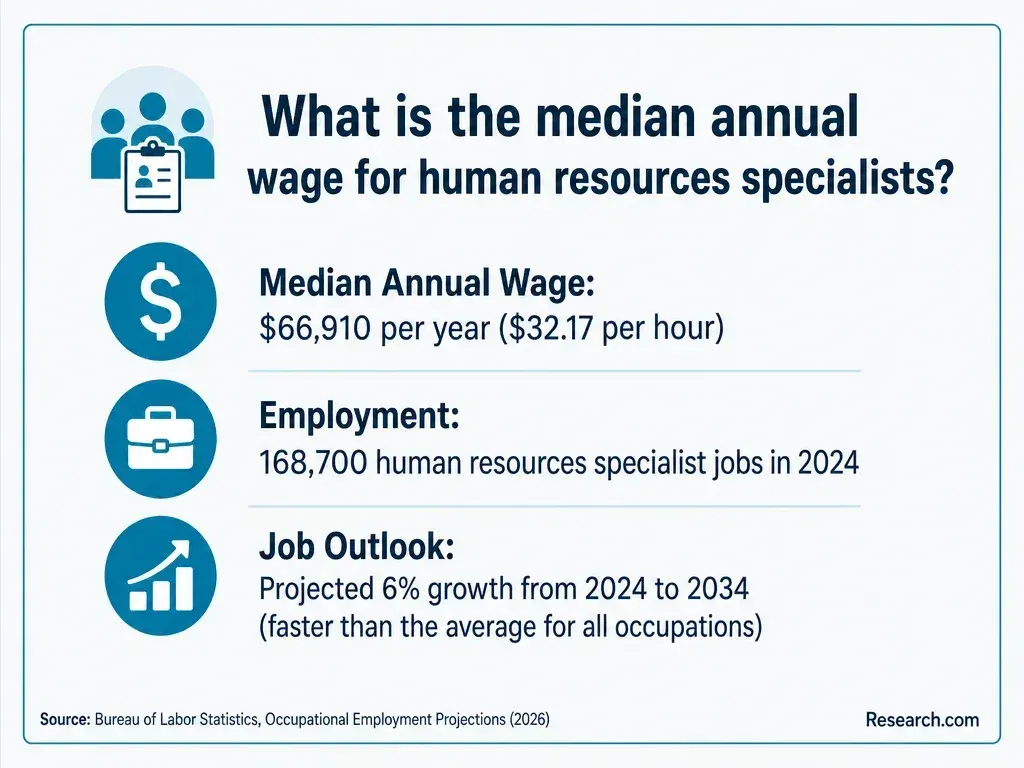
A BS may help an applicant meet bachelor's requirements for roles such as market research analyst, HR specialist, or certain business-operations positions. A certificate may strengthen the work of a founder or an employee developing a new product or service, but it rarely replaces a degree when one is required. Hiring still depends on role-specific skills, relevant experience, and the employer's criteria; entrepreneurship credentials do not confer a job title or income from a venture.
BLS reports a May 2025 median annual wage of $78,760 for market research analysts. That is the occupation-wide median, not a starting salary or an outcome attributable to either program. Someone pursuing this role should look for customer-research methods, data interpretation, and work samples in the curriculum, then compare those requirements with job postings. If project coordination is the actual target, consider its distinct training and financing needs; scholarship search options for project management majors are relevant only if that alternative fits your career plan.
There is no single BLS job category for "entrepreneurship certificate holder," and new-business success cannot be inferred from occupational projections. Outlook is more useful when tied to the role you intend to seek. BLS projects 7% employment growth for market research analysts from 2025 to 2035. That projection indicates demand across the occupation; it does not predict openings for an individual applicant or sales for a new venture.
For a career change, compare the skills in target job descriptions with your existing experience before committing to a credential. A working adult who needs broad business preparation can explore accelerated business education for working adults, while someone whose main gap is customer research may be better served by focused coursework and a documented project. In either case, ask how the program helps you demonstrate relevant skills - not just complete classes.
How can you choose an accredited and reputable business program?
First, verify the institution's current accreditation with its accreditor and confirm that it covers the school offering the credential. Business-school or programmatic accreditation from AACSB, ACBSP, or IACBE is separate; check the accreditor's listing to see what it covers. A noncredit certificate may not carry the same academic credit or financial-aid implications as a degree program at the same institution.
Compare the published curriculum with your target skills, then ask for written answers about credit status, required attendance, applied-project support, total charges, and outcomes for the specific program and student population. If federal student aid is important to the degree decision, explore FAFSA-accepting colleges for business administration students and confirm your program's eligibility directly with each school's financial-aid office. Do not assume a stand-alone certificate qualifies because the institution participates in federal aid programs.
Pursue the BS if the bachelor's credential and broad business foundation address your goal. Pursue a certificate if you already meet your career's degree requirements and need targeted venture skills. Before choosing either, get the school's written account of what you will earn, what you must complete, and what you will pay.
Other Things You Should Know About Business Administration
No general degree or certificate requirement applies to starting a business. Your activities may, however, require permits or professional licenses. Check the rules for your location and type of work.
It may help you prepare a clearer plan, but it does not establish loan eligibility. Lenders assess their own criteria, which can include finances, credit, collateral, and the proposed business.
Often, yes, but eligibility depends on the certificate. Confirm whether it accepts non-business graduates and whether any introductory courses are required.
You can generally report relevant study and experience, but a certificate does not replace an MBA program's admission requirements. Ask the MBA program whether it accepts any certificate courses for graduate credit.
- Accreditation in the U.S. | ed.gov http://www.ed.gov/laws-and-policy/higher-education-laws-and-policy/college-accreditation/accreditation-in-the-us
- Plan your business - Small Business Administration https://www.sba.gov/counseling/plan-your-business/
- Certificate vs. Degree: Pros, Cons, and Career Outcomes | National University https://www.nu.edu/blog/certificate-vs-degree/
- College Credit for Work and Life Experience | Purdue Global https://www.purdueglobal.edu/transfer-students/work-life-experience/
- How Long Does it Take to Get a Business Degree Online? | stevenson.edu https://www.stevenson.edu/online/about-us/news/how-long-does-it-take-to-get-a-business-degree-online/
- Online Business Degree | AACSB Accredited | Adelphi University https://onlineprograms.adelphi.edu/programs/bs-bachelor-business/
- What is a business venture? Key steps to starting your own | Uncover IE https://www.ie.edu/uncover-ie/business-venture-international-mba/
- Degrees vs. Certificate Programs: What's the Difference? | snhu.edu https://www.snhu.edu/about-us/newsroom/education/certificates-vs-degrees
- Business Administration Bachelor's Degree Online | The Pennsylvania Institute of Technology https://www.pit.edu/programs/b-s-business-administration/
- Entrepreneurship Program Online - ODUGlobal - Old Dominion University https://online.odu.edu/academics/programs/entrepreneurship-bsba