2027 BS in Business Administration and Supply Chain Management and Logistics: Questions to Ask About Faculty and Applied Projects
Audited and Verified:
Our Editorial and Data Verification Process
Research.com uses government datasets, official education statistics and primary institutional information to support its career and degree guides. Our review process checks factual accuracy, occupational definitions, source dates and the requirements associated with the credentials discussed.
How This Article Was Fact-Checked
Our editorial team verifies salary estimates, employment projections, education requirements and program information against original data providers and official organizations. Salary figures are checked against the relevant occupational definitions and reporting periods. Information about licensure, accreditation and required in-person training is reviewed separately.
Fact-checked and verified on:

Co-Founder and Chief Data Scientist
A supply chain concentration can look convincing in a course catalog, but its value depends on who teaches the courses and what students actually produce. For prospective and returning undergraduates, the key decision is whether a BS in Business Administration offers enough logistics depth, faculty guidance, and applied work for a target role. This guide shows what to ask about instructors, projects, data access, and assessment - then puts those answers in context with program format, cost, and career outcomes.
Key Things You Should Know
- Ask who teaches required supply chain courses, what recent operations or research experience they bring, and whether they personally review students' analytical work.
- Request a recent, redacted project brief and grading rubric: a case discussion, simulation, employer project, and supervised internship provide different evidence of skill.
- The U.S. Bureau of Labor Statistics reports a May 2025 median annual wage of $82,320 for logisticians; that occupation-wide figure is not an expected starting salary for graduates.
What Is a BS in Business Administration and Supply Chain Management?
Typically, this is a business administration bachelor's degree with supply chain management courses included as a formal concentration, emphasis, or elective sequence.
The business core develops accounting, finance, management, and quantitative reasoning; supply chain study focuses on how organizations source materials, coordinate production, manage inventory, and move goods. Logistics is the part of that work concerned especially with transportation, storage, and distribution.
Check the exact credential on the diploma and transcript. A named concentration is not necessarily a separately awarded supply chain degree, and a few electives do not establish a formal concentration.
Ask for the current degree map and compare required supply chain credits with those of a specialized bachelor's program. If you mainly need broad business preparation, affordable business education options online may be worth comparing - but verify that an affordable general program includes the logistics work you want.
What Do You Learn in Supply Chain Management and Logistics Courses?
Course titles vary, so inspect assignments as well as descriptions. Useful undergraduate work may include demand forecasting, inventory decisions, purchasing, supplier evaluation, transportation trade-offs, process mapping, and spreadsheet-based analysis.
Strong assignments require students to state assumptions and explain the effect of missing or unreliable data, not merely obtain a numerical answer. Ask which courses teach spreadsheet modeling or business systems, which require statistics or accounting first, and whether advanced supply chain courses run often enough to fit your graduation plan.
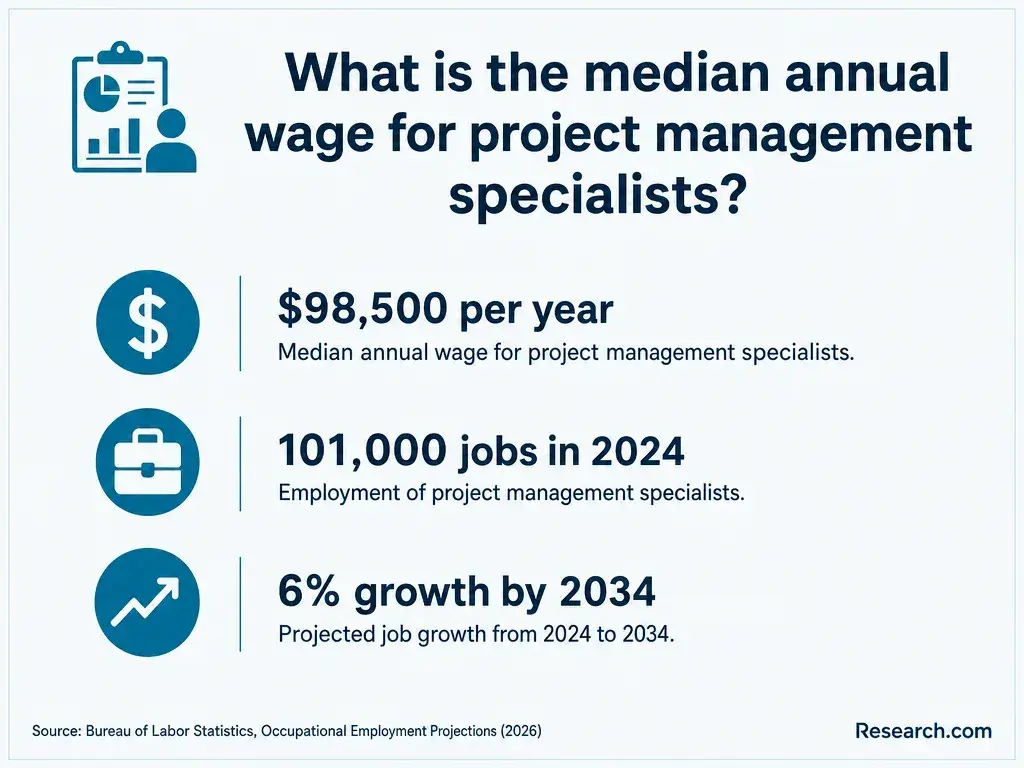
A project management course may help with implementation schedules, but it is not a substitute for procurement or inventory depth. If project coordination is the primary goal, compare the curriculum and credit requirements of project management bachelor's completion using existing credits rather than assuming the two pathways teach the same skills.
How Do Faculty Qualifications Affect Supply Chain Degree Quality?
Faculty quality is about relevant expertise and accessible instruction. Research in operations or logistics can strengthen a course's analytical foundation; experience in purchasing, distribution, manufacturing, or systems implementation can clarify operational constraints. Neither a doctorate nor an industry title alone shows how well an instructor teaches undergraduates.
Before enrolling, ask the department who regularly teaches required courses, whether those instructors are full-time or part-time, and who supervises projects. Request an example of the feedback students receive on a forecast, supplier comparison, or process analysis.
Also ask how quickly students can reach faculty when a dataset or workplace permission creates a problem. For employed students hoping to use their own organization as a project setting, compare those answers with the scheduling and support questions raised by business administration education for employed professionals.
A useful distinction is whether faculty demonstrate a method, critique a student's reasoning, and help revise a deliverable. That sequence offers more evidence of applied learning than an instructor biography or a list of software packages.
Ask for the required project - not simply examples of activities students can pursue. The comparison below separates common formats by the evidence they can produce; availability and academic credit depend on the specific program.
| Project format | Potential student deliverable | Important limitation to check |
| Case or simulation | Inventory recommendation with assumptions and sensitivity analysis | Decisions may use fictional or simplified data. |
| Faculty-guided capstone | Process map, supplier comparison, or distribution proposal | Confirm the rubric, feedback stages, and required data sources. |
| Employer-based project | Approved analysis for a workplace decision-maker | Employer permission, data rights, and confidentiality rules apply. |
| Internship or co-op | Supervised work and an assessed reflection or report | Placement, supervision, and credit may not be guaranteed. |
Ask to see a redacted brief and rubric showing the decision-maker, permitted inputs, measures of success, faculty review points, and final deliverable. For an inventory proposal, for example, students should explain the service-level and carrying-cost trade-off; a recommendation is not proof that a company adopted it or saved money.
If the applied work you want is chiefly schedules and implementation plans, compare affordable project management schools alongside supply chain programs rather than treating their projects as interchangeable.
Neither format is inherently better. Online students can analyze datasets, collaborate on simulations, and complete approved workplace projects; campus students may have easier access to in-person visits or local employers. The decisive evidence is whether the required courses provide timely faculty feedback, usable data, and a feasible path to completing projects.
Ask whether group meetings are live, when presentations occur, what software is required, and whether an internship, site visit, or residency requires travel. An asynchronous lecture can still come with fixed team deadlines. When reviewing US online business education program comparisons, check each school's supply chain course delivery and project rules separately; a general program listing cannot establish those details.
First, verify that the institution holds recognized institutional accreditation. Then check whether its business school or named business program has applicable accreditation from AACSB, ACBSP, or IACBE. These are different reviews with different scopes: do not assume that accreditation of a business school covers every campus, delivery mode, or program bearing a similar name.
Ask the institution and accreditor which entity and programs are covered for your enrollment term. Accreditation supports an assessment of educational quality; it does not certify a particular instructor, guarantee an employer project, or promise a job.
Students planning to seek federal aid can use FAFSA-accepting colleges for business administration students as a starting comparison, then confirm the specific institution's eligibility and their own aid terms.
Schools may distinguish admission to the institution from entry to the business major or concentration. Applicants generally need qualifying prior education and official transcripts, but GPA rules, placement requirements, and prerequisites vary. Supply chain courses may depend on earlier statistics, accounting, economics, or operations work, so admission does not necessarily mean immediate access to advanced courses.
Transfer students should request a written evaluation showing where accepted credits apply: general education, business core, supply chain requirements, or electives. An accepted course is not automatically a concentration requirement satisfied. If you are weighing other business functions, compare HR bachelor's transfer policies as a separate pathway, but obtain a supply chain degree audit from the institution that would award your degree.
A full-time bachelor's path commonly spans four academic years, but the relevant estimate is your remaining requirements and course sequence. Prior credits, prerequisite placement, part-time enrollment, and how often advanced supply chain courses run can change the finish date. Ask an adviser for a term-by-term plan based on an official evaluation, not an advertised fastest-completion time.
Compare tuition together with mandatory fees, software, books, travel for any required placement, and the cost of an extra term if a required course is unavailable. Confirm aid eligibility and whether any employer reimbursement arrives after you pay tuition.
For a fair financial comparison, obtain the same remaining-credit and aid assumptions for each school. If a project management alternative is also under consideration, an online project management undergraduate funding guide can help identify funding questions, but its figures and eligibility rules should not be applied automatically to a supply chain degree.
Relevant starting searches include logistics coordinator, inventory analyst, purchasing assistant, transportation coordinator, and operations analyst. Titles and responsibilities vary: one employer may emphasize spreadsheets and supplier communication, while another expects warehouse or industry-specific experience.
A well-explained project can help demonstrate judgment, but it does not replace the experience required for every specialist or management opening.
For context, the U.S. Bureau of Labor Statistics reports a May 2025 median annual wage of $82,320 for logisticians. That is the median across workers in the occupation - not a salary forecast for new graduates or a figure covering every coordinator role.
Compare local postings with your skills and experience. If your target is broad business operations rather than supply chain work, lower-tuition online business administration programs may offer a more economical route, provided their applied work still matches the jobs you seek.
Which Certifications and Job Outlook Should Students Consider?
Professional supply chain certifications are separate from the degree. Organizations set their own eligibility, exams, fees, and renewal rules; completing a concentration does not award a certification. Ask employers in your target function whether they value a particular credential, relevant systems experience, or demonstrated project work more at your career stage.
The Bureau of Labor Statistics projects 18% growth in U.S. logistician employment from 2025 to 2035. That occupation-level projection indicates potential demand, not the probability that an individual graduate will be hired.
Use it alongside local openings and their requirements when judging whether additional study is worthwhile. Supply chain program length and value comparisons can help frame the education choice, but verify each school's current project requirements and total completion cost before deciding.
Other Things You Should Know About Business Administration
Usually, applicants should check the school's stated prerequisites rather than assume proficiency in a particular system is required. Spreadsheet confidence and a willingness to work with imperfect data are useful preparation.
Yes, if the assignment permits it. Identify the source, document assumptions, and distinguish a classroom recommendation from a result implemented by an organization.
Only to the extent your employer's permission and confidentiality rules allow. A redacted description of your method and responsibilities may be safer than sharing internal figures or supplier details.
Not always. Compare the target job's requirements with your existing degree and experience; targeted courses, relevant work, or a suitable credential may address the gap more directly.
- Supply Chain Management | College of Business | Chicago State University https://www.csu.edu/collegeofbusiness/supply_chain_management.htm
- Assessing Student Learning: Group Projects | Oregon State University https://ctl.oregonstate.edu/assessing-student-learning-group-projects
- Meet Our Faculty & Staff | Graduate Programs in Supply Chain Management https://supplychain.business.uconn.edu/faculty/
- Supply Chain Management | UNCW https://uncw.edu/academics/majors-programs/csb/business-administration-bs/details/scm-concentration
- Project and Supply Chain Management - Shared Programs https://sharedprograms.psu.edu/program-list/project-and-supply-chain-management/
- MIT Sloan Case Studies | Teaching Resources Library https://mitsloan.mit.edu/teaching-resources-library/mit-sloan-case-studies
- Program: Supply Chain Management Major | citadel.edu https://catalog.citadel.edu/preview_program.php
- The Many Roles of a Supply Chain Manager | American Public University https://www.apu.apus.edu/area-of-study/business-and-management/resources/the-many-roles-of-a-supply-chain-manager/
- Jobs and Career Paths in Supply Chain Management and Logistics - Global Supply Chain Institute https://haslam.utk.edu/gsci/news/supply-chain-management-career-path/