
2027 Is an Online BS in Business Administration the Right Next Step for Medical Billing Supervisors?
Audited and Verified:
Our Editorial and Data Verification Process
Research.com uses government datasets, official education statistics and primary institutional information to support its career and degree guides. Our review process checks factual accuracy, occupational definitions, source dates and the requirements associated with the credentials discussed.
How This Article Was Fact-Checked
Our editorial team verifies salary estimates, employment projections, education requirements and program information against original data providers and official organizations. Salary figures are checked against the relevant occupational definitions and reporting periods. Information about licensure, accreditation and required in-person training is reviewed separately.
Fact-checked and verified on:

Co-Founder and Chief Data Scientist
Medical billing supervisors already manage people, workflows, and revenue-cycle problems. An online BS in Business Administration may help turn that experience into broader operations responsibility - but it may be more education than a narrowly defined promotion requires.
This guide is for supervisors weighing a bachelor's degree against certification, targeted training, or continued experience. It explains which roles the degree can support, what online study demands, and how to check the cost and hiring requirements before enrolling.
Key Things You Should Know
- An online business administration BS is most useful when your target healthcare operations role calls for broader budgeting, analytics, or management preparation - not simply stronger coding knowledge.
- The U.S. median annual wage for administrative services managers was $114,130 in May 2025; that occupation-wide figure is not a predicted salary for a billing supervisor who earns a degree.
- Compare your remaining degree requirements and total cost with the qualifications in actual job postings before choosing a program; a certification or employer-supported training may be the more direct step.
Is an online BS in Business Administration right for medical billing supervisors?
Your experience with denials, staff schedules, payer requirements, and performance measures gives business coursework a practical context. The degree is less compelling if your immediate goal is to become a better coder or meet a specific employer's requirement for a billing credential.
Let the next job determine the education choice. A general business BS can develop financial, operational, analytical, and leadership skills across functions. A healthcare administration degree may devote more coursework to healthcare systems and regulation; a billing or coding credential focuses more narrowly on technical practice. If you instead want to run projects across departments, compare the curriculum with project management bachelor's completion using existing credits. The best option depends on which qualification your target employers recognize and how much of your previous study applies.
Before committing, collect several postings for the role you want. Separate required degrees from preferred degrees, and note whether employers emphasize revenue-cycle results, coding credentials, budgeting, analytics, or cross-department leadership. A degree can address an education requirement; it cannot substitute for evidence that you can manage the work.
What career opportunities can medical billing supervisors pursue with a business administration degree?
The strongest path is usually an adjacent move that builds on billing supervision, rather than a jump into an unrelated management function. This comparison shows where existing experience helps and what additional evidence an employer may expect.
| Potential direction | Relevant billing-supervisor experience | Likely gap to address |
| Revenue-cycle management | Denial trends, collections workflows, staff oversight | Department budgets, payer strategy, and broader performance accountability |
| Healthcare operations coordination or management | Process improvement and coordination with clinical or administrative teams | Operations outside billing, such as scheduling, service delivery, or vendor oversight |
| Revenue-cycle analyst | Understanding of claims, accounts receivable, and workflow exceptions | Stronger spreadsheet, reporting, and data-interpretation skills |
| Implementation or project coordination | Experience with billing-system changes and staff training | Documented project planning, stakeholder coordination, and implementation results |
A business degree can help you explain the financial and operational significance of your work, but employers may still require healthcare-specific experience. For a project-focused pivot, compare program costs and aid on equal terms; FAFSA grants and scholarships for project management students are worth examining only if that alternative degree fits your target role better.

Do medical billing supervisors need a bachelor's degree or professional certification?
There is no universal bachelor's-degree or certification requirement for every medical billing supervisor job. Employers set qualifications for particular roles. A bachelor's degree may become more valuable when seeking positions with responsibility for budgets, multiple teams, or organization-wide operations; a relevant certification may be more direct when a posting emphasizes coding, billing rules, or revenue-cycle technical knowledge.
These credentials answer different questions. A BS in Business Administration demonstrates completion of broad undergraduate study, not mastery of a particular payer system or eligibility for a professional designation. A voluntary professional certification has its own experience, examination, and renewal rules. Check the certifying organization's requirements and the employer's posting rather than assuming either credential replaces the other.
If a bachelor's degree is the barrier, review qualifying for a business administration college program before choosing between degree study and shorter training. If the barrier is a demonstrated skill, ask whether a course, certification, or supervised workplace project would address it with less time and expense.
Online study can remove a commute and make it easier to remain employed, but it does not necessarily let you study whenever you want. Some courses have live meetings, fixed deadlines, group presentations, proctored exams, or scheduled capstone work. Campus-based study may offer easier in-person access to classmates and faculty, while requiring predictable travel and attendance.
For a billing supervisor, the decisive issue is whether coursework fits month-end reporting, staffing shortages, and other recurring workload peaks. Ask for recent course schedules and assessment examples, not just a program-level claim of flexibility. Online business degrees with compressed terms may shorten the calendar, but concentrated deadlines can be harder to manage during a busy revenue-cycle period.
Programs generally combine general education with a business core that may include accounting, finance, economics, management, marketing, statistics, operations, and business law. Exact requirements differ. For billing supervisors, managerial accounting, operations, organizational behavior, and analytics are especially relevant because they connect staffing and workflow decisions to costs and performance.
Look beyond course titles. An analytics class that requires you to interpret imperfect data may be more useful than one limited to software demonstrations. A capstone could let you propose a denial-management or workflow improvement plan, but use of workplace records requires employer permission and appropriate privacy safeguards; academic approval is a separate requirement. If comparing national rankings of fast-paced business bachelor's programs, check whether the required courses and their sequence still cover your skill gaps. Faster completion alone does not establish a better fit.
Requirements vary by institution and by whether you apply as a first-year or transfer student. Schools commonly review previous education and official transcripts; some business majors have separate entry or progression requirements. Prior billing experience may strengthen an application without automatically earning academic credit.
If you have college coursework, request an evaluation showing both credits accepted and requirements satisfied. A course counted as an elective might not replace business statistics or accounting. Ask the admissions and transfer offices about prerequisite courses, any separate major admission decision, and when you will receive a degree audit. Application fees are a smaller cost than tuition, but colleges that waive online application costs can help you compare options without paying to apply to every school.
Completion time depends chiefly on credits that apply to the degree, required-course availability, and how many courses you can manage while supervising staff. An accelerated calendar is not a substitute for a confirmed transfer evaluation. Ask each school for a degree audit and a term-by-term plan based on your actual transcript.
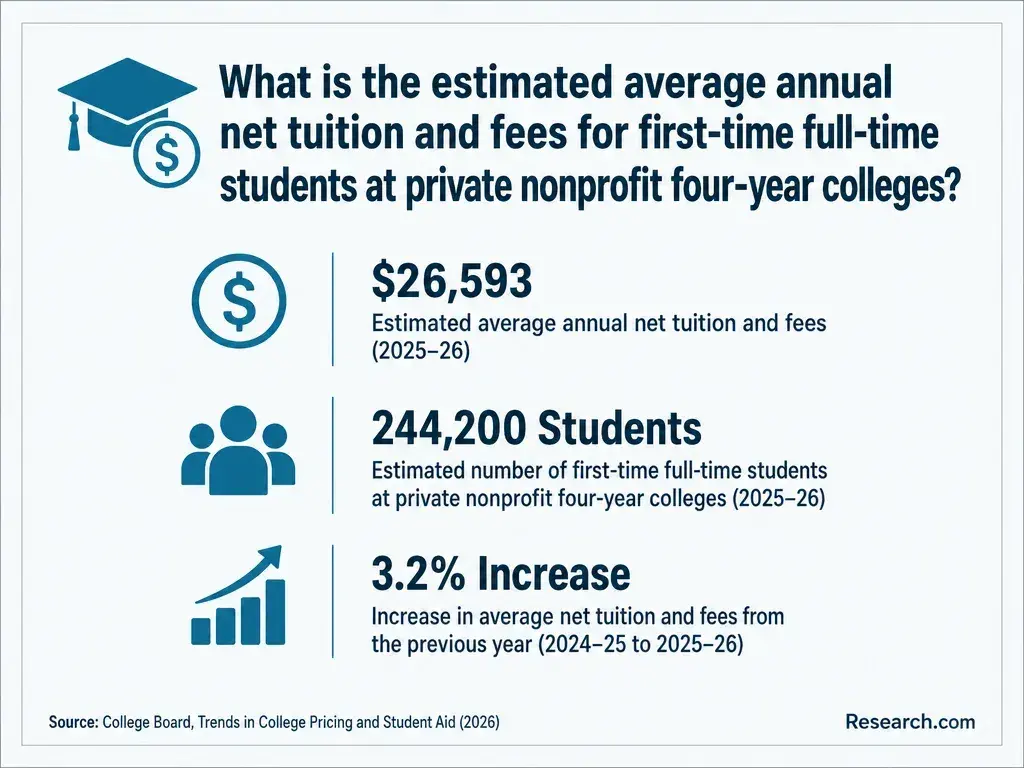
Compare the full remaining cost: tuition, mandatory fees, books or software, any proctoring or travel expenses, and interest if you borrow. Also check employer reimbursement limits, grade conditions, and payment timing; reimbursement may arrive after tuition is due. For aid planning, review FAFSA planning for affordable business administration study, then request a school-specific aid offer. Eligibility and the final net price cannot be assumed from an advertised tuition rate.
There is no single salary for business administration graduates in healthcare. Pay depends on the occupation, location, employer, and scope of responsibility - not the degree title alone. The U.S. Bureau of Labor Statistics reports a May 2025 median annual wage of $114,130 for administrative services managers, an occupation that can involve directing organizational support services. It is an occupation-wide median, not the expected pay for a newly graduated billing supervisor or a healthcare-specific salary.
Use local postings with stated pay ranges to estimate the value of a realistic next role. Compare those ranges with your current compensation, the degree's remaining cost, and whether the role requires experience you have not yet gained. Claims about shorter online business administration degrees with cost details should be tested against that personal calculation; neither a shorter program nor a national median establishes your return on investment.
A single national projection cannot describe every billing-supervisor or healthcare administration job. Job titles and responsibilities vary, and a broad management projection should not be treated as a forecast of billing-supervisor openings. For context, the Bureau of Labor Statistics projects 5% U.S. employment growth for administrative services managers from 2025 to 2035. That figure covers the occupation across industries, not medical billing specifically.
For your decision, examine openings at healthcare employers you could reasonably join. Note whether they seek denial-management expertise, reporting skills, experience with broader operations, or a bachelor's degree. Staying in your current role while building that evidence may be valuable; compare ways to study business administration without leaving your job against the actual demands of your schedule.
How can you choose an accredited online business administration program?
Start by confirming that the institution holds recognized institutional accreditation, then verify the exact degree awarded and whether its online curriculum meets your goals. AACSB, ACBSP, or IACBE recognition concerns a business school or program within the accreditor's stated scope; do not assume every degree at an institution is covered. Accreditation is an important check, not proof of a particular job outcome.
Before enrolling, request a written transfer evaluation, remaining-course plan, total-cost estimate, and examples of live-session, exam, and group-project requirements. Ask who approves workplace-based capstones, what student support is available, and whether required courses run when you need them. You can use resources on how to reduce tuition costs for a business degree to identify candidates, but compare their individual degree audits and policies before deciding. The right program is the one that closes a verified career gap at a manageable cost and pace.
Other Things You Should Know About Business Administration
Only with the required employer permission and faculty approval. Patient information, internal financial records, and proprietary reports may be restricted even if names are removed. A synthetic dataset may be a safer alternative.
Not necessarily. Business administration focuses on organizational and financial decisions. Check the course catalog if coding instruction is important, and consider dedicated coding education instead.
Diploma wording is an institutional policy. Ask the registrar what appears on the diploma and transcript for the specific program.
Only if the program formally permits it and approves your role, learning objectives, supervision, and assessment. Holding a relevant job does not automatically satisfy an internship requirement.
- Alternative Work Schedules | U.S. Office of Personnel Management https://www.opm.gov/policy-data-oversight/pay-leave/reference-materials/handbooks/alternative-work-schedules/
- Revenue Cycle Management: The Art and the Science - PMC https://pmc.ncbi.nlm.nih.gov/articles/PMC11219169/
- Accreditation in the U.S. | ed.gov http://www.ed.gov/laws-and-policy/higher-education-laws-and-policy/college-accreditation/accreditation-in-the-us
- Transfer college credits toward an associate degree | Franklin University https://www.franklin.edu/transferring-credit/transfer-associate-credit
- Healthcare Management Careers: Non-Clinical Paths | Missouri Baptist University (Mobap) https://www.mobap.edu/news/healthcare-management-careers-in-non-clinical-settings/
- Understanding Accreditation for Online Degrees | UMass Global https://www.umassglobal.edu/blog-news/online-degrees-accredited-identify-quality-distance-learning-programs
- What Can You Do With a Business Administration Degree? | snhu.edu https://www.snhu.edu/about-us/newsroom/business/what-can-you-do-with-a-business-administration-degree
- Online Medical Billing & Coding Certificate | Purdue Global https://www.purdueglobal.edu/degree-programs/health-sciences/medical-billing-coding-certificate/
- BA vs. BS in Business Administration | New England College https://www.nec.edu/news/ba-vs-bs-business-administration
- New Pathways to a College Degree: How Transfer Credits Save Time | University of Arkansas Grantham https://www.uagrantham.edu/blog/transfer-college-credits-online-pathways-degree/


