
2027 How to Become an Art Teacher in Minnesota: Requirements & Certification

Co-Founder and Chief Data Scientist
If you want to teach visual art in Minnesota, the main decision is not simply whether you enjoy art. You need to know which degree leads to licensure, how Minnesota’s teacher licensing system works, what classroom experience is required, and how to compete for K-12 art teaching jobs. This guide explains the practical path to becoming an art teacher in Minnesota, including education requirements, MTLE exams, student teaching, curriculum standards, salary expectations, professional development, job search strategy, and ways to build a stronger long-term career in arts education.
Quick Answer: How do you become an art teacher in Minnesota?
To become a public school art teacher in Minnesota, you typically complete a bachelor’s degree in art education or a related approved teacher preparation program, finish field experience and student teaching, pass the required Minnesota Teacher Licensure Examinations, complete a background check and fingerprinting, and apply for licensure through the Minnesota Professional Educator Licensing and Standards Board. Private schools may use different hiring standards, but public K-12 schools require state licensure.
Key Things You Should Know About Becoming an Art Teacher in Minnesota
- Minnesota is currently experiencing a shortage of art teachers, particularly in rural areas. This can create openings for qualified candidates who are willing to consider districts outside the most competitive metro areas.
- The average salary for art teachers in Minnesota is approximately $58,000 per year, although pay can change by district, experience level, contract terms, and added duties.
- The employment outlook for art teachers in Minnesota is positive, with a projected growth rate of about 5% over the next decade. Demand is influenced by arts education priorities and the need to replace educators who retire or leave the profession.
- The cost of living in Minnesota is relatively moderate, with an index of around 100, which is on par with the national average. Minneapolis and St. Paul may cost more than smaller communities, so salary should be evaluated alongside housing, commuting, and district benefits.
- How can you become an art teacher in Minnesota?
- What education do Minnesota art teachers need?
- How does Minnesota art teacher licensing work?
- How much teaching experience do aspiring art teachers need?
- What art standards and curriculum rules apply in Minnesota?
- What is the job market and salary outlook for art teachers in Minnesota?
- How do continuing education and professional development work?
- What legal and ethical responsibilities apply to Minnesota art teachers?
- What steps should I take before applying for art teaching jobs?
- How can digital tools strengthen art instruction?
- How can creative writing support art teaching?
- What classroom management strategies work well in art rooms?
- How can interdisciplinary skills improve an art teacher’s career?
- What advancement options and specializations are available?
- Can complementary certifications help Minnesota art teachers?
- What resources help new art teachers in Minnesota?
- How can community partnerships improve art education?
- How can networking and mentorship support career growth?
- How are private school art teaching jobs different from public school jobs?
- Can art teachers move into other education careers?
- How should candidates handle applications and interviews?
- How can interdisciplinary arts enrich teaching practice?
How can you become an art teacher in Minnesota?
The most direct route is to complete a Minnesota-approved teacher preparation pathway in visual arts, meet testing and fieldwork requirements, and apply for state licensure. The process is manageable if you treat it as a sequence of milestones rather than a single application.
| Step | What you need to do | Why it matters |
| 1. Choose the right degree path | Complete a bachelor’s degree in art education or a closely related program that includes teacher preparation. | Public school licensure depends on both art content preparation and education coursework. |
| 2. Complete field experience | Build supervised classroom experience before and during student teaching. | Schools want evidence that you can teach, manage materials, assess student work, and support different learners. |
| 3. Pass required exams | Take the Minnesota Teacher Licensure Examinations required for your licensure area. | Exam results help demonstrate basic teaching readiness and visual arts content knowledge. |
| 4. Apply through PELSB | Submit transcripts, exam records, background check materials, and the required application documents. | The Minnesota Professional Educator Licensing and Standards Board issues teaching licenses. |
| 5. Prepare your job materials | Create a teaching resume, cover letter, sample lesson plans, and a professional art and teaching portfolio. | Art teacher hiring often depends on both instructional skill and evidence of creative practice. |
| 6. Continue professional learning | Track clock hours, renewal requirements, workshops, and district professional development. | Minnesota teachers must maintain licensure after they enter the classroom. |
Programs at institutions such as Minnesota State University and Winona State University are examples of pathways that combine studio art, art history, pedagogy, and supervised teaching. Candidates comparing schools should look beyond the degree title and confirm that the program aligns with Minnesota licensure expectations.
Your portfolio should show more than personal artwork. Include lesson plans, classroom reflections, student teaching documentation when available, evidence of assessment design, and examples of how you adapt instruction for different learners. If you are exploring teacher preparation outside Minnesota, such as Nevada teacher education courses, compare requirements carefully because state licensure rules are not identical.
What are the educational requirements for becoming an art teacher in Minnesota?
Minnesota art teachers generally need a bachelor’s degree from a regionally accredited institution, preferably in art education or a related field that includes an approved teacher preparation sequence. A strong program should prepare you to make art, teach art, assess art learning, and manage a K-12 classroom safely.
- Bachelor’s degree: A four-year degree is the standard starting point for public school teaching. Art education is usually the most direct major because it combines visual arts content with education methods.
- Art and design coursework: Candidates should expect study in studio practices, art theory, art history, visual culture, media, and design principles.
- Education coursework: Teacher preparation includes lesson planning, child and adolescent development, classroom assessment, differentiated instruction, classroom management, and educational equity.
- Credit expectations: A total of 81 credits in art education is typically required for a Bachelor of Science degree.
- Fieldwork and student teaching: Programs normally include early classroom observation and a supervised student teaching placement before licensure.
- Accreditation review: Students should check whether programs are accredited or recognized by relevant bodies such as the National Association of Schools of Art and Design and the National Council for Accreditation of Teacher Education.
When comparing schools, ask whether the program leads to K-12 visual arts licensure in Minnesota, whether student teaching placements are arranged by the institution, and whether graduates receive support preparing for licensure exams. Students who later want to work in adjacent school roles may also compare graduate options such as an affordable online library science master's, but that should be treated as a separate career path rather than a substitute for teacher licensure.
How to choose an art education program in Minnesota
| Question to ask | Why it matters |
| Does the program prepare students for Minnesota visual arts licensure? | A general art degree may not include the teacher preparation components required for public school teaching. |
| How early do students enter classrooms? | Early fieldwork helps candidates test whether they enjoy teaching before reaching student teaching. |
| Who coordinates student teaching placements? | Strong placement support can reduce stress and improve access to experienced mentor teachers. |
| Does the program include digital media and traditional studio work? | Modern art classrooms often include drawing, painting, sculpture, design, photography, media arts, and digital portfolios. |
| What licensure exam support is available? | Structured preparation can help candidates plan for the MTLE requirements. |
What is the certification and licensing process for an art teacher in Minnesota?
Public school art teachers in Minnesota must obtain a teaching license from the Minnesota Professional Educator Licensing and Standards Board (PELSB). The usual pathway includes an approved bachelor’s degree program, student teaching, testing, fingerprinting, a background check, and an online application.
Candidates typically complete a bachelor’s degree in art education or a related field with both art and education coursework. A supervised student teaching placement is also required and usually includes a minimum of 12 weeks in a classroom setting.
Licensure candidates must pass the Minnesota Teacher Licensure Examinations. These include a basic skills test and an art education content area test. After meeting education and exam requirements, candidates submit their license application through PELSB. The application fee is approximately $57.
Fingerprinting and a criminal background check are required. Candidates complete the background check process through the Minnesota Bureau of Criminal Apprehension. Fingerprinting service fees vary but are generally around $30. Processing can take several weeks, so candidates should avoid waiting until a job offer is imminent before reviewing application requirements.
After the first license is issued, teachers must continue meeting renewal requirements. Minnesota teachers typically complete 125 clock hours of professional development every five years. Educators who want to expand their teaching options may later pursue additional endorsements or licenses, such as K-12 visual arts-related specializations, when required by their goals.
Minnesota art teacher licensing checklist
- Confirm that your program aligns with Minnesota teacher licensure expectations.
- Complete required art, education, fieldwork, and student teaching components.
- Register for and pass the required MTLE exams.
- Prepare official transcripts and documentation from your teacher preparation program.
- Complete fingerprinting and the background check process.
- Submit your PELSB application and pay the required fee.
- Track renewal requirements after licensure is granted.
How important is teaching experience and what are the internship opportunities for art teachers in Minnesota?
Teaching experience is one of the most important parts of becoming an art teacher because art classrooms are active, material-heavy, and highly varied. A candidate may understand visual arts content well but still need practice managing supplies, giving demonstrations, supporting students at different skill levels, and keeping the room safe during hands-on work.
Minnesota candidates are typically expected to complete student teaching, usually lasting 12 weeks, in a K-12 setting. Many programs also require field experience before student teaching, including a minimum of 200 hours of field experience before the final placement.
- Field observations: These early experiences help candidates watch experienced teachers manage routines, introduce projects, and assess student work.
- Student teaching: This placement allows candidates to gradually take responsibility for planning, teaching, grading, and classroom management.
- Community-based experience: Art camps, museums, community centers, youth arts programs, and after-school programs can help candidates build confidence before licensure.
- Substitute teaching: When eligible, substitute teaching can strengthen classroom management skills and introduce candidates to different district environments.
To get more value from student teaching, set clear goals with your mentor teacher, ask for specific feedback, collect evidence for your portfolio, and practice teaching different media. Document not only successful lessons but also revisions, challenges, and what you changed afterward. Hiring teams often value reflective teachers who can explain how they improve instruction.
What are the standards and curriculum requirements for teaching art in Minnesota?
Minnesota public school art instruction is guided by state academic standards and local curriculum decisions. Art teachers need to understand both the statewide expectations and their district’s pacing guides, assessment policies, materials budget, and course offerings.
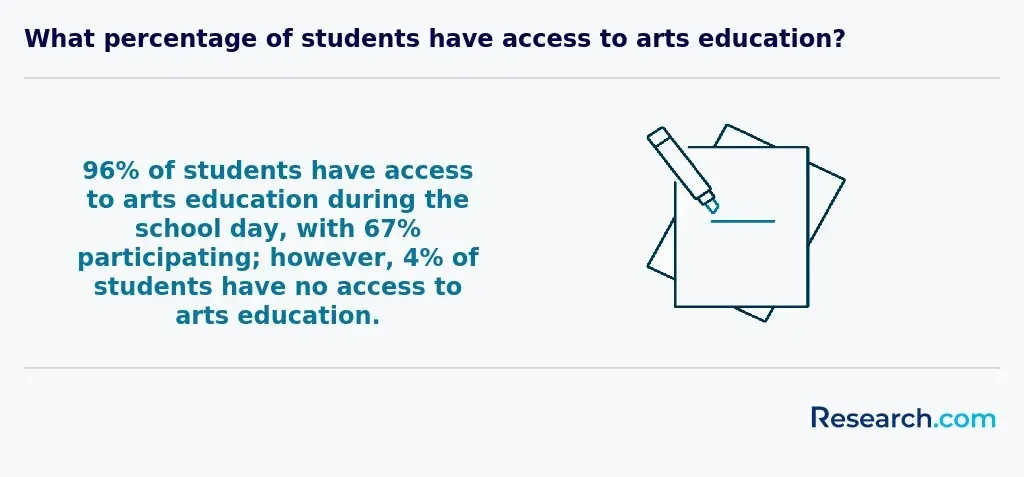
Minnesota requires public elementary and middle schools to provide instruction in at least two of four arts disciplines: dance, music, theater, and visual arts. High schools must offer at least one of five arts areas, including media arts. High school students must also complete one full credit in the arts for graduation.
The Minnesota K-12 Academic Standards in the Arts center on four major artistic processes: Creating, Responding, Performing/Presenting, and Connecting. These categories help teachers design lessons that move beyond making a final product. Students should also learn to analyze art, discuss meaning, connect art to culture and history, and present creative work with intention.
| Arts process | What students should practice | Example in a visual arts classroom |
| Creating | Generating, refining, and completing original artistic work | Students plan and revise a mixed-media self-portrait. |
| Responding | Interpreting and evaluating artwork | Students critique how color, form, and composition affect meaning. |
| Performing/Presenting | Preparing and sharing creative work | Students curate a hallway or digital exhibition with artist statements. |
| Connecting | Relating art to culture, history, identity, and other disciplines | Students compare contemporary work with local or Indigenous artistic traditions. |
Strong curriculum planning includes studio skills, art vocabulary, critique methods, art history, cultural context, digital tools, and accessible learning options. Teachers should also watch for standards updates through state and professional resources. Graduate study, including options such as the best online education master's degrees, may help licensed teachers deepen curriculum design and instructional leadership skills.
What is the job market like and what are the salary expectations for art teachers in Minnesota?
The job market for Minnesota art teachers is stable but uneven. Rural districts may have stronger hiring needs, while desirable urban or suburban districts can attract more applicants. Candidates who are flexible about location, grade level, and extracurricular involvement may find more opportunities.
Salary estimates vary by source and district. The average salary for art teachers in Minnesota is approximately $55,000 per year, while other cited data in this guide places the average at approximately $58,000 per year. Urban districts such as Minneapolis and St. Paul may average around $60,000 to $65,000, while rural districts may be closer to $50,000. Experienced teachers or those with added responsibilities may earn upwards of $70,000.
| Factor | How it can affect pay or hiring |
| Location | Urban districts may pay more, but competition and cost of living can also be higher. |
| Experience | New teachers usually start lower on the salary schedule, while veteran teachers move upward through years of service. |
| Education level | Graduate credits or advanced degrees may influence salary placement depending on the district contract. |
| Additional duties | Department leadership, clubs, exhibitions, yearbook, theater support, or extracurricular arts roles may affect compensation. |
| Licensure flexibility | Additional endorsements can make a candidate useful in smaller districts with broader staffing needs. |
Benefits also matter. Minnesota school districts often offer health insurance, retirement plans, paid time off, and professional development support. A lower nominal salary in a smaller town may stretch further than a higher salary in a more expensive metro area, so candidates should compare total compensation rather than salary alone.
One Minnesota teacher described the trade-off this way: after graduating from the University of Minnesota, she worried that art teaching would not be the highest-paying option. Over time, the benefits, school calendar, stability, and lower cost of living in a smaller town made the career financially workable, while the daily satisfaction of teaching art made the choice worthwhile.

What professional development and continuing education opportunities are available for art teachers in Minnesota?
Minnesota art teachers must continue learning after they are hired. To maintain licensure, teachers are typically required to complete 125 hours of approved professional development every five years. These hours should be planned intentionally rather than treated as a last-minute renewal task.
Professional development can include district workshops, state arts education sessions, conferences, online courses, peer coaching, graduate coursework, curriculum training, and classroom-focused seminars. Useful topics for art teachers include assessment of creative work, digital media instruction, culturally responsive teaching, classroom safety, inclusive practices, and standards-based curriculum design.
- Minnesota Department of Education: Offers updates, workshops, standards information, and educator resources.
- Perpich Center for Arts Education: Provides arts-focused professional learning in instruction, curriculum, and assessment.
- Minnesota Art Education Association: Supports art educators through workshops, professional connections, and advocacy.
- Peer collaboration: Classroom observations, team teaching, and critique of lesson design can produce practical improvement.
- Graduate programs: Advanced study can support leadership roles, curriculum work, and specialized instruction.
Teachers comparing long-term education options can also review broader teaching degree career paths to understand how classroom experience can lead to instructional coaching, curriculum leadership, administration, or specialized student support roles.
What legal and ethical considerations must Minnesota art teachers follow?
Minnesota art teachers are responsible for creating classrooms that are safe, equitable, respectful, and legally compliant. The art room can involve sensitive student expression, copyrighted images, sharp tools, digital media, and personal conversations, so professional judgment is essential.
- Professional ethics: Teachers must follow the Minnesota Code of Ethics for Educators, including student-centered conduct, nondiscrimination, confidentiality, and responsible professional boundaries.
- Mandated reporting: Educators are legally required to report suspected abuse or neglect to the proper authorities.
- Copyright and intellectual property: Teachers should model responsible use of images, music, media, and artist references while teaching students how attribution and copyright work.
- Equitable access: Students with disabilities, language needs, financial barriers, or limited prior art experience should have meaningful access to materials and instruction.
- Cultural respect: Lessons that include Indigenous art, cultural traditions, or identity-based themes should be taught with care, context, and respect rather than superficial imitation.
- Safety: Teachers must establish safe procedures for tools, chemicals, kilns, cutting equipment, storage, cleanup, and ventilation when applicable.
Understanding wider teaching expectations can help art teachers make better professional decisions. Candidates who want a broader view of Minnesota educator preparation can also review how to become an elementary school teacher in Minnesota.
What steps should I take to prepare for a career as an art teacher in Minnesota?
Start preparing before your final semester. The strongest candidates build art skills, teaching skills, and hiring materials at the same time. If you are still comparing routes into teaching, first review how to become a teacher in Minnesota so you understand the state-level process beyond the art classroom.
- Confirm your licensure path: Make sure your program is designed for Minnesota teacher licensure in visual arts.
- Build a balanced portfolio: Include your artwork, lesson plans, student teaching reflections, assessment tools, and examples of differentiated instruction.
- Develop classroom routines: Practice procedures for material distribution, cleanup, critique, transitions, and student collaboration.
- Prepare for MTLE exams: Create a study schedule early and give yourself time to retake an exam if needed.
- Research districts: Compare salary schedules, arts programming, class sizes, course offerings, and community support for the arts.
- Network with art educators: Attend local events, join professional groups, and ask mentor teachers about hiring timelines.
- Track professional development: Keep records of workshops, conferences, and training that may support licensure renewal or job applications.
How can art teachers integrate digital tools to enhance creative learning?
Digital tools can expand what students make, how they revise, and how they present their work. They should not replace foundational drawing, design, and studio skills, but they can help students document growth, collaborate, and connect art to contemporary creative industries.
- Use digital portfolios so students can track process work, revisions, reflections, and final pieces.
- Create virtual galleries to share student exhibitions with families and community partners.
- Introduce design, photography, animation, or media arts tools when they align with curriculum standards.
- Use classroom platforms to organize references, rubrics, critique prompts, and project deadlines.
- Teach ethical image use, digital citizenship, and attribution as part of the creative process.
Teachers interested in broader literacy and instructional strategies may find useful comparisons in related pathways such as how to become an english teacher in Minnesota, especially when designing critique, reflection, and artist statement assignments.
How can complementary creative writing skills benefit art teachers in Minnesota?
Creative writing can make visual arts instruction more reflective and interdisciplinary. Students often understand their own work more deeply when they write artist statements, develop visual narratives, critique peer work, or connect imagery to personal and cultural themes.
Art teachers can use writing to support sketchbook prompts, exhibition labels, reflective journals, graphic narratives, museum-style interpretation, and cross-curricular projects. Teachers who want formal training in narrative craft can compare options such as an online creative writing degree, especially if they want to design richer interdisciplinary lessons.
What are effective classroom management strategies and teaching methods for art teachers in Minnesota?
Art classroom management is different from managing a lecture-based room. Students move, share materials, use tools, ask for individualized feedback, and often work on different stages of a project at the same time. Effective management protects creativity by making expectations clear.
| Common challenge | Better strategy |
| Students misuse supplies or waste materials | Teach material routines explicitly, demonstrate setup and cleanup, and assign student roles. |
| Projects become chaotic during independent work | Use short demonstrations, visible checklists, progress checkpoints, and clear studio-time expectations. |
| Students say they are “bad at art” | Emphasize process, revision, experimentation, and skill growth instead of only finished products. |
| Critiques feel personal or uncomfortable | Teach critique language, use structured prompts, and separate analysis of choices from judgment of the student. |
| Different students finish at different times | Prepare extension tasks, reflection prompts, peer feedback roles, or independent sketchbook work. |
- Learn students’ names, interests, and cultural references so lessons feel relevant and respectful.
- State behavioral expectations positively and revisit them before tool use, group work, critique, and cleanup.
- Use formative assessment throughout the project instead of waiting until the final artwork is submitted.
- Differentiate by offering choice in media, subject matter, difficulty level, or support structure when appropriate.
- Design lessons that align with Minnesota standards while leaving room for student voice.
- Organize materials so students can work independently without constant teacher intervention.
- Use questioning techniques that push students to explain choices, evaluate alternatives, and revise thoughtfully.
- Offer timely feedback that helps students decide what to improve next.
Teachers considering advanced education and compensation pathways may also review lucrative master's in education careers, while remembering that salary outcomes depend on district contracts, role, credentials, and experience.
How can interdisciplinary skills strengthen an art teacher’s career in Minnesota?
Interdisciplinary skills help art teachers connect visual learning to reading, history, science, technology, media, and community issues. These connections can make lessons more meaningful and may also open doors to curriculum leadership, project-based learning, museum education, media arts, and resource coordination.
For example, teachers who understand research, information literacy, and resource organization may collaborate more effectively with media specialists or explore adjacent fields such as library science. The goal is not to leave art behind, but to make art instruction more connected to how students learn across subjects.
What are the career advancement opportunities and specializations for art teachers in Minnesota?
Art teaching can lead to more than one long-term pathway. Some educators stay in the classroom and become highly skilled studio teachers, while others move toward leadership, specialized student services, curriculum work, or community arts education.
- Department or program leadership: Experienced teachers may become art department chairs, arts coordinators, mentor teachers, or curriculum leaders.
- Digital media and media arts: Teachers with technology skills may expand course offerings in design, photography, animation, or digital portfolios.
- Art therapy-related pathways: Some educators pursue additional study connected to art therapy or school-based mental health support, although those roles may require separate credentials.
- Special education or ESL endorsements: Additional preparation can help teachers serve more diverse learners and may improve hiring flexibility.
- Policy and curriculum development: Teachers may contribute to district committees, standards implementation, assessment design, or arts advocacy.
- Community arts leadership: Art educators can partner with galleries, museums, youth programs, and cultural organizations.
The Minnesota Department of Education has reported a steady increase in art program enrollments, reinforcing the importance of qualified arts educators. One Minnesota teacher described beginning as a high school art teacher after graduating from the University of Minnesota, then pursuing a specialization in art therapy and eventually leading school workshops that connect art with mental health support. That type of path requires planning, but it shows how classroom art teaching can become a foundation for broader work with students.
Can pursuing complementary certifications enhance my art teaching career in Minnesota?
Additional credentials can make an art teacher more versatile, especially in districts that need educators who can support students with varied learning, language, behavioral, or accessibility needs. A credential such as special education teacher certification in Minnesota may help teachers design more inclusive art instruction and collaborate more effectively with special education teams.
Before enrolling in an added certification, ask whether it changes your license, affects salary placement, requires student teaching or practicum hours, and supports the roles you actually want. Extra credentials are most valuable when they match a clear career goal.
What resources and support are available for new art teachers in Minnesota?
New art teachers should not try to build every lesson, rubric, and classroom system alone. Minnesota has professional organizations, district mentors, state resources, and community arts partners that can make the first years more manageable.
- The Minnesota Art Education Association offers professional development, networking, mentorship connections, and support from educators who understand art classroom realities.
- The Minnesota Department of Education provides standards information, curriculum resources, assessment guidance, and educator updates.
- District mentorship programs can pair new teachers with experienced educators who help with classroom management, grading, parent communication, and school procedures.
- The Arts Learning Community connects educators, artists, and community members through workshops and collaborative learning opportunities.
- Online teacher communities can provide lesson inspiration, but new teachers should adapt resources to Minnesota standards, student needs, and local school policies.
- The Minnesota State Arts Board offers grants and funding opportunities that may support art education projects and classroom enrichment.
- Social media groups for Minnesota art teachers can help with quick advice, resource sharing, and local professional connections.
How can engaging with community partnerships enhance art education in Minnesota?
Community partnerships can give students access to real artists, public exhibitions, cultural institutions, and creative work beyond the school building. These connections are especially valuable when school budgets limit materials, guest speakers, or field experiences.
Art teachers can collaborate with galleries, museums, local artists, cultural centers, libraries, tribal communities, colleges, and nonprofit arts organizations. Partnerships may support visiting artist workshops, student exhibitions, mural projects, portfolio reviews, community history projects, or interdisciplinary units. Teachers who collaborate with social studies colleagues may also draw ideas from pathways such as become a history teacher in Minnesota to integrate historical context into visual art lessons.
How can professional networking and mentorship opportunities boost your art teaching career in Minnesota?
Networking helps art teachers find lesson ideas, job leads, grant opportunities, exhibition partners, and mentors who understand the demands of the field. It can also reduce the isolation that new art teachers sometimes feel when they are the only visual arts educator in a building.
- Join state or regional arts education organizations.
- Attend conferences, district arts meetings, and curriculum workshops.
- Ask student teaching supervisors and mentor teachers for hiring advice.
- Connect with museum educators, local artists, and university faculty.
- Participate in online Minnesota art teacher groups, while verifying advice against district and state requirements.
Art educators who teach younger students may also benefit from understanding early childhood and elementary teaching approaches. A related guide on how to become a kindergarten teacher in Minnesota can offer useful context for developmentally appropriate instruction.
How do private school art teaching positions differ from public roles in Minnesota?
Private school art teaching jobs may differ from public school positions in licensure expectations, curriculum flexibility, class size, salary structure, benefits, and religious or mission-based requirements. Some private schools may consider candidates through alternative hiring standards, while public schools require state licensure.
| Category | Public school art teaching | Private school art teaching |
| Licensure | Requires Minnesota public school teacher licensure. | Requirements may vary by school. |
| Curriculum | Must align with state standards and district requirements. | May allow more flexibility, depending on school mission. |
| Hiring process | Often follows district posting, interview, and contract procedures. | May be handled directly by school leadership. |
| Compensation | Usually tied to district salary schedules and negotiated benefits. | Can vary widely by institution. |
Applicants considering nonpublic settings should review school-specific requirements and compare them with guidance on how to become a private school teacher in Minnesota.
What do graduates have to say about becoming an art teacher in Minnesota?
- Teaching art in Minnesota has been deeply fulfilling because students, families, and local communities often recognize the value of creative learning. -Mildred
- Minnesota’s support for school arts programs has allowed me to pursue creative projects and look for grant-funded opportunities for my students. -Joe
- The professional community among art teachers has helped me improve. Sharing lessons, critique ideas, and classroom routines has made my teaching stronger. -Stephanie
Can art teachers transition into other educational roles in Minnesota?
Yes. Art teachers can move into related education roles when they add the right credentials or experience. Common transitions include curriculum coordinator, instructional coach, museum educator, arts program director, media specialist, school administrator, or community education leader.
Some art educators become interested in library and media roles because these careers also involve creativity, access to information, student support, and community programming. Candidates exploring that route can review how to become a librarian in Minnesota to understand the qualifications involved.
How can I navigate the job application and interview process for art teaching positions in Minnesota?
Art teacher hiring committees usually want evidence that you can teach standards-based lessons, manage a studio environment, support diverse learners, and contribute to the school community. Your application should show both artistic credibility and classroom readiness.
Application materials to prepare
- Resume: Highlight licensure status, student teaching, fieldwork, media skills, classroom experience, exhibitions, and youth work.
- Cover letter: Explain why you fit the district’s art program, students, and community.
- Portfolio: Include personal artwork, lesson plans, rubrics, sample student work if permitted, and reflection on instruction.
- Teaching philosophy: Keep it concrete. Describe how you teach creativity, critique, equity, safety, and skill development.
- References: Use mentor teachers, supervisors, professors, or administrators who can speak to your teaching performance.
Interview questions to practice
- How would you manage cleanup and materials in a large art class?
- How do you assess creativity without grading only talent?
- How would you adapt a lesson for students with different skill levels?
- How do you incorporate Minnesota arts standards into lesson planning?
- How would you handle a student who refuses to participate because they believe they are not good at art?
- How do you include culturally responsive teaching in visual arts?
For more perspective on how other teacher candidates frame preparation and interviews, see How to be a middle school math teacher in Minnesota?.
How can integrating interdisciplinary arts enrich your teaching practice in Minnesota?
Interdisciplinary arts instruction helps students understand that creativity is not limited to one medium. Visual art can connect with music, theater, dance, writing, history, science, technology, and community storytelling.
Teachers might build units around album cover design, stage sets, public art, scientific illustration, graphic novels, cultural festivals, animation, or documentary photography. Collaboration with music teachers can be especially productive because rhythm, pattern, mood, and composition appear in both fields. Educators interested in that connection can review how to become a music teacher in Minnesota for insight into another arts teaching pathway.
Common mistakes to avoid when becoming an art teacher in Minnesota
| Mistake | Why it causes problems | Better approach |
| Choosing a general art degree without checking licensure alignment | You may graduate without the teacher preparation components needed for public school licensure. | Confirm early that the program leads to Minnesota visual arts teacher licensure. |
| Waiting too long to plan for MTLE exams | Delayed testing can slow down licensure and job applications. | Build exam preparation into your final year or earlier. |
| Building only an artist portfolio | Hiring teams also need proof of teaching ability. | Include lesson plans, rubrics, classroom reflections, and evidence of student-centered instruction. |
| Focusing only on salary | Benefits, cost of living, commute, class load, and arts support affect job satisfaction. | Compare total compensation and working conditions. |
| Assuming private and public school requirements are the same | Licensure and hiring standards may differ by school type. | Review each employer’s requirements before applying. |
| Ignoring classroom safety | Art rooms involve tools, materials, storage, and movement. | Teach routines, safety procedures, and cleanup expectations from day one. |
Key Insights
- The most direct path to becoming a Minnesota public school art teacher is a bachelor’s degree in art education or a related approved teacher preparation program, followed by student teaching, MTLE exams, background checks, and PELSB licensure.
- Student teaching matters because art classrooms require hands-on management skills, safe material use, differentiated instruction, and the ability to assess creative growth.
- Minnesota’s arts standards emphasize Creating, Responding, Performing/Presenting, and Connecting, so strong art teachers teach process, interpretation, presentation, and cultural context—not only technique.
- Salary estimates in this article place average art teacher pay at approximately $55,000 to approximately $58,000 per year, with differences by district, experience, location, and added responsibilities.
- Rural districts may offer meaningful opportunities for candidates willing to be geographically flexible, while urban and suburban jobs may be more competitive.
- Continuing education is not optional. Minnesota teachers typically complete 125 clock hours of professional development every five years to maintain licensure.
- A strong job application includes both an art portfolio and a teaching portfolio with lesson plans, assessment tools, classroom reflections, and evidence of standards-based instruction.
Key Findings
- The Minnesota Department of Education reports that as of 2023, there are approximately 1,200 licensed art teachers in the state, showing an ongoing need for trained visual arts educators.
- To become an art teacher in Minnesota, candidates must complete a bachelor’s degree in art education or a related field, which typically requires around 120 credit hours, including coursework in both art and education.
- According to the Minnesota Office of Higher Education, the average salary for an art teacher in Minnesota is approximately $58,000 per year, with possible increases tied to experience and added qualifications.
- Candidates must pass the Minnesota Teacher Licensure Examinations, including a basic skills test and an art education content area test. Recent data shows that over 80% of candidates pass these exams on their first attempt.
- In 2023, the Minnesota Department of Employment and Economic Development projected a 6% growth rate for art and design occupations, which supports a positive outlook for aspiring art teachers.
Related Articles for Nearby States
- 2027 How to Become an Art Teacher in Wisconsin: Requirements & Certification
- 2027 How to Become an Art Teacher in Iowa: Requirements & Certification
- 2027 How to Become an Art Teacher in North Dakota: Requirements & Certification
- 2027 How to Become an Art Teacher in South Dakota: Requirements & Certification
- 2027 How to Become an Art Teacher in Nebraska: Requirements & Certification
- 2027 How to Become an Art Teacher in Illinois: Requirements & Certification
- 2027 How to Become an Art Teacher in Missouri: Requirements & Certification
- 2027 How to Become an Art Teacher in Michigan: Requirements & Certification
- 2027 How to Become an Art Teacher in Kansas: Requirements & Certification
- 2027 How to Become an Art Teacher in Indiana: Requirements & Certification
References:
- Minnesota Department of Education. Alternatives-to-Suspension Fact Sheet: Effective Classroom Management Practices. education.mn.gov.
- University of Minnesota Department of Curriculum and Instruction. Arts in education additional teaching license. ci.umn.edu.
- Minnesota State University. Art Teaching (BS). hss.mnsu.edu.
- Winona State University. Art Teaching Program. winona.edu.
- Minnesota Legislature. Minnesota Administrative Rules, 8710.4900 Teachers of Visual Arts. revisor.mn.gov.
- Art Teacher Edu.org. Minnesota Art Teacher Certification and Job Requirements. artteacheredu.org.
- Art Educators of Minnesota. Same purpose, new perspective. aem-mn.org.
- Minnesota State University. Art Teaching (BS). mnsu.edu.
- Perpich Arts High School. Arts Teacher Development and Evaluation: What to Look for in Visual Arts. perpich.mn.gov.
- 240Tutoring. Certification exam preparation resource. 240tutoring.com.
Other Things You Should Know About Becoming an Art Teacher in Minnesota
In 2027, aspiring art teachers in Minnesota must pass the Minnesota Teacher Licensure Examinations (MTLE), which includes both content-specific assessments and basic skills tests. The MTLE evaluates knowledge in art techniques, educational theory, and classroom management.
Minnesota art teachers renew their teaching licenses through the Minnesota Professional Educator Licensing and Standards Board (PELSB). Renewal usually requires completing professional development clock hours during the five-year license period, along with a valid license and any district or PELSB renewal requirements.
To become an art teacher in Minnesota in 2027, you must earn a bachelor's degree in art education or a related field, complete a teacher preparation program, and pass the Minnesota Teacher Licensure Examinations (MTLE).





