2027 Should You Choose a BS in Business Administration or An Entrepreneurship Certificate for Your Next Career Step?
Audited and Verified:
Our Editorial and Data Verification Process
Research.com uses government datasets, official education statistics and primary institutional information to support its career and degree guides. Our review process checks factual accuracy, occupational definitions, source dates and the requirements associated with the credentials discussed.
How This Article Was Fact-Checked
Our editorial team verifies salary estimates, employment projections, education requirements and program information against original data providers and official organizations. Salary figures are checked against the relevant occupational definitions and reporting periods. Information about licensure, accreditation and required in-person training is reviewed separately.
Fact-checked and verified on:

Co-Founder and Chief Data Scientist
If you want to launch a venture or take a bigger role at work, the next credential should address the gap between your current skills and your goal. A BS in Business Administration offers broad preparation and a bachelor's credential; an entrepreneurship certificate focuses more narrowly on developing and testing a business idea. That distinction matters if you are weighing tuition, time away from work, or an employer's degree requirement. This comparison will help you identify which path fits your experience, target role, and budget - and when neither is the best next step.
Key Things You Should Know
- Choose the BS if your target jobs require a bachelor's degree or you need broad preparation in accounting, operations, marketing, and management; choose a certificate to address a specific venture-building skill gap.
- A certificate is not a substitute for a bachelor's degree, and neither credential guarantees funding, customers, a promotion, or a management position.
- The U.S. Bureau of Labor Statistics projects 7% employment growth for market research analysts from 2025 to 2035, but that occupation-wide figure is not an outcome prediction for either credential.
What is the difference between a business administration degree and an entrepreneurship certificate?
A BS in Business Administration is a bachelor's degree built around multiple business functions, usually alongside general education requirements. An entrepreneurship certificate is a shorter, focused course of study that may be offered for academic credit, as noncredit professional education, or through a continuing-education unit. Its official status depends on the provider.
The comparison below highlights what each credential can - and cannot - signal to an employer or prospective business partner.
| Decision factor | BS in Business Administration | Entrepreneurship certificate |
| Credential awarded | Bachelor's degree | Certificate; not a degree |
| Typical scope | Broad business core, general education, and possible electives or concentration | Focused study of venture development or small-business topics |
| Best use | Meeting a bachelor's requirement and building cross-functional knowledge | Addressing a defined startup or business-ownership skill gap |
| Main limitation | Requires a larger time and financial commitment | Usually does not satisfy a bachelor's degree requirement |
Some universities offer entrepreneurship certificates to enrolled undergraduates; others admit working adults to stand-alone programs. Check whether the certificate appears on a transcript, earns transferable credit, and can be completed without enrolling in a degree. If speed matters but you still need a bachelor's, examine flexible fast-track routes in business education rather than assuming a certificate will meet the same requirement.
Which credential is better for your career goals: a business degree or entrepreneurship certificate?
Start with the qualification your next step actually requires. If job postings or an internal promotion policy specify a bachelor's degree, a stand-alone entrepreneurship certificate generally will not clear that threshold. The BS is also more useful if you need to understand how finance, people, marketing, and operations work together before choosing a business function.
If you already hold a degree or have substantial operating experience and need help testing a customer problem, pricing an offer, or planning a launch, a well-chosen certificate may be the more direct investment. A founder with an immediate bookkeeping gap might do even better with a targeted accounting course and professional advice than with either full program.
For a career change, separate credential gaps from experience gaps. A degree may help you qualify to apply, while a certificate can help you build a specific project; neither replaces evidence that you can perform the target work. If your real goal is project work rather than venture ownership, compare a specialized route and find project management programs with lower total costs before committing to a general business degree.
What careers can you pursue with a business administration degree or entrepreneurship certificate?
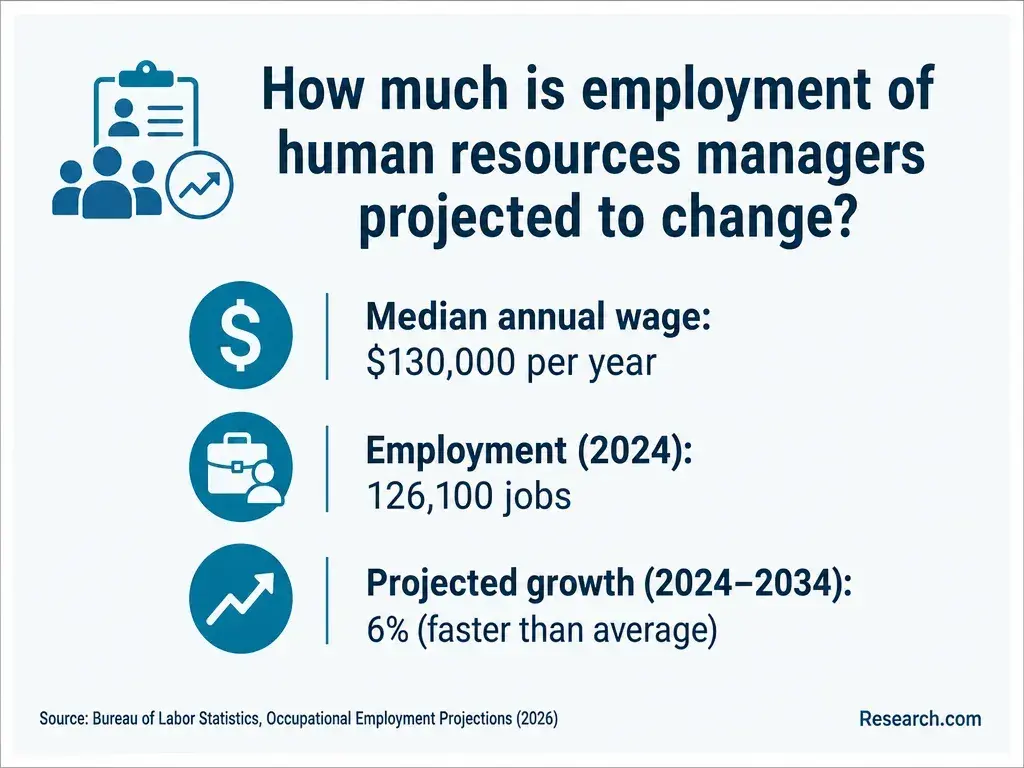
A BS can support applications for roles such as operations coordinator, marketing coordinator, sales operations associate, or human resources specialist, depending on the coursework and the employer's requirements. Those jobs involve different tasks: tracking processes and vendors, supporting campaigns, maintaining sales data, or handling HR records and employee processes. Relevant internships, work samples, and prior employment often matter as much as the degree title.
An entrepreneurship certificate is most directly applicable to starting or improving a business, joining a small firm in a role related to its coursework, or taking on new responsibilities in an existing venture. It does not create a standard occupational qualification called "entrepreneur." A business owner still needs to validate demand, manage cash, comply with applicable rules, and deliver a product or service.
If you want project coordination, compare the responsibilities in actual job postings before choosing between general business and specialized study. When a project management bachelor's is a serious alternative, include project management bachelor's aid application planning in that comparison; a career fit that requires unaffordable borrowing may not be the best route.
Business administration curricula commonly introduce accounting, economics, finance, marketing, organizational behavior, operations, and quantitative reasoning. The value is in connecting those subjects: a proposed product, for example, has to meet customer needs and generate enough cash to operate. A program may offer entrepreneurship electives or a formal concentration, but individual electives do not automatically create a separately awarded credential.
Entrepreneurship certificates usually concentrate on a narrower sequence, such as customer discovery, business models, market testing, startup finance, and pitching. Compare assignments, not just course titles. A useful program should let you test assumptions with appropriate evidence and explain the risks in a forecast - not simply produce a polished business plan. Ask what data students may use and whether a workplace project needs employer permission.
If your intended work is managing established projects rather than developing a venture, inspect the curriculum for scheduling, budgeting, stakeholder communication, and risk management. Also check how previous coursework applies if you are considering colleges accepting coursework toward project management bachelor's study; credit accepted by a college may count only as an elective rather than satisfy a required course.
A bachelor's degree typically takes multiple academic years from the start, while a certificate generally involves fewer courses. Your actual timeline depends on previously completed credits, enrollment pace, prerequisites, required course availability, and whether the certificate is credit-bearing or noncredit. Someone returning with substantial applicable college credit may finish a BS much sooner than a first-time student; only the admitting institution can confirm what applies to graduation.
Ask for a written degree audit or certificate course sequence before comparing advertised completion times. Check whether classes run every term and whether an accelerated schedule compresses deadlines rather than reducing required work. For a broader look at scheduling choices, review accelerated degree options for working adults and then verify the specific business program's calendar.
There is no reliable single price for either pathway: schools may charge by credit, course, term, or entire certificate. A BS usually involves more coursework and therefore a larger total commitment, but the relevant comparison is your remaining cost to finish, not the advertised price of a full degree. An inexpensive certificate can also be poor value if it does not address the skill or qualification you need.
Request an itemized estimate covering tuition, required fees, books or software, any campus visits, and the courses you must still take after transfer evaluation. Then compare grants, employer assistance, and expected borrowing separately from the sticker price. Verify whether a particular certificate qualifies for federal student aid; being offered by an accredited university does not, by itself, make every certificate aid-eligible. To screen degree alternatives, compare inexpensive business administration degree options, then obtain school-specific estimates based on your own credits.
Delivery mode alone does not determine a credential's value. Compare the awarded credential, curriculum, institution, assessment quality, faculty access, and opportunities to get feedback on real work. For entrepreneurship in particular, ask how students interview potential customers, receive critique, and revise a venture proposal; online activities can be useful when those steps are built into the program.
Online also does not necessarily mean self-paced. Live meetings, team projects, presentations, proctored exams, and fixed deadlines can be difficult alongside a job or caregiving. If those constraints apply, use resources on how to balance employment and business administration college study, then ask each program for a sample weekly schedule and its rules on missed sessions.
BS applicants generally need to meet the university's undergraduate admission rules; transfer applicants may also face business-major entry requirements and prerequisite courses. Requirements vary by school. Admission, acceptance of past coursework, and application of that coursework toward the business core are separate decisions.
Certificate entry varies even more. An open-enrollment continuing-education certificate may have few formal prerequisites, while a credit-bearing undergraduate certificate may require university enrollment or particular courses. Ask the provider whether prior business study is required, whether credits can later apply to a degree, and who makes that determination. For degree preparation, review prior education requirements for business administration applicants and confirm the current rules with your intended school.
Check the university's recognized institutional accreditation first. Some business schools or programs also hold accreditation from AACSB, ACBSP, or IACBE; confirm the accreditor's scope and whether it covers the specific program you are considering. Business-specific accreditation can inform a comparison, but it does not guarantee effective teaching, affordable completion, or a job.
A university-issued entrepreneurship certificate is an academic or continuing-education award, not a professional license or proof that a venture is viable. Likewise, a BS does not automatically qualify someone for a regulated accounting role or a separate professional certification. Review the actual courses, assessment methods, and credential awarded. You can explore fee-free online university applications, but an application-fee policy is a cost detail, not evidence of program quality.
What salaries and job outlook can business graduates expect?
Neither credential has a single salary or job-growth rate. Pay depends on the occupation, location, industry, experience, and responsibilities - not simply whether someone studied business administration or entrepreneurship. Startup income is especially uncertain and should not be equated with an employee salary.
As one relevant benchmark, the U.S. Bureau of Labor Statistics reports a May 2025 median annual wage of $78,760 for market research analysts and projects 7% employment growth from 2025 to 2035. Those are figures for the occupation as a whole, not starting pay or placement outcomes for either program. A prospective analyst should compare job postings for research methods and data skills, then look for coursework and projects that provide evidence of those abilities.
Assess financial return against a realistic target role, your existing qualifications, and your remaining education costs. A shorter or less costly degree path may change that calculation; economical business administration degrees with quicker study routes can provide options to investigate, but verify total cost and graduation requirements before projecting a payoff.
Other Things You Should Know About Business Administration
Yes, if a school offers both and its policies allow it. Confirm whether the certificate's courses also count toward the BS; shared course content does not guarantee that both credentials will be awarded.
Not necessarily. You can begin with low-cost customer research and a small, lawful test while studying. Keep projected sales separate from observed results, and avoid commitments you cannot yet fund or deliver.
Usually not when an employer explicitly requires a degree. It can still become useful evidence of initiative if you can explain your research, decisions, and limitations without overstating results.
Ask what credential is awarded, which courses are required, what prior credits apply, when required courses run, what the remaining total will cost, and what graduates can show from their work. Request the answers in writing where possible.
- Accreditation in the U.S. | ed.gov http://www.ed.gov/laws-and-policy/higher-education-laws-and-policy/college-accreditation/accreditation-in-the-us
- Plan your business - Small Business Administration https://www.sba.gov/counseling/plan-your-business/
- What Should I Major in If I Want to Start My Own Business? | Southeast Missouri State University https://semo.edu/blog/blog-posts/what-should-i-major-in-if-i-want-to-start-my-own-business
- Business Administration Bachelor's Degree Online | The Pennsylvania Institute of Technology https://www.pit.edu/programs/b-s-business-administration/
- Graduation Requirements for Transfer Students | newschool.edu https://www.newschool.edu/lang/graduation-requirements-transfer-students/
- Business vs. Entrepreneurship Degree Options | Goodwin University https://www.goodwin.edu/enews/entrepreneurship-vs-business-degree/
- Entrepreneurship vs. Business Degree: Key Differences | American Public University https://www.apu.apus.edu/area-of-study/business-and-management/resources/entrepreneurship-vs-business-degree/
- 10 Best Business Degrees for High Pay and Career Growth | Pace University New York https://www.pace.edu/news/best-business-degrees-undergrad-grad
- The Major Payoff: Evaluating Earnings and Employment Outcomes Across Bachelor's Degrees - CEW Georgetown https://cew.georgetown.edu/cew-reports/major-payoff/
- Entrepreneurship | com.edu https://www.com.edu/academics/areas-of-study/business/entrepreneurship/index.html