2027 Is an Online BS in Business Administration the Right Next Step for College Admissions Staff?
Audited and Verified:
Our Editorial and Data Verification Process
Research.com uses government datasets, official education statistics and primary institutional information to support its career and degree guides. Our review process checks factual accuracy, occupational definitions, source dates and the requirements associated with the credentials discussed.
How This Article Was Fact-Checked
Our editorial team verifies salary estimates, employment projections, education requirements and program information against original data providers and official organizations. Salary figures are checked against the relevant occupational definitions and reporting periods. Information about licensure, accreditation and required in-person training is reviewed separately.
Fact-checked and verified on:

Co-Founder and Chief Data Scientist
College admissions staff already practice skills that business programs teach: communicating with prospective students, coordinating events, interpreting recruitment data, and working across departments. An online BS in Business Administration may help turn that experience into a bachelor's credential and broader operational skills - but it is not the best next step for everyone. This guide helps admissions employees assess whether the degree fits a specific career goal, what an online program would demand alongside recruitment work, and when a more targeted qualification or workplace opportunity could offer better value.
Key Things You Should Know
- An online BS in Business Administration is most useful when you need a bachelor's degree for advancement or want stronger budgeting, analytics, marketing, and operations skills; it does not by itself qualify you for admissions leadership.
- Ask for an official degree audit before estimating time or cost: accepted transfer credits may not satisfy business-core, concentration, or residency requirements.
- Do not use a related occupation's salary as an admissions pay forecast. The U.S. Bureau of Labor Statistics reports a May 2025 median of $78,760 for market research analysts, a distinct career that may interest staff pursuing enrollment research.
What is an online BS in Business Administration?
It is an undergraduate bachelor's degree combining general education with subjects such as accounting, management, marketing, finance, and business analytics. "Online" describes how instruction is delivered, not a universal schedule: courses may have weekly deadlines, live meetings, group work, or supervised exams.
For admissions staff, the degree's value depends on the destination. A recruitment coordinator seeking broader enrollment operations responsibility may benefit from business coursework. Someone aiming specifically for student counseling, financial aid administration, or institutional research should compare the relevant job requirements before choosing a general business major. A BS, a BBA, and a specialized bachelor's can overlap, but their required courses differ by school. Online business programs in US college rankings can provide a starting list, not a substitute for comparing actual curricula and policies.
Is an online business administration degree accredited?
Accreditation belongs to the institution or to a specifically identified school or program - not to online delivery as a category. Check that the college holds recognized institutional accreditation, then verify whether any advertised AACSB, ACBSP, or IACBE accreditation covers the business program you would enter. Business accreditation may be valuable, but it does not establish that graduates receive admissions promotions.
For an employee planning to study while working, accreditation is only one check. Confirm required live attendance, course rotation, advising access, and whether the institution's online students receive the same career support. When reviewing business administration programs for advancement while working, request the current catalog and ask which policies apply to your intended enrollment term.
Can an online BS prepare you for college admissions careers?
Yes, particularly for admissions work involving recruitment planning, budgets, vendor coordination, staff supervision, or enrollment analysis. Business classes can strengthen those capabilities, while your existing admissions experience supplies the sector knowledge a general business degree cannot. Advancement still depends on openings, demonstrated results, and an employer's requirements - not the credential alone.
Match the degree to the work you want. For recruitment leadership, look for marketing, management, and ethical data-use assignments. For enrollment operations, seek process improvement, budgeting, and project coordination. If your goal is chiefly managing cross-department initiatives, compare a business degree with economical project management degree programs; a shorter course or employer-sponsored project may be sufficient if you already hold a bachelor's.
Ask a prospective program whether an approved capstone can examine a recruitment process using public or properly authorized, de-identified information. Employment in admissions does not automatically meet an internship requirement, and access to applicant records does not grant permission to use them in coursework.
Requirements vary, but most programs combine general education with introductory accounting, economics, finance, marketing, management, statistics, and organizational or strategic decision-making. Admissions staff should look beyond course titles to assignments: a spreadsheet-based budget, a responsibly designed audience analysis, or a process map may be more useful than an additional general survey course.
Check prerequisite chains before selecting electives. Statistics may precede analytics, and introductory accounting may precede finance; a desired course might not run every term. Programs offering business degree options with shorter sessions can change when you take those courses, but shorter sessions do not eliminate the work or guarantee that required classes fit your sequence. An elective cluster is not an official concentration unless the school awards and records it as one.
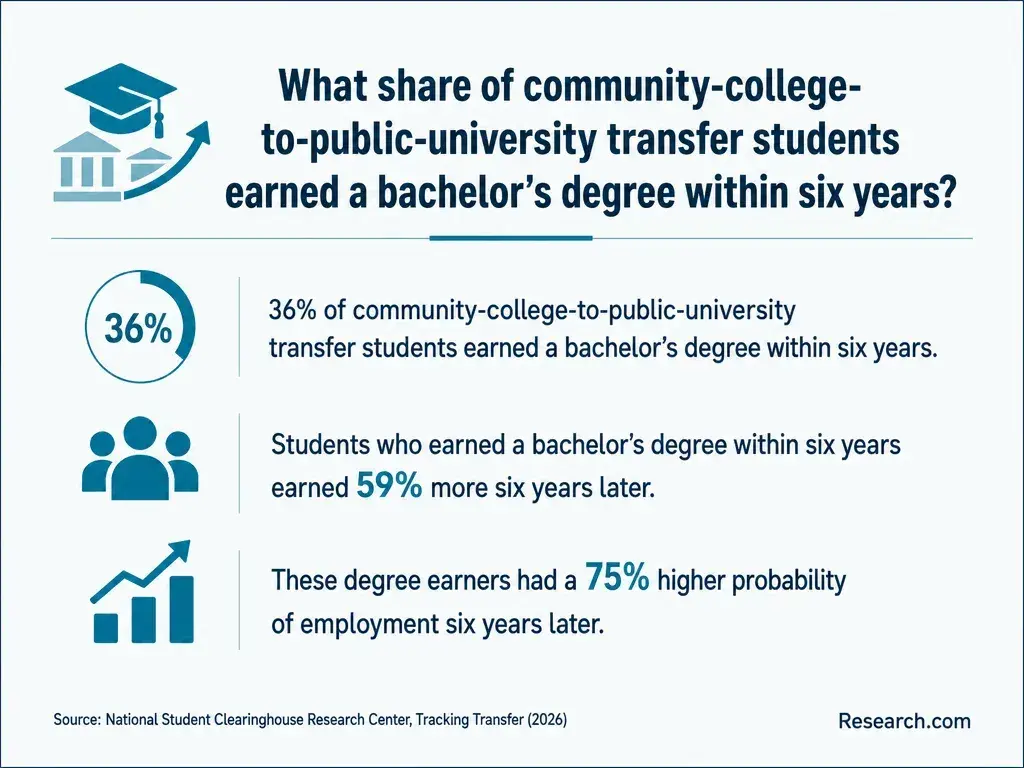
Requirements depend on whether you are applying as a first-time student, transfer student, or returning undergraduate. Schools commonly request prior academic transcripts; some business majors have separate entry standards or prerequisite courses. Professional admissions experience may strengthen an application, but it does not automatically replace academic requirements or earn credit.
Before applying, collect transcripts from every prior college and ask for both an admission review and a written evaluation showing where credits would apply. In particular, check mathematics, statistics, accounting, and general education equivalencies, as well as minimum credits that must be completed at the new institution. The institution - not a preliminary transfer estimate - determines applicability. For a closer look at possible course requirements, see prerequisites for a business administration degree.
Your remaining requirements and sustainable course load matter more than an advertised completion claim. A student bringing substantial applicable credit may finish sooner than someone starting without college coursework, but accepted electives alone may leave much of the business core unfinished. Course sequencing, residency rules, and how often required classes run can also extend the timeline.
Map proposed courses against your office's travel, application-reading, and decision periods. Ask whether attendance is live, whether group presentations occur at fixed times, and what happens if you need to reduce your course load. US rankings for accelerated business bachelor's degrees may identify options to investigate; use your official degree audit and a term-by-term plan to judge how fast each option would be for you.
There is no reliable single price without a school, a credit evaluation, and a course plan. Compare tuition for remaining required credits, mandatory fees, books and software, possible exam or travel charges, and the cost of extra terms if a required class is unavailable. Also consider whether a heavier course load would interfere with paid work.
Ask your college employer whether education assistance covers this degree, whether reimbursement arrives after grades are posted, and whether grade, service, or repayment conditions apply. Request a financial-aid offer rather than assuming you will receive a grant or scholarship. If you are comparing business with a project-management major, scholarship search options for project management majors may help you investigate that alternative; compare offers using your actual remaining requirements, not advertised tuition alone.
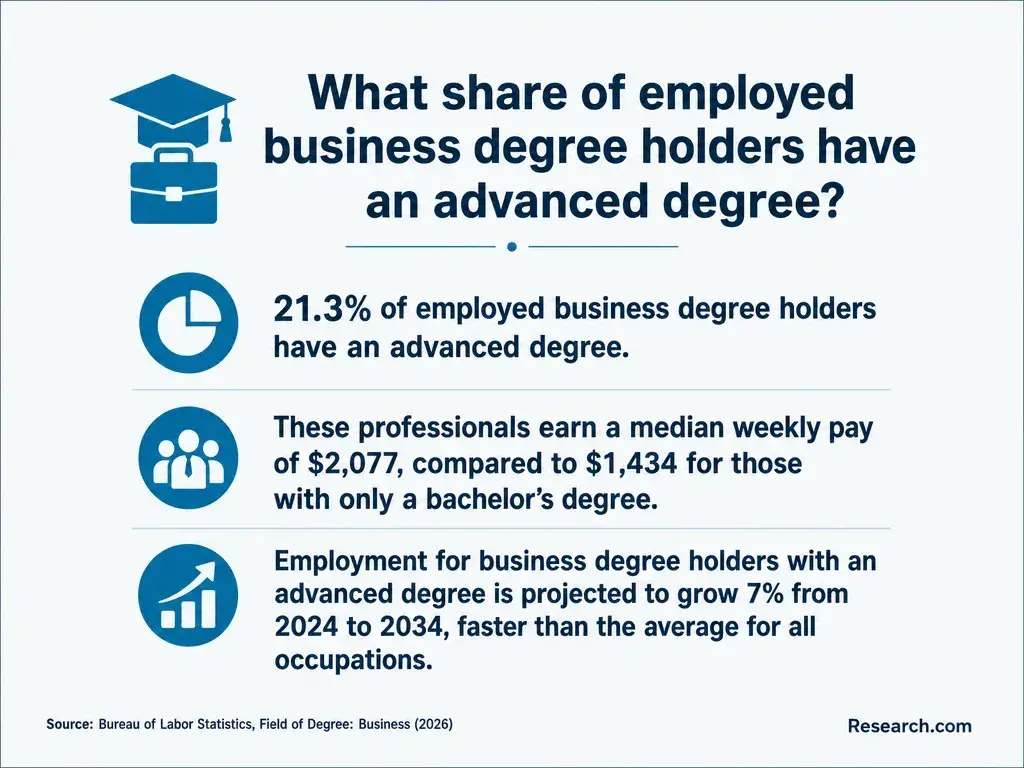
Within higher education, a business graduate with relevant experience might pursue admissions operations, recruitment coordination, enrollment marketing, event planning, or administrative project roles. Duties differ: an admissions counselor works directly with prospective students, while an operations specialist may maintain processes, reporting, and communications. Supervisory posts generally require evidence of sound judgment and responsibility beyond completing a degree.
Outside admissions, experience in student communication and event coordination may transfer to customer-facing operations or training support, though specialized roles can demand additional skills. If your goal is primarily supervising people rather than developing broad business skills, faster bachelor's routes in organizational leadership are worth comparing. Read several target job postings first: note which require a bachelor's, which prefer one, and which emphasize measurable experience instead.
A BS in Business Administration has no single salary, and national occupation medians do not predict an individual admissions employee's pay. Compensation varies by institution, position, location, and experience. Compare the posted range for the actual role you want with your current compensation and expected education costs.
For one adjacent path - not an admissions salary benchmark - the U.S. Bureau of Labor Statistics reports that market research analysts earned a median annual salary of $78,760 in May 2025 and projects 7% employment growth from 2025 to 2035. Enrollment research may draw on related analytical skills, but those figures describe the broader market research occupation and are not starting wages for business graduates. For additional perspective on timelines and earnings claims, consult business administration program length and salary context, then verify any comparison against your target job.
Do college admissions professionals need certifications or licenses?
General college admissions roles do not have a universal professional license, and a business degree does not award one. Employers may instead prioritize experience with recruitment, student communication, institutional systems, and responsible handling of applicant information. Requirements for a particular job should be checked in its posting; duties in adjacent areas may call for different training.
A voluntary certificate or focused training can make more sense than another bachelor's if you already meet a target role's degree requirement and need one defined skill. Likewise, compare a full degree with transfer-friendly project management bachelor's degrees only if your intended role calls for sustained project or operations responsibility. Neither degree automatically confers a professional project-management certification.
Other Things You Should Know About Business Administration
Admissions usually focuses on recruiting and evaluating prospective students. Enrollment management is broader and may coordinate admissions with financial aid, retention, research, and institutional planning; responsibilities vary by college.
Do not assume so. Ask your employer and instructor what information is permitted, follow applicable privacy policies and FERPA requirements, and use public or appropriately de-identified data when necessary.
It can be useful if you need scheduling flexibility, education assistance, or permission for a workplace project. You can first clarify the program's commitments and your employer's policies so the conversation concerns a workable plan.
Choose a target job and compare its posted requirements with your current experience. That makes it easier to judge whether you need a bachelor's credential, particular business courses, or more responsibility in your present role.
- Accreditation in the U.S. | ed.gov http://www.ed.gov/laws-and-policy/higher-education-laws-and-policy/college-accreditation/accreditation-in-the-us
- What Is an Accredited University? Understanding Accreditation | National University https://www.nu.edu/blog/what-is-an-accredited-university/
- Course Work Taken Elsewhere - USC Catalogue https://catalogue.usc.edu/content.php
- What Can You Do With a Business Administration Degree? | North Carolina Central University https://online.nccu.edu/blog/what-can-you-do-with-business-administration-degree/
- 10 Best Business Degrees for High Pay and Career Growth | Pace University New York https://www.pace.edu/news/best-business-degrees-undergrad-grad
- Employer Tuition Assistance Plans May Help Pay for College | Campus https://campus.edu/blog/financial-aid/employer-tuition-assistance-programs-can-help-pay-for-college
- Types of Financial Aid for Online Colleges | UMass Global https://www.umassglobal.edu/blog-news/types-financial-aid-online-colleges
- Online vs Traditional Business Admin Degrees: What's Best? | UAGC https://www.uagc.edu/blog/online-vs-traditional-business-administration-degrees-whats-best-you
- How Do Transfer Credits Work When You Go Back to School? | Whitworth Online https://online.whitworth.edu/news-articles/how-do-transfer-credits-work-when-you-go-back-to-school/
- How many hours a week do online courses require? | Penn State World Campus https://www.worldcampus.psu.edu/about-us/news-and-features/how-many-hours-a-week-do-online-courses-require