2027 BS in Business Administration and Business Analytics: What Math and Data Skills Should You Compare?
Audited and Verified:
Our Editorial and Data Verification Process
Research.com uses government datasets, official education statistics and primary institutional information to support its career and degree guides. Our review process checks factual accuracy, occupational definitions, source dates and the requirements associated with the credentials discussed.
How This Article Was Fact-Checked
Our editorial team verifies salary estimates, employment projections, education requirements and program information against original data providers and official organizations. Salary figures are checked against the relevant occupational definitions and reporting periods. Information about licensure, accreditation and required in-person training is reviewed separately.
Fact-checked and verified on:

Co-Founder and Chief Data Scientist
A business administration degree may include analytics, but that does not make it equivalent to a business analytics major. The difference matters if you are deciding how much mathematics you want to study - and whether you need to build and test analyses or primarily use them to make business decisions.
For prospective students and employees considering a bachelor's degree, this guide compares quantitative coursework, data tools, applied assignments, and career paths. It also shows what to check in a program catalog before committing time or tuition.
Key Things You Should Know
- A BS in Business Administration usually emphasizes broad business decisions; a business analytics major generally requires more sustained work in statistics, data preparation, and modeling.
- Compare required courses, not degree titles alone. Look for evidence of hands-on work with spreadsheets, databases, visualization, and statistical methods. A software name on a course list does not establish how independently students use it.
- For context, the U.S. Bureau of Labor Statistics reports a $78,760 median annual wage for market research analysts in May 2025 and projects 7% employment growth from 2025 to 2035. Those occupation-wide figures are not starting salaries or guaranteed outcomes for either major.
What is the difference between a BS in Business Administration and Business Analytics?
A BS in Business Administration typically builds a foundation across accounting, finance, marketing, operations, and management. Analytics may be part of its core or an official concentration. A business analytics bachelor's degree generally puts data collection, statistical reasoning, modeling, and communication of findings closer to the center of the program. Exact requirements vary by school; a specialized degree is not automatically more technical than every analytics concentration.
The distinction is what students must repeatedly demonstrate. A business administration student might interpret a sales dashboard to recommend a staffing change. An analytics student might also clean the underlying records, define the measures, test whether the apparent pattern is reliable, and explain the model's limits. Both need business judgment.
Choose broad business preparation if you want flexibility across functions and expect to use analyses produced by others. Favor analytics if you want to produce those analyses and are willing to take more quantitative prerequisites. If you are returning with prior credits, compare how each program applies them to its major - not just how many it accepts. Business administration degree return and completion planning is especially relevant when a specialized major would require additional courses.
What math skills do business administration and business analytics degrees require?
Both pathways commonly use algebra, percentages, financial calculations, and statistics. Business administration may apply these skills to budgets, pricing, accounting, and spreadsheet forecasts. Analytics programs often go further into probability, statistical inference, regression, optimization, or calculus, depending on the curriculum. Do not assume calculus is required - or unnecessary - without checking the specific catalog.
This comparison identifies the mathematical work to look for in required courses and assignments, rather than assuming a course title proves proficiency.
| Skill to compare | Business administration emphasis | Business analytics emphasis |
| Algebra and spreadsheets | Calculate costs, margins, and scenarios | Prepare variables, formulas, and reproducible analyses |
| Statistics | Interpret summaries and uncertainty in business reports | Select methods, assess samples, and test relationships |
| Modeling | Use forecasts to inform a decision | Build, evaluate, and explain forecasts or decision models |
Ask whether statistics is a prerequisite for upper-level analytics courses and whether transfer work satisfies that exact requirement. The same issue can arise in adjacent quantitative majors; students considering project-focused work can compare project management bachelor's credit transfer rules, but the receiving institution must determine each course's applicability.
Which data skills and tools do business analytics programs teach?
Strong analytics coursework connects a business question to usable evidence: defining a measure, checking data quality, analyzing results, and presenting a recommendation with uncertainty and limitations. Common tools include advanced spreadsheets, SQL for querying databases, and visualization software; some programs also teach Python, R, or statistical packages. Tool coverage and depth differ substantially.
Inspect assignments, not just software lists. A dashboard built from a clean sample file demonstrates something different from a project that requires students to resolve missing records, document assumptions, and explain why a forecast might fail. Ask whether students work with appropriately authorized data and whether they can show a redacted or synthetic-data version of their work to employers.
Analytics depth also depends on the function. Supply chain coursework, for example, may focus on inventory, demand, or delivery measures rather than marketing conversion. If that application interests you, faster-paced online supply chain college study is another pathway to compare - but confirm that its required data courses match your goal.
Business administration programs generally require a business core, with possible electives or a formal analytics concentration. Specialized analytics degrees may retain that core while adding a longer sequence of statistics, database, programming, and modeling courses. A concentration, elective cluster, and separately awarded analytics degree are different credentials, even when individual courses overlap.
Compare the full required sequence from introductory courses through the capstone. Check which courses require statistics first, how often upper-level classes run, and whether a project asks students to analyze evidence or mainly present a business plan. An official course map will reveal more than a list of possible electives.
If your goal is people operations rather than sustained data analysis, HR coursework may be the better use of your remaining credits. Students with previous study can compare HR bachelor's completion with transferred coursework against an analytics sequence before choosing a major.
Delivery mode alone does not determine rigor. Compare learning outcomes, required quantitative courses, assessments, instructor feedback, and access to software and data. An online analytics course should still give students opportunities to perform and explain analysis, not merely watch demonstrations; an online business administration course should still assess business judgment.
Online does not necessarily mean self-paced. Ask about live sessions, proctored exams, group projects, software requirements, and deadlines - particularly if you work irregular hours or provide care. Review work-compatible business administration education options alongside the actual schedules of the analytics courses you would need.
Requirements vary by institution and by whether you enter as a first-year or transfer student. Schools may review secondary-school records, previous college transcripts, academic standing, and math preparation. An analytics major may also require particular grades or completed prerequisites before upper-level coursework, even when admission to the university is open.
Request separate answers to three questions: Can you enter the institution? Can you enter the intended major? Which prior courses satisfy its math, statistics, and business requirements? A transfer evaluation showing accepted elective credits does not answer the third question. If application costs matter while you compare schools, examine free application options at accredited online schools; a waived fee does not change admission or major requirements.
Completion time depends on required credits, applicable transfer work, prerequisite sequencing, course availability, and enrollment pace. An analytics pathway can take longer if you must complete statistics before advanced modeling; a business administration program can also be delayed by a required capstone or unavailable core course. Neither degree title establishes a universal completion time.
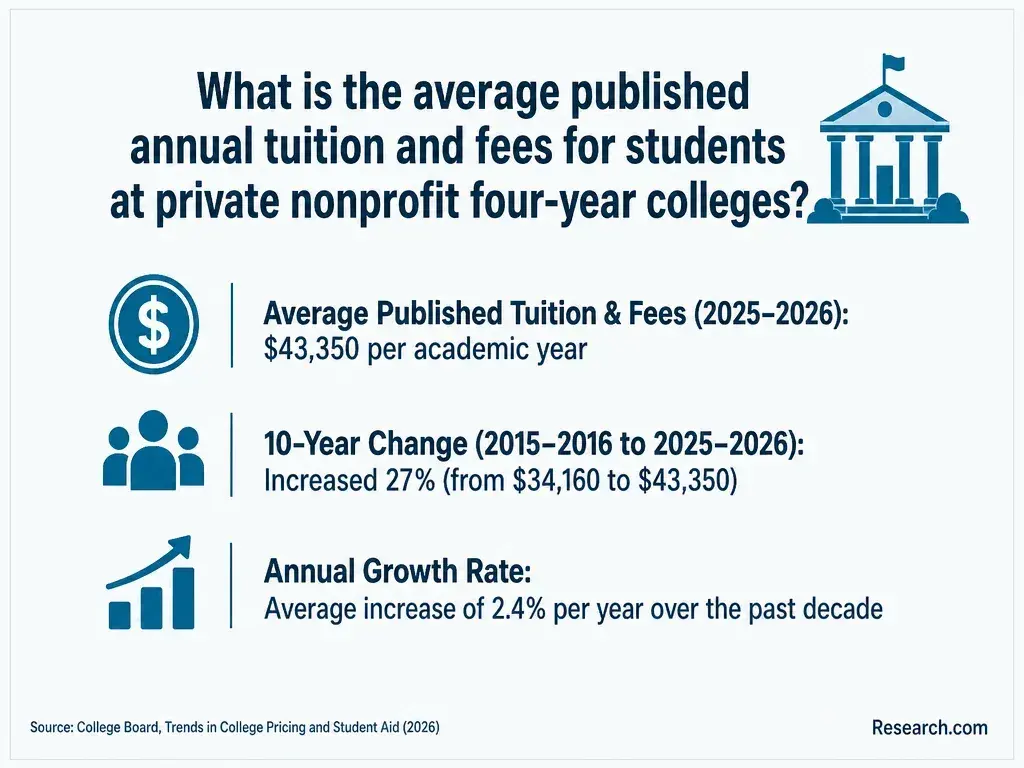
For a meaningful cost comparison, obtain a degree audit and calculate remaining tuition and mandatory fees under the same enrollment assumptions. Add books, required software or equipment, possible travel, and borrowing costs. An apparently cheaper per-credit option may cost more if fewer prior courses meet major requirements. Use economical online college programs in business as candidates to investigate, not as substitutes for a school-specific total-cost estimate.
Either degree can support entry into business functions, but job readiness depends on demonstrated skills and experience. Business administration graduates might pursue operations, sales-support, procurement, or project-coordination roles. Analytics graduates might target reporting, market research, or operations-analysis roles. Employers may consider applicants from either major when their coursework and work samples match the tasks.
Read job descriptions for the work involved: maintaining reports is different from designing statistical models, and coordinating a team is different from managing its budget and staff. An internship, relevant job, or carefully documented project can help show which tasks you have performed. If speed matters to a career change, business degrees through accelerated online learning may be worth comparing, provided the pace still allows time to develop the skills your target roles require.
Occupational data provides context, not a graduate salary forecast. The following U.S. Bureau of Labor Statistics figures cover workers across experience levels and industries; the occupations have different duties and hiring expectations.
| Occupation | Median annual wage, May 2025 | Projected employment growth, 2025-2035 |
| Market research analyst | $78,760 | 7% |
| Human resources specialist | $75,940 | 6% |
| Management analyst | $101,860 | 10% |
These figures do not mean a new graduate will earn the median or qualify immediately for every role. Compare local entry-level postings, required experience, and your likely borrowing before using wages to judge a program's value. A guide to accelerated bachelor's study can help frame the time trade-off, but finishing sooner does not itself increase pay.
How can you choose an accredited and reputable business program?
First, confirm the institution's recognized accreditation and that the exact degree is offered in your intended format. Then check whether any advertised AACSB, ACBSP, or IACBE accreditation covers the relevant business school or program; institutional and business-specific accreditation are not interchangeable. Accreditation does not, by itself, establish analytics depth or employment outcomes.
Before enrolling, obtain the current curriculum, prerequisite map, sample assignments, transfer evaluation if applicable, and a written estimate of remaining costs. Ask who teaches advanced analytics, what software students can access, how applied work is assessed, and whether career-outcome claims identify the group surveyed. If financing is part of the decision, review federal aid options at accredited business administration colleges and verify the specific institution's aid eligibility and your own eligibility separately.
Other Things You Should Know About Business Administration
Not always. Compare the missing skills and employer requirements with the cost of a second degree, a graduate certificate, targeted courses, or supervised experience. A school can explain how its second-degree rules would apply to you.
It can be a practical route when you need specific skills rather than a credential. Check target job postings, then build work samples that show how you cleaned data, chose a method, and explained limitations.
No. An MBA is a separate graduate option, not the automatic next step. Relevant work experience or function-specific training may be more useful for your immediate goal.
No. A certificate documents a defined course or training program; it is not a bachelor's degree or a formal concentration unless the awarding institution explicitly says so. Compare its assessed work with the skills the role requires.
- Explore Results for the 2024 NAEP Mathematics Assessment | nationsreportcard.gov https://www.nationsreportcard.gov/reports/mathematics/2024/g4_8/
- Statistics Courses (Statistics and Actuarial Science) (STAT) | University of Iowa General Catalog https://catalog.registrar.uiowa.edu/courses/stat/
- Business analytics vs. business administration | Capella University https://www.capella.edu/blog/business/the-difference-between-business-analytics-and-business-analysis/
- What Is a Capstone Project? | National University https://www.nu.edu/blog/what-is-a-capstone-project/
- Quantitative Methods | Babson College https://www.babson.edu/undergraduate/academics/concentrations/quantitative-methods/
- Responsible Data Management | acm.org https://cacm.acm.org/research/responsible-data-management/
- Data Analytics vs. Business Analytics: Key Differences | SIUE https://online.siue.edu/degrees/undergraduate/bsba/gen-program/business-analyst-career-guide/
- Business Analytics vs. Data Analytics | American Military University https://www.amu.apus.edu/area-of-study/business-administration-and-management/resources/business-analytics-vs-data-analytics/
- STAT - Statistics | 2026-2027 Course Catalog | University of Illinois Urbana-Champaign Course Catalog https://catalog.illinois.edu/courses-of-instruction/stat/
- Essential Data Management Skills for Modern Roles | Syracuse University https://ischool.syracuse.edu/data-management-skills/