2027 Paying for an Online BS in Business Administration: Choosing a General Track to Avoid Extra Concentration Credits
Audited and Verified:
Our Editorial and Data Verification Process
Research.com uses government datasets, official education statistics and primary institutional information to support its career and degree guides. Our review process checks factual accuracy, occupational definitions, source dates and the requirements associated with the credentials discussed.
How This Article Was Fact-Checked
Our editorial team verifies salary estimates, employment projections, education requirements and program information against original data providers and official organizations. Salary figures are checked against the relevant occupational definitions and reporting periods. Information about licensure, accreditation and required in-person training is reviewed separately.
Fact-checked and verified on:

Co-Founder and Chief Data Scientist
A concentration may sound like added value, but it can become an added bill if its required courses do not fit the credits you already have. For students paying to finish an online BS in Business Administration, the important comparison is not "general" versus "specialized" on a transcript. It is the number of credits, terms, and out-of-pocket costs each route leaves between you and graduation.
This guide explains how to compare degree audits, identify when a general track saves money, and decide whether a concentration's career value justifies any extra coursework.
Key Things You Should Know
- A general track saves money only if it reduces required credits or delays; choosing it does not automatically lower tuition.
- Compare how accepted transfer credits apply to the core, electives, concentration, and residency requirements - not just the total accepted.
- Request a written degree plan and cost estimate for both tracks before enrolling; an additional required course can affect tuition, fees, aid, and graduation timing.
What is an online BS in business administration general track?
A general track is a path through a BS in Business Administration that emphasizes the degree's broad business requirements rather than a formal concentration in an area such as marketing or finance. Students typically complete the business core and use approved electives to meet the remaining requirements. The exact degree title, elective rules, and track designation depend on the school.
"General" does not mean concentration-free coursework is easier or that students can choose any classes they want. Required prerequisites, upper-division credits, a capstone, and institutional residency rules may still apply. Conversely, taking several project management electives does not create an official project management concentration. If that function is your specific goal, compare the business degree audit with credit mapping for online project management programs rather than assuming the credentials are interchangeable.
How much does an online BS in business administration cost?
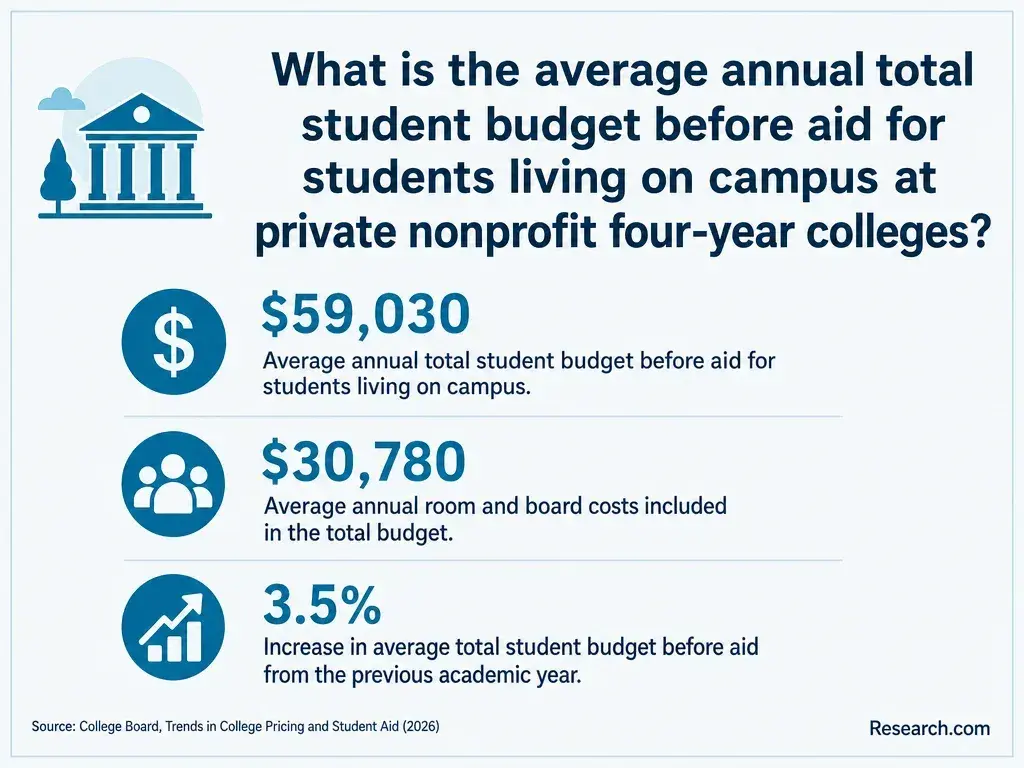
There is no reliable single price for an online BS in Business Administration. Schools may charge by credit, course, or term, and the amount you owe depends heavily on which previous credits satisfy graduation requirements. Compare remaining cost to completion, not just advertised tuition.
Ask each school for an estimate that separates remaining tuition from mandatory online, technology, proctoring, and graduation fees; books and software; and any travel requirements. Then check whether taking concentration courses would require another term or a different enrollment intensity. That distinction matters because a delay can add living or financing costs even when the credit price stays the same. Use the same remaining-credit assumptions when comparing lower-priced accredited business administration study options.
Grants, loans, scholarships, and employer tuition assistance change the amount paid out of pocket, but they are not interchangeable. Confirm aid eligibility for your planned course load, employer reimbursement rules, and when payment is due before counting on any award.
Can a general business track reduce extra concentration credits?
Yes - if the general track can use credits that a concentration cannot. A concentration may require a fixed sequence of courses while the general track permits a wider selection of approved electives. That can be especially important for transfer and returning students whose completed courses are accepted by the university but do not satisfy concentration requirements.
The comparison below shows why the track label alone cannot establish savings. The deciding document is an official evaluation showing where each credit applies.
| Degree-audit finding | Likely cost implication |
| Both tracks require the same remaining credits, and needed courses are available on schedule | The general track may offer flexibility without reducing tuition or time. |
| Prior coursework fills general electives but not required concentration courses | The general track may avoid additional coursework or a later graduation term. |
| Concentration courses also fulfill open degree requirements | Specialization may add no credits, though prerequisites and scheduling still matter. |
| A concentration has an unavailable prerequisite or limited course rotation | A delay may raise completion costs even if total required credits do not change. |
Request side-by-side audits under the same catalog and enrollment assumptions. Have an adviser identify unmet requirements, prerequisite chains, course rotation, substitutions, and credits that count only as free electives. Ask the financial-aid office how each plan affects eligibility. These checks make comparisons of cost-effective paths to a business degree more meaningful than a tuition-rate comparison alone.
Online delivery does not determine accreditation. Verify that the institution holds recognized accreditation and that it covers the school awarding the degree. Some business schools or programs also hold AACSB, ACBSP, or IACBE accreditation; check the accreditor's stated scope rather than assuming every degree at the institution is covered.
Accreditation is relevant to educational oversight and may matter for transfer or employer policies, but it does not prove that a particular concentration is worth its extra cost. If federal aid is part of your budget, confirm the institution's aid eligibility and the program's status directly before relying on comparisons of low-tuition business administration schools accepting FAFSA. An accredited school still needs to provide a workable degree audit and course schedule for your situation.
A general track commonly combines accounting, finance, economics, marketing, management, operations, business law, and quantitative coursework with general education and approved electives. Programs differ in how much statistics, analytics, and applied work they require. These courses provide a broad foundation, not the same depth as a specialized major or every concentration.
When comparing tracks, look past course titles. A concentration may add advanced courses with prerequisites, while a general track may let you apply existing coursework or choose electives relevant to your job. If your goal is specifically project coordination, compare the required classes and remaining cost of a specialized route, including financial aid at low-cost project management schools. Introductory exposure in a general business course is not a substitute for substantial project experience or a separate professional credential.
Requirements vary by institution and by whether you enter as a first-year or transfer student. Schools generally request prior academic records and may set GPA or prerequisite rules for entry to the business major. Admission, however, is separate from deciding how previous courses apply to the degree.
If you have college credit, send official transcripts and request a program-specific evaluation before committing. Ask whether previous accounting, economics, mathematics, and statistics courses satisfy the school's requirements, whether any course is considered too old, and whether you can appeal an equivalency. Application fees are a smaller cost than unnecessary classes, but students comparing several schools can also find online colleges with free admissions applications.
Completion time depends on credits that apply to the degree, remaining prerequisites, course availability, and how many classes you can take each term. A general track can shorten the path when it avoids a concentration sequence or offers more choices for filling remaining requirements. It may make no difference when both tracks fit the same graduation schedule.
Ask for a term-by-term plan showing when each required course is offered, not only a projected graduation date. Check live attendance, group projects, exams, and work commitments before choosing a faster pace. Accelerated online pathways for business students can be worth comparing, but a shorter calendar does not necessarily reduce required work or total charges.
A general business degree can support applications for roles such as operations coordinator, administrative specialist, sales operations associate, or project coordinator. The strongest route depends on the experience and work samples you bring alongside the degree. Someone with customer-service experience, for example, may be better positioned for sales operations than for a finance role requiring deeper analytical preparation.
If you want to move into supervision, examine whether the job requires demonstrated responsibility for people, budgets, or processes. A general track leaves room to build relevant electives and workplace projects, but graduation alone does not make someone a manager. For a leadership-focused alternative, compare completion times for organizational leadership degrees alongside curriculum and transfer-credit fit - not speed alone.
A degree has no single salary: pay is tied to the occupation, location, employer, and your experience. The U.S. Bureau of Labor Statistics reports a May 2025 median annual wage of $75,940 for human resources specialists. That is an occupation-wide median, not the expected starting salary for a general business graduate; HR roles may also call for relevant experience or function-specific knowledge.
Judge a concentration's potential return against the roles you can realistically pursue, not a high-paying job title listed in program advertising. Compare local postings, required skills, and your current experience before paying for added courses. The same caution applies when you compare shorter business administration college programs: lower cost and faster completion do not guarantee higher earnings.
Which online business administration programs are reputable?
No single program is best for everyone paying to complete a degree. Build a shortlist of accredited institutions offering the exact online BS in Business Administration you want, then request a written general-track audit and, if available, a concentration-track audit from each. Reputable options should make their requirements, charges, course schedules, and applicable accreditation clear enough to compare.
Favor the program that meets your academic and career needs at a manageable remaining cost, with required courses available when you can take them. Confirm whether advising estimates become official only after admission, whether online students must visit campus, and what happens if you need to pause enrollment. If speed is important, a guide to accelerated bachelor's study can help you frame questions about pace; your own degree audit remains the basis for a completion decision.
Other Things You Should Know About Business Administration
Transcript and diploma wording varies by school. Ask the registrar what each document shows. You can still describe relevant electives, projects, and experience in applications without claiming an official concentration you did not earn.
Possibly, subject to school policy and available courses. Get an updated audit first: a late change could add prerequisites or delay graduation.
Only if the institution has an applicable prior-learning or substitution policy and formally approves the credit. Employment by itself does not waive degree requirements.
A general track may preserve elective flexibility. Choose courses that build useful skills and keep records of completed projects, then compare any proposed concentration against its added requirements before declaring it.
- Fast Facts: Tuition costs of colleges and universities (76) | ed.gov https://nces.ed.gov/fastfacts/display.asp
- Types of Financial Aid: Grants, Work-Study, and Loans | studentaid.gov https://studentaid.gov/understand-aid/types
- Qualified Ed expenses | Internal Revenue Service https://www.irs.gov/credits-deductions/individuals/qualified-ed-expenses
- Estimate your college cost | usa.gov https://www.usa.gov/estimate-college-cost
- Cost of Attendance (Budget) | 2025-2026 Federal Student Aid Handbook https://fsapartners.ed.gov/knowledge-center/fsa-handbook/2025-2026/vol3/ch2-cost-attendance-budget
- Credit for Prior Learning | Transfer Credit Ohio https://transfercredit.ohio.gov/students/student-programs/Prior-Learning-Assessments
- Business Bachelor's Degree Programs Online | WGU https://www.wgu.edu/online-business-degrees/bachelors-programs.html
- How to Get College Credit for Work Experience | post.edu https://post.edu/blog/pla-101-can-a-prior-learning-assessment-get-me-college-credit-for-work-experience/
- Tuition & Fees | National University https://www.nu.edu/admissions/tuition/
- College Degree Requirements | K-State https://artsci.k-state.edu/academics/degree_requirements/