2027 Can a BS in Business Administration Prepare You for a Sales Operations Analyst Role? Skills and Entry Requirements
Audited and Verified:
Our Editorial and Data Verification Process
Research.com uses government datasets, official education statistics and primary institutional information to support its career and degree guides. Our review process checks factual accuracy, occupational definitions, source dates and the requirements associated with the credentials discussed.
How This Article Was Fact-Checked
Our editorial team verifies salary estimates, employment projections, education requirements and program information against original data providers and official organizations. Salary figures are checked against the relevant occupational definitions and reporting periods. Information about licensure, accreditation and required in-person training is reviewed separately.
Fact-checked and verified on:

Co-Founder and Chief Data Scientist
Sales operations analysts turn customer relationship management (CRM) records, pipeline reports, and sales processes into information a sales team can use. A BS in Business Administration can provide a foundation, but employers also need evidence that you can work with data and understand how sales teams operate.
This guide is for students and early-career employees deciding whether the degree fits their goal. It explains the skills, courses, experience, and job requirements to check before you enroll or before you apply with the education you already have.
Key Things You Should Know
- A BS in Business Administration can prepare you for sales operations analysis when you pair its business core with spreadsheet, CRM, reporting, and applied project experience; the degree alone does not establish job readiness.
- Entry requirements vary: some employers accept a related bachelor's degree, while others prioritize CRM experience, data skills, or prior work supporting a sales team.
- The Bureau of Labor Statistics does not publish a separate wage or growth estimate for sales operations analysts. Its related market research analyst occupation had a $78,760 median annual wage in May 2025, but that is not a sales operations starting salary.
Can a BS in Business Administration Lead to a Sales Operations Analyst Career?
Sales operations analysts help maintain reliable pipeline data, define reporting measures, examine where deals stall, and improve the processes sales teams use. Depending on the employer, they may support forecasting, territory planning, compensation reporting, or CRM administration. They generally support decisions rather than own a sales quota or manage a team.
A business administration degree can connect marketing, accounting, information systems, and operations to those tasks. Its limitation is breadth: a graduate who has only studied business concepts may be less competitive than an applicant who can clean a dataset, explain a conversion-rate calculation, and present a useful dashboard.
Students already working in sales support can seek permission to build an approved, appropriately anonymized class project around a workplace process. Employees considering a degree alongside their job can also examine career advancement study options in business administration.
What Skills Do Sales Operations Analysts Need to Succeed?
The strongest skill mix combines data accuracy with sales judgment. An analyst must know what a measure means before charting it: a count of open opportunities, for example, is only useful if teams apply the same definition of "open." Employers may ask for advanced spreadsheets, CRM reporting, dashboard tools, or SQL, but the required tools differ by role.
These skills are best demonstrated through a work sample or supervised assignment rather than a software name on a résumé:
- Data preparation: Check missing values, duplicate records, inconsistent sales stages, and date definitions before reporting results.
- Analysis: Calculate and interpret pipeline measures, conversion rates, forecast changes, and sales-cycle duration without treating correlation as proof of cause.
- Process and communication: Document a reporting rule, ask sales staff how records are entered, and explain findings in terms a manager can act on.
- Data stewardship: Follow employer rules for customer information, compensation records, and access to internal reports.
Sales operations measures customers and opportunities; people analytics measures workforce activity. If you prefer the latter, a human resources degree subject guide can help clarify the different subject matter before you choose electives.
What Education and Experience Are Required for Sales Operations Analyst Jobs?
There is no universal entry requirement for this job title. Employers may request a bachelor's degree in business, marketing, analytics, information systems, or a related field.
They may also expect experience with a particular CRM, spreadsheet analysis, reporting, or a sales organization. Read the duties as closely as the title: one "analyst" vacancy may be an accessible reporting role, while another may require substantial systems ownership.
For an early-career applicant, sales coordinator, sales support, revenue operations assistant, or CRM support work can provide relevant experience. An internship or supervised project can help if it produces a defensible work sample. When comparing openings, separate requirements you can demonstrate now from tools or industry knowledge you would need to learn.
If you are deciding between sales operations and a more logistics-focused career, compare the actual curriculum rather than assuming all operations roles are alike. Supply chain bachelor's options focused on completion speed address a different function not sales-pipeline support.
Look for a program that lets you combine a business core with quantitative and systems work. Marketing or sales courses can explain the customer journey; statistics and business analytics can support sound comparisons; information systems can introduce databases and reporting; operations can teach process mapping.
Accounting and finance help when a report involves revenue definitions, margins, or budgets. Course titles alone do not show how much hands-on analysis students perform.
Before choosing electives or a concentration, inspect assignment descriptions and prerequisites. A useful combination might let you analyze a cleaned dataset, document its limitations, build a dashboard, and explain a recommendation. Ask whether analytics courses require statistics first and whether the courses you want are offered often enough to fit your graduation plan.
A project management course can strengthen implementation skills, but a separate degree is not automatically necessary for this role; if comparing that alternative, estimate the cost of accredited project management study alongside its relevance to the jobs you want.
Sales operations analysis is not generally a licensed occupation. Employers may value training in the CRM or reporting platform they use, but a vendor certificate is separate from a degree and is not a substitute for accurate analysis. Check job postings before paying for one: software requirements can differ substantially between employers.
A sensible sequence is to learn the reporting concepts, practice with permitted or public sample data, and then pursue a tool-specific credential if target employers ask for it. Project management credentials are likewise optional for most sales operations analyst roles.
If you are instead considering an undergraduate project management pathway, federal aid for undergraduate project management study is a separate education-financing question, not a requirement for sales operations employment.

Neither format is inherently better. Compare access to analytics coursework, feedback on applied assignments, career services, and internships or employer projects. Campus study may make local recruiting and in-person collaboration easier.
Online study may fit an existing sales support job, allowing you to apply course concepts at work if your employer and instructor approve the project and data use.
Do not equate online with self-paced. Confirm live-session times, group work, proctored exams, software access, and any campus or internship requirements before enrolling. Check that the institution holds recognized accreditation and that the specific degree offers the courses you need.
If application costs affect which schools you can consider, you can apply to accredited online colleges for free where a no-fee application policy applies; still verify the degree's curriculum and total cost.
A full-time bachelor's pathway commonly takes about four academic years, but transfer credit, part-time enrollment, prerequisite sequencing, and course availability can change the timeline.
An accelerated calendar does not necessarily reduce the number of required credits or the weekly workload. Ask for a degree audit showing where accepted credits apply, not just how many the school accepts.
To compare costs, request an estimate based on your remaining required courses. Include tuition, mandatory fees, books, software, commuting or technology expenses, and any earnings you would give up to study.
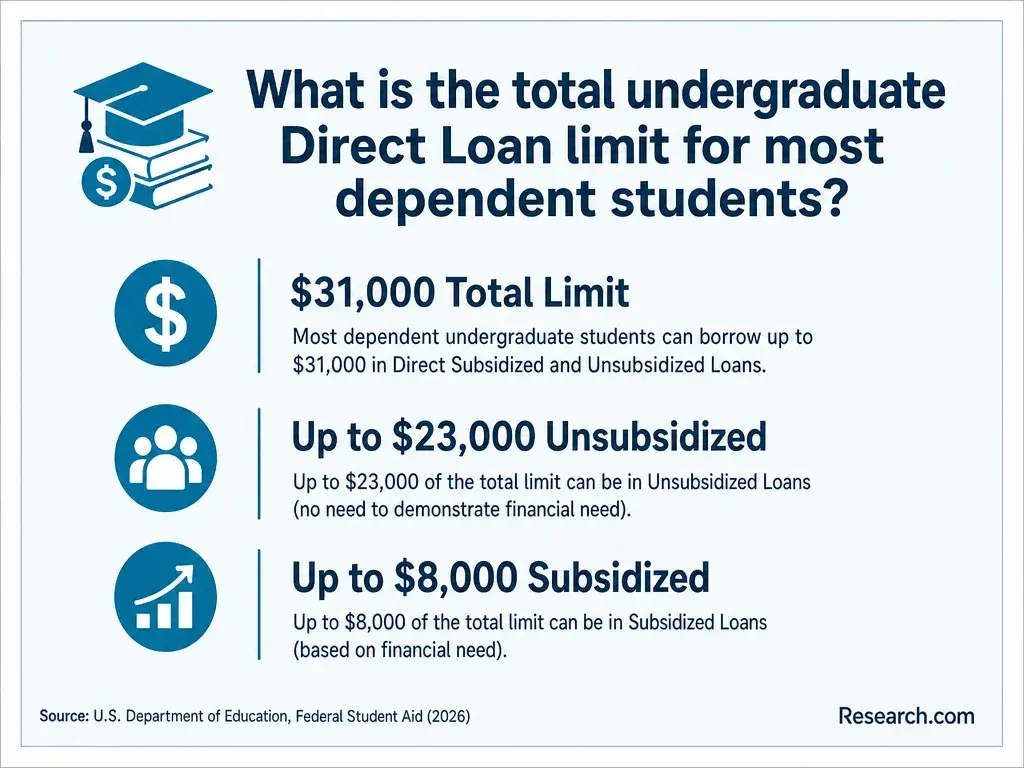
Check when grants, loans, or employer reimbursement would actually be available; advertised tuition alone does not establish your net cost. Financial aid planning for low-cost business administration degrees can provide a starting point, but your school's aid offer and degree audit must control the final comparison.
Requirements depend on whether you are applying as a first-year or transfer student and whether the school admits students directly to the business major. Schools commonly request prior academic transcripts.
Some specify GPA thresholds or prerequisites for upper-level business courses. Mathematics, accounting, economics, or statistics preparation may affect course placement even when it is not an initial admission barrier.
Ask admissions and the business adviser two separate questions: whether you qualify to enter, and which completed courses satisfy the degree's general education, business core, and elective requirements. Students with prior college work should obtain an official evaluation before estimating their finish date.
If your interests have shifted toward workforce functions instead of sales reporting, HR bachelor's completion with transferred coursework illustrates a distinct degree-completion choice; confirm how your own credits apply before switching paths.
The U.S. Bureau of Labor Statistics does not report a national median specifically for "sales operations analyst." For context, its related, but not equivalent, market research analyst occupation had a median annual wage of $78,760 in May 2025. That occupation studies markets and consumers; its median covers workers at different career stages and should not be read as a new sales operations analyst's offer.
Pay for a particular opening depends on location, industry, responsibilities, experience, and whether compensation includes an incentive component. Compare posted salary ranges for roles with matching duties, then weigh those ranges against the education you still need to fund.
If finishing a bachelor's is the goal, compare shorter business administration college programs using your actual remaining credits and costs rather than an assumed graduate salary.
What Job Outlook and Career Paths Exist for Sales Operations Analysts?
BLS does not publish a separate employment projection for sales operations analysts. Its market research analyst occupation is projected to grow 7% from 2025 to 2035, but that figure describes a broader, different set of jobs. Use it as limited context, not a forecast of vacancies under the sales operations title.
A realistic path may run from sales support or CRM reporting into analyst responsibilities, then toward senior sales operations, revenue operations, systems administration, or team leadership. Advancement depends on the work you can own and explain, not simply on the degree title.
Before selecting a program, review vacancies you would actually pursue, identify their recurring tool and experience requirements, and choose coursework or projects that close those gaps. If time to completion is a major constraint, examine shorter pathways to an online business degree against course availability, workload, and total cost.
Other Things You Should Know About Business Administration Programs
Yes, if you own the work or have permission to share it. Remove customer and employee information, confidential figures, and proprietary definitions. A clearly labeled project using public or simulated data is often safer.
Not necessarily. Analyst roles commonly focus on reporting and processes rather than individual selling, but compensation arrangements vary. Check whether a posting includes incentives and what determines them.
Possibly. If you already have a bachelor's degree, relevant sales support experience, targeted analytics training, and a credible work sample may be more direct than another full degree. Compare those assets with actual vacancies.
No. Sales operations focuses on the sales organization. Revenue operations may coordinate processes and data across sales, marketing, and customer success. Employers use the titles differently, so judge the duties in each posting.
- What Is a Business Analyst? Roles, Skills, and Career Outlook | Florida National University (FNU) https://www.fnu.edu/what-does-a-business-analyst-do/
- How to Become a Business Analyst: Steps, Skills, and Salary | Touro University Worldwide https://www.tuw.edu/business/how-to-become-a-business-analyst/
- What Jobs Can You Get With a Business Degree? | snhu.edu https://www.snhu.edu/about-us/newsroom/business/what-jobs-can-you-get-with-a-business-degree
- 10 Key Skills for Data Analysts | Johns Hopkins AAP https://advanced.jhu.edu/about/on-the-advance/mastering-your-future/10-key-skills-for-data-analysts/
- Operations Analyst (General) - NC State Online https://online-distance.ncsu.edu/career/operations-analyst-general/
- Becoming a Business Analyst: What You Need to Know | Georgia Tech Professional Education https://pe.gatech.edu/blog/industry-trends/how-to-become-a-business-analyst
- BS Business Administration | University at Albany https://www.albany.edu/business/programs/bs-business-administration
- Sales Operations Analysts: How to Become One | Franklin University https://www.franklin.edu/career-guide/operations-research-analysts/how-to-become-sales-operations-analysts
- What is Sales Analytics? Key Metrics & Types | Salesforce https://www.salesforce.com/sales/analytics/guide/
- How to Become a Operations Analyst | Career Karma https://careerkarma.com/careers/operations-analyst/