2027 BS in Business Administration Math Planning: Completing Algebra at Community College First
Audited and Verified:
Our Editorial and Data Verification Process
Research.com uses government datasets, official education statistics and primary institutional information to support its career and degree guides. Our review process checks factual accuracy, occupational definitions, source dates and the requirements associated with the credentials discussed.
How This Article Was Fact-Checked
Our editorial team verifies salary estimates, employment projections, education requirements and program information against original data providers and official organizations. Salary figures are checked against the relevant occupational definitions and reporting periods. Information about licensure, accreditation and required in-person training is reviewed separately.
Fact-checked and verified on:

Co-Founder and Chief Data Scientist
Taking algebra at a community college before a BS in Business Administration can be a practical way to prepare for business coursework and manage costs. But a course that transfers as elective credit may leave the degree's math requirement unfinished.
This guide is for prospective transfer and returning students deciding where to take algebra. It explains how to identify the right course, obtain a dependable transfer evaluation, and check whether the choice will shorten - or unexpectedly delay - the path to graduation.
Key Things You Should Know
- You can usually take algebra before transferring, but the receiving university decides whether it satisfies a specific degree requirement.
- Match the course to the university's required math course and any statistics or calculus prerequisites; accepted elective credit is not the same as a completed requirement.
- Get the equivalency and degree-audit placement confirmed before enrolling, then compare the community college's total cost with the risk of an extra course or term.
What is a BS in Business Administration, and does it require college algebra?
A BS in Business Administration is an undergraduate degree covering business functions such as accounting, finance, marketing, management, and operations. Its quantitative coursework helps students interpret financial information and make decisions using data. College algebra is not a universal, separately named requirement: one university may require it, another may accept a higher-level course, and another may specify a different quantitative-reasoning pathway.
Check the requirements for the exact BS program and catalog year you expect to enter. A BBA, a BA in Business, and a specialized business degree at the same institution can have different math rules. If your priority is a shorter route rather than a particular degree title, flexible fast-track routes in business education may be worth comparing - but only after checking which of your credits satisfy each program's requirements.
Can you complete algebra at community college before transferring to a business program?
Yes, if the destination school accepts the course and applies it where you need it. Taking algebra first can make sense when community college tuition is lower, you want a smaller class, or algebra is a prerequisite for later business coursework. It is a poor shortcut if the course is below the required level, lacks a required component, or will be counted only as a general elective.
Timing matters as much as equivalency. If statistics requires algebra and the university offers statistics only in certain terms, finishing the correct algebra course before transfer may prevent a sequencing delay. Conversely, a university placement assessment or an approved higher-level course might let you proceed without taking algebra. Advertised speed is not proof of faster graduation; when reviewing US business bachelor's fast-track rankings, compare your remaining requirements and actual course availability.
Which math courses are required for a BS in Business Administration?
Requirements depend on the curriculum and, sometimes, the concentration. The distinctions below help you check whether the algebra course you plan to take is a requirement, a prerequisite, or neither.
| Course area | Possible role in a business degree | What to check |
| College algebra or quantitative reasoning | May satisfy general education math or prepare students for later courses | Required course number and accepted equivalents |
| Statistics or business statistics | Supports analysis of business data | Prerequisites and whether a general statistics course counts |
| Calculus or business calculus | May be required by a particular program or quantitative track | Whether the specified version is required |
| Finance or analytics courses | Apply quantitative skills within the business core or a concentration | Prerequisite sequence and transfer restrictions |
Do not assume that passing algebra fulfills every quantitative requirement. A student considering operations or supply chain study should inspect that program's statistics and analytics sequence, not infer it from a general business plan. Supply chain degree duration and salary considerations can inform that separate degree comparison; the destination catalog still controls math requirements.
An equivalency database is a useful starting point, not a substitute for confirmation that the course will satisfy your BS requirement. Use this sequence before paying for the class:
- Find the destination university's current degree plan and identify the exact math requirement and any prerequisite it serves.
- Give the transfer office the community college's course number, title, credit value, catalog description, and syllabus if requested; ask about minimum grades, course recency, and credit-system conversion.
- Ask the business adviser where the credit will appear in your degree audit: general education, business prerequisite, major requirement, or elective.
- Keep the written determination, submit an official transcript after completing the course, and check the updated audit before scheduling the next math class.
If the course is accepted only as an elective, ask whether a different community college course or a formal substitution is available. The receiving institution has final authority. This distinction also matters when comparing human resources bachelor's credit transfer options: a program's willingness to accept credits does not establish how each credit applies.
Separate admission to the university from admission to its business major. A transfer applicant may be admitted while still needing a math prerequisite before entering upper-level business courses. Schools may also evaluate prior college transcripts, academic standing, grades in designated prerequisite courses, and application deadlines; their actual rules differ.
Ask admissions whether algebra must be completed before application, before entry to the major, or before a later course. Then ask the business adviser whether a completed community college course meets that rule. Do not treat a conditional admission offer as confirmation that the course will apply to the degree. If you are comparing a business degree with a project-management degree, review project management bachelor's scholarship options separately from admission and prerequisite eligibility; funding information cannot establish course equivalency.
For algebra planning, the important difference is access to the courses you still need. An online BS may accept your community college algebra credit yet require live sessions, proctored exams, or scheduled group work in later quantitative courses. A campus program may offer in-person math support but require commuting and fixed class times.
Request a term-by-term schedule for statistics, finance, and any required math course in each format. Confirm whether tutoring, office hours, and exams are accessible on your schedule; "online" does not necessarily mean self-paced. If project management is an alternative academic goal, online degree options in project management at lower cost provide a separate comparison, but their delivery format and credit rules need the same scrutiny.
A full-time student entering without college credit commonly plans around four academic years; a transfer student's remaining time depends on credits that apply, prerequisite order, required courses' availability, and university residency rules. Taking algebra at community college does not necessarily remove a term from the schedule if it transfers only as an elective or the next required course is unavailable.
Compare the community college's tuition, mandatory fees, books, and travel with the university's charge for the equivalent course. Then add any cost of delaying transfer or taking an extra class, and ask financial-aid offices at both schools how enrollment affects your aid eligibility. For a broader comparison of price, duration, and outcomes of business administration degrees, use the remaining credits in your degree audit rather than an advertised program length.
First, verify the university's institutional accreditation through the accreditor and confirm that it covers the institution offering the degree. Then check whether any claimed AACSB, ACBSP, or IACBE business accreditation covers the relevant business unit or program. These are distinct checks; business accreditation does not decide whether your algebra course transfers.
For this decision, compare programs on written algebra equivalencies, math-course sequencing, transfer advising, residency requirements, and access to an official degree audit. A low advertised price matters less if required credits must be repeated. The same distinction between accreditation and affordability applies when examining accredited project management programs with low tuition; verify each claim's scope rather than assuming one credential or policy covers another program.
A business administration graduate might pursue coordinator or specialist work in operations, marketing, human resources, or project support, depending on coursework and experience. Algebra helps build a foundation for spreadsheets, statistics, budgeting, and data interpretation, but employers also look for evidence that applicants can apply those skills. Internships, relevant employment, and well-explained projects can help; the degree alone does not make a graduate a manager.
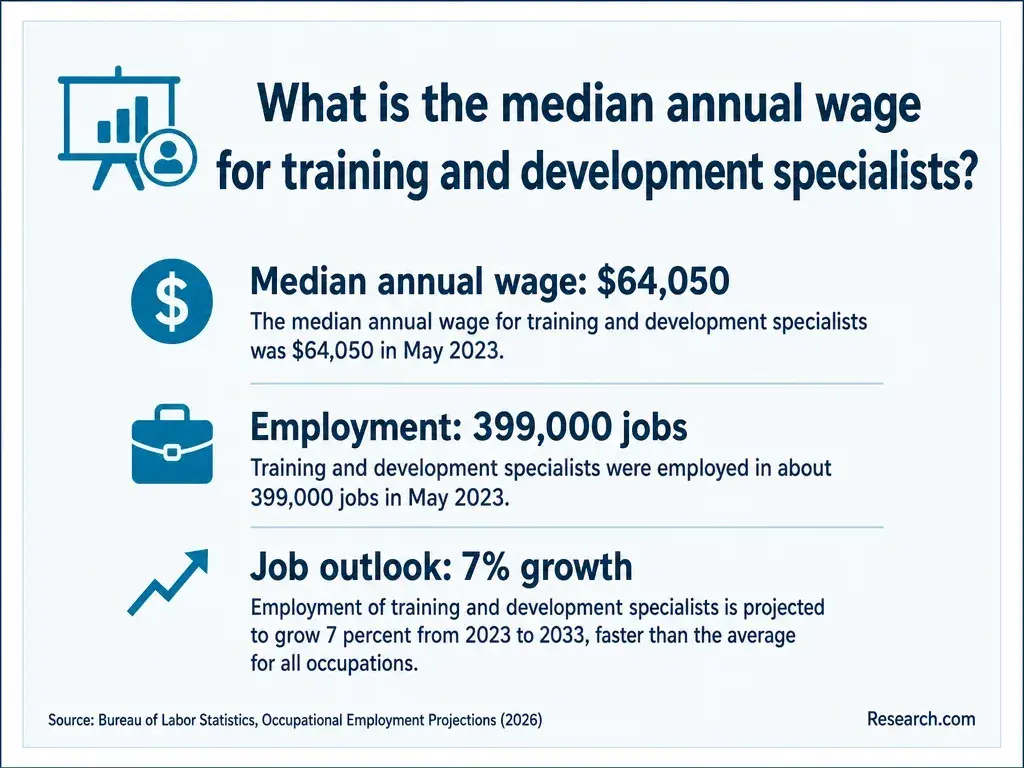
For context, the U.S. Bureau of Labor Statistics reports a May 2025 median annual wage of $75,940 for human resources specialists. That occupation-wide median is not a starting salary or a forecast for business administration graduates. Compare roles you actually want with their required skills and local opportunities before weighing earnings against tuition. If cost is central to that decision, business administration online programs with competitive tuition are a starting point for price comparison, not evidence of job placement.
Are licenses or certifications required for business administration careers?
Most general business coordination roles do not require a business administration license. Particular activities and occupations can have separate rules: accounting licensure, for example, has requirements beyond a general business degree, while some financial-services work requires role-specific authorization. Voluntary professional certifications may also impose education or experience conditions.
Choose any added credential by the target job, not by its resemblance to a degree concentration. If a job calls mainly for spreadsheet skills or accounting fundamentals, a targeted course and relevant work may be more direct than another credential; if it requires a bachelor's degree, a short certificate may not substitute. Compare that distinction with the total cost of online business degrees with lower tuition before committing to a longer pathway.
Other Things You Should Know About Business Administration
Sometimes. A placement result may allow enrollment in a later course without awarding credit for algebra. Ask whether that leaves a degree requirement unmet.
No. An associate degree may satisfy a transfer agreement or general education block, but the receiving university must determine whether it covers the BS program's specific math and prerequisite rules.
It depends on the receiving school's grade policy and whether the course is a business prerequisite. Check how it treats pass/fail credit before choosing that grading option.
Submit it for evaluation before taking algebra again. The university may accept it as a substitute, use it to satisfy another requirement, or still require the specified course.
- Predictors and Consequences of Math Course Repetition - PMC https://pmc.ncbi.nlm.nih.gov/articles/PMC10923562/
- Colleges and College Coursework | New York State Education Department https://www.nysed.gov/teaching-initiatives/colleges-and-college-coursework
- Frequently Asked Questions (FAQs) - Transfer Credit Ohio https://transfercredit.ohio.gov/help-center/faqs/faqs
- Transfer and Articulation Agreements - NYU Bulletins https://bulletins.nyu.edu/nyu/policies/transfer/
- Degree Audit and Transfer Credit - Registration and Records https://registrar.ncsu.edu/operations/degree-audit-and-transfer-credit/
- Transfer Credit | University of Maryland Catalog https://academiccatalog.umd.edu/undergraduate/registration-academic-requirements-regulations/transfer-credit/
- Transfer Credit Evaluation - TXST Admissions https://www.admissions.txst.edu/future-students/transfer-credit-evaluation.html
- What is the difference between a B.A. and B.S. in business administration? | Concordia University, Nebraska https://www.cune.edu/news/what-difference-between-b-and-bs-business-administration
- How Much Math Do You Need to get a Degree in Business Administration? | Southern Nazarene University https://www.snu.edu/blog/how-much-math-do-you-need-to-get-a-degree-in-business-administration
- Transfer Credit - College of LSA - University of Michigan https://lsa.umich.edu/lsa/academics/lsa-academic-policies-and-procedures/transfer-information---residence-policy.html