2027 Choosing a BS in Business Administration for Business Roles in Health Insurance Organizations
Audited and Verified:
Our Editorial and Data Verification Process
Research.com uses government datasets, official education statistics and primary institutional information to support its career and degree guides. Our review process checks factual accuracy, occupational definitions, source dates and the requirements associated with the credentials discussed.
How This Article Was Fact-Checked
Our editorial team verifies salary estimates, employment projections, education requirements and program information against original data providers and official organizations. Salary figures are checked against the relevant occupational definitions and reporting periods. Information about licensure, accreditation and required in-person training is reviewed separately.
Fact-checked and verified on:

Co-Founder and Chief Data Scientist
Health insurance organizations need people who can manage operations, analyze spending, support members, coordinate projects, and work within complex regulatory rules. A BS in Business Administration can prepare you for some of those functions, but the right degree depends on the work you want to do and the experience you already have. This guide connects business coursework to realistic health insurance roles, explains when a specialized path may be better, and shows what to verify before committing time and money to a program.
Key Things You Should Know
- A BS in Business Administration is a plausible route into insurer operations, project coordination, HR, and business analysis; it does not by itself qualify a graduate for clinical decisions, licensed insurance sales, or management.
- Choose courses and applied work around a target function, then add health insurance knowledge such as claims workflows, member experience, privacy, or plan operations.
- For context, the U.S. median annual wage for project management specialists was $102,320 in May 2025, but that occupation-wide figure is not a starting salary or a health insurance-specific estimate.
What Is a Business Administration Degree for Health Insurance Careers?
A BS in Business Administration is a broad undergraduate degree covering business functions such as accounting, management, operations, marketing, and quantitative decision-making. It is not usually an insurance-specific qualification. Its value to a health insurer is that graduates can apply those functions to work such as tracking service performance, coordinating vendors, preparing budgets, or improving administrative processes.
A BBA may serve similar goals, while a specialized degree can offer more depth in a particular function. Compare actual courses rather than assuming degree titles are interchangeable. For example, a student aiming to coordinate insurer technology implementations might compare a general business BS with a project management degree; accredited project management degree cost breakdowns can help frame the financial side of that comparison, but curriculum and transfer applicability matter too.
The degree is most compelling when you want flexibility across business functions. If you already know you want accounting, actuarial analysis, clinical work, or another specialized occupation, check that occupation's requirements before choosing a general business major.
What Health Insurance Jobs Can You Get With a Business Administration Degree?
Start with the tasks you want to perform, not the word "manager" in a job title. Health insurers, third-party administrators, and related organizations hire for member-facing, operational, analytical, and support functions. A BS may meet an employer's education preference, but relevant experience and tools often determine whether an applicant is competitive.
The distinctions below show where general business preparation can help and where additional knowledge becomes important.
| Role direction | Typical business work | Evidence employers may seek |
| Operations or claims coordinator | Monitor workflows, resolve administrative exceptions, and document process issues | Spreadsheet skills, accuracy, and experience with service or claims processes |
| Member experience or account support | Track service issues and communicate with members, employers, or internal teams | Customer communication, issue resolution, and knowledge of plan terminology |
| Project coordinator | Maintain schedules, follow up on deliverables, and support cross-functional changes | Documented coordination work, reporting, and stakeholder communication |
| Business or operations analyst | Examine performance measures and explain findings to decision-makers | Data preparation, sound interpretation, and familiarity with the relevant workflow |
A customer service employee may be able to move into member operations by documenting process improvements and learning plan workflows. Moving straight into an analyst role may require stronger data skills and a work sample. If project coordination is the target, compare business completion options with project management undergraduate transfer pathways; the better option is the one that applies your credits and builds the skills the job requires.
Is a BS in Business Administration Worth It for Health Insurance Roles?
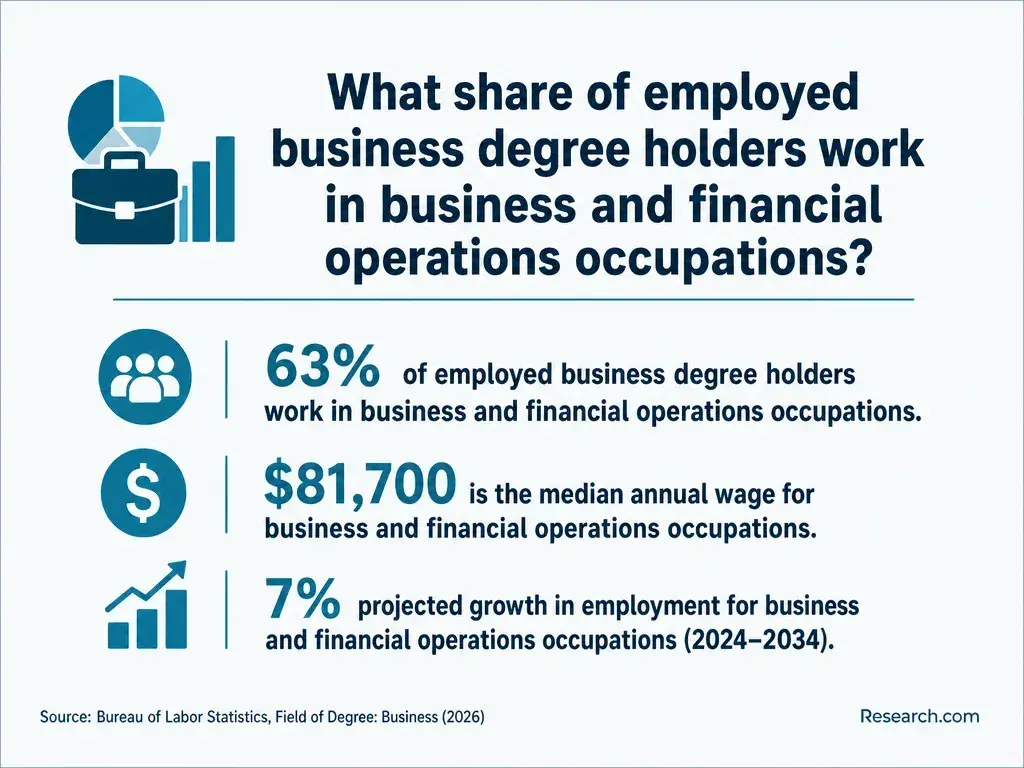
It can be worth completing if target job postings prefer a bachelor's degree, your prior credits apply toward the BS, and the curriculum addresses a skill gap you cannot readily close at work. The case is weaker if you already meet the education requirement and need only a particular skill, such as spreadsheet analysis, insurance terminology, or project coordination experience.
Compare the degree against your next realistic role, not an eventual executive position. Ask employers or review postings for the role's degree expectations, required software, insurance experience, and evidence of responsibility. Then compare the remaining tuition and time to completion with alternatives such as employer training, a targeted course, or a specialized degree. For someone interested specifically in procurement or vendor logistics, shorter online supply chain degree pathways may merit comparison, although their specialized courses may be less useful for broader insurer operations.
A strong reason to choose general business is optionality: operations, account support, and internal projects draw on overlapping skills. Optionality does not replace the industry knowledge or demonstrated performance needed to advance.
Prioritize courses by the decisions your target role makes. Accounting and finance help with budgets and cost reports; operations and project management help with service workflows and implementations; statistics and information systems help with performance measures. Business communication matters when explaining an issue to a member, employer client, vendor, or compliance team.
Look beyond course names to assignments. A useful program might let you analyze a de-identified service process, build a documented dashboard using permitted data, or assess a hypothetical vendor decision. Do not assume an employer will authorize access to claims or member records for classwork. Ask how the program handles data permissions, confidentiality, and alternatives when workplace data cannot be used.
For an HR-focused path within a health insurer, compare the business program's HR electives with a dedicated HR curriculum and transfer admission options for human resources majors. An elective cluster is not necessarily a formal concentration; verify its designation, required courses, and any added completion time.
Most internal business operations jobs do not require a license merely because the employer is a health insurer. Requirements depend on the activity and state: selling or soliciting insurance may require a producer license, while some claims-adjusting work can have separate state rules. Clinical determinations can require professional clinical qualifications. A business degree grants none of these authorities.
Voluntary credentials in project management, HR, analytics, or insurance may help in particular roles, but each has its own eligibility rules. Do not mistake a project management course - or the cost of a project management degree - for certification eligibility. If that function is your goal, compare the role's credential expectations with cost-conscious project management college options before paying for a second academic pathway.
Insurers may also require job-specific training on privacy, products, or regulated processes. Check postings and ask the employer which training is provided after hire and which qualifications must be in place beforehand.
Choose the format that lets you finish required courses and produce credible work samples. Online study may help an employee maintain a work schedule, but online does not mean self-paced: classes can include fixed deadlines, live meetings, group work, proctored assessments, or an approved internship. Campus study may offer easier access to local recruiting and in-person collaboration, but travel and class times can constrain a working student.
Ask each program for a term-by-term course schedule and the requirements for its internship or capstone. If you need financial assistance for an online option, compare eligibility and timing alongside format; information on financial aid packages for online project management bachelor's students illustrates questions to ask when considering a specialized alternative, but aid for one program does not establish aid for another.
There is no reliable single price or completion timeline for this choice. The amount you will pay depends on the school's tuition structure, fees, accepted credits that actually satisfy requirements, enrollment pace, and available aid. A transfer student should obtain a degree audit before relying on an advertised accelerated timeline.
Compare each offer using the same cost categories. This is particularly important if an internship schedule could reduce your paid work hours.
- Remaining required credits and the terms in which required courses are offered
- Tuition, mandatory fees, books, software, proctoring, and any travel
- Grants and scholarships versus loans, plus employer reimbursement rules and timing
- Work hours you may need to give up and the cost of an extra term if a course is unavailable
Use the school's current aid offer and degree audit to estimate your own total. To identify questions about posted tuition and federal aid participation, you can compare business administration tuition and FAFSA eligibility; confirm charges and your individual aid eligibility directly with each school.
Requirements vary by institution and by whether you enter as a first-year, transfer, or returning student. A school may request secondary-school or college transcripts and may set separate requirements for admission to its business major. Mathematics, accounting, or economics courses may be prerequisites at one program and part of the degree after admission at another.
If you have previous coursework, request both an admission review and an official evaluation showing where accepted credits apply. A course counted as a free elective may not replace a required business course. Before applying, review prerequisites for a business administration degree, then ask the specific program which requirements apply to your entry term and how missing courses affect your sequence.
First, confirm the institution's current accreditation through the accreditor and the U.S. Department of Education's recognized-accreditor information, checking that it applies to the school you would attend. Then determine whether the business school or particular program has separate AACSB, ACBSP, or IACBE accreditation. These are different checks: institutional accreditation does not establish business-program accreditation, and a business school's claim may not cover every degree it offers.
Confirm the exact degree name, location or online offering, and accreditation scope with the school and accreditor before enrolling. Accreditation matters, but it is not evidence that a particular employer will hire graduates. If application charges affect your shortlist, application-cost-free online school options can help identify schools to investigate; verify both the current fee and accreditation yourself.
What Salaries and Job Outlook Can Business Graduates Expect in Health Insurance?
No national wage figure describes what new business administration graduates earn at health insurers. U.S. Bureau of Labor Statistics occupation data provides context for possible career directions, not an offer prediction. The figures below cover workers across industries and experience levels, and the occupations do not map neatly to every insurer job title.
| Related U.S. occupation | Median annual wage, May 2025 | Projected employment growth, 2025-2035 |
| Project management specialist | $102,320 | 7% |
| Human resources specialist | $75,940 | 6% |
| Market research analyst | $78,760 | 7% |
These medians include experienced workers and jobs outside health insurance. Use local postings to assess entry-level pay, required experience, and whether an insurer's title corresponds to a BLS occupation. If finishing sooner would help you apply for degree-preferred positions, compare shorter pathways to an online business degree against the credits the school will actually apply and the weekly workload you can sustain.
Other Things You Should Know About Business Administration
It depends on the role. Member support and claims-related work commonly require more plan and healthcare terminology than a general HR or purchasing role. Check job postings and seek role-specific training rather than assuming a business degree covers it.
Yes, especially when you can document issue resolution, accurate records, process improvements, or work with multiple teams. Show how those responsibilities match the target role rather than relying on the job title alone.
Only with appropriate employer and academic permission. Member information, internal reports, and vendor terms may be restricted. A permitted de-identified dataset or a clearly labeled hypothetical case may be a safer alternative.
Not always. Employers may consider transferable operations, service, analytical, or administrative experience. Insurance knowledge can make you more competitive, so compare postings for your target role and learn the relevant workflows.
- Small Business and the Affordable Care Act (ACA) | HealthCare.gov https://www.healthcare.gov/small-businesses/learn-more/how-aca-affects-businesses/
- Health Insurance Portability and Accountability Act (HIPAA) Compliance - StatPearls - NCBI Bookshelf https://www.ncbi.nlm.nih.gov/books/NBK500019/
- What Can You Do With a Business Administration Degree? | snhu.edu https://www.snhu.edu/about-us/newsroom/business/what-can-you-do-with-a-business-administration-degree
- The Business Side of Healthcare: Non-Clinical Healthcare Jobs | Northeastern Online https://online.northeastern.edu/resources/non-clinical-healthcare-careers/
- What Does a Data Analyst Do? Roles, Skills & Tools Explained | Syracuse University https://ischool.syracuse.edu/what-does-a-data-analyst-do/
- Regional vs. National Accreditation: Which is Better? | Drexel University Online https://www.online.drexel.edu/news/national-vs-regional-accreditation.aspx
- Healthcare Data Analyst Career Guide: How to Get Started | University of San Diego Online Degrees https://onlinedegrees.sandiego.edu/health-data-analyst/
- Labor market information | Metro State University https://www.metrostate.edu/students/support/career/finding-a-path/labor-market
- Business Careers in Healthcare - U Career Success https://careers.utah.edu/uncategorized/business-careers-in-healthcare/
- Online Healthcare Administration Degree: What to Look for in a Program | CSP Global Concordia University, ST. Paul https://online.csp.edu/resources/article/online-healthcare-administration-degree/