2027 Is an Online BS in Business Administration the Right Next Step for Catering Coordinators?
Audited and Verified:
Our Editorial and Data Verification Process
Research.com uses government datasets, official education statistics and primary institutional information to support its career and degree guides. Our review process checks factual accuracy, occupational definitions, source dates and the requirements associated with the credentials discussed.
How This Article Was Fact-Checked
Our editorial team verifies salary estimates, employment projections, education requirements and program information against original data providers and official organizations. Salary figures are checked against the relevant occupational definitions and reporting periods. Information about licensure, accreditation and required in-person training is reviewed separately.
Fact-checked and verified on:

Co-Founder and Chief Data Scientist
Catering coordinators already manage deadlines, vendors, clients, and last-minute changes. An online BS in Business Administration could help turn that experience into broader responsibility, but it may be more education than a particular career goal requires.
If you are weighing school against work and event schedules, this guide explains where the degree adds value, where experience or targeted training may be faster, and what to verify before enrolling. The aim is to help you choose a path based on the job you want - not the assumption that every promotion requires a business degree.
Key Things You Should Know
- A business administration BS is most useful when your target role calls for broader budgeting, operations, or management preparation; it is not a prerequisite for every catering or event-planning job.
- Online does not necessarily mean self-paced. Check live meetings, group assignments, exams, and deadlines against evenings and weekends spent working events.
- The US Bureau of Labor Statistics reports a $61,160 median annual wage for meeting and event planners in May 2025 and projects 6% employment growth from 2025 to 2035; neither figure predicts an individual graduate's pay or job prospects.
Is an online bachelor's degree in business administration right for catering coordinators?
It may be a good next step if you want to move beyond coordinating individual events into venue operations, account management, budgeting, or supervising a catering business. A BS in Business Administration generally combines accounting, marketing, management, and quantitative coursework. That breadth can complement your client service, scheduling, vendor communication, and problem-solving experience.
Start with the job you want. If postings you would realistically apply for prefer a bachelor's degree and you lack one, completing a BS may remove a hiring barrier. If you want to become a stronger event planner or earn a promotion at your current employer, documented results, mentorship, and focused training may offer a more direct route. A hospitality degree may be more relevant if you want deeper instruction in lodging, food service, or venue operations.
Before applying, compare the degree requirement in target job postings with the responsibilities you have already held. If you are still testing whether a degree fits your plans, application-cost-free online school options can remove one upfront expense - but not tuition or the time commitment.
What careers can catering coordinators pursue with a business administration degree?
The most credible next move usually builds on work you can already demonstrate. These paths differ in how much new functional experience they require:
| Potential path | Relevant catering experience | Additional evidence employers may seek |
| Senior event or venue coordinator | Client timelines, vendors, and on-site problem-solving | Ownership of larger events, contracts, or budgets |
| Catering or venue operations supervisor | Staff scheduling and service coordination | Documented staffing, purchasing, and performance responsibility |
| Sales or account coordinator | Proposals and ongoing client relationships | Sales records, pricing judgment, and customer-management tools |
| HR coordinator | Training and scheduling staff | Knowledge of HR processes and relevant experience |
A business degree can support these transitions, but it does not make a coordinator an experienced manager or HR specialist. For a deliberate move into HR, compare specialized study and HR bachelor's transfer policies before choosing a general business program. Ask employers which responsibilities - not just titles - they expect you to have handled.
How does an online business administration degree support event management careers?
Business coursework can give a catering coordinator a stronger basis for decisions that extend beyond event logistics: whether a proposed price covers costs, how to forecast staffing needs, and how to assess a vendor or marketing campaign. The benefit is greatest when you can apply class concepts to permissible, real work rather than relying only on hypothetical cases.
For example, a course project could propose a staffing model using publicly available or instructor-supplied figures. Using actual employer schedules, customer information, or margins requires permission and appropriate safeguards; a classroom proposal is not proof that a business change worked. If your ambition is organization-wide leadership rather than event delivery, compare the curriculum and time commitment with online organizational leadership programs for quicker graduation. A shorter advertised timeline still depends on transferable credits and course availability.
Requirements vary, but a BS in Business Administration typically includes general education and a business core. For catering work, managerial accounting can inform menu and labor-cost decisions; operations courses can address capacity and workflow; marketing can strengthen client outreach; and statistics or spreadsheet assignments can improve demand estimates. Management and business law may add context for staffing, contracts, and organizational decisions.
Review the actual catalog, not just a list of concentration names. An event-management elective is not necessarily a formal concentration, and an operations course does not provide specialist supply-chain qualifications. If purchasing and distribution - not event leadership - are your long-term focus, compare the course depth and completion requirements of shorter completion timelines for supply chain bachelor's students with a general business degree.
First-year applicants commonly submit evidence of secondary-school completion; transfer applicants generally submit transcripts from previous colleges. A school may also have GPA rules, mathematics preparation requirements, or separate admission standards for its business major. Experience coordinating catering events can strengthen an application, but it does not automatically replace academic requirements or earn credit.
If you have prior college study, request an official evaluation showing where accepted credits apply: general education, business core, electives, or other requirements. This matters more than a headline transfer-credit total. Check the school's published policies and business administration admissions eligibility rules, then ask admissions whether you can enter the major directly and an adviser which courses remain. The institution - not a preliminary estimate - decides credit applicability.
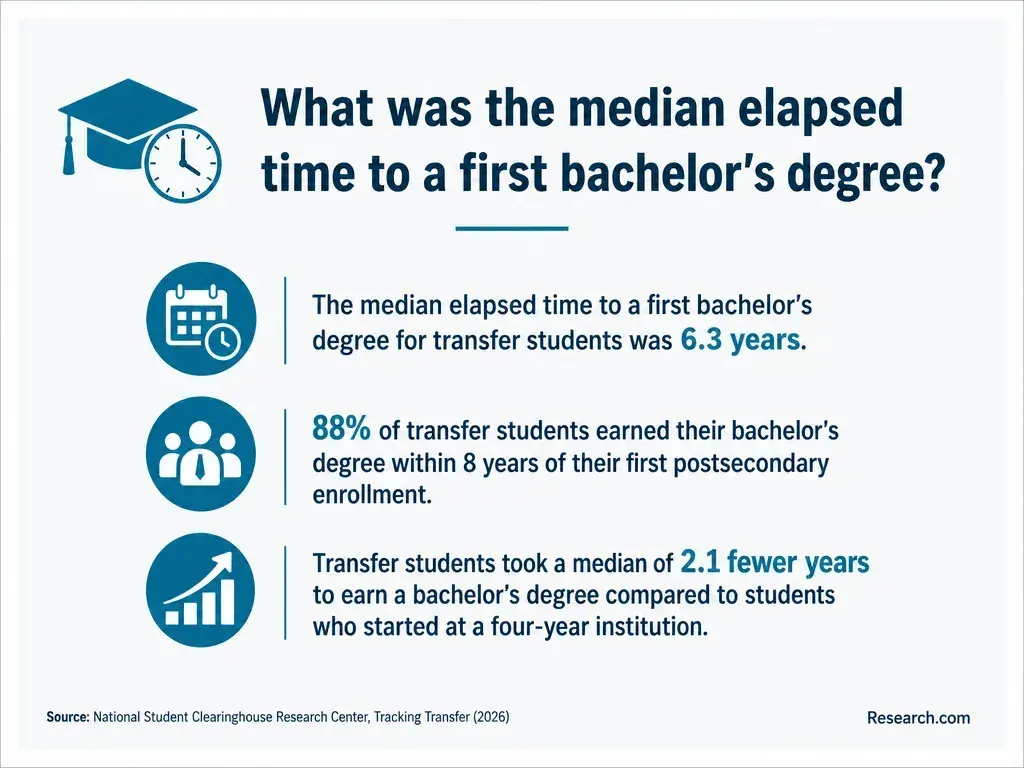
A bachelor's degree commonly requires about 120 semester credits, but your remaining credits, required course sequence, and enrollment pace determine the finish date. Full-time study from the beginning generally takes several academic years; transferred coursework may shorten that path only when it satisfies degree requirements. Event-heavy seasons may make a sustainable part-time schedule more valuable than the fastest advertised completion time.
Calculate the cost of remaining required credits, not the published price of a full degree. Include tuition, mandatory and technology fees, books or software, possible travel or proctoring, and financing costs. Compare schools using an official degree audit and a written aid estimate; affordable school choices for online business students are a starting point, not a substitute for your personal net-cost calculation. Ask whether employer tuition assistance is paid upfront or reimbursed after a course is completed.
An online degree can be a legitimate bachelor's degree when the institution holds recognized institutional accreditation and the program meets its academic requirements. Institutional accreditation applies to the school; AACSB, ACBSP, or IACBE business accreditation has a separate scope that must be checked for the particular school or program. None of these credentials guarantees a job.
Verify the institution and exact degree on the school's website, then check the relevant accreditor's directory and the program's stated coverage. When using a national guide to ranked online business colleges to build a shortlist, confirm accreditation and curriculum independently. Employers may value an accredited degree, but they will also assess your event experience, skills, and record of responsibility.
Online study may eliminate a commute and let you work around event shifts. Campus study may offer easier face-to-face contact and scheduled time for group work. Neither format is inherently easier: online courses may still require live meetings, timed exams, presentations, group projects, or fixed weekly deadlines.
Ask for sample schedules from required upper-level courses, not only introductory classes. Check whether attendance conflicts with weekend events, whether a capstone permits an approved workplace project, and whether tutoring and career services serve online students. Shorter pathways to an online business degree may reduce calendar time while increasing the weekly workload; compare that workload with your busiest catering season before committing.
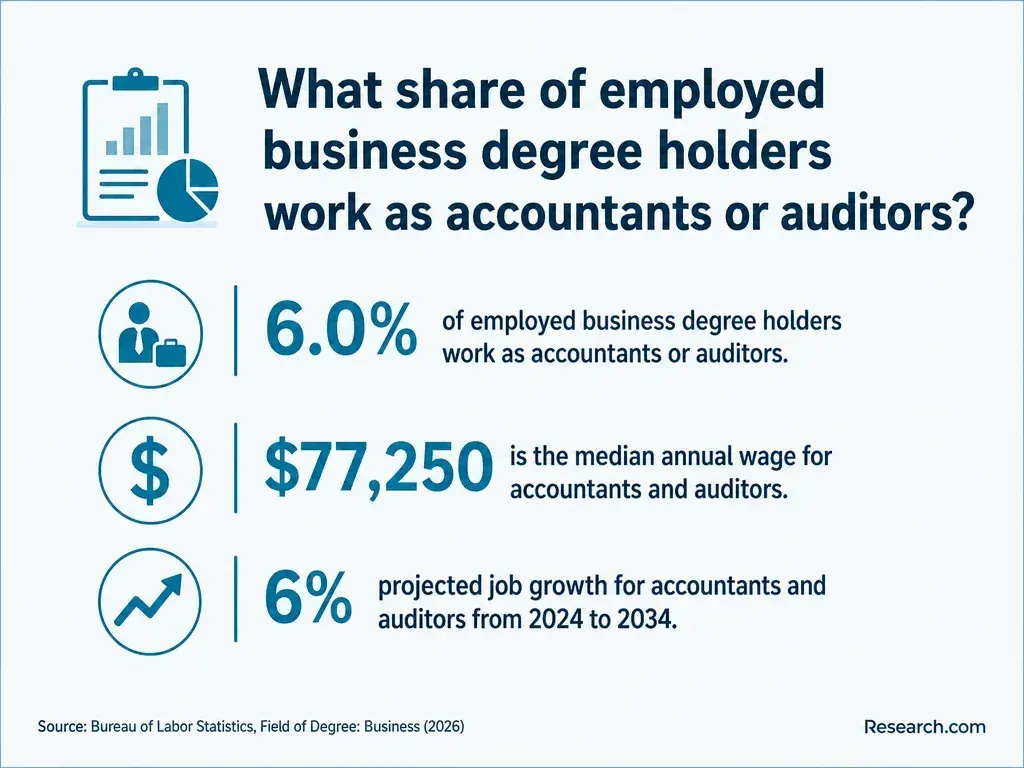
There is no single salary or growth rate for business administration graduates. The closest occupational benchmark for many catering coordinators considering event work is meeting and event planner; a move into another function has a different labor market.
| US occupation | Median annual wage, May 2025 | Projected employment change, 2025-2035 |
| Meeting and event planner | $61,160 | +6% |
| Human resources specialist | $75,940 | +6% |
These Bureau of Labor Statistics figures cover workers across each occupation, not new graduates or catering coordinators making a career change. The HR figure, in particular, is not a likely starting salary for someone without relevant HR experience. Use local job postings to judge degree preferences and pay for roles you could plausibly obtain. If keeping your catering job while seeking advancement is essential, working-adult business administration program comparisons can help you assess whether a feasible program supports that goal.
Do catering coordinators need certifications or licenses to advance their careers?
There is no single business administration license required to become a catering or event coordinator. Employers may instead value food-safety training, venue-specific instruction, demonstrated event experience, or a voluntary event-planning credential. Requirements for handling food, alcohol service, and operating a business vary by location and responsibility; confirm the applicable rules with the relevant state or local authority and employer.
Choose additional education by the task you want to perform. If you want to lead complex event projects, compare a focused credential or course with a full degree, including eligibility requirements and total costs of project management programs. A business BS is broader preparation; it does not itself award a professional certification or replace the experience employers expect from project leaders.
Other Things You Should Know About Business Administration
Possibly. Ask the instructor what qualifies, and get employer permission before using internal records, client information, or company materials. Your job does not automatically satisfy a capstone or internship requirement.
No. Both are undergraduate business degrees, but required courses and quantitative emphasis can differ by school. Compare catalogs rather than assuming the titles describe identical preparation.
No. Describe the responsibilities you already hold, such as coordinating staff or tracking expenses. Admission policies vary, and management experience is not universally required for an undergraduate business program.
Check whether a second bachelor's degree is worth its additional requirements. Depending on your goal, targeted courses, a certificate, employer training, or a graduate program may be a better use of your time and money.
- Catering manager | Prospects.ac.uk https://www.prospects.ac.uk/job-profiles/catering-manager/
- Business Administration - Online | Saint Joseph's University https://www.sju.edu/degree-programs/business-administration-online
- How Long Does it Take to Get a Business Degree Online? | stevenson.edu https://www.stevenson.edu/online/about-us/news/how-long-does-it-take-to-get-a-business-degree-online/
- Lombardo College of Business Online Bachelor's in Business Administration Degree. | Millersville University https://www.millersville.edu/mgmtmktg/general-business-admin-online.php
- 11 Types of Business Degrees and Career Pathways | National University https://www.nu.edu/blog/types-of-business-degrees/
- Find the Right Online Degree Program by Using a Comparison Framework | Columbia Southern University https://www.columbiasouthern.edu/blog/blog-articles/2026/august/find-the-right-online-degree-program
- Transfer Courses | Undergraduate Advising Resources | Master of Science in Financial Technology https://eccles.utah.edu/programs/undergraduate/policies/transfer-course-equivalency/
- Choosing an MBA Program - Terry College of Business - UGA https://www.terry.uga.edu/mba/types-of-mba-degrees/
- Food Service Management Requirements: Is a Degree Mandatory? | ECPI University https://www.ecpi.edu/blog/food-service-management-requirements-is-a-degree-mandatory
- Fast Online Bachelor's Degree Completion: How to Spot a Smart Investment vs. a Degree Mill https://www.ndnu.edu/articles/business-management/fast-online-bachelors-degree-completion-smart-investment-vs-degree-mill.html