2027 Does Adding a Concentration to a Business Administration BS Justify an Extra Semester?
Audited and Verified:
Our Editorial and Data Verification Process
Research.com uses government datasets, official education statistics and primary institutional information to support its career and degree guides. Our review process checks factual accuracy, occupational definitions, source dates and the requirements associated with the credentials discussed.
How This Article Was Fact-Checked
Our editorial team verifies salary estimates, employment projections, education requirements and program information against original data providers and official organizations. Salary figures are checked against the relevant occupational definitions and reporting periods. Information about licensure, accreditation and required in-person training is reviewed separately.
Fact-checked and verified on:

Co-Founder and Chief Data Scientist
A concentration can make a business administration BS more relevant to a target job, but an extra semester also means more expense and a later graduation date. If you are choosing courses or reviewing your degree audit, the decision depends on what the concentration adds beyond electives you could take without delaying graduation.
This guide shows how to compare the coursework, career value, scheduling, and full cost of both paths - and what to confirm with your school before changing your plan.
Key Things You Should Know
- An extra semester is most defensible when the concentration fills a specific skill gap and provides relevant coursework or applied work you cannot complete on time through electives.
- Compare the entire added semester - not just course charges - with the value of graduating sooner; a concentration does not guarantee higher pay or a job.
- Check the official degree audit first: accepted credits may count as electives without satisfying concentration requirements, and required courses may not run every term.
Does adding a concentration to a business administration BS justify an extra semester?
Usually, only if the additional semester buys meaningful preparation for a defined goal. A student pursuing supply chain work, for example, may benefit from a sequence in procurement, operations, and analytics plus a relevant project. Someone with comparable coursework and experience may gain little from staying enrolled solely to add the concentration label.
Compare the choices against the same target role and graduation plan. The distinction is between learning you can use and a designation whose requirements happen to delay completion.
| Path | Best fit | Main trade-off |
| Graduate on schedule with a general BS | Relevant electives, work experience, or an internship already demonstrate the target skills | No formal concentration designation |
| Add the concentration and an extra semester | Required courses and applied work close a substantial, job-relevant gap | Additional costs and delayed full-time job availability |
| Graduate, then pursue targeted training | A narrow skill or separate professional credential matters more than the concentration | Training may not carry undergraduate credit or appear on the degree record |
Ask your adviser for a term-by-term plan for both graduation dates, including prerequisites and course availability. If speed is the deciding factor, compare accelerated undergraduate programs cautiously: a shorter calendar does not make the remaining work cheaper or lighter.
What is a business administration BS concentration, and how does it differ from electives?
A concentration is a school-defined set of courses within the BS in Business Administration, often focused on a function such as finance, marketing, or operations. Electives are courses you can choose within your degree plan. Several electives in one subject do not automatically become an official concentration; the school decides its requirements and whether the designation appears on the transcript or diploma.
That distinction matters most when previous or transferred courses are involved. A course can be accepted for credit yet apply only as a general elective, leaving a required concentration course unfinished. Students bringing in project management coursework can use guidance on online undergraduate project management credit acceptance as a starting point, but only their receiving institution can confirm how each course applies to its BS and concentration.
How does a business concentration affect career opportunities and earning potential?
A concentration can help you explain your preparation for a function-specific entry role. A marketing applicant might point to research methods and campaign analysis; an operations applicant might show process mapping and spreadsheet work. Employers can still weigh internships, prior jobs, communication, and demonstrated results more heavily than the concentration name. Graduation alone does not qualify someone to manage staff or budgets.
For context, the U.S. Bureau of Labor Statistics reports a May 2025 median annual wage of $78,760 for market research analysts. That is an occupation-wide figure, not the expected starting salary or pay increase for a business graduate who adds a marketing concentration. Compare actual entry-level postings in your location and look for required skills before treating another semester as an earnings investment.
If your target work is substantially more specialized than the available concentration, consider whether a dedicated degree provides better preparation. Supply chain program length and value comparisons, for instance, can help frame that question without assuming a specialized degree is always worth changing programs.
Choose by the tasks in the jobs you want, not by a concentration's broad name. The following matches indicate where additional coursework may help an early-career applicant build evidence; none establishes job eligibility by itself.
| Concentration | Relevant work to investigate | Evidence worth developing |
| Operations or supply chain | Logistics, purchasing, inventory, or operations coordination | Process analysis, forecasting, and supplier or inventory exercises |
| Marketing or analytics | Marketing coordination or market research support | Research design, data interpretation, and campaign measurement |
| Human resources | HR support, recruiting coordination, or training support | Workforce data, employment practices, and professional communication |
| Finance | Finance-support or analyst-track roles, subject to employer requirements | Financial-statement analysis and spreadsheet modeling |
BLS projects 18% U.S. employment growth for logisticians from 2025 to 2035. That signals demand in a specific occupation, not guaranteed openings for every supply chain student; review the technical and experience requirements in postings. If HR is your target, compare HR curricula and career directions to see whether a concentration offers enough depth for the work you want.
The business core usually supplies broad grounding in accounting, economics, marketing, management, finance, and quantitative reasoning. A concentration adds more focused courses, but its depth varies. An analytics option might move from statistics and spreadsheets to dashboards; an operations option might add supply chain planning and process improvement. Look for assignments that let you interpret imperfect data and explain recommendations, rather than merely learn software terms.
Course order can determine whether the extra semester is necessary. A prerequisite offered now and an advanced course offered only in a later term may create a delay even when few credits remain. Check whether an internship or capstone is required, whether your proposed workplace project needs approval, and whether its results can be shown in a portfolio without disclosing confidential information. For a student considering a more focused alternative, economical project management education online offers a comparison point for course depth - not a substitute for checking the BS degree audit.
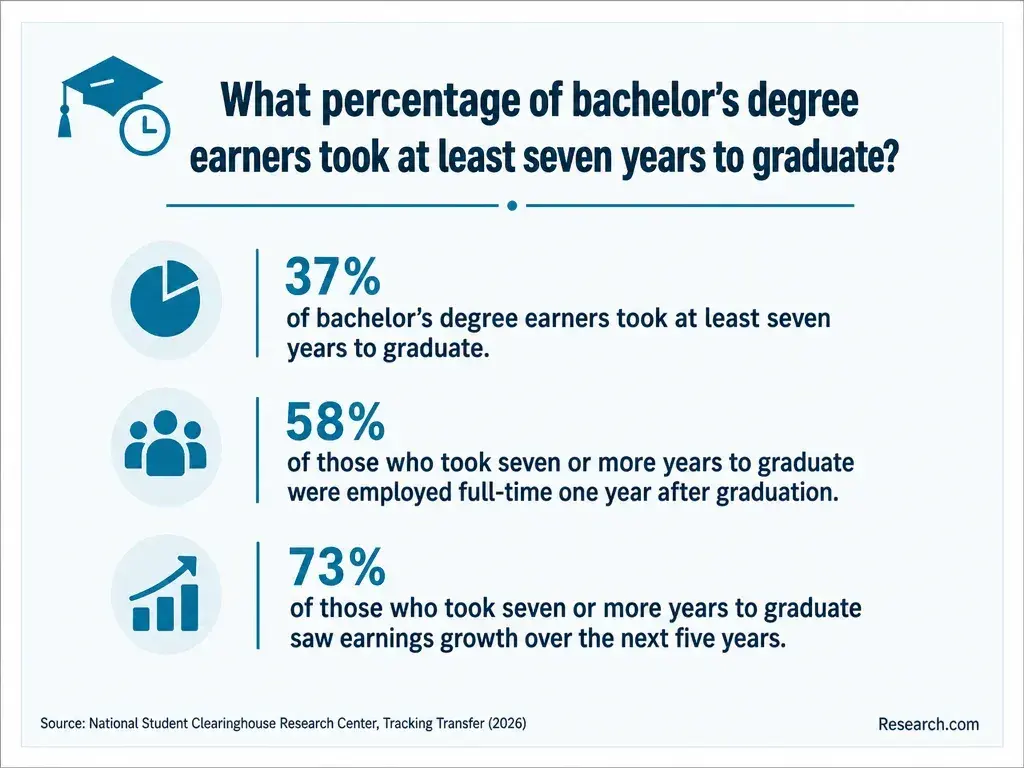
There is no reliable universal price for an extra semester. A school may charge by credit or term, and the added amount depends on course load, aid eligibility, housing, and whether graduation postpones paid work. Build both completion scenarios using the school's current charges and your own budget. These are the costs most likely to change the decision.
| Cost component | What to compare in each scenario |
| Direct education charges | Additional tuition, mandatory fees, books, software, and any required travel |
| Living and financing | Extra-term housing or childcare and any additional borrowing or interest |
| Opportunity cost | Potential full-time earnings postponed, adjusted for whether you could realistically secure that work |
| Offsets | Confirmed grants, employer benefits, or other aid that actually applies to the extra term |
Calculate the incremental cost: extra charges and living costs, minus confirmed aid and costs you would incur either way. Keep delayed earnings separate because a job offer is not guaranteed. Ask financial aid whether the extra courses count toward your eligible program and whether another term changes your borrowing or satisfactory academic progress status. Project management tuition fees and financial aid illustrates the categories to compare if a separate program is your alternative; use your own school's figures for this decision.
Sometimes - but online delivery does not ensure the required courses are available every term. A concentration may have live meetings, group projects, proctored assessments, an internship, or a capstone that is difficult to fit around work. Ask for the upcoming course rotation and confirm whether every requirement is available in your format, not merely somewhere at the institution.
For an online student, the fastest plan may be to take a prerequisite earlier, use an approved summer course, or choose relevant electives already scheduled. Do not assume an outside course will transfer as a concentration requirement. Students comparing a switch of programs can compare accelerated supply chain bachelor's degrees, then request a written evaluation of remaining requirements before assuming a faster finish.
Ordinarily, choosing a concentration does not require a professional license, and completing one does not award a license or certification. Accounting licensure, financial-services licensing, HR certifications, and project management credentials are separate pathways with requirements set by the relevant state authority or credentialing body. Some may require particular coursework, examinations, or experience.
If a named credential is your goal, check its official eligibility rules before adding a semester. An additional degree application is not a shortcut around those rules: even online universities with no application charge cannot confer a separate occupational credential through admission alone.
Start with recognized institutional accreditation, then check whether any claimed AACSB, ACBSP, or IACBE accreditation covers the relevant business school or program. Accreditation is an important quality check, but it does not establish that a specific concentration is offered online, will accept your credits, or will improve your employment prospects. The catalog and an official degree evaluation should settle the academic questions.
Request the concentration's required courses, recent and planned course schedules, delivery and attendance rules, applied-work requirements, total charges, and the exact wording recorded upon completion. Ask career services for relevant internship support and for the definitions behind any published outcomes. US business college rankings for online learners can help identify programs to investigate, but compare verified requirements and your expected completion date before relying on a ranking.
When is a general business administration BS better than a concentration?
Finish the general BS on schedule when the concentration would mainly repeat skills you already have, when its required courses do not match your target roles, or when an internship, work sample, or focused training would address the gap more directly. This is especially relevant if the extra term would strain your finances or keep you from accepting a suitable job.
Before declining the concentration, ask your adviser to confirm that your chosen electives satisfy graduation requirements and that leaving the concentration will not disrupt another requirement. If cost is driving the choice between staying and transferring, low-cost online business degree programs may be worth investigating - but obtain a written credit evaluation and full completion-cost estimate before moving. The better choice is the path that produces useful evidence of your skills at a cost and graduation date you can justify.
Other Things You Should Know About Business Administration
Often, but deadlines and approvals vary. Ask your adviser whether the change is permitted under your catalog year and whether it alters your graduation plan.
Usually, subject to school policy. Request an updated degree audit first to make sure completed concentration courses still count toward the general BS.
Not necessarily. Schools differ in whether they print it on the diploma, record it on the transcript, or both. Check the registrar's policy before relying on the designation.
Yes. List accurate course names, skills, or approved projects, but do not claim an official concentration you have not completed.
- Cost of Attendance (Budget) | 2025-2026 Federal Student Aid Handbook https://fsapartners.ed.gov/knowledge-center/fsa-handbook/2025-2026/vol3/ch2-cost-attendance-budget
- Understanding College Costs | studentaid.gov https://studentaid.gov/resources/prepare-for-college/students/choosing-schools/consider-costs
- Estimating Costs | Financial Aid - University of Michigan https://finaid.umich.edu/getting-started/estimating-costs
- Business Administration Major, B.S.B.A. - UNC Catalog https://catalog.unc.edu/undergraduate/programs-study/business-administration-major-bsba/
- how-to-select-a-concentration-when-earning-a-bachelor-of-science-in-business-administration | Walden University https://www.waldenu.edu/online-bachelors-programs/bs-in-business-administration/resource/how-to-select-a-concentration-when-earning-a-bachelor-of-science-in-business-administration
- BS Business Administration | University at Albany https://www.albany.edu/business/programs/bs-business-administration
- Business Administration | General Studies | BABA - UF Catalog https://catalog.ufl.edu/UGRD/colleges-schools/UGBUS/BAG_BABA/
- Benefits of Internships for College Students | Husson University https://www.husson.edu/online/blog/2024/06/benefits-of-internships
- Understanding Opportunity Cost of Attending College | University of Phoenix https://www.phoenix.edu/blog/understanding-opportunity-cost-of-attending-college.html
- Business Administration | Office of Undergraduate Programs | News at Poole College https://poole.ncsu.edu/undergraduate/majors-and-minors/business-administration/