2027 Choosing a BS in Business Administration When You Have Prior College Debt and a Limited Education Budget
Audited and Verified:
Our Editorial and Data Verification Process
Research.com uses government datasets, official education statistics and primary institutional information to support its career and degree guides. Our review process checks factual accuracy, occupational definitions, source dates and the requirements associated with the credentials discussed.
How This Article Was Fact-Checked
Our editorial team verifies salary estimates, employment projections, education requirements and program information against original data providers and official organizations. Salary figures are checked against the relevant occupational definitions and reporting periods. Information about licensure, accreditation and required in-person training is reviewed separately.
Fact-checked and verified on:

Co-Founder and Chief Data Scientist
Existing college debt makes the price of another semester matter more than an advertised tuition rate. If you want to finish a BS in Business Administration on a limited budget, the crucial questions are how your previous credits apply, what aid you can still receive, and whether the remaining degree requirements justify the cost. This guide helps returning students compare realistic completion plans, protect their cash flow, and decide when a lower-cost or more targeted route would serve them better.
Key Things You Should Know
- Compare the cost of credits still required for graduation, not just tuition per credit; accepted transfer credits may count only as electives.
- Existing student loans do not automatically prevent new federal aid, but default, prior borrowing, remaining grant eligibility, and academic progress can change the answer.
- A business degree can support several career paths, but it does not guarantee a salary increase; the U.S. Bureau of Labor Statistics reports a $75,940 May 2025 median for human resources specialists across the occupation, not for new business graduates.
What is a BS in Business Administration, and is it worth pursuing with existing college debt?
A BS in Business Administration is an undergraduate degree covering several business functions rather than training for one occupation. Programs commonly combine accounting, finance, marketing, management, operations, and quantitative coursework with general education requirements. A BBA or specialized business bachelor's may cover similar ground, but the required courses and transfer rules depend on the institution.
With existing debt, the degree is most defensible when it removes a documented barrier - for example, a bachelor's requirement for roles you are qualified to pursue - and when an official degree audit shows an affordable path to completion. Start with your experience and target job: a working operations coordinator may benefit from completing a bachelor's, while someone seeking one specific spreadsheet or bookkeeping skill may be better served by a course or employer training.
Compare the additional borrowing and time required with plausible opportunities, not a promised return. A guide to business administration college costs and potential career outcomes can help frame the comparison, but your own credit evaluation, loan balance, and local job requirements should control the decision.
How can you pay for a business administration degree with limited education funds?
Use funding that does not increase debt first, while checking its conditions. The practical order is to obtain an official transfer evaluation, compare grants and scholarships for which you qualify, ask about employer assistance, and then determine whether any remaining federal borrowing fits your repayment budget.
Several funding sources have timing or eligibility limits worth checking before you enroll:
- Grants and scholarships: Ask whether awards are available to transfer, part-time, or returning students and whether they renew.
- Employer assistance: Confirm eligible programs, grade requirements, reimbursement dates, annual limits, and whether leaving the job triggers repayment.
- Payment plans: Compare installment dates and fees with your monthly cash flow; a plan spreads charges but does not reduce tuition.
- Prior-learning or examination credit: Use it only when the school confirms that the resulting credit satisfies a remaining requirement and costs less than the course.
If you need to search beyond local institutions, use lists of inexpensive online business administration colleges to identify candidates, then request each school's personalized cost and degree audit. A low advertised rate is not savings if the program requires you to repeat coursework.
Can you receive financial aid for a new degree while repaying prior student loans?
Often, yes. Simply making payments on existing student loans does not disqualify you from federal student aid. Eligibility depends on factors including the school and program, your enrollment, academic progress, remaining grant eligibility, borrowing limits, and whether your federal loans are in default. Submit the Free Application for Federal Student Aid (FAFSA) and have the prospective school assess your record rather than assuming you are ineligible.
If you already hold a bachelor's degree, do not assume you can receive another Pell Grant; federal Pell eligibility generally excludes students who have completed a bachelor's degree. If you previously attended college without graduating, ask the aid office to check your remaining Pell eligibility and federal loan history. Students with loans in default should resolve their eligibility with the appropriate loan holder and financial-aid office before relying on an award estimate.
Returning students should also ask how the school measures satisfactory academic progress, including its rules for transferred and previously attempted credits. If you enroll at least half time, an eligible federal loan may qualify for in-school deferment, but interest can still accrue depending on the loan type. Confirm the status with your servicer; postponing payments is not debt forgiveness. When comparing affordable school choices for online business students, check each institution's aid eligibility and your individual award alongside its price.
There is no reliable single price or completion time for a student with prior college work. Your starting point is the school's written evaluation showing which credits satisfy general education, business core, concentration, elective, and residency requirements. An accepted credit that applies only as an elective may not shorten the path as much as expected.
The following cost components explain why two schools with similar tuition can produce different final bills. Compare them using the same enrollment pace and the requirements each school says you still need.
| Cost or time factor | What to obtain from each school | Why it changes the comparison |
| Remaining coursework | Official degree audit and required course sequence | Extra prerequisites or repeated courses increase both cost and time. |
| Tuition and required fees | Charges per credit, course, or term, including program and technology fees | The lowest advertised tuition rate may not produce the lowest total. |
| Course availability | Planned offerings for required courses and the capstone | A missed or infrequently offered course can delay graduation. |
| Other expenses | Books, software, proctoring, transportation, and any campus visits | These costs affect the cash needed each term. |
| Work and borrowing | Feasible work schedule, aid estimate, and expected new loan amount | Reduced earnings and loan interest add to the degree's financial cost. |
Ask each adviser for a term-by-term plan, then total the charges for those terms and subtract only aid you are actually eligible to receive. Recalculate if changing pace affects aid, tuition, or the date a required course is offered. Lists of ranked programs for finishing a business bachelor's sooner can suggest options, but an accelerated calendar does not establish your personal graduation date.
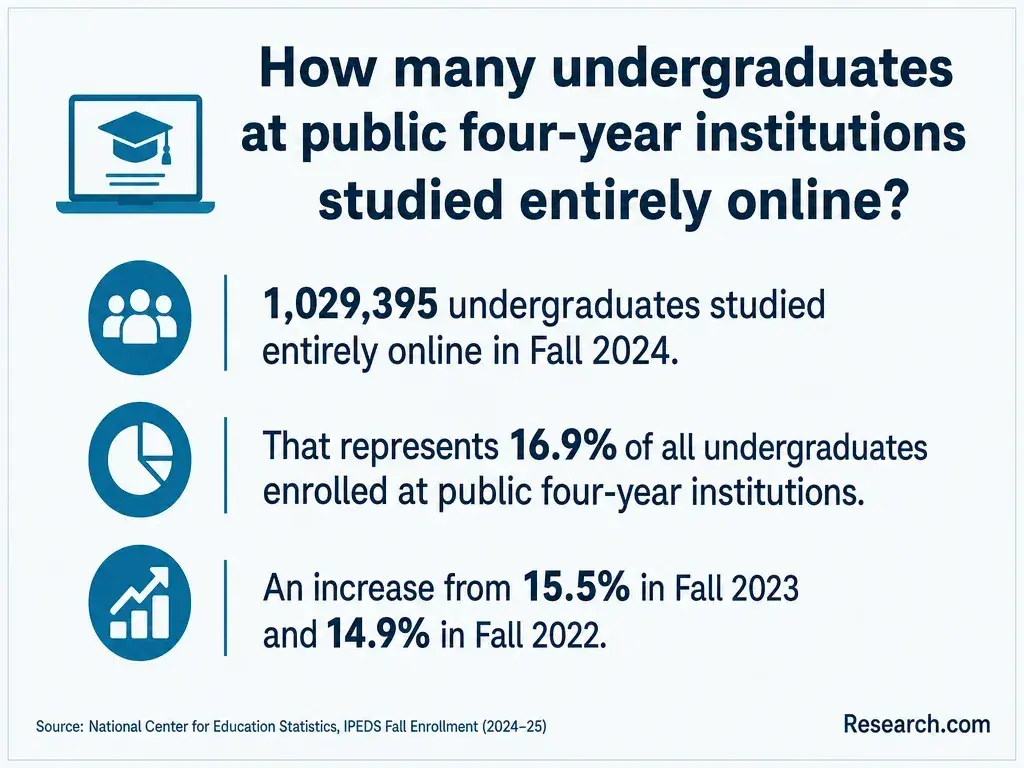
Neither format is inherently cheaper. Online study may reduce commuting and relocation costs, while campus study may offer a lower in-state rate or easier access to courses and support. Compare the total cost to finish under each format, including fees, remaining requirements, course availability, and any change in your ability to keep working.
For a student managing loan payments, cash flow matters as much as total tuition. An online program that lets you remain employed can be valuable, but online classes may still require live meetings, group work, proctored exams, or fixed deadlines. Check those obligations before treating the format as flexible. Programs described as business administration programs supporting continued employment should be evaluated against your actual work hours and the schedule of required courses, not their delivery label alone.
Most programs combine general education with a business core in accounting, economics, finance, marketing, management, operations, and business law or ethics. Statistics, spreadsheets, information systems, and a strategy or capstone course may also be required. The exact mix matters to a debt-conscious student because an earlier course in the same subject may not meet a program's specific prerequisite.
Choose electives or a formal concentration by the work you want to do, not by its title alone. For example, supply chain coursework may add procurement and logistics depth beyond a general operations course. If that is your target field, compare the added requirements of your business program with fast undergraduate routes into supply chain management. A specialized route makes sense only if its relevant coursework and applied opportunities outweigh any additional time or cost. An elective cluster is not necessarily an officially awarded concentration.
Requirements vary by school and by entry point. A returning student may need official transcripts from every prior college, proof of secondary-school completion, and a minimum academic standing. Some institutions admit students to the university before separately approving entry to the business major; introductory accounting, economics, mathematics, or statistics may be prerequisites rather than admission requirements.
Before paying an application fee, ask admissions whether your record qualifies for entry, then ask the business department and transfer office which courses will satisfy major requirements. If you previously struggled academically, ask about readmission, academic renewal, and whether old grades affect eligibility. Admission does not settle credit applicability or financial-aid standing.
Students considering accelerated online bachelor's programs should ask whether their prior credits meet the program's entry conditions and whether required courses can actually be taken in the proposed sequence. A short advertised timeline may depend on transfer credits that have not yet been approved.
First, confirm the institution's accreditation and its status through the U.S. Department of Education's accreditation database or the accreditor's own directory. Then check whether any claimed AACSB, ACBSP, or IACBE business accreditation covers the school or program you are considering. Institutional accreditation and specialized business accreditation answer different questions; neither guarantees that your credits will transfer elsewhere or that you will obtain a job.
Quality for this decision also means a workable route to graduation. Request the current catalog, a written degree audit, schedules for upper-level requirements, advising access, and the school's policies on transfer appeals, course substitutions, and graduation residency. Ask how the program reports completion and career outcomes, including which students were counted. If you are comparing business administration with online leadership bachelor's programs with compressed schedules, verify the exact degree awarded and whether the shorter schedule preserves the courses you need for your goal.
A broad business degree can support applications for roles in operations coordination, administrative services, sales support, marketing coordination, procurement, and human resources. Your prior work often determines the most credible next step: someone with customer-service and scheduling experience may be better positioned for an operations role than for an analyst job requiring extensive data experience. Management positions generally call for demonstrated responsibility beyond the degree.
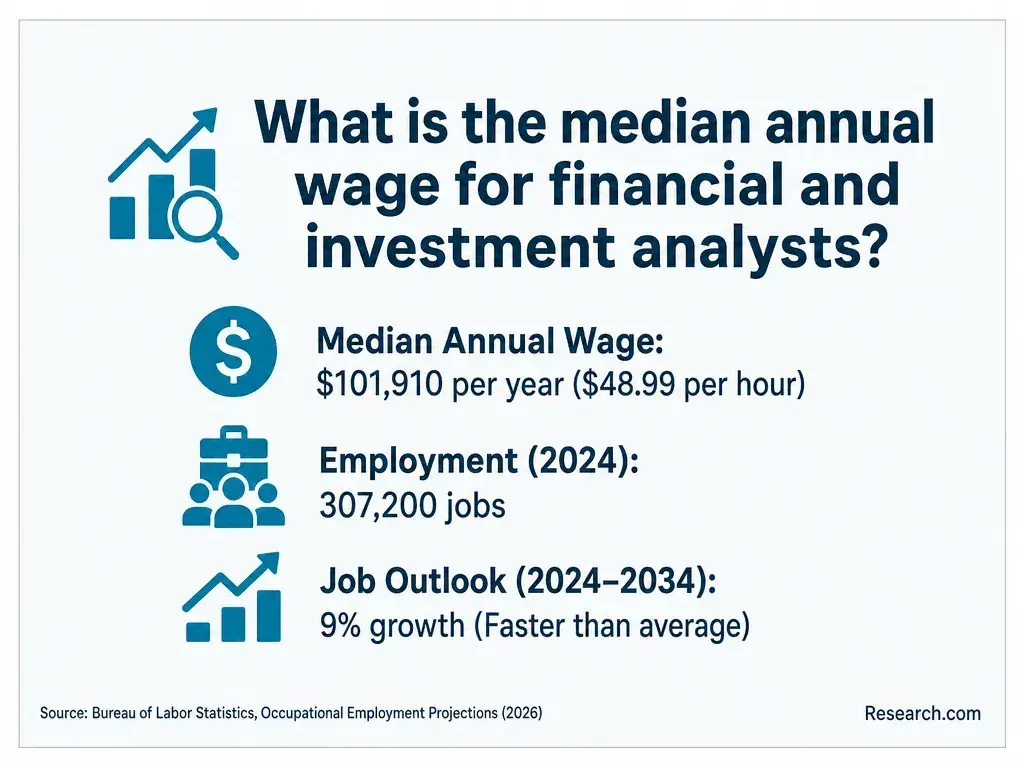
For salary context, the U.S. Bureau of Labor Statistics reports a $75,940 median annual wage for human resources specialists in May 2025. That is the occupation-wide midpoint, not an entry-level offer or the expected pay for someone who earns this degree. Use occupation-specific job postings in your area to assess required experience, skills, and pay before borrowing for a career change.
If HR is your goal, compare business administration coursework and relevant work experience with transfer-friendly online HR colleges. A specialized program may be a better value if it accepts your prior credits and provides the employment-law, HR systems, and applied work your target roles request.
What certifications or licenses complement a business administration degree?
A certification is a separate credential, not an automatic result of finishing a business course or concentration. Depending on your target role, you might investigate HR, project management, accounting, or industry-specific credentials. Check the issuing organization's current eligibility rules, examination fees, and experience requirements before adding a credential to your education budget.
For instance, project coordinators may benefit from documented scheduling and stakeholder work alongside formal study; some project management certifications require experience that coursework alone does not supply. Compare the cost of a full degree with affordable pathways to study project management if that function, rather than broad business preparation, is your objective. Likewise, a BS in Business Administration does not by itself establish eligibility for CPA licensure or a financial-services license; those pathways have separate rules.
Other Things You Should Know About Business Administration
Compare its interest rate, repayment terms, and protections with any federal aid still available. If the gap is unaffordable, a slower enrollment pace or later start may be safer than borrowing without a clear repayment plan.
It can spread a term's bill into installments, but it does not reduce the price. Check enrollment fees, due dates, and what happens if a payment is late.
No. Earnings can affect need-based aid calculations, while enrollment intensity can affect eligibility for particular awards. Ask the financial-aid office to estimate your situation using your expected work and course schedule.
Contact the school before stopping attendance. Its tuition-refund and federal-aid return rules may leave you owing a balance even if you do not complete the term.
- Net Price | Federal Student Aid https://studentaid.gov/help-center/answers/article/net-price
- Understanding U.S. Accreditation | EducationUSA https://educationusa.state.gov/understanding-us-accreditation
- Tuition Payment Plans in Higher Education | consumerfinance.gov https://www.consumerfinance.gov/data-research/research-reports/tuition-payment-plans-in-higher-education/
- Cost of Attendance (Budget) | 2025-2026 Federal Student Aid Handbook https://fsapartners.ed.gov/knowledge-center/fsa-handbook/2025-2026/vol3/ch2-cost-attendance-budget
- Accreditation in the U.S. | ed.gov http://www.ed.gov/laws-and-policy/higher-education-laws-and-policy/college-accreditation/accreditation-in-the-us
- Tuition and Costs | The Pennsylvania State University https://www.psu.edu/admission/undergraduate/tuition-costs
- Payment Plan - Niner Central - UNC Charlotte https://ninercentral.charlotte.edu/billing-payments-refunds/payment-options/payment-plan
- 2.1.9 Baccalaureate Degree Programs | Illinois State https://policy.illinoisstate.edu/students/2-1-9/
- Residency Requirements and Transfer Credits | Point University Catalog https://catalog.point.edu/policy/standinghonors/residencyrequirements
- College funding for older adult students - UW-Madison Online https://online.wisc.edu/blog/funding-your-return-to-college-as-an-adult-student/