2027 BS in Business Administration and Finance: Evaluating Career Claims Before Requesting Information
Audited and Verified:
Our Editorial and Data Verification Process
Research.com uses government datasets, official education statistics and primary institutional information to support its career and degree guides. Our review process checks factual accuracy, occupational definitions, source dates and the requirements associated with the credentials discussed.
How This Article Was Fact-Checked
Our editorial team verifies salary estimates, employment projections, education requirements and program information against original data providers and official organizations. Salary figures are checked against the relevant occupational definitions and reporting periods. Information about licensure, accreditation and required in-person training is reviewed separately.
Fact-checked and verified on:

Co-Founder and Chief Data Scientist
A program may advertise finance careers, strong earnings, and flexible study without showing how many graduates reached those outcomes. If you are considering a BS in Business Administration and Finance, those claims deserve scrutiny before you share your contact information or commit to a school. This guide explains what the degree can prepare you to do, where experience or additional credentials matter, and which program facts to request. You will leave with a practical way to separate useful career evidence from appealing but incomplete marketing.
Key Things You Should Know
- A finance-focused business degree can support applications for analyst and business roles, but a course or concentration does not establish job eligibility, professional licensure, or managerial experience.
- The U.S. median annual wage for financial and investment analysts was $102,740 in May 2025; that occupation-wide figure is not a starting salary or a measured outcome for graduates of any particular program.
- Before requesting information, look for the exact degree title, required finance courses, total remaining cost, and career outcomes that identify the graduating cohort, response rate, job types, and measurement date.
What is a BS in Business Administration and Finance?
A BS in Business Administration and Finance generally combines a broad business core with additional finance study. The exact credential varies: one school may award a BS in Business Administration with a formal finance concentration, while another offers a separately named finance major. An elective in investments is not, by itself, an official concentration. Check the catalog and transcript designation rather than relying on an advertisement's wording.
Broad business study can suit someone who wants flexibility across budgeting, operations, and financial decision support. A specialized finance bachelor's may be a better fit when the target job calls for more extensive modeling, investments, or financial markets coursework. Conversely, someone pursuing logistics rather than finance should compare a supply chain curriculum and its completion time; compare three-year-or-less supply chain degrees only after checking whether their required courses match that goal.
What careers can you pursue with a BS in Business Administration and Finance?
The degree may help you compete for roles involving financial information, but job duties and required experience matter more than a broad promise of "finance careers." For an early-career applicant, relevant coursework becomes stronger evidence when paired with a spreadsheet model, supervised project, internship, or work involving budgets and reports.
The distinctions below can help you test whether a school's advertised job titles describe plausible first roles or later career destinations.
| Role path | Typical work | What to check beyond the degree |
| Financial analyst or analyst-support role | Review financial statements, build forecasts, and explain assumptions | Modeling skills, relevant experience, and the employer's technical requirements |
| Budget or operations support | Track spending, investigate variances, and prepare reports | Spreadsheet proficiency and knowledge of the organization's processes |
| Financial services role | Support clients, products, or transactions | Whether particular duties require an employer-sponsored registration or license |
Management jobs usually require evidence of responsibility and results, not simply a bachelor's degree. If your interests lean toward hiring or employee support instead, examine human resources education and career options rather than assuming a finance emphasis is the most direct preparation. Compare actual job postings in your preferred location with the program's courses and available applied work.
How much can you earn with a BS in Business Administration and Finance?
There is no reliable single salary for everyone with this degree. The Bureau of Labor Statistics reports a May 2025 median annual wage of $102,740 for financial and investment analysts, with employment projected to grow 7% from 2025 to 2035. These are occupation-wide figures, not entry-level pay or proof that graduates of a particular school become analysts. Employers may expect specialized skills and experience, and pay varies by location, industry, and duties.
When a program quotes a salary, ask whether it measures all graduates, employed survey respondents, or a selected set of alumni - and how long after graduation it was collected. Compare the figure with the jobs graduates actually held. If your intended role is outside finance, evaluate the cost and duration of that pathway separately; supply chain degree cost and duration comparisons, for example, address a different occupational target and cannot validate a finance-program earnings claim.
Expect a business foundation that may include accounting, economics, statistics, management, marketing, and operations. Finance-focused requirements might address corporate finance, financial statement analysis, investments, or financial modeling. Course names alone reveal little about depth: compare prerequisites, required assignments, software, and whether students must explain the uncertainty behind a forecast.
For analyst-oriented work, look for a sequence that moves from accounting and quantitative reasoning to interpreting statements, modeling cash flows, and presenting a recommendation. Ask whether an internship or capstone is required, optional, or unavailable online. If you need to strengthen your preparation first, review college coursework required for business administration entry, then confirm the named school's actual prerequisites. A classroom model demonstrates learning; it is not evidence of a real employer-approved financial result.
A full-time bachelor's pathway commonly spans four academic years, but your remaining time depends on applicable transfer credit, course sequencing, enrollment pace, and when finance requirements are offered. Accepted credits do not necessarily satisfy the business core or concentration. Request a degree audit that shows where each prior course applies and which prerequisites stand between you and graduation.
Accelerated claims require the same scrutiny as career claims. When reviewing ranked programs for finishing a business bachelor's sooner, ask whether the advertised timeline assumes substantial transfer credit or continuous full-time enrollment. For working students, confirm live sessions, group assignments, exam windows, and the availability of required upper-level finance courses before choosing a pace.
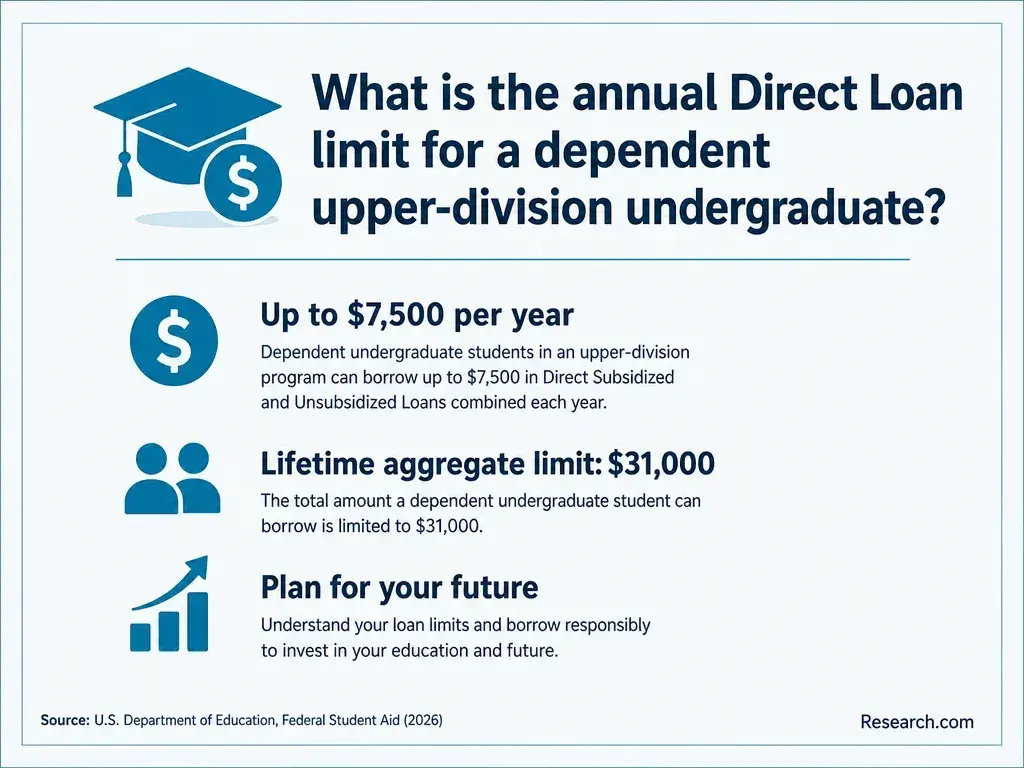
There is no defensible program-wide price without a named school and your credit evaluation. Calculate the cost of remaining required courses, not just the published tuition rate. Include mandatory fees, books and software, any travel or proctoring costs, and the expense of additional terms if a required course is unavailable. Subtract grants or employer assistance only after eligibility and payment timing are confirmed; loans reduce immediate cash needs but must be repaid.
Use affordable colleges for business study as a shortlist, not as a substitute for personalized estimates. Ask each school for an itemized cost based on an official evaluation of your credits. Compare that figure with the cost of a more specialized degree or targeted training if your goal is a specific finance skill rather than completion of a bachelor's credential.
Requirements depend on whether you apply as a first-year, transfer, returning, or second-degree student. Schools may request prior transcripts and may set separate conditions for entry to the business major or upper-level finance courses. Admission to the institution does not mean every previous credit will apply to the degree.
Before paying or submitting an application, ask admissions which documents and prerequisites apply to your record, and ask the registrar or transfer office who issues the official credit evaluation. Accredited colleges offering free online applications may help you limit application spending, but a waived fee says nothing about finance-course availability, total tuition, or career outcomes.
Online delivery does not make a degree less credible by itself. Verify that the institution has recognized institutional accreditation and that the online degree is awarded by the institution named in its catalog. Then examine how students practice financial analysis: assignments, instructor feedback, access to required tools, and opportunities for supervised or appropriately scoped projects.
Credibility and convenience are separate questions. A course can be online yet require scheduled presentations, team meetings, proctored exams, or deadlines that conflict with work. Use leading American online business degree schools to identify options, then obtain each program's current course schedule and assessment policies. Neither a delivery format nor a ranking verifies placement in finance jobs.
No general license is required to earn a BS in Business Administration and Finance. Particular jobs are different: some financial-services activities require registration or licensing, and professional designations have their own education, experience, examination, or ethics rules. A finance course - or even a formal finance concentration - does not automatically satisfy those requirements.
Start with the duties in the job posting, then check the applicable regulator or credentialing body before treating any school's "career-ready" claim as professional eligibility. The distinction applies beyond finance: accelerated organizational leadership degrees are another education pathway, not a license or automatic qualification to manage staff.
How do you choose an accredited business administration and finance program?
Before requesting information, decide which claim matters to you: preparation for a named role, completion speed, affordability, or access to finance-related applied work. Evaluate the exact degree against that claim. Institutional accreditation establishes an important baseline; if a school also cites AACSB, ACBSP, or IACBE, confirm the accreditor's current listing and whether its scope covers the business program in question. Accreditation alone does not measure graduate employment.
Request evidence you can compare across schools. The following items turn a general career promise into questions the school can answer.
- Ask for the current catalog, degree plan, official concentration designation, and a personalized transfer-credit audit if applicable.
- Request an itemized estimate for remaining coursework and a term-by-term plan showing when required finance courses are offered.
- Ask for career-outcome reports that define the graduating cohort, survey response rate, employment date, job titles, and whether earnings come from graduates or occupation-wide statistics.
- Confirm who can access internships, projects, career advising, and recruiting services, including students studying online or part time.
If speed is central to your decision, bachelor's degrees with compressed schedules can provide additional options to examine. Compare their actual course load and completion requirements, not just the advertised calendar. A school that cannot document a specific outcome may still offer useful education, but you should not price your decision as though the outcome were established.
Other Things You Should Know About Business Administration
Not necessarily. Some institutions record concentrations on transcripts rather than diplomas. Ask the registrar how the credential will be documented.
Only if the program permits it and approves the role, supervision, learning objectives, and assessment. Employment alone does not award internship credit.
Usually, if you own the work and have permission to share its data. Label assumptions and simulated results clearly; remove confidential or personal information.
Check whether it accepts related degrees and identify the specific skills requested. Your transcript and work samples may help demonstrate relevant preparation, but the employer decides whether your degree meets its requirement.
- College Student Employment - COE https://nces.ed.gov/programs/coe/indicator/ssa/college-student-employment
- What are graduation, retention, and transfer rates? | studentaid.gov https://studentaid.gov/help/graduation-retention-transfer-rates
- Find Internships - Center for Student Experience and Talent | Academic Affairs https://uwm.edu/set/internships/
- Bachelor of Business Administration in Finance | Grand Valley State University https://www.gvsu.edu/catalog/program/bachelor-of-business-administration-in-finance.htm
- Completion Rates and Time to Degree Completion | Academic Affairs https://academicaffairs.uams.edu/irpa/office-of-institutional-studies/student-outcomes/completion-rates/
- UCI Graduates Destinations - UCI Division of Career Pathways https://career.uci.edu/faculty-staff/uci-graduate-destinations/
- BBA in Finance Degree - School of Management https://www.umflint.edu/som/undergraduate-business-programs/finance-bba/
- Bachelor of Finance Degree | Davenport University https://www.davenport.edu/academics/areas/business/bachelors-finance
- Alumni Careers & Outcomes | Reed College https://www.reed.edu/about/alumni-careers-outcomes.html
- Curriculum - MSU Broad College of Business https://broad.msu.edu/undergraduate/curriculum/