2027 BS in Business Administration Program Choice: A Project Using Public Data Instead of Employer Records as a Capstone Option
Audited and Verified:
Our Editorial and Data Verification Process
Research.com uses government datasets, official education statistics and primary institutional information to support its career and degree guides. Our review process checks factual accuracy, occupational definitions, source dates and the requirements associated with the credentials discussed.
How This Article Was Fact-Checked
Our editorial team verifies salary estimates, employment projections, education requirements and program information against original data providers and official organizations. Salary figures are checked against the relevant occupational definitions and reporting periods. Information about licensure, accreditation and required in-person training is reviewed separately.
Fact-checked and verified on:

Co-Founder and Chief Data Scientist
An employer-based capstone can be difficult to complete if your workplace cannot share records, you are changing jobs, or you do not have an employer. A project using public data may offer a practical alternative - but only if the program permits it and the analysis supports a real business decision.
This guide explains how to scope that project, compare it with workplace-based work, and evaluate BS in Business Administration programs without mistaking a polished dashboard for evidence of business impact.
Key Things You Should Know
- A public-data capstone can be a credible BS in Business Administration project if faculty approve the format and the work addresses a defined decision, documents its sources, and explains its limits.
- Public data avoids the need to access employer records, but it rarely reveals an organization's actual costs, customers, or results; present recommendations as proposals, not measured improvements.
- Before choosing a program, confirm its capstone rules, data-access expectations, and total completion requirements. The May 2025 median wage of $78,760 for market research analysts is an occupation-wide figure, not an expected salary for capstone students.
What Is a BS in Business Administration Capstone Using Public Data?
A public-data capstone is a faculty-assessed business project built from information available without access to an employer's private records. The student applies coursework to a decision - such as where a hypothetical retailer might investigate expansion, which regional industries merit further supplier research, or how a nonprofit might prioritize outreach.
The intended audience may be a hypothetical owner or program director; it should not be presented as a real client unless one has agreed to participate.
Possible inputs include U.S. Census Bureau demographic and business data, Bureau of Labor Statistics employment data, publicly posted government procurement information, and company filings. Public availability does not guarantee that a dataset is suitable, current, or free of reuse conditions. Choose sources that match the geography, population, and time period of the decision.
A manageable project can follow this sequence. It gives an assessor something more useful to evaluate than an attractive chart alone:
- State one decision and identify its hypothetical or actual decision-maker.
- Select a small set of relevant measures, define their units and dates, and record each source's limitations.
- Clean and analyze the data in a reproducible spreadsheet or other approved tool; separate observed figures from assumptions.
- Compare feasible options, explain uncertainty and missing internal information, and recommend what to investigate next.
- Submit the required report, presentation, dashboard, or portfolio artifact under the program's assessment rules.
For students whose jobs offer no usable project data, this format may make degree completion more feasible. When comparing degree options for working business administration students, ask each program whether a public-data project is an approved capstone route - not merely whether its courses are online.
How Does a Public-Data Capstone Compare With an Employer-Based Project?
The better option depends on the learning objective and the access you can reliably obtain. This comparison separates what each project can demonstrate from what it cannot.
| Criterion | Public-data project | Employer-based project |
| Access | Depends on suitable published sources and their reuse terms | Depends on employer permission, available records, and any required agreements |
| Business relevance | Tests an external opportunity or decision framework | Can address a specific organization's operations and constraints |
| Evidence of results | Supports analysis and proposed actions, not claims of organizational impact | May permit evaluation of actual outcomes if implementation and measurement are authorized |
| Portfolio use | Often easier to reproduce with cited sources | May require substantial redaction or permission before sharing |
An employer project may be stronger when a supervisor can define the problem, authorize appropriate data use, and review the recommendation. It is not automatically stronger: a vague assignment or restricted records can leave little assessable evidence. A public-data project is often safer when permission is uncertain, but it cannot establish what a particular company should spend or how its customers will respond.
Confirm whether the school requires a workplace sponsor, original fieldwork, a team, or a live presentation. A short course schedule can make permission delays especially consequential. Compare those obligations before considering a different program, including online leadership bachelor's programs with compressed schedules; changing degree paths does not itself solve a capstone-approval problem.
Is a BS in Business Administration Right for Your Career Goals?
A BS in Business Administration can fit someone who wants broad grounding in finance, marketing, operations, and management while developing an applied work sample. It is less direct than a specialized degree if your target role requires substantial accounting, technical analytics, or supply chain depth. The capstone should reinforce the role you want, not determine your degree choice by itself.
For example, a student interested in operations coordination might analyze regional freight or labor-market data, then seek an internship or job that exposes them to actual purchasing and scheduling decisions.
Someone set on supply chain work should also compare three-year-or-less supply chain degrees for relevant coursework and transfer fit. If you already hold a bachelor's degree and only need a particular analytical skill, targeted training and a supervised project may be more efficient than a second bachelor's.
Programs typically combine accounting, finance, economics, marketing, management, operations, statistics, and communication, though course depth and requirements differ. A public-data capstone can connect these subjects: market analysis helps define demand, finance helps frame costs and assumptions, and statistics helps prevent misleading comparisons. It cannot replace access to internal financial statements when those are necessary to answer the chosen question.
Look for courses that teach spreadsheet modeling, source evaluation, visualization, and clear recommendations, then check whether an official concentration adds relevant depth. An HR-focused student, for example, may prefer workforce analysis and HR coursework over a general expansion study; human resources bachelor's credit transfer options can inform that comparison. A capstone topic or elective cluster is not, by itself, a formally awarded concentration.
Either format can support a public-data capstone. Online access may help a student download sources and collaborate remotely, while campus programs may offer easier in-person faculty meetings or presentations. Neither format guarantees independent scheduling: team meetings, fixed deadlines, proctored assessments, and live capstone presentations may still apply.
Ask for the actual capstone syllabus and a recent course schedule. Check whether faculty provide feedback before final submission, which software is required, and whether a student can complete the project without campus visits. If speed matters, business degrees through accelerated online learning deserve scrutiny for workload and course availability as well as advertised calendar length.
First verify the institution's current accreditation and the accreditor's recognized status through the school and the U.S. Department of Education's accreditation information. Then check whether any claimed AACSB, ACBSP, or IACBE business accreditation actually covers the school or program you would enter. Institutional and business accreditation have different scopes; neither establishes that a public-data capstone is allowed.
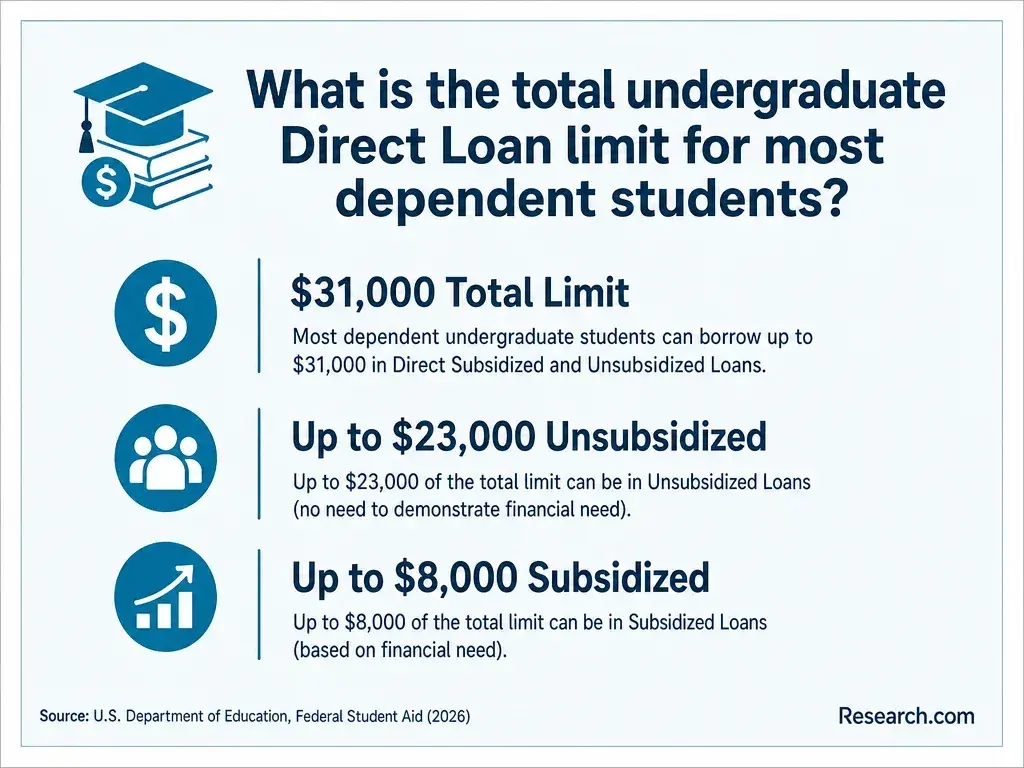
Request the current catalog language and written clarification from the business department about capstone alternatives. If aid is part of the decision, use FAFSA-eligible online business administration colleges as a comparison starting point, then verify each institution's current accreditation, aid participation, and eligibility rules directly.
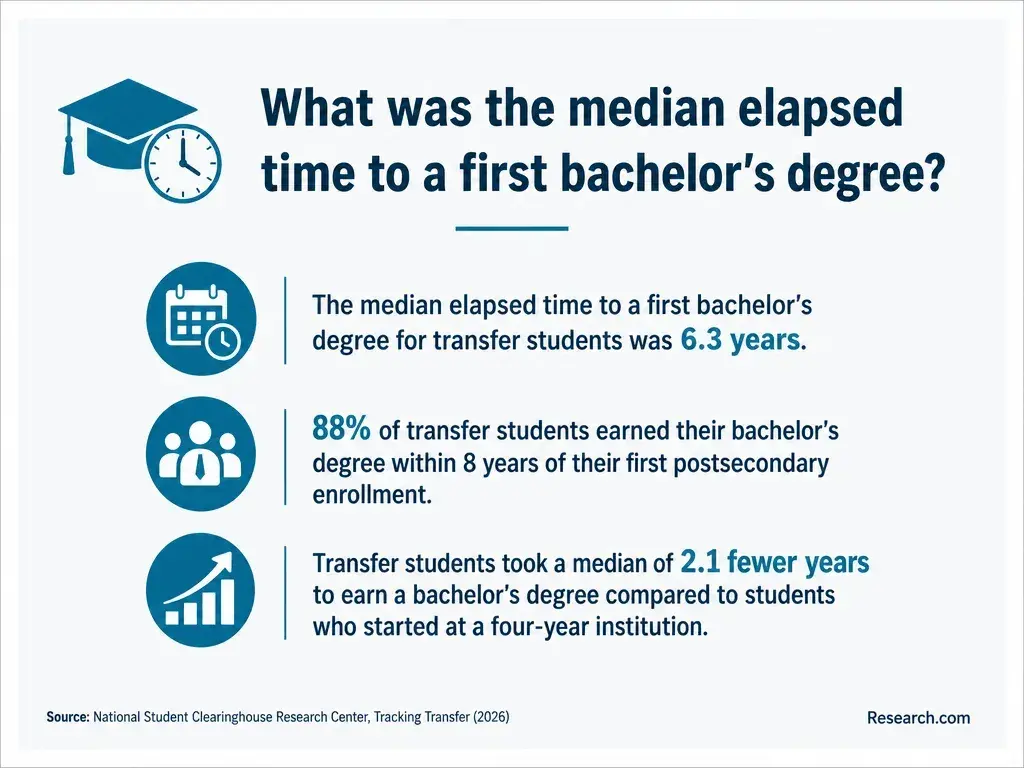
Requirements depend on whether you apply as a first-year, transfer, or returning student. Schools may ask for prior transcripts and may set separate conditions for entry into the business major, including specified mathematics or introductory business courses. Admission does not mean previous credits will satisfy the business core or that a proposed capstone has been approved.
Ask admissions which records to submit, then request an official credit evaluation and degree audit from the appropriate school offices. Identify remaining prerequisites, residency credits, and the earliest term you can take the capstone. When reviewing accelerated business bachelor's school comparisons, treat a projected finish date as conditional until the institution evaluates your coursework and confirms its course sequence.
Completion time and cost depend on credits that apply to the degree, course availability, enrollment pace, tuition rules, and fees. A public-data capstone might avoid travel or employer-coordination delays, but it does not necessarily reduce required credits or tuition. Software, books, presentation requirements, and an extra term can change the total.
Compare schools using the same remaining-credit estimate and ask for tuition and mandatory fees through graduation, not just a per-credit price. Check whether capstone courses are offered every term and whether part-time enrollment changes aid eligibility. To develop a shortlist, explore affordable colleges for business study, then obtain school-specific estimates after your transcript evaluation.
Relevant early-career directions include marketing coordination, operations support, HR support, and project coordination; the right route depends on coursework, internships, prior work, and employer requirements. A documented public-data analysis can help demonstrate research, spreadsheet, and communication skills. It does not establish that you managed a company project or produced a measurable business result.
For salary context, the U.S. Bureau of Labor Statistics reports a May 2025 median annual wage of $78,760 for market research analysts and projects 7% employment growth for that occupation from 2025 to 2035. These are occupation-wide figures, not starting pay or outcomes for BS in Business Administration graduates.
Compare job postings for the tasks and tools you hope to practice; business administration program length and salary context can support a broader cost discussion without substituting for a local job search.
Do Business Administration Graduates Need Licenses or Certifications?
A general BS in Business Administration does not itself confer an occupational license. Some target jobs or activities have separate legal or employer requirements - for example, regulated accounting or financial services work - while optional credentials in HR or project management have their own eligibility rules. A capstone, even one built with sophisticated analysis, does not replace those requirements.
If your goal is project coordination, first check whether employers seek a degree, demonstrated project work, or a particular credential. A specialized degree is a separate investment; information about funding an online project management bachelor's degree is useful only if that pathway offers relevant preparation beyond the business degree you are considering.
Before committing, get faculty confirmation of your proposed dataset and deliverable, then refine the scope against the capstone rubric.
Other Things You Should Know About Business Administration
Possibly. Trace it to its original source, check reuse terms, and assess whether its collection method and coverage are documented. Ask your instructor before relying on a dataset with unclear provenance.
No. A website may allow viewing without allowing unrestricted copying or redistribution. Check its terms and cite the source; do not assume public access grants portfolio publication rights.
Record the dataset title, publisher, release or retrieval date, and any available version identifier. Keep an approved snapshot or documentation so an assessor can understand which figures supported your conclusions.
Yes, if the comparison is valid and the dates are explicit. Check for changes in definitions, geographic boundaries, and collection methods before interpreting a difference as a business trend.
- Step 4 - Gather Credible Evidence | Program Evaluation https://www.cdc.gov/evaluation/php/evaluation-framework-action-guide/step-4-gather-credible-evidence.html
- Plan your business - Small Business Administration https://www.sba.gov/counseling/plan-your-business/
- Frequently asked questions about providing public access to data | IES https://nces.ed.gov/about/public-access-research/frequently-asked-questions-about-providing-public-access-to-data
- Capstone Information - UHWO Business Administration https://westoahu.hawaii.edu/busa/capstone-information/
- Data Sources for MIDS Capstone Projects: Government Data | Library Guides at UC Berkeley https://guides.lib.berkeley.edu/c.php
- Finishing touch: Capstone projects - W. P. Carey News https://news.wpcarey.asu.edu/20160711-finishing-touch-capstone-projects