2027 BS in Business Administration: Live Online Sessions Versus Asynchronous Coursework
Audited and Verified:
Our Editorial and Data Verification Process
Research.com uses government datasets, official education statistics and primary institutional information to support its career and degree guides. Our review process checks factual accuracy, occupational definitions, source dates and the requirements associated with the credentials discussed.
How This Article Was Fact-Checked
Our editorial team verifies salary estimates, employment projections, education requirements and program information against original data providers and official organizations. Salary figures are checked against the relevant occupational definitions and reporting periods. Information about licensure, accreditation and required in-person training is reviewed separately.
Fact-checked and verified on:

Co-Founder and Chief Data Scientist
A business degree advertised as "online" may still require you to attend class at a fixed time. That distinction matters if you work shifts, care for family, or need regular contact with an instructor.
This guide compares live online sessions with asynchronous coursework in a BS in Business Administration, including how each handles discussions, team projects, deadlines, and support. You'll learn which obligations to verify before enrolling - and how to choose a format you can sustain through graduation.
Key Things You Should Know
- Choose live sessions if scheduled discussion and immediate feedback help you learn - and you can reliably protect class time.
- Choose asynchronous coursework if your available study hours change, but verify deadlines, group meetings, exams, and required presentations; it rarely means self-paced study.
- Compare actual course schedules, not just program labels: one required live course or fixed-time assessment can determine whether a program fits your work or caregiving commitments.
What Is a BS in Business Administration?
A Bachelor of Science in Business Administration, often shortened to BSBA, is an undergraduate degree covering several business functions rather than training for one occupation. Depending on the school, it may combine accounting, finance, marketing, management, operations, and quantitative coursework with general education and electives. A BSBA and a BBA can have similar aims, but their requirements are not interchangeable; compare the actual catalogs.
Delivery format is a separate choice from degree content. A live online class meets remotely at scheduled times; an asynchronous class lets students access lessons and complete much of their work at different times. Neither format, by itself, establishes the degree's rigor or whether it suits your goals. If your aim is specifically organizational leadership, compare the curriculum and timetable of online leadership bachelor's programs with compressed schedules rather than assuming they cover the same business core as a BSBA.
How Do Live Online and Asynchronous Business Classes Compare?
The main difference is when participation must happen, not whether students do substantial work. This comparison shows where each format is likely to create a scheduling or learning advantage; individual course rules can override either general pattern.
| Decision factor | Live online sessions | Asynchronous coursework |
| Class attendance | Usually requires attendance at designated times | Usually permits access to lessons on your own schedule |
| Questions and feedback | Real-time discussion is available during meetings | Replies may come later through messages or office hours |
| Business presentations | May involve presenting and responding to questions live | May use recordings or submitted slides, although live presentations can still be required |
| Weekly planning | Class meetings anchor the calendar | Students must organize work around due dates |
| Team assignments | Class time may support coordination | Teams may need to arrange separate meeting times |
In either format, ask about timed exams, proctoring, attendance rules, group simulations, instructor office hours, and any campus visits. An accelerated calendar is another variable: faster-paced business degree study options may shorten terms without reducing assignments or making deadlines more flexible.
Which Business Administration Format Fits Your Learning Style?
Live sessions tend to fit students who learn by asking questions in the moment, discussing cases, and practicing presentations with an audience. They are less workable if a shift change, commute, or caregiving interruption regularly overlaps class. Asynchronous study offers more control over when you watch lessons and draft assignments, but it calls for independent planning and comfort asking for help in writing.
Test the fit against an ordinary difficult week, not your best week. Identify uninterrupted study blocks, then compare them with the program's published live meetings and assignment deadlines. If your target role is narrowly focused on project work, compare the coursework and delivery of online project management degrees with lower tuition before assuming a general BSBA is the only suitable route.
A mixed program may offer the best fit: asynchronous lectures with optional live office hours, for example. Confirm whether "optional" sessions are genuinely optional for participation grades, exam preparation, and required presentations.
Most BSBA curricula build from introductory business and quantitative subjects toward applied work. Accounting and finance develop financial-statement and budgeting literacy; marketing and management address customers and organizations; statistics, operations, and information systems support decisions using data. The exact courses, prerequisites, and depth vary by school.
Format matters most in courses that require practice with other people. A marketing presentation, negotiation exercise, group case, or capstone may involve live meetings even when its lectures are asynchronous. Before choosing electives or a concentration, inspect sample syllabi for required collaboration and software. A student considering an HR-focused path should compare official HR requirements and credit applicability; resources to evaluate transfer-friendly online HR colleges can help frame that comparison. An HR elective alone does not create a formal concentration.
Schools commonly request evidence of secondary-school completion or prior college study and official transcripts. Transfer applicants may face separate institution and business-major requirements. A school may also specify a GPA, quantitative preparation, or prerequisites, but none should be assumed universal. Being admitted does not mean every previous course will satisfy a BSBA requirement.
Ask admissions which documents apply to your background, then request a written transfer evaluation and degree audit before estimating your remaining workload. If application charges affect which schools you can consider, review fee-free applications for online college; confirm each school's current policy and the full cost of attendance separately.
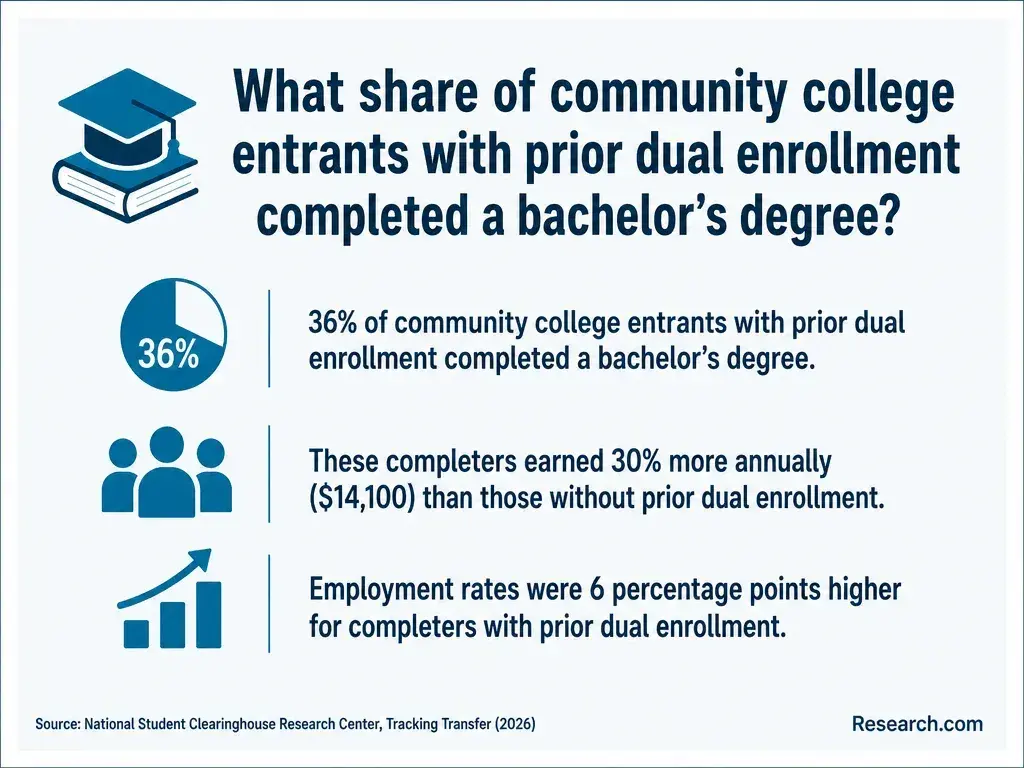
Completion time depends on credits that apply to degree requirements, course sequencing, enrollment intensity, and when required classes are offered. Live and asynchronous versions of the same course need not have different academic lengths. Shorter terms can move the calendar faster, but may concentrate assignments into weeks that are harder to manage alongside work.
Request a term-by-term plan showing prerequisites, required live meetings, and the earliest available capstone. Compare a sustainable part-time plan with a full-time one rather than relying on an advertised fastest finish. Ask the financial-aid office how your intended enrollment affects eligibility; aid guidance for a specialized alternative, such as FAFSA grants and scholarships for project management students, should not be assumed to describe your BSBA award.
Compare the cost to finish, not just advertised tuition. The relevant estimate includes credits still required after an official evaluation, mandatory fees, books, software, possible exam-proctoring charges, and any travel for required activities. An asynchronous option is not automatically cheaper: the same tuition may apply, and a missed prerequisite or infrequently offered course can extend enrollment.
Ask each school for a written estimate based on your degree audit and planned pace. Separate grants and scholarships from loans, and check when employer tuition reimbursement is paid if you expect to use it. A comparison of low-tuition pathways to a business administration degree is a starting point, not a substitute for your individual net-cost estimate.
Check the institution's current accreditation status with its recognized institutional accreditor, including whether it covers the school awarding the online degree. Then check any claimed business accreditation directly with AACSB, ACBSP, or IACBE, as applicable, to establish its scope and whether the particular business program is covered. Institutional accreditation and business-specific accreditation answer different questions; neither proves that a class is asynchronous or that graduates secure particular jobs.
Ask the school to identify the exact online BSBA, its awarding institution, and the policies governing your enrollment term. If financial aid is central to your decision, accredited online business administration study with aid eligibility can provide comparison candidates, but verify accreditation and your own aid eligibility before committing.
A BSBA can support applications for business roles such as operations coordinator, marketing coordinator, HR specialist, or project coordinator, depending on the coursework and experience you bring. Employers assess role-specific abilities - such as spreadsheet work, communication, process documentation, or recruiting - not the delivery format alone. Internships and approved projects can help you demonstrate those abilities, but a degree does not automatically qualify you to manage staff or budgets.
For salary context, the U.S. Bureau of Labor Statistics reports a May 2025 median annual wage of $75,940 for human resources specialists. That is an occupation-wide median, not an expected starting salary for BSBA graduates; experience, location, industry, and the job's requirements matter. If supply chain is your intended field, compare specialized coursework and the supply chain program tuition time and earnings context rather than relying on a general business salary figure.
Do Business Administration Graduates Need Licenses or Certifications?
There is no general license required simply to hold a BSBA or apply for most general business roles. Specific activities can have separate rules: accounting licensure, certain financial-services work, and other regulated functions require qualifications beyond a general business degree. Voluntary professional certifications may also require experience, examinations, or both; completing a related course does not award the credential.
Start with the requirements of the job you want. If project coordination is the goal, decide whether employers seek a bachelor's degree, demonstrated project experience, a certification, or a combination. Compare the expense of additional education using an accredited online project management tuition guide, but check certification eligibility with the credentialing organization itself.
Other Things You Should Know About Business Administration
Only if the instructor's attendance policy permits it. A recording may help you review material without replacing graded participation.
They often do. Participation may take the form of posts, peer responses, or collaborative documents with scheduled due dates.
Contact the school's accessibility office before the course begins. It can explain the documentation process and how approved accommodations are implemented.
Possibly, if both sections are offered and the school permits a change. Check deadlines, seat availability, and whether switching affects your degree plan or aid.
- Understanding College Costs | studentaid.gov https://studentaid.gov/resources/prepare-for-college/students/choosing-schools/consider-costs
- Disability Discrimination: Technology Accessibility | ed.gov http://www.ed.gov/laws-and-policy/civil-rights-laws/disability-discrimination/disability-discrimination-key-issues/disability-discrimination-technology-accessibility
- IT Accessibility Laws and Policies | Section508.gov https://www.section508.gov/manage/laws-and-policies/
- Fast Facts: Tuition costs of colleges and universities (76) | ed.gov https://nces.ed.gov/fastfacts/display.asp
- Synchronous vs. Asynchronous Online Classes - ANU Alumni https://alumni.an.edu/synchronous-vs-asynchronous-online-classes-which-works-better-for-adult-learners/
- Synchronous vs. Asynchronous Classes | Hopkins EP https://ep.jhu.edu/news/asynchronous-vs-synchronous-classes/
- Exam Proctoring Policies & Guidelines - Athletic Study Center https://asc.berkeley.edu/resources/faculty-staff/exam-proctoring-policies-guidelines
- Course Delivery Methods - Ways to Learn | Riverland https://www.riverland.edu/academics/course-delivery-methods-ways-to-learn/
- What's the Difference Between Asynchronous and Synchronous Learning? | Ohio State Online https://online.osu.edu/content-hub/blogs/whats-the-difference-between-asynchronous-and-synchronous-learning/
- The difference between a synchronous and an asynchronous class | Boise State Online https://www.boisestate.edu/online/2024/10/25/the-difference-between-a-synchronous-and-an-asynchronous-class/