
2027 Best Online Counseling Psychology Degree Programs

Co-Founder and Chief Data Scientist
Students who choose counseling psychology as a major often bring a strong sense of empathy, a desire to understand human behavior, and a clear interest in helping others navigate emotional and social challenges.
Online programs in this field offer a structured yet flexible path to build that foundation, preparing students for a range of support roles in mental health, education, and community services. The most effective programs focus on developing both practical and theoretical skills that align with current standards in behavioral science.
In this guide, I’ll walk you through the key components of today’s top online counseling psychology degree programs. You’ll learn what the curriculum typically includes, how long these programs take to complete, and what it takes to get started. I’ll also cover typical costs, admission requirements, and the kinds of entry-level careers or graduate pathways this degree can support.
What are the benefits of online counseling psychology programs?
- Graduates of online counseling psychology programs find roles in schools, healthcare, nonprofits, and government supporting education, wellness, and community-based services.
- Most bachelor’s graduates earn under $60,000, but advanced credentials raise median pay to $61,330 for social workers and $65,140 for school counselors.
- Master’s programs can also lead to licensure as professional counselors or clinical mental health practitioners.
What can I expect from online counseling psychology programs?
Online counseling psychology programs offer foundational training in mental health, behavior, and communication through a fully remote format. Coursework typically includes subjects like developmental psychology, counseling theory, and group dynamics, with a clear focus on understanding diverse populations and ethical practice in human services.
Expect consistent interaction with emotionally complex material. Many courses involve reflective writing, case analysis, or roleplay-based discussions. These activities develop the self-awareness and empathy essential to the field, even in a virtual setting.
Some programs include service-learning or community-based assignments, where students apply classroom knowledge to real scenarios. These may involve interviews, observation reports, or field-based reflection, even without formal clinical placements at the undergraduate level.
The best online programs also prepare students for graduate study. They emphasize writing, APA-style documentation, and psychological research, all of which are core to future licensure pathways. Support services often include academic coaching and career planning tailored to counseling-related fields.
Where can I work with online counseling psychology programs?
While many roles require graduate study for licensure, a bachelor’s degree in counseling psychology can lead to entry-level work in sectors that value mental health training and behavioral insight. These programs prepare students to contribute in settings where communication, empathy, and applied psychology are essential.
These are the most common settings where this degree is both relevant and valued:
- Community-Based Organizations: Nonprofits, youth programs, and outreach services that address behavioral and emotional wellness.
- Healthcare Systems: Hospitals, clinics, and wellness centers that offer support roles in patient care and behavioral health coordination.
- Schools and Educational Services: K–12 settings and academic support programs focused on student development and behavioral needs.
- Social Services and Government Agencies: Public programs related to housing, corrections, child welfare, or disability services.
- Human Resources and Workplace Wellness: Corporate offices and employee assistance programs focused on mental health and performance.
- Rehabilitation and Recovery Programs: Centers that support addiction treatment, trauma recovery, and reintegration services.
Well-designed programs help graduates enter these fields prepared, with the foundational knowledge and credibility that top employers increasingly expect.
How much can I make with online counseling psychology programs?
Graduates with a bachelor’s degree in counseling psychology typically enter support roles in behavioral health, education, or community-based services. While salaries at this level vary by setting and responsibility, they tend to reflect early-career, non-licensed positions.
The most recent data from the Bureau of Labor Statistics (BLS) shows:
- Community and Social Services: Median annual wage is $57,530, with most bachelor’s-level roles falling between $40,000–$52,000 (BLS, 2024).
- Substance Abuse and Mental Health Support: Counselors in recovery and treatment services earn a median wage of $59,190 (BLS, 2024).
- Social Work and Related Services: Median pay for social workers is $61,330, with many entering the field after completing a bachelor’s degree and pursuing licensure (BLS, 2024).
- School and Career Counseling (Graduate-level): Licensed counselors earn a median of $65,140 (BLS, 2024).
- Marriage and Family Therapy (Graduate-level): Licensed professionals in this area earn a median salary of $63,780 (BLS, 2024).
Earning potential is moderate at the start, but the best programs position students well for graduate study, where the financial and professional returns grow substantially.
- List of Online Counseling Psychology Degree Programs for 2027 List of Programs
- How long does it take to complete online counseling psychology programs? Program Length
- How do online counseling psychology programs compare to on-campus programs? How do online counseling psychology programs compare to on-campus programs?
- What is the average cost of online counseling psychology programs? Average Costs
- What are the financial aid options for students enrolling in online counseling psychology programs? Financial Aid
- What are the prerequisites for enrolling in online counseling psychology programs? Requirements
- What courses are typically in online counseling psychology programs? What courses are typically in online counseling psychology programs?
- What types of specializations are available in online counseling psychology programs? What types of specializations are available in online counseling psychology programs?
- How to choose the best online counseling psychology programs? How to choose the best online counseling psychology programs?
- What career paths are available for graduates of online counseling psychology programs? Career Paths
- What challenges do students face in online counseling psychology programs? What challenges do students face in online counseling psychology programs?
- What is the job market for graduates of online counseling psychology programs? Job Outlook
- What research validates the outcomes of online counseling psychology programs? What research validates the outcomes of online counseling psychology programs?
Best Online Counseling Psychology Degree Programs for 2027
Choosing an online counseling psychology program is not just a question of convenience. The program you select can affect your transfer timeline, graduate school options, supervised fieldwork access, licensure preparation, and total cost. This guide is designed for students comparing online bachelor’s and master’s pathways in counseling psychology, psychology, clinical mental health counseling, school counseling, and related behavioral health fields.
Below, you will find a ranked list of online counseling psychology degree programs, followed by practical guidance on timelines, costs, admissions requirements, course content, specializations, career paths, job outlook, and how to avoid common mistakes. The goal is to help you choose a program that fits your career plans instead of relying only on a school’s marketing language.
Quick answer: What is the best online counseling psychology degree program?
The best online counseling psychology program is the one that matches your intended credential level and licensing goal. Bachelor’s programs can prepare students for entry-level behavioral health roles or graduate study, while most independent counseling careers require a master’s degree, supervised clinical experience, and state licensure. Before enrolling, confirm regional accreditation, practicum or internship support, transfer policies, total tuition, and whether the curriculum aligns with the state where you plan to work.
How these online counseling psychology programs were selected
The strongest online counseling psychology programs combine academic quality with practical preparation. For this ranking, I applied Research.com’s ranking methodology and considered accreditation, cost per credit, required credits, available tracks or concentrations, program duration, transfer flexibility, and whether the curriculum supports clinical readiness or future graduate study.
Program information was reviewed using current and reliable education data sources, including the Integrated Postsecondary Education Data System (IPEDS), Peterson’s Distance Learning database, the U.S. Department of Education’s College Scorecard, and the National Center for Education Statistics (NCES).
Online counseling psychology programs at a glance
| Rank | School | Online Program | Credits | Cost per Credit | Accreditation |
| 1 | Arizona State University | BS in Counseling and Applied Psychological Science | 120 | Ranges from approximately $561 to $1,343, depending on course load and other factors | Higher Learning Commission (HLC) |
| 2 | Maryville University | BA in Psychology | 120 | $575 | HLC |
| 3 | Methodist University | BS in Psychology | 124 | $435 ($250 for military) | Southern Association of Colleges and Schools Commission on Colleges (SACSCOC) |
| 4 | Concordia University - Saint Paul | BA in Psychology | 120 | $420 | HLC |
| 5 | East Central University | BS in Psychology | 120 | $321.80 (Oklahoma residents); $638.80 (non-residents) | HLC |
| 6 | University of West Alabama | BA/BS in Psychology | Approximately 123 | $325 | HLC |
| 7 | University of Texas Permian Basin | BA in Psychology | 120 | $362.34 (additional fees may apply) | HLC |
| 8 | Our Lady of the Lake University | MA in Counseling | 60 | $991 | SACSCOC |
| 9 | University of New Haven | MA in Clinical Mental Health Counseling | 60 | $785 | New England Commission of Higher Education (NECHE) |
| 10 | University of Massachusetts Global | MA in Professional Clinical Counseling or dual MFT/Clinical Counseling option | 63 for MA in Clinical Counseling; 69 for dual track | $750 | WASC Senior College and University Commission (WSCUC) |
1. Arizona State University
Arizona State University offers an online Bachelor of Science in Counseling and Applied Psychological Science that is especially useful for students who want a psychology-based undergraduate degree with a clear applied counseling orientation. The curriculum includes research-based coursework, a 135-hour supervised capstone, and focused options connected to veteran support and performance psychology.
- Program Length: Approximately 4 years full-time
- Tracks/concentrations: Counseling for Military Members and Veterans; Sport and Performance Counseling
- Cost per Credit: Ranges from approximately $561 to $1,343, depending on course load and other factors
- Required Credits to Graduate: 120
- Accreditation: Higher Learning Commission (HLC)
2. Maryville University
Maryville University provides an online Bachelor of Arts in Psychology that emphasizes psychological theory, human behavior, research, and faculty-supported academic development. Its APA-aligned curriculum and Early Access option may appeal to students who want to begin graduate-level coursework during their senior year if they qualify.
- Program Length: Typically 4 years, potentially less with transfer credits or full-time pace
- Tracks/concentrations: Core psychology curriculum with opportunities for applied research and experiential learning
- Cost per Credit: $575
- Required Credits to Graduate: 120
- Accreditation: HLC
3. Methodist University
Methodist University offers a fully online Bachelor of Science in Psychology for students interested in behavioral science, mental health support, and graduate preparation. The program uses accelerated eight-week courses and accepts up to 93 credit hours in transfer, which can make it a practical option for students who already have substantial college credit.
- Program Length: Approximately 3.5 years full-time
- Tracks/concentrations: Counseling/Clinical Psychology; Human Performance Psychology
- Cost per Credit: $435 ($250 for military)
- Required Credits to Graduate: 124
- Accreditation: Southern Association of Colleges and Schools Commission on Colleges (SACSCOC)
4. Concordia University - Saint Paul
Concordia University – Saint Paul delivers an online Bachelor of Arts in Psychology with a flexible structure and career-oriented electives. The program is best suited for students who want broad preparation in human behavior, applied learning, and graduate study readiness while using transfer credits to shorten their time to completion.
- Program Length: As few as 18 months with transfer credits
- Tracks/concentrations: General Psychology with career-aligned electives
- Cost per Credit: $420
- Required Credits to Graduate: 120
- Accreditation: HLC
5. East Central University
East Central University offers an online Bachelor of Science in Psychology with a Behavioral Health concentration. This program is a strong fit for students aiming for human services, behavioral health support, case management, crisis response, or future graduate study. Its transfer policy allows students to bring in up to 90 credit hours.
- Program Length: Approximately 2–4 years
- Tracks/concentrations: Behavioral Health
- Cost per Credit: $321.80 (Oklahoma residents); $638.80 (non-residents)
- Required Credits to Graduate: 120
- Accreditation: HLC
6. University of West Alabama
University of West Alabama offers online BA and BS options in Psychology with an emphasis on research methods, experimental psychology, and faculty mentorship. Students who want undergraduate research experience, conference presentation opportunities, and preparation for counseling or social service graduate programs may find this program especially relevant.
- Program Length: Approximately 3–4 years
- Tracks/concentrations: General Psychology (BA/BS options)
- Cost per Credit: $325
- Required Credits to Graduate: Approximately 123
- Accreditation: HLC
7. University of Texas Permian Basin
The University of Texas Permian Basin provides an online Bachelor of Arts in Psychology that combines behavioral science, writing, analysis, and research-based instruction. Multiple start dates and eight-week courses make it flexible for working students, and the institution also offers a fully online MS in Clinical Psychology for students considering graduate study at the same university.
- Program Length: Approximately 4 years full-time
- Tracks/concentrations: Optional focus in Clinical, Developmental, Forensic, or Health Psychology
- Cost per Credit: $362.34 (additional fees may apply)
- Required Credits to Graduate: 120
- Accreditation: HLC
8. Our Lady of the Lake University
Our Lady of the Lake University offers a fully online Master of Arts in Counseling with a Clinical Mental Health Counseling specialization. The program is designed around a CACREP-aligned curriculum, includes over 700 hours of supervised clinical experience, and may be a good fit for students seeking a licensure-oriented graduate counseling pathway. Military-affiliated students may also benefit from a 10% tuition discount and Yellow Ribbon School status.
- Program Length: Approximately 40 months
- Tracks/concentrations: Clinical Mental Health Counseling; Clinical Rehabilitation Counseling; School Counseling
- Cost per Credit: $991
- Required Credits to Graduate: 60
- Accreditation: SACSCOC
9. University of New Haven
University of New Haven offers an online Master of Arts in Clinical Mental Health Counseling with a trauma-informed and culturally responsive focus. The 60-credit curriculum is aligned with CACREP standards and includes practicum and internship requirements in an online-supported format. With three start dates per year and a part-time structure, the program is designed for working adults preparing for licensure in most U.S. states.
- Program Length: 3 years part-time
- Tracks/concentrations: Trauma-informed clinical mental health counseling
- Cost per Credit: $785
- Required Credits to Graduate: 60
- Accreditation: New England Commission of Higher Education (NECHE)
10. University of Massachusetts Global
University of Massachusetts Global offers online graduate counseling pathways, including the MA in Professional Clinical Counseling and a dual option in Marriage and Family Therapy with Clinical Counseling. These programs are structured for students pursuing California licensure requirements and include CACREP-aligned coursework, asynchronous online learning, and practicum coordination support.
- Program Length: 2–2.5 years
- Tracks/concentrations: MA in Clinical Counseling; MA in Marriage and Family Therapy and Clinical Counseling (dual track)
- Cost per Credit: $750
- Required Credits to Graduate: 63 for MA in Clinical Counseling; 69 for dual track
- Accreditation: WASC Senior College and University Commission (WSCUC)
How long does it take to complete an online counseling psychology program?
Completion time depends on whether you choose a bachelor’s degree, certificate, competency-based option, or master’s degree. It also depends on transfer credits, enrollment intensity, practicum requirements, and whether the program uses traditional semesters or shorter accelerated terms. The same planning logic applies across many online graduate pathways, including programs such as a master’s in engineering management online, where pace and prior credits can change the timeline substantially.
| Program Type | Typical Timeline | Best For |
| Standard Bachelor’s Degree | A traditional 120-credit BA in counseling psychology is usually completed in four years of full-time study. | First-time college students who want a structured undergraduate path before graduate school or entry-level behavioral health work. |
| Accelerated Bachelor’s Degree | Fast-track formats with continuous eight-week terms allow students to complete the same 120 credits in approximately three years. | Motivated students who can handle year-round coursework and want to reduce time in school. |
| Part-Time Certificate Programs | Undergraduate-level certificates in counseling foundations or behavioral science topics typically take 6–12 months to complete. | Students exploring the field or adding counseling-related knowledge to another major or career. |
| Competency-Based Bachelor’s Path | These self-paced programs allow students to progress upon mastering each subject area, with many finishing in 14–27 months. | Experienced learners who can study independently and move quickly through familiar material. |
| Master’s Degree Programs | Online MA or MS programs in counseling psychology generally require 30–60 credits and can be completed in 18–24 months with full-time enrollment. | Students preparing for advanced counseling roles, licensure pathways, or specialized practice. |
Students comparing licensure-oriented graduate options may also want to review fast online master’s in school counseling programs, especially if they are focused on K–12 settings and need a more targeted credential.
Are online counseling psychology programs as effective as on-campus programs?
Online counseling psychology programs can be effective when they are intentionally built for skill development rather than simply converting lectures into recorded videos. Counseling is an interpersonal field, so quality online programs must include live interaction, faculty feedback, roleplay, case analysis, recorded demonstrations, and supervised field experiences where required.
The biggest difference is not the screen. It is the level of structure. A strong online program gives students repeated opportunities to practice listening, assessment, ethical reasoning, multicultural awareness, and client-centered communication. Some programs also include in-person intensives or residencies for additional skills practice without requiring students to relocate for the entire degree.
Students considering accelerated online counselor education programs should be especially careful. Faster formats can work well for disciplined students, but they should still include meaningful interaction, supervised practice, and clear licensure guidance.
Online vs. campus counseling psychology programs
| Factor | Online Programs | Campus Programs |
| Schedule | Often more flexible, with asynchronous coursework or evening live sessions. | Usually follows set class meeting times and campus-based schedules. |
| Clinical skills practice | May use video roleplay, live simulations, recorded counseling exercises, and remote supervision. | Often includes face-to-face roleplay, labs, clinics, and direct faculty observation. |
| Field placement | Students may need to secure approved local sites with school support. | Students may have access to established campus-area placement networks. |
| Best fit | Working adults, military students, caregivers, transfer students, and learners far from campus. | Students who prefer in-person structure, campus services, and local networking. |
| Main risk | Choosing a program without enough practicum support or state licensure alignment. | Higher relocation, commuting, or schedule costs for some students. |
Distance learning participation has continued to expand, and the chart below illustrates how many students now use online education formats.
What is the average cost of online counseling psychology programs?
Online counseling psychology tuition varies by degree level, residency status, school type, transfer credit policy, and required clinical components. As with an online MBA in general business, the posted per-credit rate does not always show the full cost. Students should also check mandatory fees, books, technology costs, background checks, liability insurance, residency travel, and field placement expenses.
| Program Type | Typical Cost Information | Cost Planning Advice |
| Certificate Programs | Individual courses or short certificates start at around $49 for single-module training. Graduate-level certificates range up to $11,100 for a 12-credit sequence, with per-credit costs averaging between $500 and $925. | Use certificates for targeted skill-building, not as a substitute for a licensure-required degree unless your state or employer specifically accepts them. |
| Standard Bachelor’s Degree | Online bachelor’s programs in counseling or psychology typically charge $300–$450 per credit. A full 120-credit degree often costs between $36,000 and $54,000 before aid. Some public institutions report average net prices near $9,000 after grants. | Compare net price after grants, not only tuition. Transfer credits can also change the final cost significantly. |
| Accelerated Bachelor’s Degree | Per-credit costs are similar to traditional tracks, but continuous eight-week terms and generous transfer credit policies can reduce total tuition by eliminating one or more semesters. | Make sure the faster pace does not reduce your GPA or weaken your graduate school application. |
| Master’s Degree Programs | Most affordable options list tuition between $19,000 and $30,000, with per-credit rates ranging from $420 to $730. Some in-state programs offer complete master’s degrees for as low as $9,000. | Confirm that the program supports your intended license before choosing the lowest-cost option. |
If your long-term goal is clinical psychology rather than counseling, compare degree routes carefully. Research.com’s guide to the difference between PhD and PsyD in clinical psychology can help you understand how doctoral psychology pathways differ from master’s-level counseling routes.
What financial aid options are available for online counseling psychology students?
Online counseling psychology students may qualify for federal, institutional, employer-based, military, and field-specific aid. The most important first step is completing the FAFSA if the school participates in federal student aid programs. Graduate students should also ask whether scholarships are tied to service commitments, underserved populations, research, leadership, or professional membership.
- Federal Aid Packages: FAFSA-based aid, including Pell Grants, Direct Loans, and Work-Study programs, is the primary funding source for many undergraduate and graduate students.
- NBCC Foundation Scholarships: The National Board for Certified Counselors Foundation offers scholarships and training awards for counseling students, with particular attention to service in underserved communities.
- NBCC Minority Fellowship Program (MFP): This federally funded program provides over 400 fellowships annually for diverse graduate students preparing for mental health careers with high-need populations.
- Division 17 Counseling Psychology Grants: The American Psychological Foundation and Division 17 support research and professional development through several $1,500–$3,500 grants.
- American Counseling Association Awards: The ACA offers graduate student opportunities, including essay-based scholarships and competitions such as the Tomorrow’s Counselors Award.
- Chi Sigma Iota Scholarships: CSI’s Individual Awards Program provides $1,200–$3,000 for counselor education students who demonstrate academic strength and leadership promise.
- Psi Chi Undergraduate Scholarships: Psi Chi awards eight $3,000 scholarships to high-achieving undergraduate psychology students, including students enrolled in fully online programs.
Questions to ask about financial aid before enrolling
- Is the online program eligible for federal financial aid?
- Does the tuition rate change based on residency, course load, or campus affiliation?
- Are practicum, internship, background check, or liability insurance costs included in the estimate?
- Can employer tuition benefits, military benefits, or scholarships be combined?
- What is the total program cost after transfer credits and institutional aid?
What are the prerequisites for online counseling psychology programs?
Admissions requirements depend heavily on degree level. Undergraduate counseling psychology or psychology programs usually focus on high school completion, transfer credits, and readiness for college-level study. Graduate programs are more selective because students may be preparing for supervised clinical training and eventual licensure. Similar to an online master’s in higher education, applicants must show academic preparation, communication ability, and readiness for professional work with people.
| Requirement | What It Usually Means | Why It Matters |
| Educational Background | Applicants to bachelor’s programs must have a high school diploma or GED. Master’s applicants need a regionally accredited bachelor’s degree, typically in psychology or a related discipline, with a minimum GPA of 3.0. | Schools use this to determine whether students are prepared for the academic level of the program. |
| Foundational Coursework | Undergraduate applicants may need general psychology and introductory statistics. Master’s programs often expect abnormal, developmental, and social psychology. | These courses help students enter advanced counseling coursework with the necessary vocabulary and theory base. |
| Practicum Eligibility | Some programs value volunteer or paid experience in human services, behavioral health, education, or community support settings. | Experience can show that applicants understand the realities of helping professions. |
| Technical Requirements | Students need reliable high-speed internet, a webcam-enabled device, learning management system access, and secure video platform capability. | Online counseling programs often require live discussion, recorded demonstrations, and simulated counseling activities. |
| Communication Assessment | Programs may require essays, personal statements, interviews, or recorded responses. | Counseling education depends on self-awareness, empathy, and clear expression. |
| Background and Health Clearances | Graduate fieldwork may require a criminal background check, tuberculosis screening, and proof of professional liability insurance. | Clinical sites use these clearances to protect clients and meet agency requirements. |
What courses are typically included in online counseling psychology programs?
Online counseling psychology programs usually blend psychology theory, counseling methods, research training, ethics, diversity, and applied practice. Bachelor’s programs tend to build a foundation for graduate study or entry-level human services roles. Master’s programs, especially an online master’s in clinical mental health counseling, usually include more advanced clinical coursework and supervised field experiences.
- Foundations in Counseling Theories: Covers major models such as psychodynamic, cognitive-behavioral, and person-centered counseling, with attention to how theory guides intervention.
- Human Growth and Development: Studies lifespan development, developmental milestones, cultural context, and individual differences.
- Abnormal Psychology and Psychopathology: Introduces mental health disorders, diagnostic frameworks, and evidence-based approaches to treatment.
- Research Methods and Statistics: Builds skills in research design, data interpretation, ethical inquiry, and evaluation of psychological evidence.
- Multicultural Counseling and Diversity: Prepares students to work responsibly with clients from varied cultural, racial, socioeconomic, and identity backgrounds.
- Professional Ethics and Legal Issues: Examines confidentiality, informed consent, mandated reporting, professional boundaries, and legal responsibilities.
- Group Counseling Techniques: Focuses on group process, facilitation, group dynamics, and treatment planning in group settings.
- Practicum and Internship Seminar: Connects supervised fieldwork with academic reflection and professional skill-building.
Students who are unsure where a master’s degree ends and doctoral clinical psychology begins should review whether they can practice independently in their intended role. Research.com’s guide on whether you can be a clinical psychologist with a master’s degree explains that distinction in more detail.
What specializations are available in online counseling psychology programs?
Specializations help students focus their training on a client population, treatment need, or work setting. The right concentration should be chosen based on your intended license, employer expectations, and the type of clients you want to serve. A specialization can strengthen your preparation, but it does not automatically replace state licensure requirements.
| Specialization | What Students Study | Common Work Settings |
| Addiction Counseling | Assessment, treatment planning, relapse prevention, recovery support, and substance use interventions. | Outpatient clinics, residential treatment centers, hospitals, and community agencies. |
| Marriage and Family Therapy | Relational systems, couples counseling, family dynamics, and evidence-based family interventions. | Private practices, family service agencies, community clinics, and behavioral health organizations. |
| School Counseling | Academic, emotional, social, and career development for K–12 students. | Public schools, private schools, and district counseling offices. |
| Trauma and Crisis Counseling | Crisis response, trauma recovery, stabilization, and trauma-informed care. | Hospitals, crisis centers, nonprofit agencies, and community mental health settings. |
| Career Counseling | Career development theory, assessments, job transition support, and workplace readiness. | Schools, colleges, workforce agencies, and career centers. |
| Multicultural Counseling | Culturally responsive practice, advocacy, identity development, and work with marginalized communities. | Community agencies, nonprofit organizations, schools, and integrated care settings. |
| Rehabilitation Counseling | Disability support, vocational planning, independence, and social participation. | Rehabilitation agencies, government programs, hospitals, and workforce organizations. |
| Child and Adolescent Counseling | Developmentally appropriate counseling methods for children, teens, and families. | Schools, youth agencies, clinics, and family service programs. |
Students interested in more advanced psychology specialties may eventually compare counseling master’s programs with doctoral study, including options discussed in Research.com’s guide to online PhD and PsyD programs in neuropsychology. Those pathways serve different professional goals and should not be treated as interchangeable.
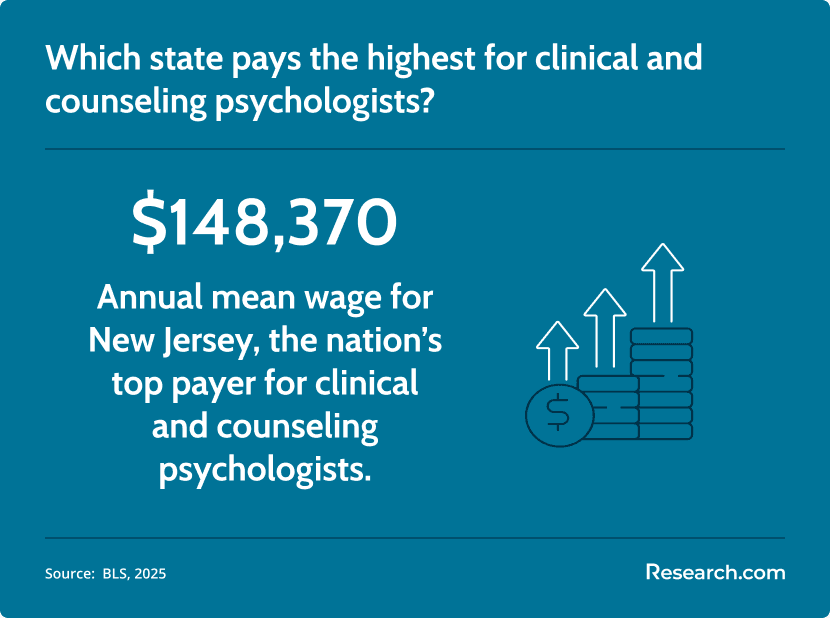
The chart below compares median annual wages for clinical and counseling psychologists, psychologists, and related specializations.
How should you choose the best online counseling psychology program?
The best program is not always the cheapest, fastest, or highest-ranked. It is the program that supports your academic starting point, licensure target, budget, schedule, and preferred client population. Use the criteria below before committing to any school.
| Selection Factor | What to Check | Red Flag |
| Accreditation | Confirm regional accreditation and, for counseling graduate programs, review whether CACREP accreditation or CACREP-aligned coursework is relevant to your state. | The school cannot clearly explain its accreditation status or licensure alignment. |
| Licensure Fit | Compare the curriculum, clinical hours, and internship requirements with the rules in the state where you plan to work. | The program says it “may prepare” students for licensure but provides no state-specific guidance. |
| Field Placement Support | Ask whether the school helps identify sites, approve supervisors, and solve placement issues for online learners. | Students are fully responsible for finding placements with little institutional support. |
| Faculty Credentials | Look for faculty with counseling licenses, clinical experience, research activity, and experience supervising students. | Faculty profiles are vague or lack evidence of relevant professional expertise. |
| Cost | Compare total cost, including tuition, fees, travel, technology, books, background checks, and internship-related expenses. | The program advertises low tuition but does not disclose required fees or residency costs. |
| Flexibility | Review course length, start dates, synchronous requirements, transfer credit limits, and part-time options. | The schedule conflicts with your work or caregiving responsibilities. |
| Student Support | Check advising, tutoring, career services, library access, technology support, and mental health resources. | Online students receive fewer services than campus students. |
| Outcomes | Ask about graduation rates, licensing exam preparation, employment support, and alumni pathways. | The school cannot provide meaningful outcome information. |
Common mistakes to avoid
- Choosing only by tuition: A lower per-credit rate may not mean a lower total cost if fees, transfer limits, or extra terms increase the final bill.
- Ignoring licensure rules: Counseling licensure is state-based. Always verify requirements where you plan to practice.
- Assuming every online program includes local field placement help: Ask how practicum and internship sites are approved before enrolling.
- Confusing psychology and counseling credentials: A bachelor’s in psychology, a master’s in counseling, and a doctoral psychology degree lead to different roles.
- Relying only on rankings: Rankings can narrow your search, but your final choice should depend on accreditation, cost, curriculum, and career fit.
- Overestimating accelerated formats: Faster programs can be useful, but only if you can keep up academically and complete fieldwork requirements.
What career paths are available after an online counseling psychology program?
Career options depend on your degree level and state requirements. A bachelor’s degree can lead to entry-level behavioral health, case management, intake, or support roles. A licensure-oriented master’s degree is usually required for independent counseling practice. Students who want a faster graduate route may compare programs such as an accelerated online master’s in clinical mental health counseling, but they should still verify supervised hour and licensing requirements.
| Career Path | Typical Role | Degree Level Often Needed |
| Mental Health Counselor | Provides counseling to individuals or groups in clinics, private practices, hospitals, or integrated care teams. | Usually a licensure-oriented master’s degree plus supervised experience. |
| Marriage and Family Therapist | Works with couples and families using relational and systems-based approaches. | Usually a graduate degree aligned with marriage and family therapy licensure. |
| School or Career Counselor | Supports students’ academic, emotional, social, and career development. | Usually a state-approved graduate counseling or school counseling program. |
| Substance-Use and Behavioral Disorder Counselor | Provides assessment, education, relapse prevention, and treatment support. | Requirements vary by state and role; many clinical roles require graduate training and licensure. |
| Rehabilitation Counselor | Helps people with disabilities pursue independence, employment, and community participation. | Often a counseling-related graduate degree for advanced roles. |
| Clinical Case Manager | Coordinates care, referrals, service plans, housing resources, and behavioral health supports. | Bachelor’s or master’s degree, depending on employer and responsibility level. |
| Behavioral Health Technician or Intake Specialist | Supports treatment teams through client monitoring, intake interviews, documentation, and direct service support. | Often accessible with a bachelor’s degree or related experience. |
| Employee Assistance Program (EAP) Counselor | Provides short-term counseling, crisis response, and referrals for employees. | Usually requires graduate-level counseling preparation and licensure. |
| Program Developer or Community Services Manager | Plans, manages, or evaluates mental health and community service programs. | Often requires experience plus a bachelor’s or graduate degree. |
What challenges do online counseling psychology students face?
Online counseling psychology students must manage independent study, virtual communication, technology requirements, and field placement logistics. The academic work can be demanding, especially when students balance coursework with employment, family responsibilities, or supervised practice hours. Students should also be careful when comparing program quality because accreditation, clinical support, and licensure alignment can vary.
Cost is another challenge. Tuition is only one part of the budget, so students should compare aid, transfer credits, fees, and placement-related expenses. Those looking for lower-cost undergraduate options can start with Research.com’s guide to affordable online psychology degrees.
How to prepare for success in an online counseling psychology program
- Check your state’s licensure rules before applying to any graduate counseling program.
- Ask admissions staff how online students complete practicum and internship requirements.
- Create a weekly study schedule before classes begin, especially if courses use eight-week terms.
- Practice professional communication in writing and video settings because both are central to online counseling education.
- Build experience through volunteering, peer support, crisis line work, research assistance, or human services employment when appropriate.
- Keep records of syllabi, clinical hours, supervisor credentials, and field placement documents for future licensure applications.
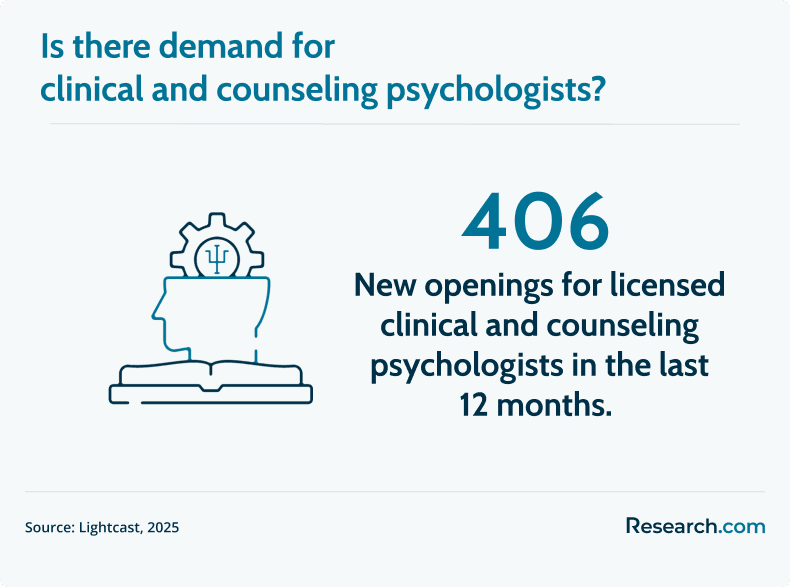
What is the job market for counseling psychology graduates?
The labor market for counseling-related roles reflects continued need for mental health, substance-use, school, and community support services. Demand varies by occupation, license type, employer, and location, so students should treat national projections as a broad signal rather than a guaranteed employment outcome.
Substance-use and mental health counseling is one of the strongest growth areas. Employment in this field is projected to grow 19% from 2023 to 2033, with about 42,000 openings each year. This growth reflects continued demand for treatment and support services in inpatient, outpatient, residential, and community settings.
School and career counselors are projected to see 4% growth during the same period, with approximately 29,100 annual openings. Demand is connected to student enrollment, academic support needs, and career readiness services in schools and postsecondary institutions.
Social and community service managers are projected to grow 8%, particularly in organizations that manage counseling, behavioral health, and social service programs. Community and social service occupations overall are expected to grow faster than average, covering a wide range of direct-service and program leadership roles.
Entry-level roles such as psychiatric technicians, intake specialists, and behavioral health support staff continue to be important as clinics and agencies expand access to services.
The chart below shows projected employment growth for clinical and counseling psychologists in the coming years.
What research supports online counseling psychology education?
Research on online counseling education is still developing, but well-designed online programs can support meaningful learning when they include interactive case work, simulated clinical experiences, structured feedback, and outcome-based assessment. The strongest evidence is not that every online program is equal to every campus program; rather, quality depends on instructional design, faculty engagement, supervised practice, and whether students are assessed on applied competencies instead of passive content completion.
Some students also add specialized credentials to support a particular practice area. For example, those interested in behavior analysis may compare counseling pathways with affordable online BCBA master’s programs, depending on their long-term professional goals.
What graduates say about online counseling psychology degrees
- Hayden: "Leaving military service was difficult, and I needed a program that gave me direction without forcing me to put my life on hold. Studying online helped me stay consistent, and I now use the degree in my work as a peer counselor for other veterans."
- Kristopher: "The most valuable part of my online program was the practical work. Case studies, simulated client conversations, and feedback from instructors helped me move beyond definitions and think through real counseling situations. That preparation helped me land an internship at a behavioral health center, which later became a full-time job."
- Levi: "I had spent ten years teaching and wanted to move into school counseling without leaving my job immediately. The online MA gave me the foundation I needed while I continued working. Today, I serve as a full-time school counselor in my district, and the career change has been deeply meaningful."
Key Insights
- Degree level matters: A bachelor’s degree can support entry-level behavioral health roles or graduate school preparation, but most independent counseling roles require a master’s degree, supervised experience, and state licensure.
- Accreditation is non-negotiable: Confirm regional accreditation first, then check whether CACREP accreditation or CACREP-aligned coursework is important for your counseling specialty and state.
- Online programs can work well when they include real skill practice: Look for live interaction, roleplay, recorded demonstrations, faculty feedback, and strong practicum or internship support.
- Total cost is more important than per-credit tuition: Include fees, books, transfer credit limits, residency travel, background checks, liability insurance, and field placement expenses in your calculation.
- Licensure rules are state-specific: Before enrolling in a graduate program, confirm that the curriculum and supervised hours match the state where you plan to practice.
- Career outcomes vary by credential: Bachelor’s graduates often enter support or case management roles, while master’s graduates may qualify for licensure-oriented counseling positions after meeting state requirements.
- Do not choose by speed alone: Accelerated programs can save time, but they must still provide rigorous coursework, supervised fieldwork, and enough support to prepare you for professional practice.
References:
- American Counseling Association. (2024). Tomorrow's Counselors Essay Competition. https://www.counseling.org/membership/awards
- American Psychological Association. (2025). Pursuing a career in counseling psychology. https://www.apa.org/education-career/guide/subfields/counseling/education-training
- Bureau of Labor Statistics. (2024). Community and social service occupations. https://www.bls.gov/ooh/community-and-social-service/home.htm
- Bureau of Labor Statistics. (2024). Marriage and family therapists. https://www.bls.gov/ooh/community-and-social-service/marriage-and-family-therapists.htm
- Bureau of Labor Statistics. (2024). School and career counselors and advisors. https://www.bls.gov/ooh/community-and-social-service/school-and-career-counselors-and-advisors.htm
- Bureau of Labor Statistics. (2024). Social workers. https://www.bls.gov/ooh/community-and-social-service/social-workers.htm
- Bureau of Labor Statistics. (2024). Substance abuse, behavioral disorder, and mental health counselors. https://www.bls.gov/ooh/community-and-social-service/substance-abuse-behavioral-disorder-and-mental-health-counselors.htm
- Chi Sigma Iota. (2024). Awards and Grants. https://www.csi-net.org/events/EventDetails.aspx?id=1982532
- Council for Accreditation of Counseling and Related Educational Programs. (2024). CACREP accreditation standards. https://www.cacrep.org/wp-content/uploads/2024/04/2024-Standards-Combined-Version-4.11.2024.pdf
- National Board for Certified Counselors. (2024). NCE statistics and preparation. https://nbcc.org/exams/nce
- National Center for Education Statistics. (2024). Distance Education in IPEDS. https://nces.ed.gov/ipeds/use-the-data/distance-education-in-ipeds
- Psi Chi. (2024). Undergraduate Scholarships. https://www.psichi.org/page/psichischolars
- Psychology.org. (2024). Admission requirements for an online counseling degree. https://www.psychology.org/online-degrees/counseling
- U.S. Department of Education. (2024). Tuition costs for distance education students. https://nces.ed.gov/fastfacts/display.asp?id=80
Other Things You Should Know About Online Counseling Psychology Programs
Yes. Most CACREP-accredited online counseling psychology programs require at least 100 hours of practicum and 600 hours of internship. These field placements must usually be completed in approved in-person sites, even when the coursework is online, to meet licensure-track training standards.
Admission requirements typically include a bachelor’s degree in psychology or a related field, a minimum GPA of 3.0, letters of recommendation, a statement of purpose, and possibly GRE scores. Some programs may also require relevant work experience or an interview.
Students enrolling in 2027 online counseling psychology programs can access federal student aid, scholarships, and grants. Schools may offer specific counseling scholarships, and state-specific aid could be available, depending on residency. Always verify with program representatives for eligibility and deadlines.


