2027 Should You Choose a BS in Business Administration or A Customer Success Certification for Your Next Career Step?
Audited and Verified:
Our Editorial and Data Verification Process
Research.com uses government datasets, official education statistics and primary institutional information to support its career and degree guides. Our review process checks factual accuracy, occupational definitions, source dates and the requirements associated with the credentials discussed.
How This Article Was Fact-Checked
Our editorial team verifies salary estimates, employment projections, education requirements and program information against original data providers and official organizations. Salary figures are checked against the relevant occupational definitions and reporting periods. Information about licensure, accreditation and required in-person training is reviewed separately.
Fact-checked and verified on:

Co-Founder and Chief Data Scientist
If you want to move into customer success, a full business degree and a focused certification solve different problems. The choice matters because employers may value your ability to manage customer relationships and demonstrate results more than either credential alone. This comparison is for career changers, customer-facing employees, and students weighing their next step. It explains what each pathway teaches, what it costs in time and money, and when your existing education and experience may make one option - or neither - the better investment.
Key Things You Should Know
- Choose a customer success certification for a focused skills gap if you already have relevant education or customer-facing experience; it is not a substitute for a bachelor's degree when an employer requires one.
- Consider a BS in Business Administration when you need a bachelor's credential and want broader options beyond customer success. Programs commonly require about 120 semester credits, but prior credits may reduce what remains.
- Neither pathway guarantees a customer success manager job. As a reminder not to mistake related occupations for CSM pay, the Bureau of Labor Statistics reports a $78,760 May 2025 median for market research analysts - not for customer success managers.
What is the difference between a BS in Business Administration and a customer success certification?
A BS in Business Administration is an undergraduate academic degree covering several business functions alongside general education. A customer success certification is a credential awarded by a training provider after its specified coursework, assessment, or both. Providers set their own standards; there is no single certification that licenses someone to work in customer success.
The distinction is breadth versus immediate job relevance. A degree can build foundations in finance, marketing, operations, and management, but it may offer little instruction in customer onboarding or renewal conversations. A focused certification can teach those tasks, but it does not replace an accredited bachelor's credential or establish a record of customer outcomes. If your goal is broader people or organizational leadership rather than customer-account ownership, compare faster bachelor's routes in organizational leadership before committing to either pathway.
Which option better prepares you for a career in customer success?
For someone already handling accounts, support escalations, sales, or implementation, targeted training plus documented work is often the more direct next step. Look for practice with onboarding plans, adoption measures, stakeholder meetings, renewal-risk assessment, and ethical use of customer data. Ask a supervisor for opportunities to contribute to these tasks; a certificate alone cannot demonstrate that you have performed them.
A degree may be the better investment if you lack a bachelor's credential required by your target employers, want access to undergraduate internships, or want to keep options open across business functions. It is a longer route to customer success skills, so pair it with customer-facing work and an approved project. If you discover that hiring and employee development appeal to you more than managing customer accounts, HR degree requirements and job opportunities provide a more relevant comparison.
What are the education and certification requirements for customer success managers?
Customer success manager is a job title, not a licensed profession with one nationwide degree or certification requirement. Employers set their own criteria. Some seek a bachelor's degree; others emphasize experience in customer support, account management, sales, implementation, or a particular product. Manager in the title can mean ownership of customer accounts rather than supervision of employees.
Read several postings for the type of CSM role you want. A technical software account may call for product and implementation knowledge, while a high-volume account role may emphasize communication, prioritization, and CRM records. Compare required qualifications with preferred ones before paying for training. If a bachelor's degree is your missing qualification, check the school's actual entry rules using a business administration admissions preparation guide; admission to a college and admission to its business major can be separate decisions.
Business administration programs typically combine general education with accounting, economics, finance, marketing, management, operations, business statistics, and communication. Requirements and quantitative depth vary by school. For customer success, marketing and customer research can help you understand buyer needs; accounting and finance can help you discuss account value; analytics and operations can support adoption reporting and implementation planning.
Check whether the program offers relevant electives, a formal concentration, an internship, or a capstone that permits a customer-experience topic. An elective is not automatically a concentration, and a classroom case is not proof of workplace results. When comparing shorter online business administration degrees with cost details, inspect the required courses and applied opportunities - not just the advertised completion time.
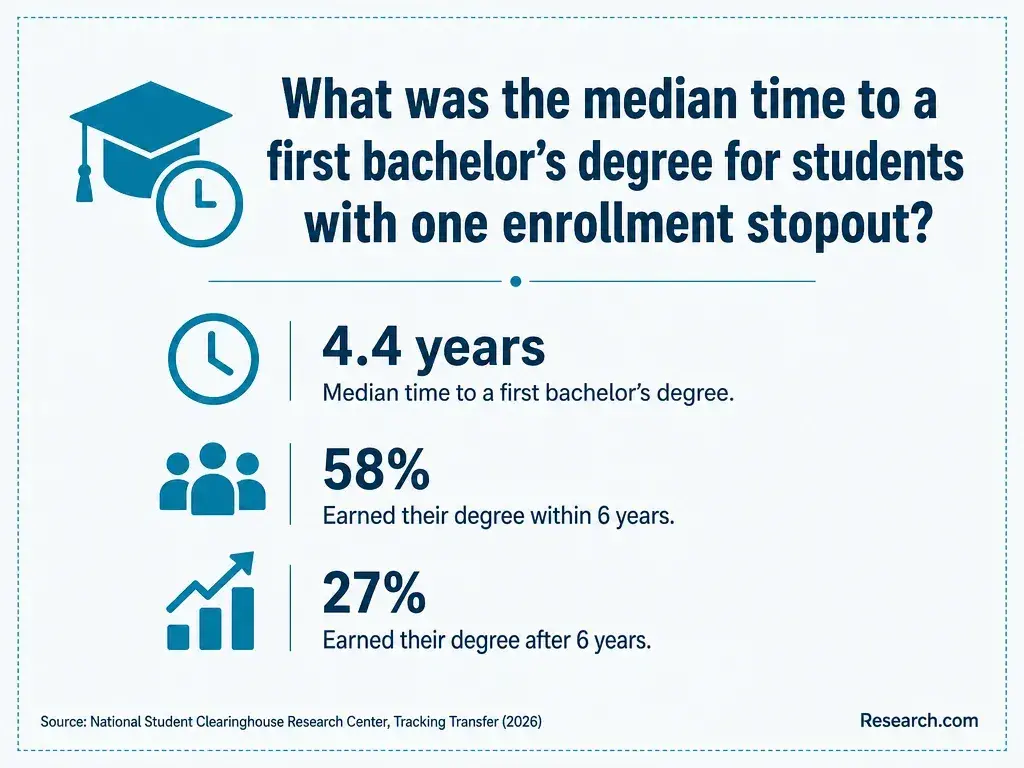
A bachelor's degree commonly comprises about 120 semester credits. A student entering without college credit often plans for several years of study; a transfer student needs an official evaluation to know how many requirements remain. Accepted credits do not necessarily satisfy the business core, and course sequencing or residency rules can extend the timeline.
Certification programs are generally much shorter, but their duration depends on lessons, assessment, access periods, and your weekly study time. Compare time to a usable result, not only time to a credential: a short course may still need to be followed by product practice and customer-facing work. If speed is central to your degree decision, examine accelerated study schedules for business majors alongside the workload and required course availability.
Either format can provide a legitimate degree if the institution and program meet your needs. Online study may reduce commuting, but it is not necessarily self-paced: courses can require live sessions, group meetings, scheduled exams, or presentations. Campus programs may offer easier access to in-person recruiting and faculty, though those opportunities depend on the school and your ability to attend.
Ask for sample course schedules, assessment rules, internship policies, and the availability of career services to online students. If you are comparing online schools before applying, schools with zero-cost college applications may reduce one initial expense; an application-fee policy says nothing by itself about tuition, flexibility, or program quality.
There is no reliable single price for either pathway. A degree's total depends on tuition rates, required credits after an official transfer evaluation, fees, materials, enrollment pace, and aid eligibility. A certification's advertised price may exclude assessment attempts, software access, or renewal. Compare the amount you must pay to finish - not the price of one course or an advertised starting rate.
Request written figures for these cost categories before enrolling:
- Degree: tuition for remaining required credits, mandatory fees, materials, and any travel or lost work time.
- Certification: course and assessment charges, retakes, subscriptions, and any renewal fees.
- Available support: grants or scholarships you actually qualify for, employer reimbursement terms, and the amount you would need to borrow or pay upfront.
Use the school's current tuition schedule and your degree audit to compare lower-priced college options for business majors. A certification may have a lower upfront cost, but it is poor value if it teaches skills you already have or fails to address the qualification your target employer requires.
A customer success certification is most directly relevant to customer success associate, onboarding, implementation-support, and account-support work. Progression to account ownership usually depends on product knowledge, customer communication, and evidence that you can identify risks and coordinate solutions. It does not automatically qualify you for a CSM position.
A business degree can also support applications for roles such as marketing coordinator, operations coordinator, sales support specialist, or project coordinator, depending on coursework and experience. Those jobs have different tasks and hiring standards. If coordinating delivery appeals to you more than maintaining ongoing customer accounts, compare online project management degrees for transfer applicants with the actual requirements in project-coordinator postings.
There is no BLS occupational category that cleanly isolates customer success managers, so a national CSM salary or growth rate should not be inferred from another job title. Compensation also varies with industry, account complexity, location, experience, and whether the role includes sales incentives. A degree or certification does not establish a starting salary.
For a different, adjacent occupation, the BLS reports a May 2025 median annual wage of $78,760 for market research analysts and projects 7% employment growth from 2025 to 2035. Those figures describe the occupation as a whole, not new business graduates or CSMs; use them only if research and analysis are realistic alternative career goals. Project management is another distinct path, and comparing tuition budgeting for an accredited project management degree is useful only if that career's responsibilities match your interests.
How can you evaluate an accredited degree or reputable customer success certification?
For a degree, verify the institution's recognized institutional accreditation, the exact degree awarded, required courses, total remaining credits, and career support. If a school cites AACSB, ACBSP, or IACBE, confirm whether its specific business program falls within that accreditor's scope. Accreditation is a quality-control consideration, not a guarantee of hiring results. For aid planning, check FAFSA eligibility at online business administration schools and confirm your own eligibility and award with the school's financial-aid office.
For a certification, examine who awards it, what the assessment tests, whether practice uses realistic customer scenarios, instructor qualifications, total charges, and any expiration or renewal rules. Then check whether your target employers mention that credential. Before choosing either option, identify your missing qualification, obtain a written degree cost and credit estimate if applicable, and ask how you will gain demonstrable customer-facing experience.
Other Things You Should Know About Business Administration
Yes, if an employer accepts your experience. Document examples of onboarding help, issue resolution, product guidance, and cross-team coordination, then seek opportunities to take on account-focused tasks.
Usually, first check whether your existing degree meets employers' education requirements. Targeted training and relevant work may address the remaining gap more directly than another bachelor's degree.
Only use materials you have permission to share. Remove personal and proprietary information, and consider a clearly labeled sample using invented data instead of confidential account records.
Some do, but benefits vary. Ask whether the course is approved, when reimbursement occurs, what completion conditions apply, and whether you must repay the benefit if you leave.
- School-Determined Requirements - FSA Partner Connect https://fsapartners.ed.gov/knowledge-center/fsa-handbook/2026-2027/vol1/ch1-school-determined-requirements
- Business Administration vs. Management Degrees | CMU https://www.calmu.edu/news/business-administration-vs-management
- Online Business Management Degree Costs | Boise State Online https://www.boisestate.edu/online/business-management/costs/
- How Long Does It Take to Finish an Online Degree? | NMSU Global Campus https://global.nmsu.edu/blog/general/how-long-does-it-take-to-finish-an-online-degree/
- Exploratory Pathway (part-time) | valenciacollege.edu https://valenciacollege.edu/students/degree-pathways/aa-exploratory-pt.php
- Transfer Requirements | Orange Coast College https://orangecoastcollege.edu/services-support/counseling/transfer-center/transfer-requirements.html
- Do College Credits Ever Expire? | National University https://www.nu.edu/blog/do-college-credits-ever-expire-what-you-need-to-know-before-transferring/
- 10 Key Subjects Taught in a Bachelor of Business Administration Program | Carson-Newman University https://www.cn.edu/cps-blog/10-key-subjects-taught-in-a-bachelor-of-business-administration-program/
- Business Management vs. Business Administration: Which Degree Is Right for You? | Cal Lutheran https://www.callutheran.edu/programs/articles/business-management-vs-business-administration/
- Online Bachelor's Degree in Business Administration | Purdue Global https://www.purdueglobal.edu/degree-programs/business/bachelor-business-administration/