2027 Choosing a BS in Business Administration for Business Roles in Construction Companies
Audited and Verified:
Our Editorial and Data Verification Process
Research.com uses government datasets, official education statistics and primary institutional information to support its career and degree guides. Our review process checks factual accuracy, occupational definitions, source dates and the requirements associated with the credentials discussed.
How This Article Was Fact-Checked
Our editorial team verifies salary estimates, employment projections, education requirements and program information against original data providers and official organizations. Salary figures are checked against the relevant occupational definitions and reporting periods. Information about licensure, accreditation and required in-person training is reviewed separately.
Fact-checked and verified on:

Co-Founder and Chief Data Scientist
A construction company needs people who can control costs, coordinate purchases, support bids, manage contracts, and keep office and field teams working together. A BS in Business Administration can prepare you for that work, but it is not interchangeable with a construction management degree or jobsite experience.
This guide is for students entering the industry and employees considering a move into business or management roles. It explains which jobs the degree fits, where specialized training matters, and what to verify before committing time and tuition.
Key Things You Should Know
- A BS in Business Administration is a strong fit for construction finance, procurement, operations, and project-support roles; field leadership usually requires substantial construction experience and technical knowledge.
- Prioritize accounting, contracts, scheduling, and applied construction work over a concentration name alone; ask employers which skills their target jobs require.
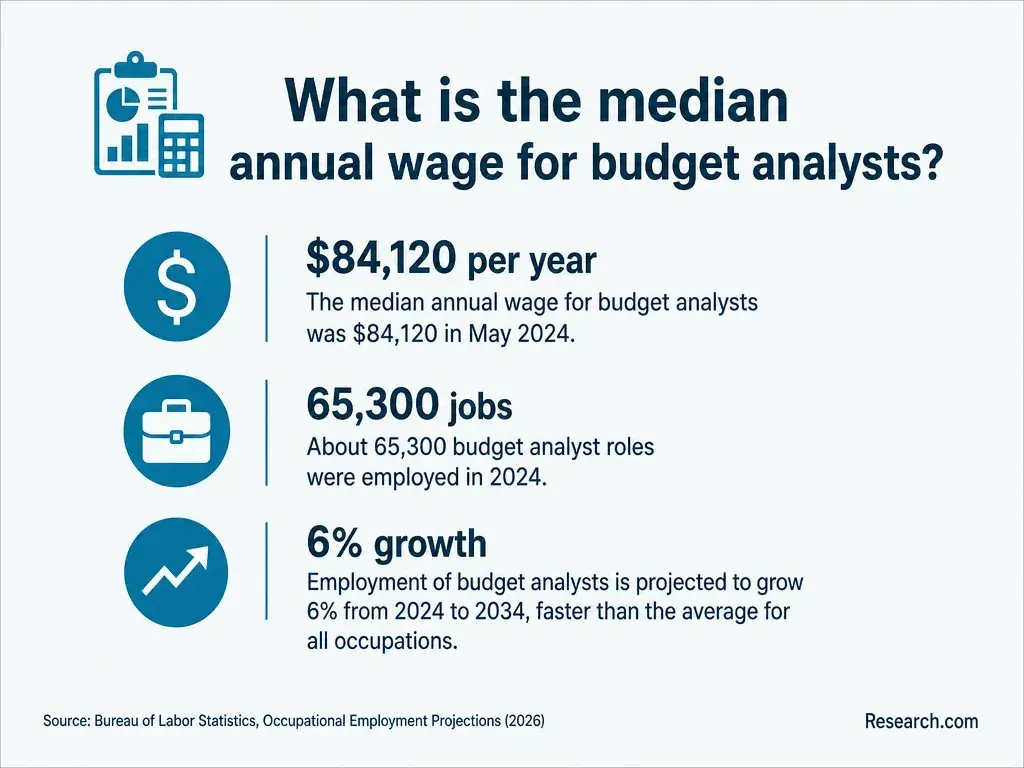
- The U.S. median annual wage for project management specialists was $102,320 in May 2025, but that occupation-wide figure is not an expected starting salary for a business graduate.
What is a business administration degree for construction company careers?
A BS in Business Administration is an undergraduate degree covering business functions such as accounting, finance, operations, management, and analysis. In a construction company, those skills can support estimating administration, purchasing, payroll and cost tracking, subcontractor coordination, and project reporting. The degree does not, by itself, teach someone to interpret every plan, supervise a jobsite, or satisfy a contractor's licensing requirements.
Choose the degree according to the work you want. A broad business program can fit someone aiming for a contractor's finance or operations office, particularly if it permits construction-related electives and projects. A construction management degree generally offers more direct preparation in building methods, estimating, scheduling, and field coordination. A supply chain degree may be a better match for purchasing-intensive work; compare accelerated supply chain bachelor's degrees only after checking whether their courses address the procurement tasks you want to perform.
Degree titles are not standardized. A BS, BBA, or management degree may have a similar core but different quantitative requirements, electives, and graduation rules. Read the actual catalog rather than treating the titles as equivalent.
Which construction business roles can you pursue with a bachelor's degree?
The most accessible route depends on your existing experience. A new graduate may start by supporting a business function; a tradesperson or construction office employee may use the degree to take on broader budgeting, purchasing, or coordination duties. The distinctions below help you match a target role to evidence you can build before graduation:
| Role | Typical work | Evidence beyond the degree |
| Project coordinator or administrator | Track documents, schedules, change requests, and communications | Accurate records, scheduling tools, and familiarity with project workflows |
| Purchasing or procurement coordinator | Compare quotes, issue purchase orders, and monitor deliveries | Spreadsheet skills, supplier communication, and material-flow knowledge |
| Construction accounting assistant or cost analyst | Support invoices, job-cost reports, and budget tracking | Accounting fundamentals and experience with relevant software |
| HR or operations coordinator | Support hiring, training records, staffing, and office processes | Employment-practice knowledge and careful handling of personnel data |
These titles vary by employer. Larger contractors may separate purchasing, accounting, and HR; a small contractor may combine them. If people operations interests you more than project delivery, compare HR curricula and career directions before choosing a general business concentration.
For any opening, compare the posting's tasks with work you have actually done. A class project can demonstrate analysis or communication, but it does not replace responsibility for a live budget, crew, or contract.
What degree requirements help you qualify for construction management positions?
Construction manager positions commonly call for a bachelor's degree and construction experience, but employers differ on which majors they accept and how much field knowledge they expect. A business degree may help a candidate understand budgets, contracts, and personnel decisions; it is less direct preparation for construction methods, building systems, safety oversight, and field sequencing. Graduation alone is not a promotion to construction manager.
If that is your target, review local job postings for acceptable majors and technical requirements. Then ask a program adviser whether you can take construction estimating, plan reading, scheduling, or building methods coursework and whether an internship can place you with a general contractor or subcontractor. A field-facing role also benefits from documented experience resolving site-to-office coordination problems under supervision.
Students with prior construction coursework should request an official degree audit before assuming it satisfies business requirements. Resources on online undergraduate project management credit acceptance can suggest questions to ask, but only the receiving institution can determine how credits apply to its degree.
Most business administration programs teach a general core; construction-focused learning may come through a formal concentration, electives, an internship, or an approved project. Those options have different transcript and graduation implications. Ask whether the school awards an official concentration or merely offers related courses.
For construction business roles, managerial accounting and finance help you interpret job costs and cash-flow pressures. Operations and supply chain courses support purchasing and delivery decisions. Business law and contract coursework provide context for agreements and change documentation, while statistics and spreadsheets help you examine estimates and performance reports. None substitutes for legal advice or supervised construction practice.
A useful applied assignment might compare supplier bids using stated delivery, quality, and payment assumptions—not confidential company quotes obtained without permission. If procurement is your main goal, use supply chain program length and value comparisons to test whether a specialized pathway offers enough additional depth to justify its remaining courses. Check prerequisites and course rotation before planning electives that may delay graduation.
Yes, an online program can suit someone already working for a contractor, especially when coursework lets them analyze approved workplace processes. Online delivery does not make construction exposure optional: students without industry experience should seek an internship, relevant employment, or another supervised way to learn how projects operate.
Check the schedule beneath the "online" label. Live classes, group meetings, proctored exams, fixed deadlines, internships, or campus visits can affect a working student's ability to finish. Ask whether an employer-approved project can satisfy a course requirement and what data may be used; employment alone does not automatically earn academic credit.
If speed matters, compare accelerated undergraduate programs against your work schedule and the availability of required courses. A shorter calendar does not necessarily mean fewer study hours or a lower total cost.
A traditional full-time bachelor's path often takes four academic years. A transfer student's timeline depends on which credits satisfy general education, business core, elective, and institutional residency requirements—not just the number of credits accepted. Part-time study, prerequisite sequences, and infrequently offered courses can extend completion.
Compare programs using a written estimate of remaining requirements and total completion cost. Include tuition, mandatory and technology fees, books, travel or internship costs, and any earnings you would forgo by changing work hours. Ask financial-aid and employer-benefits offices about eligibility and reimbursement timing before relying on either source to pay a bill.
For a student considering a project-oriented alternative, information on project management tuition fees and financial aid can frame the cost questions. Compare official, program-specific estimates on the same enrollment and transfer-credit assumptions; advertised tuition alone is not the final price.
Requirements vary by institution and by whether you apply as a first-year or transfer student. Schools commonly request prior academic transcripts and may set separate standards for entry into the business major. Some programs require introductory accounting, economics, mathematics, or statistics before upper-level business courses; others incorporate those subjects after admission.
Request the current catalog and ask admissions for the documents and deadlines that apply to your status. If you have college or trade-related coursework, send official records for evaluation and ask which credits fulfill degree requirements rather than becoming free electives. An applicant returning after years in construction should also ask whether a prior learning assessment is available, what evidence it requires, and where any awarded credit would apply.
Application costs are worth checking, but they should not drive the degree decision. A list of online universities with no application charge can help narrow an initial search; confirm each school's current policy and overall fit directly.
First, verify the institution's current accreditation through its accreditor and the U.S. Department of Education's recognized-accreditor information. Then check whether any advertised business accreditation—such as AACSB, ACBSP, or IACBE—actually covers the business school or program you would enter. Institutional accreditation and business accreditation have different scopes; neither guarantees a construction job.
Quality for this career goal also means usable courses and employer access. Ask for the current curriculum, course rotation, internship rules, career-service support, and any construction industry partnerships the school can document. If the school reports employment outcomes, check which graduates were counted and whether the figures distinguish construction employers from all employers.
US business college rankings for online learners may help generate candidates, but use the underlying program policies and outcomes—not rank alone—to make the final comparison.
A BS in Business Administration does not award a contractor license or a professional certification. Contractor licensing rules depend on the state, the activity, and the person or business responsible. For office-based roles, an employer may value proficiency in its accounting, estimating, scheduling, or document-control systems more than an additional credential.
Safety training, construction or project-management certifications, and purchasing credentials may be useful when they match the job. Check each issuing organization's eligibility, examination, experience, and renewal rules before paying for preparation. In particular, a project management course does not establish eligibility for every professional designation.
If your goal is primarily project coordination, compare the training and experience a target employer requests with economical project management education online. A focused course or supervised assignment may address a specific skill gap more efficiently than another degree.
What salaries and job outlook can business graduates expect in construction?
There is no single salary or growth rate for "business administration graduates in construction." Pay depends on the occupation, employer, region, and experience. The U.S. Bureau of Labor Statistics reports a $102,320 median annual wage for project management specialists in May 2025 and projects 7% employment growth from 2025 to 2035. Those figures cover the occupation across industries and experience levels; they are not construction-specific starting pay or a forecast for graduates of this degree.
Use occupation data to understand a possible longer-term direction, then examine local postings for the roles you could qualify for now. Compare required experience, travel, site hours, and responsibilities alongside pay. A student seeking a first construction role may gain more immediate value from relevant employment and a manageable education bill than from choosing a program based on an experienced specialist's median wage.
To assess affordability against likely early-career opportunities, compare your official remaining-cost estimates with low-cost online business degree programs—and verify that any lower-cost option still offers the construction-relevant coursework and support you need.
Other Things You Should Know About Business Administration
Yes. Document the budgets, purchasing, documentation, or coordination work you performed. A general contractor may value that perspective, although its broader project responsibilities can require additional learning.
Start with the tools named in your target postings. Software practice is most convincing when paired with an understanding of quantities, assumptions, and review procedures; a tutorial alone does not demonstrate estimating proficiency.
Only with appropriate employer and faculty permission. Follow confidentiality and intellectual-property rules, and use approved, redacted, or fictionalized examples when real records cannot be shared.
Not necessarily. A small firm can provide exposure to several business functions. Keep specific, nonconfidential examples of your responsibilities so larger employers can understand the scope of your experience.
- Detail for CIP Code 52.2002 | ed.gov https://nces.ed.gov/ipeds/cipcode/cipdetail.aspx
- Top Jobs with a Business Administration Degree | Florida National University (FNU) https://www.fnu.edu/8-jobs-business-administration-degree/
- Co-ops vs Internships | Kettering University https://www.kettering.edu/co-op-experience/kettering-co-op-vs-internships
- Business Administration vs. Business Management | Warner Pacific University https://www.warnerpacific.edu/blog/business-administration-vs-business-management/
- How Do Transfer Credits Work When You Go Back to School? | Whitworth Online https://online.whitworth.edu/news-articles/how-do-transfer-credits-work-when-you-go-back-to-school/
- Undergraduate Transfer Credit and Credit for Prior Learning | charlotte.edu https://provost.charlotte.edu/policies-procedures/academic-policies-and-procedures/undergraduate-transfer-credit-credit-for-prior-learning/
- Business Administration Program Guide | University of Bridgeport https://www.bridgeport.edu/news/guide-to-choosing-the-right-business-administration-program/
- Bachelor of Science in Business Administration (BSBA) | Boston University https://www.bu.edu/academics/questrom/programs/undergrad/bsba/
- Construction Management Certification Guide | sjvc.edu https://www.sjvc.edu/blog/which-credentials-or-certifications-prepare-you-for-the-construction-industry/
- Business Management vs. Business Administration: Which Degree Is Right for You? | Cal Lutheran https://www.callutheran.edu/programs/articles/business-management-vs-business-administration/