2027 Should You Choose Real Estate or General Business in a BS in Business Administration?
Audited and Verified:
Our Editorial and Data Verification Process
Research.com uses government datasets, official education statistics and primary institutional information to support its career and degree guides. Our review process checks factual accuracy, occupational definitions, source dates and the requirements associated with the credentials discussed.
How This Article Was Fact-Checked
Our editorial team verifies salary estimates, employment projections, education requirements and program information against original data providers and official organizations. Salary figures are checked against the relevant occupational definitions and reporting periods. Information about licensure, accreditation and required in-person training is reviewed separately.
Fact-checked and verified on:

Co-Founder and Chief Data Scientist
A real estate concentration can make a BS in Business Administration (BSBA) more relevant to property work, while general business leaves more room to explore industries and functions. That choice matters if you are selecting courses now, transferring credits, or preparing for a first professional role.
This guide compares what each concentration adds to the shared business degree, where each can lead, and what neither guarantees. You will also learn how to check licensing rules, program costs, and applied opportunities before committing.
Key Things You Should Know
- Choose real estate if you want property-focused coursework and projects; choose general business if you need flexibility across business functions or have not settled on a target role. Neither concentration automatically grants a real estate license.
- Check the requirements of the state where you intend to practice before counting degree courses toward licensure.
- Compare the remaining courses and their availability, not just the concentration name. The May 2025 median wage of $78,760 for market research analysts is occupation-wide, not an expected starting salary for general business graduates.
Should you choose a real estate or general business concentration in a BSBA?
Start with the work you want to do, then look at the courses and experience that would help you qualify. Real estate is the stronger choice if you are committed to work involving property markets, development, leasing, or real estate finance and the program offers relevant applied work. General business is the safer choice if you want to explore operations, marketing, sales, or other functions without committing your electives to one industry.
The recommendation can change if the real estate track adds courses that will not fit your schedule or apply to your transferred credits. It can also change if a general business track lets you pair broad coursework with a property internship. If your goal is organizational leadership rather than property work, compare the actual curriculum with undergraduate leadership programs with shorter timelines; a different degree may be more direct.
What is the difference between a real estate and general business degree?
In this comparison, both options lead to a BSBA; the concentration is a defined set of courses within that degree, not necessarily a separately awarded real estate degree. Schools may use different labels, and some offer property-related electives without offering a formal concentration. The catalog and degree audit establish what you would actually earn.
The table shows the difference that matters most when choosing electives: industry depth versus room to move across functions.
| Decision factor | Real estate concentration | General business concentration |
| Additional focus | Property markets, transactions, investment, or development, depending on the school | A broader selection of business functions and electives |
| Best fit | A student with a reasonably clear property-industry goal | A student exploring roles or seeking cross-industry flexibility |
| Main limitation | Fewer electives may remain for other interests | Property expertise may require carefully chosen electives and experience |
If your interest is specifically purchasing, logistics, or distribution rather than property, a supply chain degree may offer more relevant depth. Compare its required courses and total completion cost with budget-friendly supply chain degrees with shorter schedules before assuming general business is the closest alternative.
Which careers can you pursue with each BSBA concentration?
A real estate concentration can support applications for leasing, property operations, real estate research, or development-support roles. The work may involve tenant communication, market comparisons, budgets, and coordination with owners or contractors. Sales-agent and broker work follows separate state licensing rules; managing a property portfolio or leading development projects generally requires experience beyond undergraduate coursework.
General business graduates can pursue entry-level roles such as operations coordinator, sales-support specialist, or marketing coordinator. Employers will look for evidence tied to the job - such as spreadsheet work, customer communication, or process documentation - not only the concentration title. If human resources becomes your specific goal, compare HR coursework and experience requirements; transfer students can also examine HR bachelor's transfer credit evaluation before changing degree paths. Neither concentration makes a new graduate automatically qualified to manage staff or budgets.
Both paths typically sit on a business core that may include accounting, finance, marketing, management, economics, and quantitative work. The distinction is what you study beyond that core. Real estate options may cover property valuation, investment analysis, real estate law, or development. General business may let you combine courses in areas such as operations, entrepreneurship, marketing, and finance. The exact requirements and prerequisite sequence vary by school.
Look for assignments that produce evidence of the work you hope to do: a documented property-market analysis for a real estate goal, or a budget, customer analysis, or process proposal for a broader business goal. A classroom project is not proof of professional results or permission to use an employer's confidential data. If coordinating construction or property projects is your target, compare the relevant courses with project management undergraduate transfer pathways rather than assuming any real estate course supplies project-management training.
Real estate sales-agent and broker licensing is controlled by the state where you plan to practice. A state may require approved prelicensing education, an examination, an application, and other conditions; whether a college course counts depends on that state's rules and any applicable approvals. Broker requirements can differ from sales-agent requirements.
Check the state real estate regulator's published rules and ask whether the school's specific courses meet them before enrolling for that purpose. A faster academic calendar does not shorten a separate licensing process: even online business degrees with compressed terms should be evaluated independently of state-approved prelicensing education. If your sole goal is to qualify for a sales-agent license, a BSBA may not be the most direct required step.
Completion time depends on remaining requirements, transferable credits, course availability, and whether you study full-time or part-time. Concentrations can have different prerequisites or course schedules, so two options within one BSBA may not finish at the same time. Ask for an official degree audit showing which accepted credits satisfy the business core, concentration, electives, and institutional residency requirements.
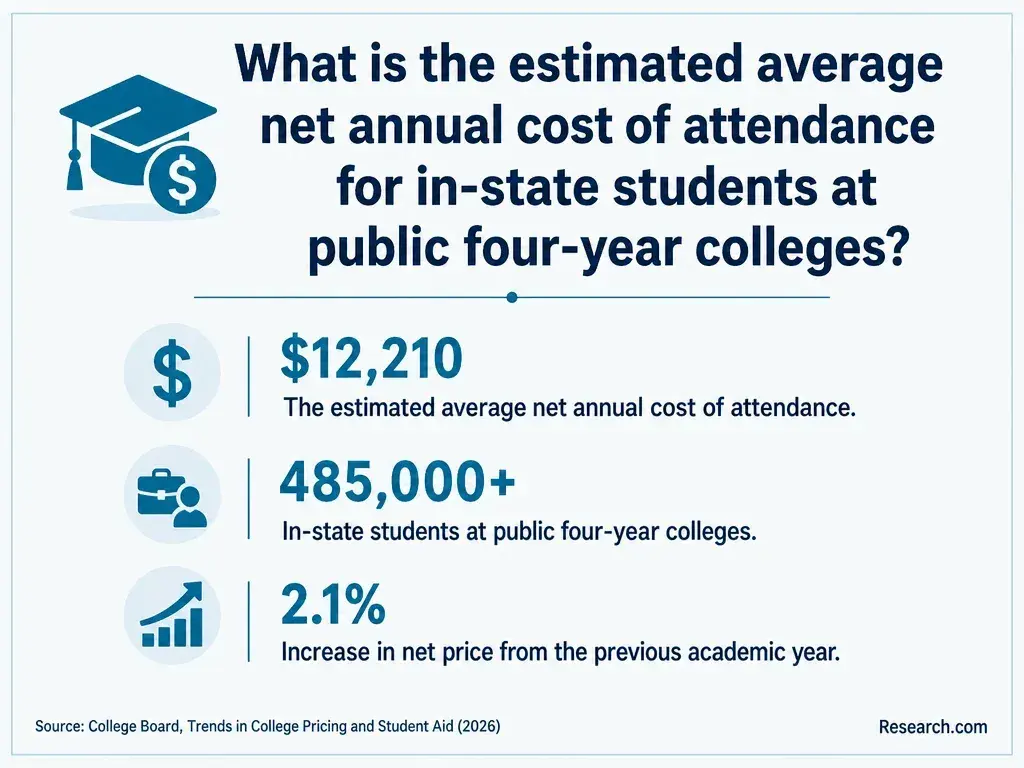
No single price accurately represents both concentrations. Compare each school's published tuition and fees against your remaining courses, then account for books, software, commuting or technology costs, and possible extra terms. An accelerated schedule may reduce calendar time without reducing required coursework or total charges. For context when comparing duration and potential returns, see business administration program length and salary context; use your own aid offer and degree audit for a personal cost estimate.
Choose the format that gives you access to the courses, projects, and people your goal requires. Online study may make it easier to keep a job while completing a BSBA, but deadlines, live sessions, group work, exams, and internships can still constrain your schedule. Campus study may make local networking and some property-site experiences easier, but those opportunities are not guaranteed.
For real estate, ask whether students can work with local market information and whether any internship needs a nearby site. For general business, check how online teams, presentations, and faculty feedback work. If you must continue working, compare actual weekly obligations - not the word "flexible" - across business administration programs for advancement while working.
Requirements vary by institution and by whether you enter as a first-year or transfer student. Schools commonly review prior academic records, while admission to a business major or concentration may have additional rules. Some courses may require earlier math, accounting, or economics work. Being admitted does not mean every previous credit will satisfy a BSBA requirement.
Request the current admissions criteria and a transfer evaluation, then ask an adviser when you may declare each concentration and whether its prerequisites affect your graduation plan. If affordability shapes your choice, verify aid eligibility and your own award before comparing cheaper business administration study with FAFSA-based aid. A school's acceptance of aid applications does not establish what assistance you will receive.
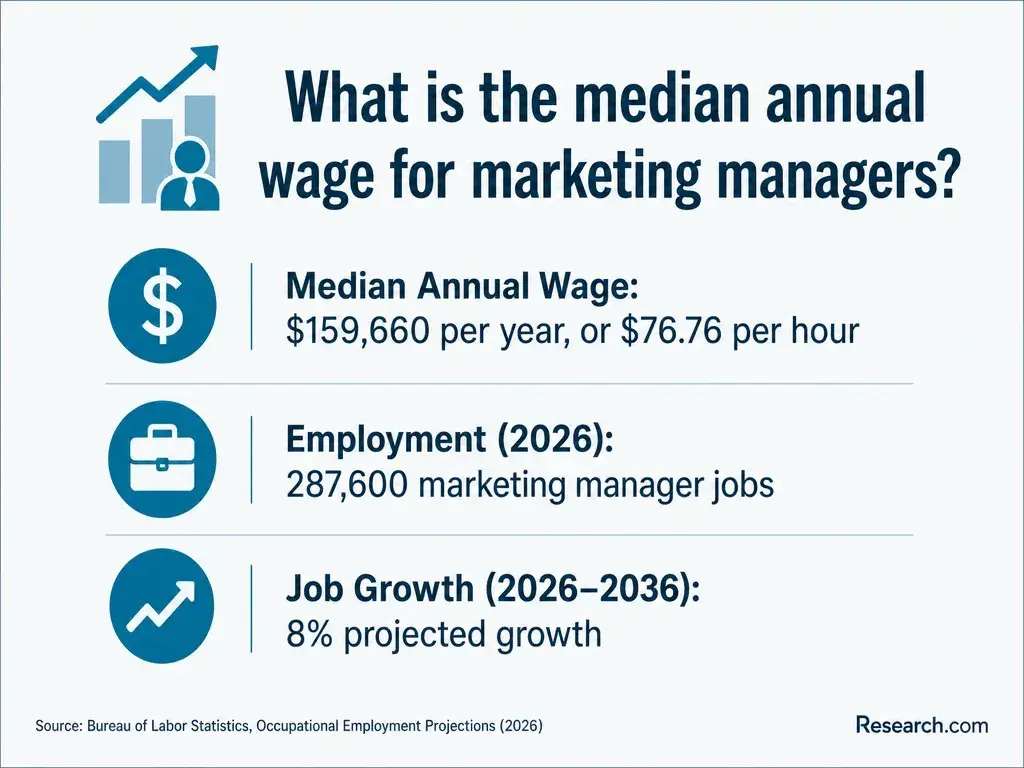
There is no reliable single salary for either concentration: pay follows the occupation, location, responsibilities, and experience. The US Bureau of Labor Statistics reports a May 2025 median annual wage of $78,760 for market research analysts and projects 7% employment growth from 2025 to 2035. That occupation may interest a general business student who develops research and analytical skills, but the median covers workers across experience levels and is not a new-graduate offer.
Property roles can differ substantially in duties and compensation structure, so do not substitute a broad business wage for a real estate salary expectation. Compare local postings for the precise role you want, including licensing, experience, and pay arrangements. Then weigh likely entry routes against education costs; economical online college programs in business can be a starting point for cost comparisons, not evidence that either concentration will produce a particular salary.
How can you evaluate an accredited and reputable BSBA program?
First confirm that the institution holds recognized institutional accreditation and that it awards the stated BSBA with the concentration you want. If a school cites AACSB, ACBSP, or IACBE, check the accreditor's coverage rather than assuming every degree or concentration is included. Accreditation is an important quality check, not a guarantee of internships, licensing eligibility, or employment.
Ask for the current catalog, a sample degree plan, course rotation, and evidence of career support relevant to your target role. For real estate, check who supervises property-focused projects and whether local opportunities are available; for general business, check whether electives remain open often enough to support your plan. A national guide to ranked online business colleges can help identify schools to investigate, but make the final comparison using verified curriculum, total cost, scheduling, and outcomes information from each institution.
Other Things You Should Know About Business Administration
Often, but the school's catalog and advising rules control the change. Request an updated degree audit first; courses already completed may become electives rather than meeting the new concentration's requirements.
Possibly. Ask whether the program permits cross-concentration electives and whether they count toward graduation. Taking courses from both areas does not necessarily award two formal concentrations.
That depends on the institution. Confirm whether it appears on the diploma, transcript, both, or neither before relying on how the credential will be displayed.
Only with appropriate permission and under the school's project rules. Check confidentiality, privacy, and ownership restrictions; a public-data or simulated analysis may be a safer alternative.
- Cost of Attendance (Budget) | 2025-2026 Federal Student Aid Handbook https://fsapartners.ed.gov/knowledge-center/fsa-handbook/2025-2026/vol3/ch2-cost-attendance-budget
- Real Estate Commission Licensure Guide | pa.gov https://www.pa.gov/agencies/dos/resources/professional-licensing-resources/licensure-processing-guides-and-timelines/real-estate-commission-guide
- Chapter 520-2 STANDARDS FOR REAL ESTATE COURSES | ga.gov https://rules.sos.ga.gov/gac/520-2
- Real Estate Salesperson Frequently Asked Questions | ny.gov https://dos.ny.gov/real-estate-salesperson-frequently-asked-questions
- Requirements to Apply for a Real Estate Broker License - DRE https://www.dre.ca.gov/examinees/requirementsbroker.html
- Undergraduate Real Estate Finance Concentration | Naveen Jindal School of Management https://fin.utdallas.edu/real-estate/undergraduate-concentration/
- Bachelor of Business Administration, Major in Business Administration: Real Estate Concentration | shsu.edu https://catalog.shsu.edu/undergraduate/colleges-academic-departments/business-administration/business-administration-and-entrepreneurship/bba-general-business-administration-real-estate-concentration/
- Real Estate (REAL) | Fordham University https://bulletin.fordham.edu/courses/real/
- 13 careers to pursue in real estate | FIU College of Business https://business.fiu.edu/academics/graduate/insights/posts/13-careers-to-pursue-in-real-estate.html
- Real Estate (RFD) - The University of Texas at San Antonio https://catalog.utsa.edu/undergraduate/coursedescriptions/rfd/