2027 Human Resources Management vs. Supply Chain Management and Logistics for a Business Administration BS: Which Fits?
Audited and Verified:
Our Editorial and Data Verification Process
Research.com uses government datasets, official education statistics and primary institutional information to support its career and degree guides. Our review process checks factual accuracy, occupational definitions, source dates and the requirements associated with the credentials discussed.
How This Article Was Fact-Checked
Our editorial team verifies salary estimates, employment projections, education requirements and program information against original data providers and official organizations. Salary figures are checked against the relevant occupational definitions and reporting periods. Information about licensure, accreditation and required in-person training is reviewed separately.
Fact-checked and verified on:

Co-Founder and Chief Data Scientist
Choosing between human resources and supply chain management changes more than your electives: it shapes the problems you practice solving and the entry-level roles you can pursue. For students planning or finishing a BS in Business Administration, the better choice depends on the work you want to do, the experience you already have, and the courses and projects your school actually offers. This comparison explains each concentration's curriculum, career paths, costs, and labor-market evidence so you can choose a direction - and verify that your program supports it.
Key Things You Should Know
- Choose HR if you want to work on recruiting, employee support, training, or workplace policies; choose supply chain if purchasing, inventory, transportation, and process performance interest you more.
- In May 2025, the U.S. median annual wage was $75,940 for human resources specialists and $82,320 for logisticians. These occupation-wide medians are not starting salaries for graduates.
- Compare required courses and approved transfer credits before committing: the same Business Administration BS may offer substantially different depth, project access, and time to completion in each concentration.
What is the difference between human resources and supply chain management?
Human resources (HR) focuses on an organization's workforce: hiring processes, employee records, benefits administration, training, and the consistent application of workplace policies. Supply chain management and logistics focus on the movement of materials, products, and information through purchasing, production, storage, and delivery. Both require communication, data interpretation, and sound judgment, but they serve different day-to-day decisions.
The comparison below shows the work each concentration is most likely to prepare you to explore. Neither concentration makes a graduate immediately qualified to manage a department.
| Decision factor | Human resources | Supply chain management and logistics |
| Typical question | How can we fill roles, support employees, and apply policies fairly? | How can we obtain and deliver what is needed reliably and efficiently? |
| Common work | Recruiting coordination, employee records, onboarding, training support | Purchasing support, inventory analysis, shipment coordination, supplier communication |
| Important constraints | Employee privacy, employment rules, organizational policy | Lead times, demand uncertainty, supplier capacity, transportation costs |
| Useful evidence of readiness | A policy analysis, onboarding plan, or privacy-conscious training project | An inventory model, process map, or documented logistics analysis |
If employee-facing work appeals to you, human resources degree planning basics can help you examine HR-specific education alongside a general business degree. Supply chain may be the stronger fit if you would rather improve how goods and services reach their destination than administer workforce processes.
Which business administration concentration fits your career goals?
Start with a target role, not the concentration label. A student with customer-service or supervisory experience may have useful communication skills for HR but still need exposure to employee records and employment practices. Someone who has tracked orders, worked in a warehouse, or supported purchasing may have a clearer bridge into supply chain work but still need stronger spreadsheet and analytical skills.
Choose HR if you want to help run recruiting, onboarding, benefits, or training processes and are comfortable handling sensitive employee information. Choose supply chain if you enjoy tracing delays, comparing purchasing options, organizing inventory, or coordinating across suppliers and operations teams. If you primarily want to own project schedules and budgets across many functions, neither is automatically the best match; examine project-focused coursework or explore economical project management degree programs before choosing a concentration by name alone.
Ask an adviser for the current degree audit and course rotation. Compare the additional courses each concentration requires, whether your existing credits satisfy them, and whether you can complete a relevant internship or project. A concentration that adds a term without improving preparation for your target role may be less valuable than another concentration plus focused work experience.
What do human resources and supply chain management degrees teach?
In a BS in Business Administration, both paths usually build on a general business core that may include accounting, management, economics, statistics, and business communication. The concentration supplies function-specific depth; its exact title, required courses, and credit count depend on the institution. A specialized HR or supply chain bachelor's degree may devote more of the curriculum to that function than a general business degree with a concentration.
HR coursework may cover staffing, compensation and benefits, employee relations, training, and employment law. Look for assignments that require careful policy interpretation and responsible handling of personnel information, not just leadership theory. Supply chain coursework may cover procurement, operations, inventory, logistics, forecasting, and supplier relationships. Look for applied spreadsheet work, process analysis, and explicit treatment of uncertainty; an introductory course alone does not establish technical expertise.
Projects often reveal more than course titles. An HR student might evaluate an onboarding process using permitted, nonidentifiable information. A supply chain student might compare inventory approaches using a clearly labeled classroom dataset. If your goal is broader project coordination rather than either function, compare aid and tuition at online project management schools as well as the project courses available within business administration. Check faculty requirements and data permissions before proposing any workplace-based assignment.
The delivery format matters because HR and supply chain learning both benefit from discussion, feedback, and applied work. Campus programs may make local employer visits, recruiting events, and group simulations easier to access. Online programs may reduce travel and fit an existing job, but online does not necessarily mean self-paced: live sessions, fixed deadlines, proctored exams, and team meetings can still control your schedule.
For either format, ask how students complete concentration courses and applied assignments - not just the business core. An online supply chain course may use software-based simulations; an HR course may require live role-play or group policy analysis. Confirm which courses run each term, whether internships are required, and what access you will have to faculty and career services. When comparing budget-conscious online business administration education, include technology fees and any travel or scheduling costs rather than comparing tuition alone.
Requirements vary by school and by whether you are entering as a first-year or transfer student. Institutions commonly review prior transcripts, and some business majors have separate entry or progression requirements. Mathematics, accounting, or statistics courses may be prerequisites for upper-level business work even when they are not required before admission to the university.
If you are returning to finish a BS, request an official evaluation that separates credits accepted from credits applied to general education, the business core, and your chosen concentration. Ask whether a prior course satisfies a required HR or supply chain class, whether an upper-level residency rule applies, and who approves substitutions. An accepted elective may not shorten the path to either concentration.
Application fees are a smaller but avoidable comparison cost. No-application-fee online college choices can broaden a shortlist, but confirm admission rules, program availability, and credit applicability before selecting a school on that basis.
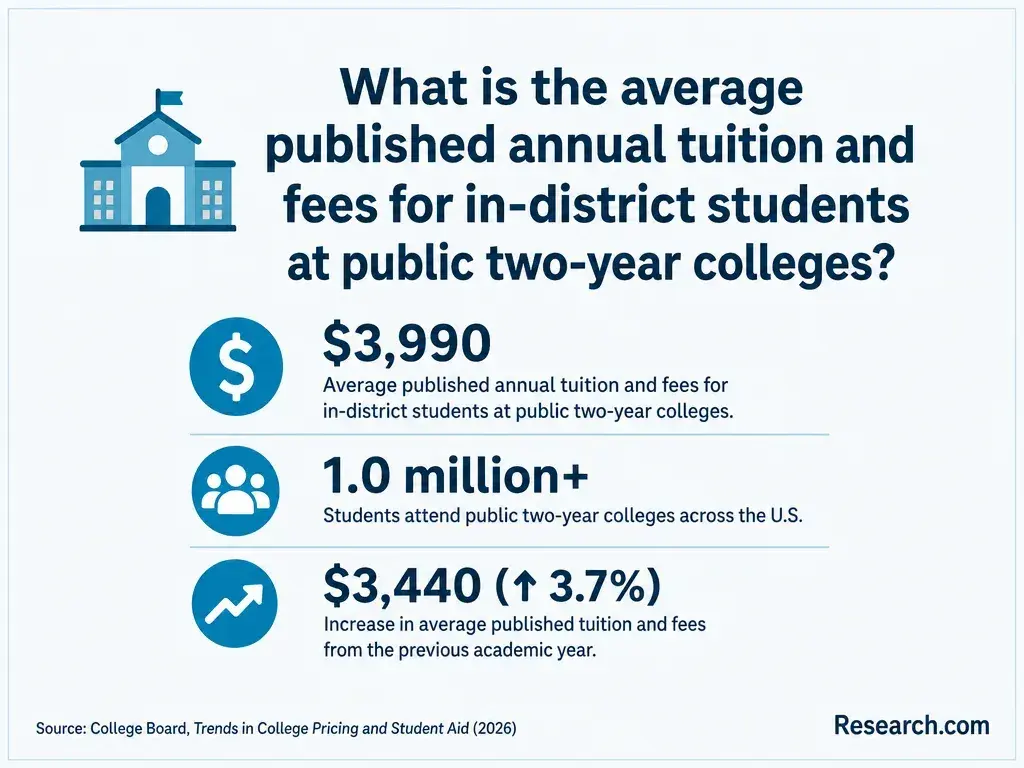
A traditional full-time bachelor's pathway is often planned over four academic years, but a degree-completion student's timeline depends on the official transfer evaluation, remaining prerequisites, course availability, and enrollment pace. The HR and supply chain options may require different sequences even within the same BS. An accelerated calendar can shorten elapsed time without reducing the coursework or making the program less expensive.
For a useful cost comparison, obtain a written degree audit for each concentration and price the remaining required courses. Add mandatory fees, books or software, travel, and any income you would give up to attend. Then compare grants, employer assistance, and borrowing under each likely schedule. Business administration tuition budgets using federal student aid can help frame the financing questions, but aid eligibility and final costs must be confirmed with each school.
If one option requires an additional term, ask what career-relevant learning that time buys. A cheaper concentration is not necessarily the better value if it lacks the courses or applied access needed for your intended role.
An HR concentration can support applications for roles such as HR assistant, recruiting coordinator, onboarding coordinator, or HR specialist. A supply chain concentration can support applications for purchasing assistant, inventory analyst, logistics coordinator, or logistician roles. Titles vary by employer: compare job duties and required experience rather than assuming a shared title means identical work.
For an early-career candidate, relevant work evidence matters alongside the degree. HR applicants can document scheduling interviews, maintaining accurate records, communicating policy information, or supporting training while respecting confidentiality. Supply chain applicants can show order tracking, spreadsheet analysis, vendor communication, or a supervised process-improvement project. Internships and approved workplace projects can help, but neither automatically awards academic credit or leads to a job.
If logistics is your clear target, compare the concentration with a specialized supply chain bachelor's program. Supply chain program length and value comparisons are most useful after you check whether the specialized coursework adds relevant depth without forcing you to repeat credits. Management roles in either field generally call for substantial experience beyond graduation.
U.S. Bureau of Labor Statistics occupation-wide medians provide a consistent comparison, but they include workers at different experience levels, employers, and locations. They are not expected salaries for new graduates or evidence that one concentration causes higher earnings.
| Occupation | Median annual wage, May 2025 | How to use the figure |
| Human resources specialist | $75,940 | Benchmark for a defined HR occupation, not every HR support role |
| Logistician | $82,320 | Benchmark for a defined logistics occupation, not every purchasing or warehouse role |
The higher logistician median does not mean supply chain is the better financial choice for every student. Your likely entry role, local employers, prior experience, and additional cost to complete the concentration may matter more. To compare degree options on those terms, compare cost-to-finish for shorter business administration programs, then check actual job postings for the qualifications and pay associated with roles you could realistically pursue.
The BLS projects U.S. employment of human resources specialists to grow 6% and employment of logisticians to grow 18% from 2025 to 2035. The faster logistician projection suggests stronger growth for that occupation, but it does not measure demand for every supply chain job or predict an individual graduate's prospects. HR remains a viable choice if its work better matches your skills and interests.
Use outlook figures as a check, not a deadline for enrolling. Regional employers, internships, and the skills requested in current postings can matter more to your first job search than national growth alone. If speed to graduation is important, US rankings for accelerated business bachelor's degrees can help identify programs to investigate; verify that the relevant concentration courses and career support are available on the accelerated schedule.
Which accreditations and certifications matter in each field?
First, verify the institution's recognized accreditation and confirm that the advertised BS and concentration are offered in the format you intend to study. Business-school or programmatic accreditation through AACSB, ACBSP, or IACBE is a separate question: check the accreditor's directory and the exact scope of coverage rather than assuming that accreditation of a school applies to every program or location.
An HR concentration is an academic designation, not an HR certification. Employers may value voluntary HR credentials, but eligibility, exams, and experience rules are set by the certifying organization. Supply chain credentials likewise have separate requirements and may focus on logistics, planning, procurement, or operations. Choose one only after identifying the function and employers you want to work with; a certificate is not a substitute for experience with the relevant tasks.
Before choosing a compressed program, use a guide to accelerated bachelor's study to frame questions about pacing, then confirm the school's accreditation, concentration availability, and graduation requirements directly. The strongest choice is the program that lets you complete the right coursework and demonstrate relevant work - not simply the one with the fastest advertised finish.
Other Things You Should Know About Business Administration
Often, but the school decides how completed courses apply. Request a revised degree audit before switching so you can see whether the change adds requirements or delays graduation.
Only if your school permits it and you meet both sets of requirements. Ask whether courses can count toward both and whether a second concentration will appear on your official record.
That varies by institution. Ask the registrar whether it appears on the diploma, transcript, or both; do not assume that taking related electives creates an official concentration.
Not always. If your employer values your experience and needs only a bachelor's degree, the fastest applicable completion path may make more sense. Check the qualifications for your target role before paying for additional concentration courses.
- Career exploration and its influence on the relationship... - PMC https://pmc.ncbi.nlm.nih.gov/articles/PMC11153200/
- Why Accreditation Matters When Choosing Your Graduate School Program - Graduate Programs https://blogs.umflint.edu/graduateprograms/2025/09/22/why-accreditation-matters-when-choosing-your-graduate-school-program/
- Supply Chain Management - Lehigh Catalog https://catalog.lehigh.edu/coursesprogramsandcurricula/businessandeconomics/supplychainmanagement/
- BS in Business Administration: Concentration Supply Chain Management - Centenary University https://www.centenaryuniversity.edu/degrees-and-programs/bs-business-administration-supply-chain-management/
- MBA Majors & Concentrations | The Wharton School | MBA Program https://mba.wharton.upenn.edu/mba-majors/
- Management vs. Human Resource Management Degree | American Public University https://www.apu.apus.edu/area-of-study/business-and-management/resources/management-vs-human-resource-management-degree/
- Business Administration with Human Resource Management (BS) | trinitydc.edu https://discover.trinitydc.edu/catalog-22-23/human-resource-management/
- Concentrations - Undergrad Inside - University of Pennsylvania https://undergrad-inside.wharton.upenn.edu/concentrations/
- What Is a Bachelor's Degree in Supply Chain, Transportation and Logistics Management? | Bellevue University https://www.bellevue.edu/articles/what-is-a-bachelors-degree-in-supply-chain-transportation-and-logistics-management/
- MBA Concentrations: Types, Skills, and Career Paths | SCU https://www.scu.edu/business/blog/mba/mba-concentrations/