2027 BS in Business Administration Program Choice: A Work-Based Project Requiring Employer Permission as a Capstone Option
Audited and Verified:
Our Editorial and Data Verification Process
Research.com uses government datasets, official education statistics and primary institutional information to support its career and degree guides. Our review process checks factual accuracy, occupational definitions, source dates and the requirements associated with the credentials discussed.
How This Article Was Fact-Checked
Our editorial team verifies salary estimates, employment projections, education requirements and program information against original data providers and official organizations. Salary figures are checked against the relevant occupational definitions and reporting periods. Information about licensure, accreditation and required in-person training is reviewed separately.
Fact-checked and verified on:

Co-Founder and Chief Data Scientist
A workplace problem can make a business administration capstone more useful - but only if your school approves the project and your employer permits the work, data use, and final deliverable. For employees choosing a BS in Business Administration program, that distinction can determine whether a promising project is feasible or creates a graduation delay.
This guide explains how to scope an achievable capstone, secure the right permissions, compare program policies, and prepare a backup option before enrolling or proposing a project.
Key Things You Should Know
- Employer permission and academic approval are separate: neither a supportive supervisor nor an approved course automatically authorizes access to company information.
- The strongest project answers a bounded business question with permitted evidence, a defined decision-maker, and an assessable deliverable - not a promise of measurable improvement.
- Before choosing a program, confirm the capstone policy, approval deadlines, confidentiality rules, and an alternative project if workplace access changes.
What is a BS in Business Administration work-based capstone project?
A work-based capstone is a final academic project that applies business coursework to a question at an organization where the student works or has authorized access. A student might map a purchasing process, evaluate scheduling options, or develop a customer-service measurement plan. The intended output could be an analysis and recommendation rather than an implemented change.
For example, a scheduling project could compare existing workflow steps with proposed alternatives using approved, aggregated information. It should identify the decision-maker, assumptions, costs, risks, and measures that would be needed to test a recommendation. It should not report savings or employee responses that were never measured.
A capstone is not automatically an internship, credit for prior work, or an employer consulting engagement. Faculty set the learning outcomes and grade the academic work; the employer controls its operations and information. When exploring options to study business administration without leaving your job, ask specifically whether current-employer projects are permitted and what the course requires.
What employer permissions are required for a work-based business capstone?
There is no universal permission form. Requirements depend on the organization, the data, and the school's rules. A manager's agreement to discuss a problem may not authorize access to records, contact with employees or customers, use of company branding, or submission of internal material to a faculty member.
Before collecting information, agree on the project boundaries in writing with the appropriate workplace contact and faculty adviser. The following sequence separates approvals that students often mistakenly combine:
- Submit a short scope describing the business question, academic deliverable, timeline, and whether any operational change is proposed.
- Ask the employer who can authorize the activity, which information may be used, who may be contacted, and whether work can occur during paid time.
- Ask the school about data handling, intellectual property, required agreements, and any ethics or research-review process that applies to proposed interviews or surveys.
- Confirm what faculty may see and what may appear in a presentation or portfolio; arrange a redacted or synthetic-data version if needed.
- Record an approved fallback project and change-control process in case access, employment, or the business priority changes.
Seek specialist approval before using personal, financial, health, personnel, or other regulated information. If the employer cannot authorize a usable submission, a public-data case or simulation is usually safer than quietly transferring internal files. A program that lets you study business administration without leaving your job may accommodate employment, but that alone does not grant permission to use workplace materials.
How do you choose an accredited BS in Business Administration program?
Start with recognized institutional accreditation, then verify the exact degree and capstone requirements in the current catalog. AACSB, ACBSP, and IACBE accredit business education within their respective scopes; do not assume an institution's accreditation means its business program holds one of these additional accreditations.
For this decision, the most revealing comparison is the school's written answer to a specific scenario: "May I analyze a process at my current employer if I cannot share raw records?" Ask who approves the proposal, whether anonymized or synthetic data are acceptable, whether the employer must sign an agreement, and what happens if permission is withdrawn. Confirm when the capstone is offered and whether its prerequisites fit your degree plan. Lists of ranked US colleges for faster business degree completion can help generate candidates, but advertised speed is not evidence that a workplace capstone will be approved.
Business administration programs commonly cover accounting, finance, marketing, management, operations, economics, and quantitative analysis, though course depth varies. A capstone draws these subjects together: a purchasing-process proposal, for instance, might require cost comparisons, workflow analysis, stakeholder communication, and an explanation of risks.
Choose electives for the proposed question rather than assuming a general business core will supply every technical skill. A student developing a project schedule may benefit from operations or project-management coursework; a student assessing customer feedback may need research methods and data interpretation. An elective or capstone does not create a formal concentration unless the school awards one. If your goal is specifically project-management practice rather than broad business preparation, compare the curriculum and project management degree tuition comparisons before committing to a full business degree.
The academic standard need not differ by delivery mode; access and coordination often do. An online student may meet faculty remotely and submit a recorded presentation, while a campus student may attend scheduled meetings or present in person. Either format can require team work, fixed deadlines, or live employer discussions. Online does not mean self-paced.
Ask for a recent capstone syllabus showing meeting times, presentation rules, group obligations, required software, and any campus visits. Check whether faculty and employer contacts can review drafts within the same timeframe. If you are considering online business study with accelerated terms, allow time to obtain permissions before the course starts; a shorter term compresses the approval and revision window as well as the teaching schedule.
Schools set their own entry rules. Applicants may need secondary-school records or previous college transcripts, while transfer students may face separate requirements for admission to the business major. Mathematics, accounting, economics, or statistics courses may be prerequisites for later coursework rather than conditions of initial admission.
Request a written evaluation of how prior credits apply to general education, the business core, and any concentration. Then check whether missing prerequisites delay capstone eligibility. Accepted transfer credit is not necessarily credit toward a required business course. For a fuller admissions checklist, consult guidance on qualifying for a business administration college program; the receiving school remains the authority on your application and degree audit.
Completion time depends on applicable transfer credit, course sequencing, enrollment pace, and capstone availability. A project that requires employer approval can add a scheduling risk even when it adds no separate course: missing the proposal deadline may postpone the required capstone until another term.
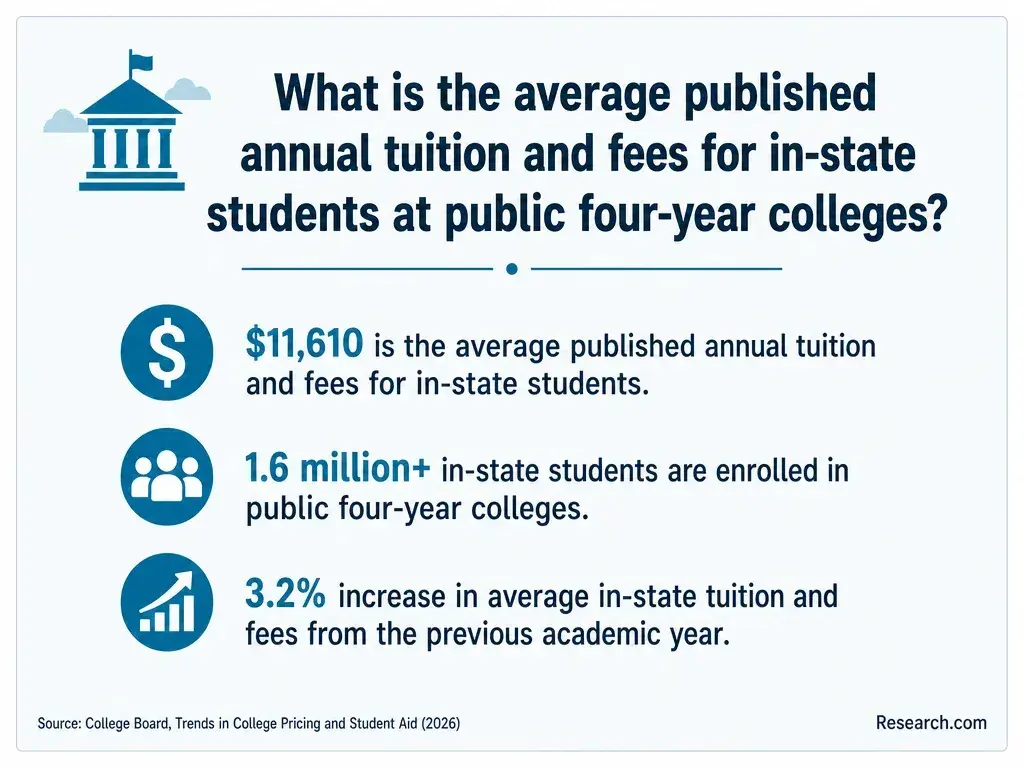
Compare schools using a written remaining-course plan, not the advertised program length. For cost, include tuition, required fees, software, materials, potential travel, and the effect of an extra term; ask when employer tuition assistance is paid and whether a capstone delay affects eligibility. Accelerated bachelor's program comparisons can clarify pacing options, but shorter calendar time does not establish a lower total cost or a lighter weekly workload.
A well-documented capstone can help an applicant discuss how they defined a problem, weighed constraints, and communicated a recommendation. That evidence may be relevant to operations coordination, procurement support, HR, marketing, or project coordination, depending on the work performed. It does not by itself establish eligibility for a specialist or manager role.
Match the project to the tasks in your target job posting. An HR-focused applicant might demonstrate careful process documentation without exposing employee records; an operations applicant might show a reproducible workflow analysis. If HR is the primary goal and you have prior college credit, compare specialized HR bachelor's programs with flexible transfer pathways against a general business degree before deciding which curriculum better closes your skill gaps.
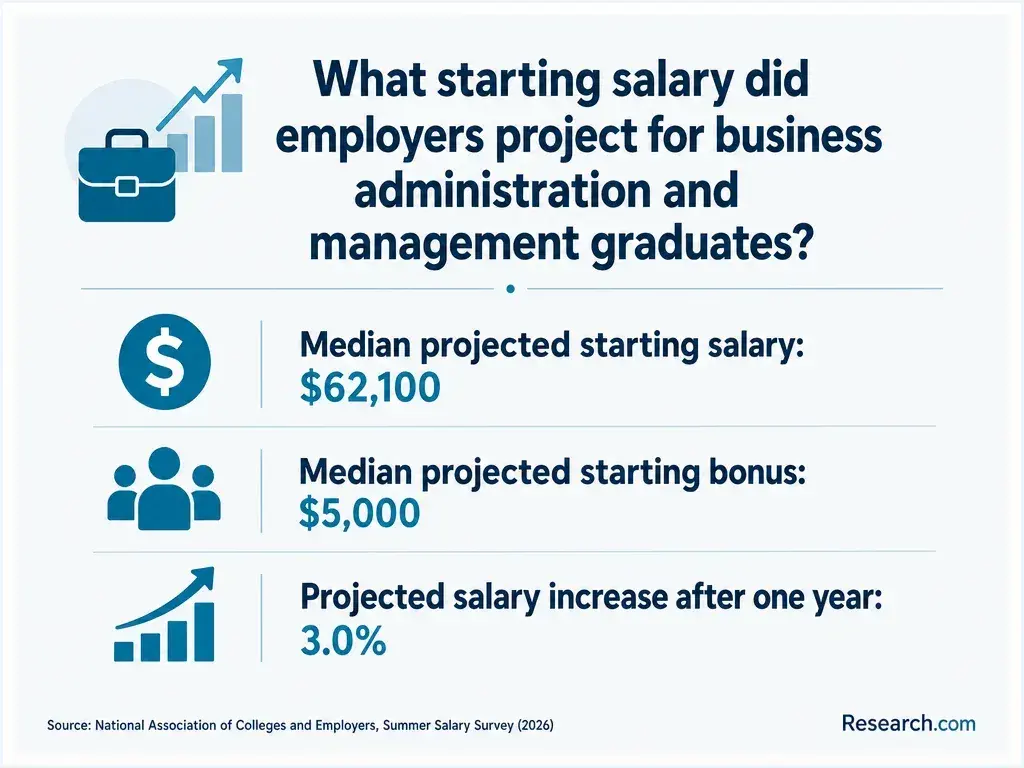
There is no single salary or growth rate for BS in Business Administration graduates: outcomes depend on occupation, experience, industry, and location. For one relevant occupation, the US Bureau of Labor Statistics reports a May 2025 median annual wage of $102,320 for project management specialists and projects 7% employment growth from 2025 to 2035. That occupation-wide median includes experienced workers; it is not a starting salary or a return attributable to a capstone.
Use the occupation that matches your intended duties when weighing education costs. A purchasing-process project, for example, could support an interest in supply chain work, but it does not qualify you as a logistician. If that is your target field, compare focused coursework and economical study options for supply chain careers with a general business degree.
Which certifications complement a BS in Business Administration?
A certification is most useful when it matches your intended function and you meet the issuing organization's eligibility rules. Project-management, HR, analytics, and supply-chain credentials have different experience, education, examination, and renewal requirements. A business capstone may provide a useful work sample, but it does not automatically count as qualifying professional experience.
Before paying for a credential, check its official requirements and whether employers for your target role actually request it. Compare that expense with the coursework you still need; guidance on undergraduate project management grants and scholarship planning may be useful if you are weighing additional degree study against a shorter credential. Neither route substitutes for employer authorization to use a workplace project.
Other Things You Should Know About Business Administration
Possibly. Ask your faculty adviser about the change deadline and whether a revised proposal is required. A smaller approved topic is usually more workable than an unapproved replacement late in the term.
Faculty normally assess the academic deliverable under the school's rubric. An employer may provide feedback or verify access, but ask the program to clarify each person's formal role.
Only if your employer permits it. Confirm scheduling, compensation, and ownership of the resulting work through the appropriate workplace contact before assuming course tasks are part of your job.
Follow your school's academic-integrity rules and your employer's data policies. Do not enter confidential workplace information into an AI tool without explicit authorization, and verify any analysis you submit.
- Designing effective capstone experiences and projects... - PMC https://pmc.ncbi.nlm.nih.gov/articles/PMC7861568/
- Fact Sheet #71: Internship Programs Under The Fair Labor Standards Act | U.S. Department of Labor https://www.dol.gov/agencies/whd/fact-sheets/71-flsa-internships
- Honors College Capstone Project https://honorscollege.rutgers.edu/academics/curriculum/capstone-project
- Bachelor of Science in Business Administration | Georgia Tech Catalog https://catalog.gatech.edu/programs/business-administration-bs/
- Capstone | Honors College | University of Illinois Chicago https://honors.uic.edu/academics/capstone-project/
- Business Administration | University of Wisconsin Flexible Option https://flex.wisconsin.edu/degrees-programs/bachelor-science-business-administration/
- Protection of Confidential or Sensitive Proposal Information | The University of Utah https://osp.utah.edu/policies/handbook/submission-procedures/protection-confidential-information.php
- 7 CFR § 2500.017 - Confidentiality of proposals and awards. | LII / Legal Information Institute https://www.law.cornell.edu/cfr/text/7/2500.017
- How to prevent and manage scope creep | University of Phoenix https://www.phoenix.edu/articles/business/how-to-prevent-and-manage-scope-creep.html