2027 BS in Business Administration Program Choice: A Grant Budget Analysis as a Capstone Option
Audited and Verified:
Our Editorial and Data Verification Process
Research.com uses government datasets, official education statistics and primary institutional information to support its career and degree guides. Our review process checks factual accuracy, occupational definitions, source dates and the requirements associated with the credentials discussed.
How This Article Was Fact-Checked
Our editorial team verifies salary estimates, employment projections, education requirements and program information against original data providers and official organizations. Salary figures are checked against the relevant occupational definitions and reporting periods. Information about licensure, accreditation and required in-person training is reviewed separately.
Fact-checked and verified on:

Co-Founder and Chief Data Scientist
A grant budget analysis can turn a business administration capstone into a useful test of financial judgment - but only if the project fits the program's rules and the student can obtain appropriate data.
This guide is for prospective and current BS in Business Administration students, especially those interested in nonprofit or public-sector work. It explains what the capstone should produce, which courses and program features support it, and how to weigh the project's value against degree cost and career goals before committing.
Key Things You Should Know
- A strong capstone separates proposed costs, funding restrictions, indirect costs, and assumptions; it does not present a draft budget as an approved grant or a measured result.
- Confirm capstone eligibility, faculty supervision, data permissions, and required coursework before choosing a program or organizational partner.
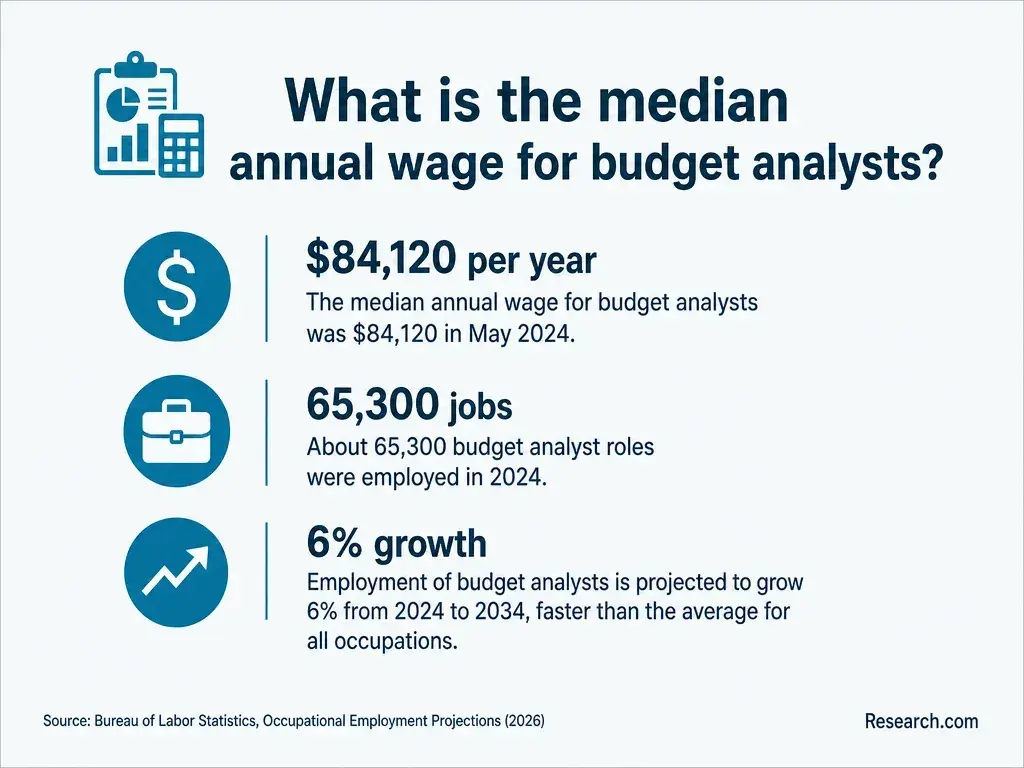
- Budget analyst jobs had a May 2025 national median wage of $91,640, but that occupation-wide figure is not a starting salary or a guaranteed outcome of the degree.
What is a BS in Business Administration grant budget analysis capstone?
It is an applied academic project that evaluates whether a proposed or existing grant budget is financially coherent, allowable under the relevant funding rules, and suited to an organization's goals. The intended reader might be a nonprofit program director deciding whether to pursue an award or a public-agency manager reviewing a funding proposal. The academic deliverable is an analysis and recommendation - not an awarded grant, an approved organizational budget, or evidence that spending achieved its intended results.
A manageable project might examine one program and one funding opportunity. Its output could include a budget workbook, a written justification connecting costs to activities, an assumptions log, a review of restrictions and match requirements, and a short decision memo. If the project uses a federal award, the student must check the applicable award terms and federal grant rules, including relevant provisions of the Uniform Guidance; other funders may impose different rules.
The capstone's value comes from testing a decision rather than filling in a spreadsheet. For example, an apparently affordable project may still create a cash-flow problem if reimbursement arrives after payroll is due. A student with a tighter project timeline can compare capstone requirements with compare accelerated business programs, but faster coursework does not remove the need for project approval and revision.
Before work begins, obtain the faculty rubric and confirm who can authorize use of organizational information. A public grant notice can support a hypothetical case; it does not give a student access to a nonprofit's payroll records or permission to submit work on its behalf.
How does accreditation affect a BS in Business Administration program?
Recognized institutional accreditation is an essential program-screening check because it concerns the institution as a whole. Business-specific accreditation, where present, has a narrower scope: AACSB, ACBSP, and IACBE do not automatically cover every degree or location offered by a school. Confirm the institution's status and whether the particular BS in Business Administration is within any claimed business accreditation scope.
Accreditation alone does not establish that grant budget analysis is an available capstone. Ask the program for its current catalog, capstone syllabus or rubric, examples of permitted project types, and rules for faculty supervision, external partners, and confidential data. When screening schools, colleges with no upfront application payment may help limit application expenses, but a waived fee says nothing about capstone fit.
What coursework prepares students for grant budget analysis?
Managerial accounting helps students classify and explain costs; finance addresses timing and funding needs; statistics supports defensible estimates; and spreadsheet or analytics coursework helps document calculations. Operations or project management can connect spending to activities and schedules. A nonprofit-management or public-budgeting elective may add useful context, but its availability should not be assumed from the degree title.
Course sequence matters. A capstone attempted before accounting and spreadsheet work may leave too little time to correct a weak model. Compare each school's prerequisites, elective availability, and capstone term. If the main goal is project scheduling rather than analyzing grant restrictions, low-cost project management schools and aid options offer a different comparison; a project management curriculum is not a substitute for grant-accounting knowledge.
A credible capstone shows that the student can trace a cost to a planned activity, distinguish direct from indirect costs, explain estimates, identify funding restrictions, and communicate uncertainty to a decision-maker. It should also distinguish a proposed budget from actual expenditures and make its formulas and source assumptions reviewable.
These skills are most convincing when the deliverable survives a structured review. A compact project sequence is:
- Define the funding decision, project period, stakeholder, and applicable grant terms.
- Document permitted data sources and build an assumptions log before estimating costs.
- Classify costs, test the budget against restrictions, and examine timing or funding gaps.
- Have the faculty supervisor review the model and revise the recommendation in response.
Personnel costs may require particular care: a salary estimate is not enough if the project omits time allocation, benefits, or the funder's documentation rules. Students interested primarily in staffing decisions can compare human resources qualifications and degree routes; an HR pathway may fit that goal better than a broad business capstone. For a portfolio, retain a reproducible, redacted version and obtain permission before showing organizational material.
Requirements depend on the institution and on whether the applicant is entering college, transferring, or returning after a break. Schools may request secondary-school or college transcripts and may apply separate requirements for admission to the business major. A non-business background does not necessarily prevent admission, but mathematics, accounting, or other prerequisites may affect when a student can begin the capstone sequence.
Transfer applicants should request an official evaluation showing not just accepted credits but which credits satisfy general education, the business core, electives, and residency requirements. Students weighing an HR degree instead can examine using existing credits in a human resources degree; the receiving institution, not a prior school's course title, determines applicability. Ask admissions and a business adviser when capstone eligibility begins and whether a proposed grant project needs separate approval.
Completion time depends on remaining required credits, course sequencing, enrollment pace, and when the capstone is offered. Transfer credits can shorten the path only if they apply to the degree's requirements. A project requiring partner approval or restricted data can also take longer than a classroom case, even when both earn the same academic credit.
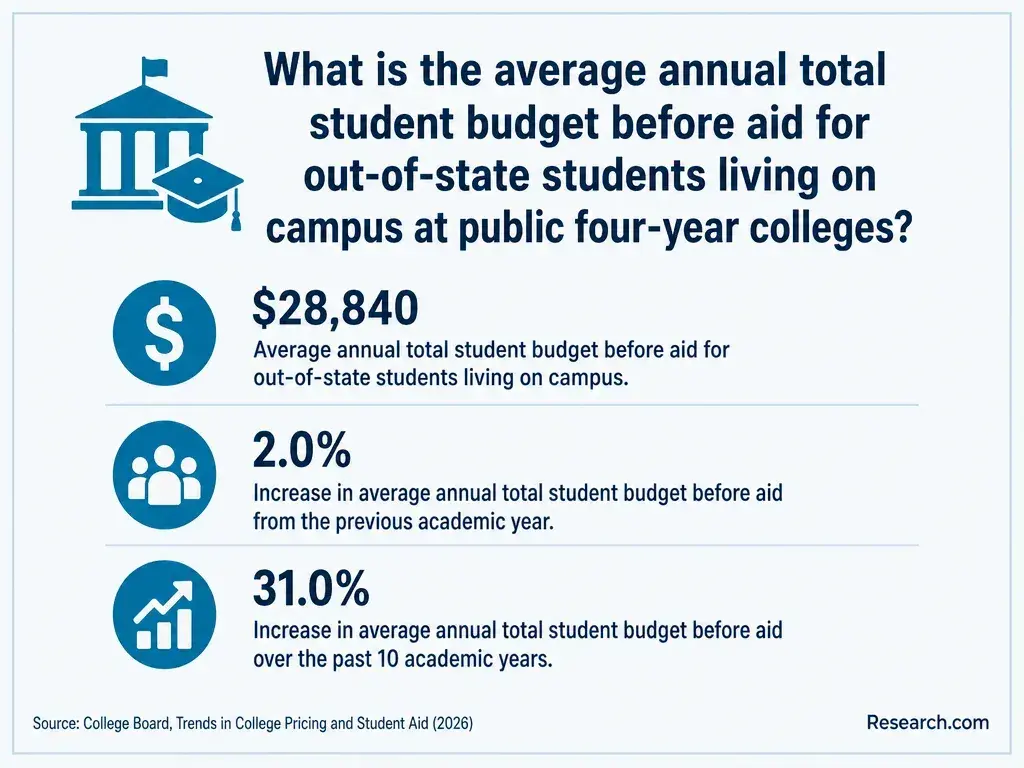
Compare a written, individualized cost estimate rather than advertised tuition alone. It should account for remaining courses, mandatory fees, software or books, any required travel, and the effect of attending part time. Grant aid and employer reimbursement may reduce the student's cost, but eligibility and payment timing need confirmation. Economical online business administration college programs can be a starting point for price comparisons; verify each school's current charges and whether its capstone format meets your needs.
Either format can support a rigorous grant budget analysis. The practical difference is how students get feedback, coordinate with a partner, and meet presentation or team requirements. Online does not necessarily mean self-paced, while campus attendance does not necessarily provide access to a nonprofit or government project.
The comparison below highlights constraints to verify in the actual capstone syllabus, rather than assuming a delivery format determines project quality.
| Format | Potential advantage for this capstone | Constraint to verify |
| Online | May allow remote review of a budget model and written feedback | Live presentations, group meetings, software access, and fixed deadlines |
| Campus-based | May make in-person faculty or partner meetings easier | Travel, scheduled attendance, and access to a suitable project partner |
Working students should request the weekly meeting expectations and presentation schedule before enrolling. Guidance on flexible online study for business administration career growth can help frame that comparison, but the capstone's specific obligations control the decision.
The most direct early-career possibilities are grant or program coordinator roles that help assemble budgets, track documentation, and communicate with program staff. Budget assistant and administrative roles may also use the capstone's spreadsheet and cost-explanation skills. A budget analyst role typically involves broader budget preparation and review; employers may expect relevant experience or sector-specific knowledge in addition to a bachelor's degree.
For nonprofit and public-sector applicants, the strongest work sample is one that explains the funding decision, the student's own contribution, and the analysis's limits. Relevant employment, volunteering, or an approved internship can add context that a classroom model alone cannot provide. If the target is supervising programs rather than analyzing funds, accelerated online organizational leadership school choices provide a separate degree comparison; neither pathway grants managerial authority on graduation.
The U.S. Bureau of Labor Statistics reports a May 2025 median annual wage of $91,640 for budget analysts and projects 2% employment growth from 2025 to 2035. Those figures describe an occupation across experience levels and employers - not pay or placement rates for new BS in Business Administration graduates. Grant coordinator and budget-support positions can differ substantially in duties and compensation.
Use local postings to check whether entry roles ask for grant compliance experience, accounting coursework, spreadsheet skills, or prior public-sector work. Then compare the degree's remaining cost with the roles you can realistically pursue. Affordable business education options online may help establish a price shortlist, but an attractive tuition figure should not outweigh missing coursework or capstone access.
Which certifications support careers in budgeting and grant management?
There is no single certification that automatically qualifies someone to prepare every grant budget. Grant-management, project-management, and accounting-related credentials serve different purposes, and eligibility, examinations, experience requirements, and renewal rules depend on the issuing organization. For federal-award work, training on applicable grant rules may be more immediately useful than a general credential.
Choose training against a specific job description: identify the duties you cannot yet demonstrate, then verify whether the credential teaches those duties and whether local employers recognize it. A short course may be more direct than another degree for an experienced employee with a narrow compliance gap; it will not replace a bachelor's requirement where an employer has one. If comparing certification costs with a separate project-management bachelor's pathway, FAFSA-based aid for online project management undergraduates explains a financing question specific to degree study, not an automatic source of aid for standalone certification.
Other Things You Should Know About Business Administration
No. A well-supported recommendation not to pursue a grant can meet an academic objective if the faculty rubric permits it. Grant approval is outside the student's control.
Possibly. Treatment of in-kind contributions depends on the funder's rules and documentation requirements. Do not assign a value or count a contribution toward a match without checking those terms.
Check the course policy and the organization's data rules first. Verify every generated claim and calculation, and do not enter confidential or personal information into an unapproved tool.
It may. Ask the faculty supervisor before collecting responses, especially from clients or beneficiaries. Institutional research-review rules, organizational permission, and privacy obligations can apply even to a student project.
- 2 CFR Part 200 Subpart E -- Cost Principles | ecfr.gov https://www.ecfr.gov/current/title-2/subtitle-A/chapter-II/part-200/subpart-E
- Matching or Cost Sharing Requirements Guide Sheet | Office of Justice Programs https://www.ojp.gov/tfsc/matching_or_cost_sharing_requirements_guide_sheet_508
- CMS Guidance for Preparing a Budget Request and Narrative https://www.cms.gov/about-cms/work-us/cms-grants-cooperative-agreements/how-apply-cms-grants/cms-guidance-preparing-budget-request-narrative
- Itemized Budget with Justifications (For Project/Presentation Funding) - Undergraduate Research Opportunities Program https://manoa.hawaii.edu/undergrad/urop/student-funding/shortcuts/budget/
- Cost Share Defined | Finance & Business - UC Davis https://financeandbusiness.ucdavis.edu/systems/cost-share-app/defined
- Elements of a Budget - USC Department of Contracts and Grant https://dcg.usc.edu/budget-development-guidelines/
- Cost Sharing Basics - Sponsored Projects - UC Berkeley https://spo.berkeley.edu/procedures/costsharing.html
- Faculty Innovation Grant Proposal Evaluation Rubric | carthage.edu https://www.carthage.edu/live/files/5761-faculty-innovation-grant-proposal-rubricpdf
- Bachelor of Science in Business Administration | utdallas.edu http://sites.utdallas.edu/osim/bs-ba/
- Cost Principles for Sponsored Agreements (Contracts and Grants) | Office of Ethics, Risk, and Compliance Services https://oercs.berkeley.edu/policies/campus-policy-library/cost-principles-sponsored-agreements-contracts-and-grants