2027 BS in Business Administration: A Written Part-Time Degree Map
Audited and Verified:
Our Editorial and Data Verification Process
Research.com uses government datasets, official education statistics and primary institutional information to support its career and degree guides. Our review process checks factual accuracy, occupational definitions, source dates and the requirements associated with the credentials discussed.
How This Article Was Fact-Checked
Our editorial team verifies salary estimates, employment projections, education requirements and program information against original data providers and official organizations. Salary figures are checked against the relevant occupational definitions and reporting periods. Information about licensure, accreditation and required in-person training is reviewed separately.
Fact-checked and verified on:

Co-Founder and Chief Data Scientist
A part-time BS in Business Administration can fit around a job, but "part-time" does not tell you which courses to take first or whether required classes will be available when you need them.
This guide is for working adults planning a new degree or returning to finish one. It provides a written course map, explains the policies that can change your timeline and cost, and shows how to compare programs before committing to a schedule.
Key Things You Should Know
- A student with 60 credits still to complete would need 10 terms at six credits per term, that schedule depends on summer availability and an approved degree audit.
- Choose a program using required-course schedules, prerequisites, transfer applicability, and assessment obligations, not an advertised completion date alone.
- A business degree can support entry into several functions, but internships, relevant work, and role-specific skills matter more than the degree title alone for many jobs.
What Is a Part-Time Bachelor's Degree in Business Administration?
A part-time BS in Business Administration is a bachelor's degree completed at a lighter course load than the institution defines as full-time. Students generally complete general education, a business core, electives or a concentration, and sometimes a capstone. The BS designation is the school's degree title; it does not guarantee more quantitative coursework than a BBA or BA in Business. Compare actual requirements.
For a working adult, the useful distinction is between a flexible enrollment load and a flexible course schedule. A school may permit one course at a time while still requiring live meetings, group presentations, fixed exam windows, or classes offered only once a year. When you explore business administration colleges for working professionals, request a term-by-term schedule for the courses you personally have left.
How Do You Choose an Accredited Part-Time Business Administration Program?
First, confirm the institution holds recognized institutional accreditation and that the award is the bachelor's degree you intend to earn. AACSB, ACBSP, and IACBE accreditation can provide additional information about a business school or program, but their scopes differ. Check whether the specific program is covered rather than assuming every business degree at the institution is.
Next, test whether the program works at your intended pace. Ask an adviser for the current catalog, a written degree audit, recent and planned course rotations, prerequisite rules, and policies on changing enrollment intensity or taking a break. Confirm who advises part-time students and whether career services, internships, and capstones are accessible to them. You can compare nationally ranked online business programs to build a shortlist, but a ranking cannot establish that your required courses will fit your calendar.
What Courses Are Required for a Bachelor's in Business Administration?
Requirements vary, but a BSBA commonly combines accounting, economics, statistics, finance, marketing, management, operations, business law, and information systems with general education. Some programs also require an internship or strategy capstone. An official concentration has specified requirements; taking related electives does not necessarily add a concentration to your transcript.
The course order matters more than the course list. Accounting and quantitative prerequisites may need to come before finance or analytics, while a capstone may require much of the business core. A returning student should ask which previous courses satisfy each requirement - not merely how many credits the school accepts. If you are moving from another business track, comparisons such as human resources bachelor's residency and transfer rules can help you identify questions to raise, but only your chosen school can approve equivalencies and substitutions.
Schools may admit first-year and transfer applicants under different rules. Expect to provide prior school transcripts; a program may also specify academic-standing, mathematics, or business-major admission requirements. Work experience may strengthen an application, but it does not automatically replace a prerequisite or earn academic credit. Ask whether admission to the university also means admission to the business major.
Before applying, send unofficial transcripts for an initial discussion and ask when an official transfer evaluation becomes available. If application expense matters, accredited colleges offering free online applications may be worth reviewing. A waived application fee is useful, but it should not outweigh poor credit applicability or an unworkable course schedule.
The answer depends on requirements remaining, not credits previously earned. The following written map is an illustration for a student whose approved audit shows 60 credits left in courses worth three credits each. At two courses per term, that is 10 terms. It assumes the school offers the needed summer courses and permits this sequence; it is not a substitute for an institutional plan.
This example places foundational courses before advanced work and reserves the final term for a capstone. Course titles and prerequisites must be replaced with those in your own catalog.
- Term 1: Financial accounting and an outstanding general education course.
- Term 2: Managerial accounting and microeconomics.
- Term 3: Macroeconomics and business statistics, subject to the math prerequisite. Term 4: Marketing principles and management or organizational behavior.
- Term 5: Business finance and business law.
- Term 6: Operations management and business information systems.
- Term 7: Human resource management and business analytics.
- Term 8: Two approved concentration courses or upper-level electives.
- Term 9: Strategy and a remaining concentration course or upper-level elective.
- Term 10: The approved capstone and the final audited elective or general education requirement.
At three terms each year, 10 terms extend into a fourth academic year. Skipping summers, needing a prerequisite, or waiting for an annual course extends that map; accepted transfer credit may shorten it only if it satisfies remaining requirements. If a specialized route is your goal, compare its course rotation before switching majors - for example, while you explore lower-cost supply chain completion routes. The fastest advertised program is not necessarily fastest after your credits are evaluated.
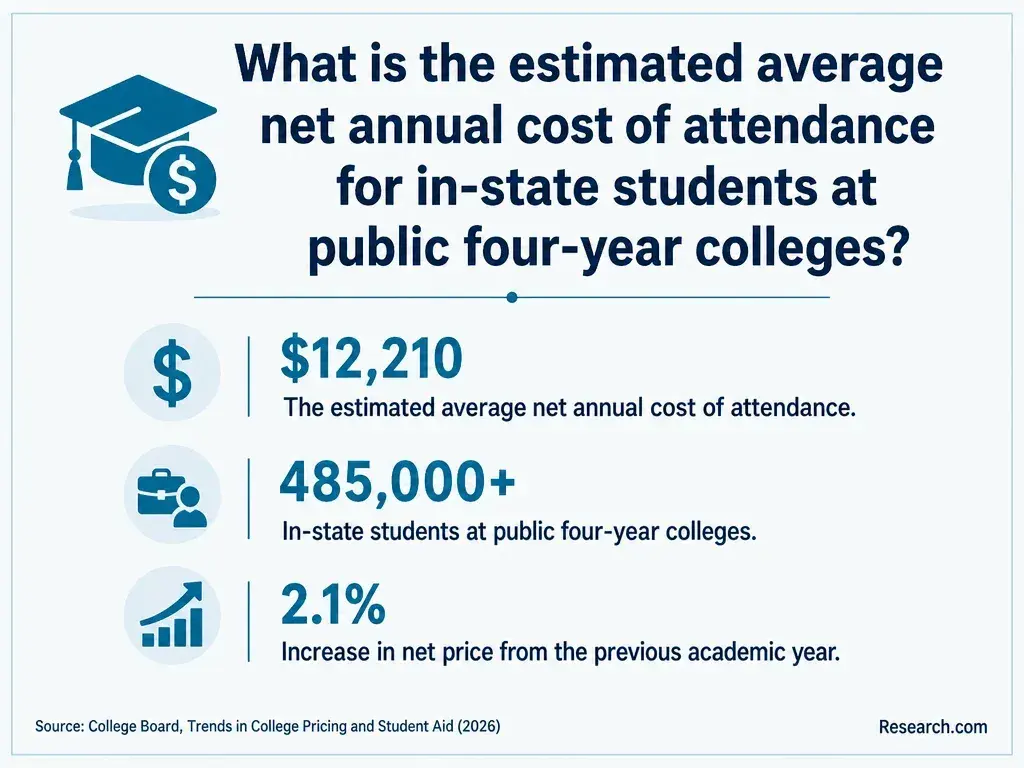
There is no reliable single price for a part-time BSBA. Your total depends on credits still required, tuition charged per credit or term, mandatory fees, books and software, and any travel or proctoring expenses. Part-time study can spread payments out without reducing the total tuition charged for the same credits. It can also add costs if a delayed prerequisite creates another term of fees.
Request a written estimate based on your applied transfer credits and planned enrollment load. Compare that estimate with aid eligibility, loan borrowing, payment deadlines, and any employer reimbursement rules; reimbursement may arrive after tuition is due. To develop a shortlist, you can find accredited affordable business administration colleges with aid options. Confirm the school's current charges and your own aid offer before treating any advertised price as your net cost.
Neither format is inherently better. Online study removes a regular commute and may offer asynchronous lessons, but assignment deadlines, proctored exams, live discussions, and team projects can still constrain a work schedule. Campus courses provide scheduled face-to-face contact but may be difficult to attend during rotating shifts. Hybrid programs combine both sets of obligations.
Use a typical required course - not the program's general marketing page - to compare meeting times, exam windows, group-work expectations, accessibility support, and any campus visits. Check how these obligations change in the capstone. If online delivery is your best fit, you can reduce tuition spending on an online business administration degree by comparing eligible programs, but include technology fees and the cost of a schedule you can realistically sustain.
A BSBA can support applications for roles in operations coordination, sales support, marketing coordination, HR, procurement, and project coordination. The best entry point depends on what you already do. Someone who schedules staff or tracks inventory, for example, can pair that experience with coursework and a documented process-improvement project when seeking an operations role. A career changer without related experience may need an internship or an adjacent entry-level position first.
Specialized roles warrant a closer check, particularly when evaluating low-cost shorter business administration programs. The U.S. Bureau of Labor Statistics projects 18% employment growth for logisticians from 2025 to 2035, but that occupation's outlook is not a hiring forecast for every BSBA graduate. If supply chain work is the specific goal, compare a general BSBA's relevant electives and work opportunities with a specialized degree before enrolling.
Pay follows the occupation, responsibilities, location, and experience, not the degree title by itself. For context, the U.S. Bureau of Labor Statistics reports a May 2025 median annual wage of $75,940 for human resources specialists. That is the median across people employed in the occupation, not an expected starting salary for a new BSBA graduate. An applicant targeting HR should compare local postings and assess whether their coursework and experience match the duties.
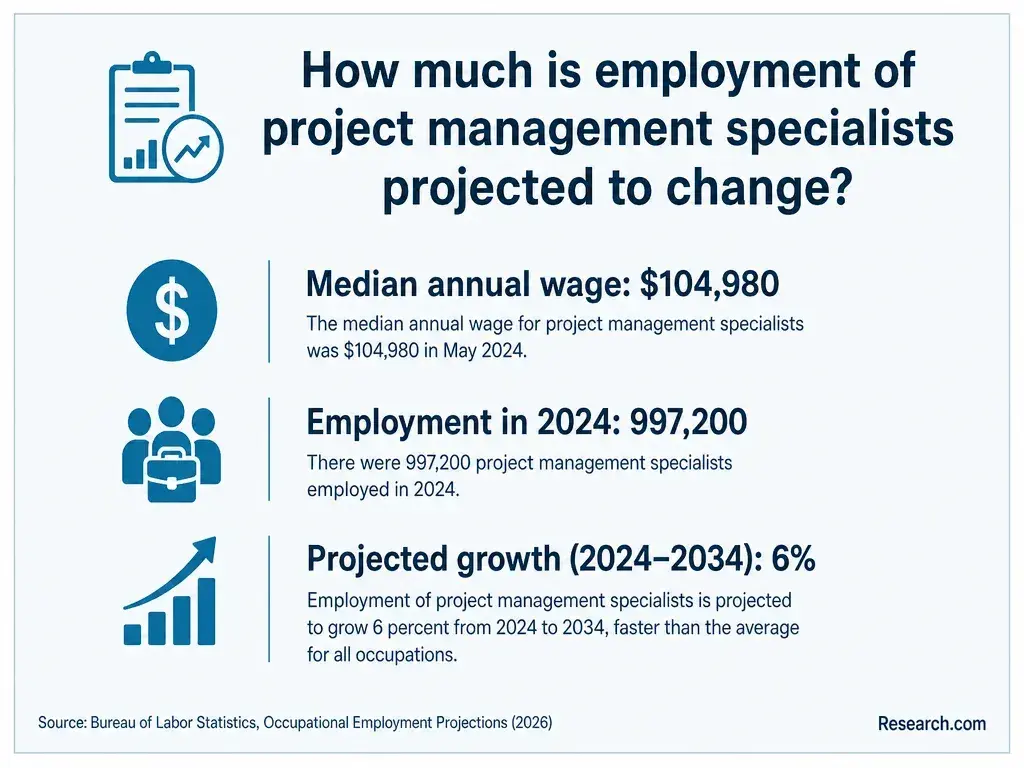
Apply the same test to any proposed salary gain: identify a realistic target job, its hiring requirements, and the additional education cost. If project work is your goal, budgeting for online project management college study offers a comparison point, but do not assume a project-focused program or a BSBA alone qualifies you for a senior project role.
Do Business Administration Graduates Need Licenses or Certifications?
A general BSBA does not carry a universal occupational license. Particular jobs can have separate requirements: accounting licensure, financial-services licenses, and some employer-requested credentials follow rules beyond the business degree. Voluntary certifications in areas such as HR or project management may also have eligibility requirements involving education, experience, or an exam. Check the responsible licensing board or credentialing organization for the role you want.
Do not pay for a credential simply because it appears alongside a degree in a program description. First, review target job postings and compare the credential's requirements with what you can document. If your goal is specifically HR, explore the costs of an HR degree as one alternative to a general BSBA plus later training; neither degree automatically awards a professional HR certification.
Other Things You Should Know About Business Administration
Often, but check the school's leave and readmission rules before stopping. A return after a long gap may place you under a newer catalog with different requirements.
Part-time usually describes enrollment status, not a separate degree. Confirm the exact award name with the school if diploma wording matters to you.
Possibly. Obtain any required employer permission, remove confidential or personal information, and confirm your course's academic-use rules before sharing it.
Many programs allow a change in course load, subject to course availability and academic rules. Ask the financial-aid office how a change would affect your specific award and payment schedule.
- School-Determined Requirements - FSA Partner Connect https://fsapartners.ed.gov/knowledge-center/fsa-handbook/2025-2026/vol1/ch1-school-determined-requirements
- Section 1501.311 Credit for Prior Learning | ilga.gov https://www.ilga.gov/ftp/JCAR/AdminCode/023/023015010C03110R.html
- Class Modality Types - Office of the Registrar | Stockton University https://www.stockton.edu/registrar/class-modality-types.html
- Student Services - Admissions | WSU Tech https://wsutech.edu/admissions/college-catalog/student-services/
- Undergraduate Policies and Procedures | The University of Texas at Dallas https://catalog.utdallas.edu/2026/undergraduate/policies/course-policies
- Courses Counting Toward Degree - TXST One Stop https://onestop.txst.edu/financial-aid/learn-more/recfa/courses-counting-toward-degree.html
- Degree Works (Degree Audit) FAQ | wichita.edu https://www.wichita.edu/degreeworks
- Transfer credit policies - Office of Admissions https://admit.washington.edu/apply/transfer/policies/
- Degree Requirements | Division of Undergraduate Education College of Letters & Science https://www.duels.ucsb.edu/degree-planning/degree-requirements
- Degree Requirements - myRBS - Rutgers University https://myrbs.business.rutgers.edu/undergraduate-new-brunswick/degree-requirements