2027 From Inside Sales to Account Management: When Does a BS in Business Administration Make Sense?
Audited and Verified:
Our Editorial and Data Verification Process
Research.com uses government datasets, official education statistics and primary institutional information to support its career and degree guides. Our review process checks factual accuracy, occupational definitions, source dates and the requirements associated with the credentials discussed.
How This Article Was Fact-Checked
Our editorial team verifies salary estimates, employment projections, education requirements and program information against original data providers and official organizations. Salary figures are checked against the relevant occupational definitions and reporting periods. Information about licensure, accreditation and required in-person training is reviewed separately.
Fact-checked and verified on:

Co-Founder and Chief Data Scientist
Inside sales teaches you to find prospects, handle objections, and close deals. Account management often adds a different responsibility: keeping customers successful and growing a relationship after the sale. If you are considering a BS in Business Administration to make that move, the decision depends on your experience, the roles you want, and what the degree would cost you. This guide explains where business coursework can fill genuine skill gaps, where workplace experience carries more weight, and how to compare a degree with more direct routes into account management.
Key Things You Should Know
- A BS in Business Administration makes the most sense when target account-manager jobs prefer a bachelor's degree and you need broader preparation in finance, operations, and customer strategy - not just more sales training.
- It is not a standard license or universal requirement for account management. Documented experience retaining customers, coordinating solutions, and managing renewals may offer a faster route.
- The Bureau of Labor Statistics reports a May 2025 median wage of $148,270 for sales managers, not account managers; do not use that figure as an expected salary or a forecast of what the degree will earn you.
What Is a Business Administration Degree for Account Management Careers?
A BS in Business Administration is a broad undergraduate degree covering how organizations make financial, marketing, operational, and management decisions. For an account manager, its value is not that it teaches a particular sales script. It can help you understand a customer's business priorities, build a credible proposal, discuss costs, and coordinate colleagues who deliver what was sold.
Inside sales generally emphasizes prospecting and selling through phone, video, email, and other remote channels. Account management typically emphasizes an assigned group of existing customers: onboarding, relationship management, renewals, resolving problems, and identifying appropriate opportunities to expand an account. Employers use these titles differently, so compare job duties rather than relying on the title alone.
A BS in Business Administration, BBA, and specialized marketing degree may share courses, but their requirements and depth vary by school. If you want broad commercial responsibility, a general business degree may fit. If you want a narrowly defined function, inspect the actual curriculum before choosing. Compare programs and delivery options through affordable business education options online, then check each school's current catalog rather than assuming similarly named degrees cover the same material.
When Does a BS in Business Administration Make Sense for Inside Sales?
The degree is most compelling when you already have evidence that you can sell, but your next role calls for capabilities you have not yet developed: interpreting customer economics, planning a portfolio of accounts, coordinating service delivery, or discussing contracts with senior buyers. It may also matter if the employers you are targeting consistently list a bachelor's degree as required or preferred.
The comparison below separates a degree-related gap from a gap that is better addressed through work experience. It is a decision framework, not a claim that any one route guarantees promotion.
| What is holding you back? | More direct response | When the BS adds value |
| Little experience with existing customers | Seek renewal, onboarding, or customer-success responsibilities. | When target roles also expect broad business judgment or a bachelor's degree. |
| Weak knowledge of budgets, operations, or analytics | Take targeted courses and apply them to account work. | When several gaps call for a structured, broadly recognized qualification. |
| Few interviews despite relevant results | Check actual job postings and get feedback on your résumé. | When a degree is a recurring hiring requirement you cannot otherwise meet. |
If you can move into account ownership through an internal promotion, mentorship, or a customer-success role, test that route before taking on degree costs. If you need a bachelor's while continuing to work, compare business administration programs supporting continued employment against your actual sales schedule.
Can a Business Administration Degree Help You Become an Account Manager?
Yes, but it helps most when paired with evidence that you can manage the work. Employers may want someone who can protect a renewal, identify an appropriate expansion opportunity, explain a customer's needs internally, and follow through when delivery goes wrong. A transcript cannot establish that you have done those things.
Start by looking for duties adjacent to your current inside sales role: assisting with renewals, joining account reviews, documenting customer goals, or coordinating an approved handoff. Track outcomes you are authorized to share, such as your responsibilities and the methods you used, without disclosing customer names or confidential figures. Then compare those examples with the requirements in account-manager postings you would realistically apply to.
Industry fit can change the recommendation. An industrial distributor may value product and supply-chain knowledge alongside relationship skills; a software employer may prioritize onboarding and retention experience. If your goal is specifically commercial work in logistics, budget-friendly supply chain degrees with shorter schedules may be worth comparing with a general business degree. Neither route replaces knowledge of the employer's customers and products.
Look for a curriculum that connects classroom work to account decisions. Marketing and consumer behavior can help you interpret customer needs; managerial accounting and finance can help you discuss pricing and margins; operations courses can show why a promised delivery date or service level must be feasible. Business communication, negotiation, and analytics support account reviews and responsible use of customer data.
Depth matters more than a course title. A useful applied assignment might ask you to assess a hypothetical account's needs, prepare a proposal with stated assumptions, and explain the operational trade-offs. An official sales or marketing concentration may offer more relevant electives, but verify whether it is formally awarded, whether required courses are available, and whether it adds credits or time. An elective alone does not create a concentration.
Some account roles involve substantial implementation coordination. If that is your preferred direction, compare the business curriculum with project-focused study; for students bringing prior college work, credit mapping for online project management programs is particularly relevant. Confirm how any accepted credits apply to required courses before treating either pathway as faster.
Choose the format that lets you complete relevant work without undermining your job performance. Online study may remove a commute, but it can still require scheduled presentations, group meetings, timed exams, and weekly deadlines. Campus study may make faculty access and local networking easier, but class times and travel can conflict with sales shifts or customer appointments.
Before applying, ask for a sample course schedule, the expected attendance rules, assessment requirements, and the availability of required courses each term. If minimizing upfront application expense matters, no-application-fee online college choices can help you identify schools to investigate. An application-fee policy is only one cost factor; verify the degree, accreditation, and course schedule separately.
Requirements vary by institution and by whether you apply as a first-year, transfer, or returning student. Schools commonly request prior academic records; some business majors have additional entry rules or prerequisite courses. Admission to the college does not necessarily mean admission to the business major, and accepted transfer credit does not necessarily satisfy a business-core requirement.
If you have studied elsewhere, request an evaluation that shows where each course applies - not just how many credits are accepted. Ask an adviser about mathematics or accounting prerequisites, residency requirements, and the remaining course sequence. A sales record may strengthen your career plan, but do not assume professional experience substitutes for academic requirements without written confirmation.
If your experience points you toward an HR-related customer or people-operations role rather than account management, investigate that alternative on its own terms. For transfer applicants, transfer-friendly online HR colleges provide a separate comparison; their credit policies should not be assumed to apply to a business administration major.
A conventional full-time bachelor's path generally takes about four academic years, while part-time attendance can take longer. A returning student's timeline depends on the school's evaluation of prior coursework, remaining requirements, and when required classes are offered. Do not treat a preliminary transfer-credit estimate as a graduation date.
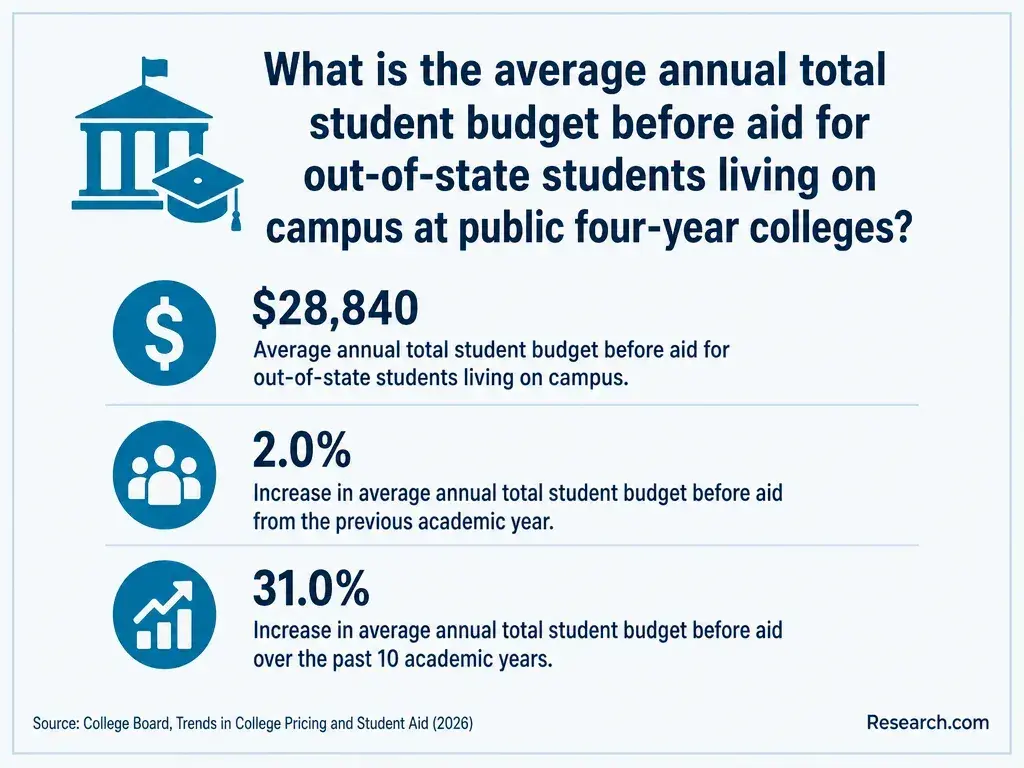
Compare the cost to finish, not just advertised tuition. Include required credits, fees, books and software, possible travel, loan costs, and any reduction in work hours. Employer tuition assistance can change the calculation, but check eligibility, reimbursement timing, grade conditions, and any repayment obligation before counting on it.
To narrow the search, use inexpensive online business administration colleges as a starting point. Request a written degree audit and an itemized estimate from each institution before comparing totals. A lower per-credit price may not be cheaper if more courses remain.
For someone already in inside sales, the most relevant next roles may include account coordinator, customer success associate, renewal specialist, sales operations coordinator, or account manager. The distinctions are practical: a coordinator may support account records and handoffs, while an account manager may own customer relationships and renewal goals. Titles and decision-making authority vary substantially by employer.
Sales management is a different step. It commonly involves directing sales staff and strategy, and a business degree alone does not confer that responsibility. The Bureau of Labor Statistics projects 5% employment growth for sales managers from 2025 to 2035; that projection describes an occupation, not the odds that an account manager will be promoted.
If you discover that you prefer employee support to customer-account ownership, compare duties and training before changing direction. You can explore the costs of an HR degree, but do not assume an HR qualification and a business administration degree prepare you for identical jobs.
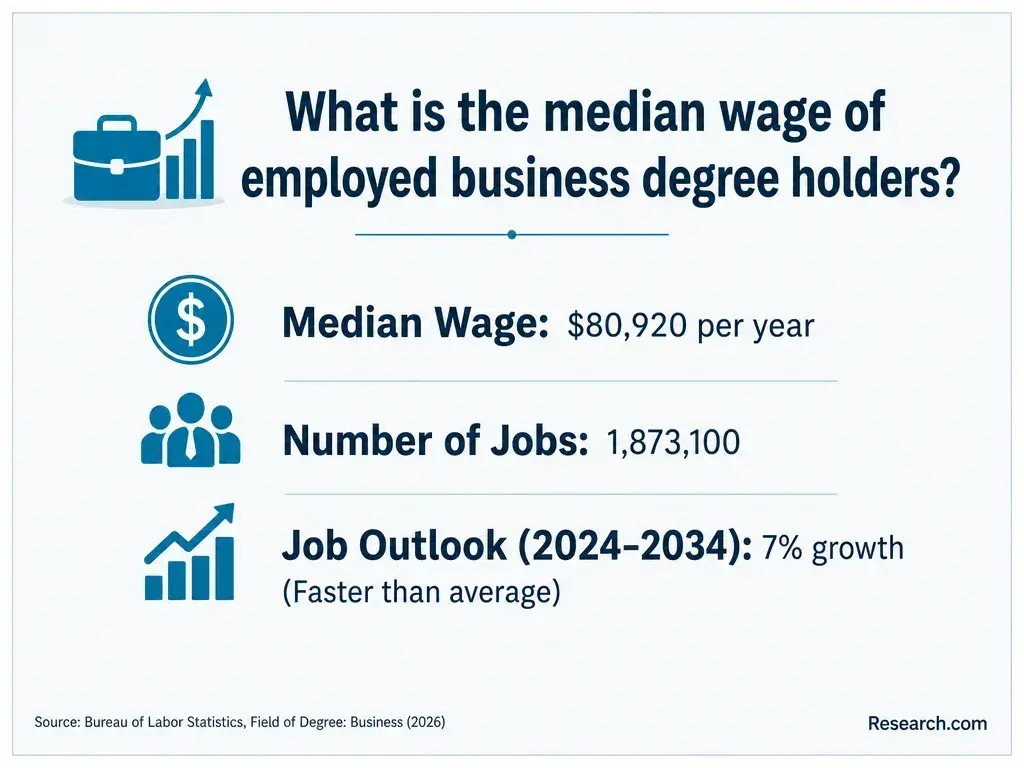
There is no single reliable national wage figure for either title in the occupation data discussed here. "Inside sales" can cover different products and pay structures, while "account manager" can describe roles ranging from customer support to major commercial accounts. Industry, location, experience, account size, and commissions can materially change compensation.
For context, the Bureau of Labor Statistics reports a May 2025 median annual wage of $148,270 for sales managers. That is the occupation-wide midpoint for people in a management role - not the median for account managers, inside sales staff, or new business graduates. It should not be used to calculate an assumed return on a BS.
For a personal comparison, obtain the base-pay and incentive terms for roles you could plausibly pursue, then weigh those opportunities against your remaining education costs. Online business administration program cost-and-time comparisons can help shortlist schools, but an individual degree audit and employer-specific pay information are needed for a useful decision.
Do Account Managers Need Certifications, Licenses, or Accreditation?
Account management itself does not have a general occupational license or universally required certification. An employer may prefer training in its products, customer relationship management software, or sales methods. Certain industries or activities can have separate licensing rules, so check the duties of the particular job rather than assuming the account-manager title settles the issue.
For a degree, verify that the institution holds recognized accreditation and check whether any claimed AACSB, ACBSP, or IACBE business accreditation covers the program you are considering. School accreditation, business-program accreditation, an academic concentration, and a voluntary professional certificate are different things. None automatically grants account-management experience.
If your long-term goal shifts toward managing customer implementations, you might compare a separate project-management degree with targeted training. In that case, undergraduate project management grants and scholarship planning addresses financing that alternative degree - not eligibility for a professional certification.
Other Things You Should Know About Business Administration
Yes. Show where you handled ongoing relationships, resolved issues across teams, or identified customer needs. Describe your responsibilities precisely rather than relabeling support work as account ownership.
Use a fictional case or an employer-approved, redacted example. Explain your approach to customer goals, communication, and trade-offs without revealing names, contract terms, personal data, or proprietary results.
It can be, especially when you can show consultative selling and follow-through. Expect to learn the industry, buying process, and how multiple stakeholders influence a business purchase.
Ask which customers you will own, who handles service problems, how renewals and expansions are measured, and how variable pay is calculated. Those details reveal more about the job than its title.
- 7 Key Areas in a Business Administration Program Explained | Northbridge University https://northbridge.edu/en/publications/key-areas-business-administration-program-explained/
- How to Become an Account Manager | Western Governors University https://www.wgu.edu/career-guide/business/account-manager-career.html
- What You Could Do with a Business Administration Degree | Miller-Motte College https://www.miller-motte.edu/blog/business/what-to-do-business-admin/
- The Benefits of Earning a Degree in Business Administration | The Pennsylvania Institute of Technology https://www.pit.edu/news/the-benefits-of-earning-a-degree-in-business-administration/
- How to Become a Account Manager | Career Karma https://careerkarma.com/careers/account-manager/
- 7 Key Differences Between Sales and Account Management | HSE https://hardskill.exchange/blog/7-key-differences-between-sales-and-account-management/
- Career Paths for Successful Key Account Managers | kapta.com https://kapta.com/resources/key-account-management-blog/account-management/career-paths-successful-account-managers
- Sales vs. Account Management - Main Differences | DemandFarm https://www.demandfarm.com/blog/sales-vs-account-management/