2027 A Second BS in Business Administration After a Bachelor's in Library Science: Credits, Cost, and Alternatives
Audited and Verified:
Our Editorial and Data Verification Process
Research.com uses government datasets, official education statistics and primary institutional information to support its career and degree guides. Our review process checks factual accuracy, occupational definitions, source dates and the requirements associated with the credentials discussed.
How This Article Was Fact-Checked
Our editorial team verifies salary estimates, employment projections, education requirements and program information against original data providers and official organizations. Salary figures are checked against the relevant occupational definitions and reporting periods. Information about licensure, accreditation and required in-person training is reviewed separately.
Fact-checked and verified on:

Co-Founder and Chief Data Scientist
A bachelor's degree in library science may have given you research, information-management, and public-service skills - but it does not tell you how much of a second business degree is already complete. The answer depends on the new school's second-degree rules and how your courses apply to its business curriculum.
This guide explains what to request in a credit evaluation, how to estimate the remaining cost and time, and when a certificate, specialized degree, or work-based training may be a better route to your target role.
Key Things You Should Know
- Your first bachelor's degree may satisfy general education requirements, but accepted credits do not automatically satisfy accounting, economics, or other business requirements.
- Compare schools using an approved degree audit showing remaining courses, residency rules, tuition, and course availability - not the number of credits they say they accept.
- A second BS is most useful when a target role calls for broad business preparation; the May 2025 median wage for human resources specialists was $75,940, an occupation-wide figure, not an expected salary for new graduates.
What Is a Second Bachelor's Degree in Business Administration After Library Science?
It is a separately awarded undergraduate degree completed after your library science bachelor's. You study the new institution's required business courses while seeking credit for prior coursework. A BS in Business Administration is typically broad; a BBA, BA in Business, or specialized business degree may have different requirements even when the titles sound similar.
Start with the work you want to do. Library science preparation can be useful in records and information services, research, vendor coordination, and service operations. Business coursework may add budgeting, accounting, marketing, and organizational decision-making. A second BS makes the strongest case when you need several of those functions and an employer values another bachelor's.
If you need one skill for an existing job, targeted courses, a certificate, or supervised experience may cost less and take less time. If project delivery is the specific goal, compare the curriculum - not just the price - of low-cost project management schools and aid options before committing to a general business degree.
An MBA is another possibility for someone who already has a bachelor's, but its admissions expectations, graduate-level work, and cost differ. You do not necessarily need a second bachelor's before applying; check whether a prospective MBA accepts non-business graduates and what preparation it expects.
How Many Credits Transfer Toward a Second Business Administration Bachelor's Degree?
There is no reliable universal transfer number. A school may accept much of your library science coursework yet apply relatively little of it to the business major. Some schools waive general education for degree holders; others evaluate courses individually. Second-degree residency rules can also require you to complete a minimum amount of new coursework at the awarding institution.
The distinctions below show what to look for in a written evaluation. They matter more than an advertised maximum transfer allowance.
| Prior learning | Possible application | Question for the school |
| First completed bachelor's degree | General education or elective requirements | Does degree-holder status waive requirements, or must courses be matched individually? |
| Statistics, economics, accounting, or mathematics | Business prerequisites or core, if equivalent | Do content, grade, credit value, and course recency meet this program's rules? |
| Library science and information courses | Electives; occasionally a relevant information-systems requirement | Which specific degree requirement does each accepted course satisfy? |
| Professional experience | Possible prior-learning credit where offered | Is assessment available, and can awarded credit fulfill a required course? |
Send official transcripts and, for potentially equivalent courses, syllabi to the transfer office or business department. Request a degree audit that separates accepted credits from credits applied to general education, the business core, a concentration, and electives.
For a more specialized comparison, online HR bachelor's programs accepting transfer credits may be worth examining if personnel work - not general administration - is your goal. Only each institution can approve its own equivalencies.
How Much Does a Second Business Administration Bachelor's Degree Cost?
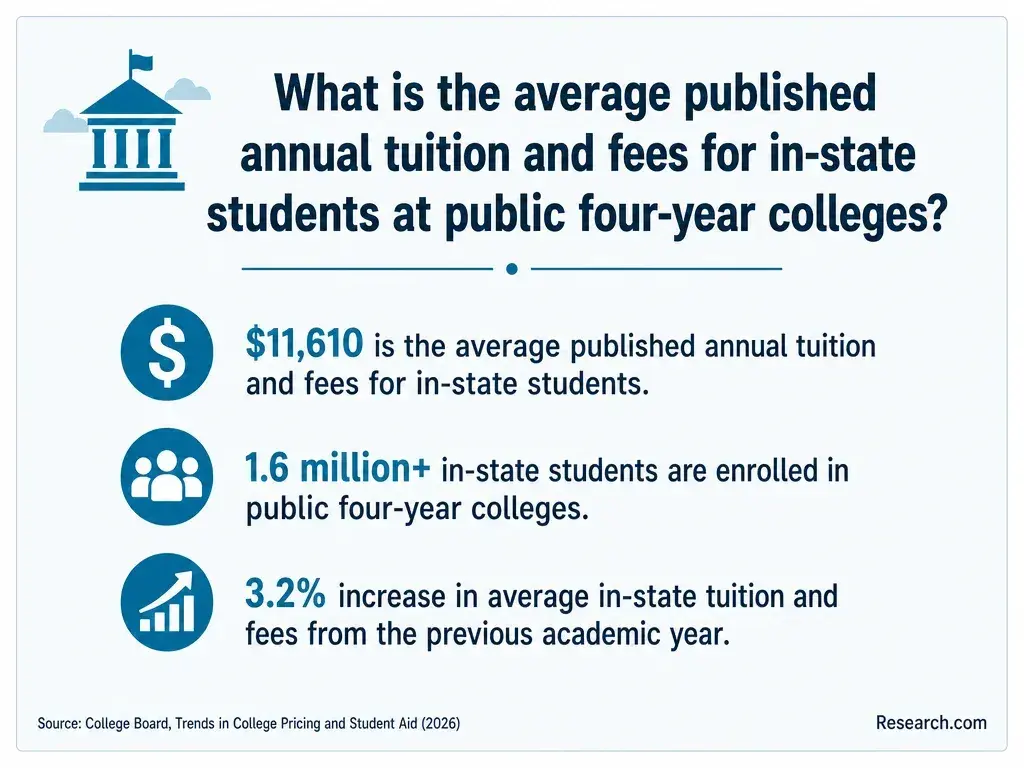
Without a school-specific audit and tuition schedule, no responsible total can be quoted. Estimate cost from the courses you still must take, including prerequisites and residency courses, rather than from the size of the degree printed in the catalog. Then add mandatory fees, materials, technology or proctoring charges, and any travel. If enrolling would reduce your work hours, account for lost earnings as well.
Ask each school for a term-by-term estimate based on your evaluated credits. Check whether tuition is charged per credit, per term, or by another method, and whether required courses are offered often enough to avoid paying for an extra term. Compare immediate payments with eventual net cost: employer reimbursement, for example, may arrive only after you pay and meet a grade requirement.
A prior bachelor's can affect eligibility for some need-based undergraduate grants. Do not assume either that all aid is unavailable or that you will qualify for a particular award. Ask the financial-aid office to review your remaining eligibility, satisfactory academic progress status, and loan options; online business administration degrees accepting federal aid applications provide a starting point for comparing programs, not a guarantee of aid or low net cost.
Most importantly, distinguish admission to the university from admission to its business major. A completed library science bachelor's does not inherently bar either, but schools set their own rules for previous-degree holders, GPA, prerequisites, and application deadlines. Some allow you to begin introductory business coursework after admission; others require specified preparation before entering the major.
Prepare your prior-college transcripts, then compare them with the program's mathematics, statistics, economics, accounting, and communication requirements. Ask admissions which are entry conditions and which can be completed after enrollment.
Ask the business adviser whether an earlier course qualifies for a substitution - and obtain that decision in writing. A guide to business administration degree prerequisite planning can help you frame those questions, but the prospective school's current catalog and evaluation control.
Neither format changes the fundamental need for an approved degree audit. Choose based on access to required courses and the kind of learning and career support you need. Online study may reduce commuting, but it can still involve live sessions, scheduled exams, group presentations, and fixed weekly deadlines. Campus study may make networking and local employer contact easier, but class times can conflict with work.
Ask for a sample schedule covering the business core and any concentration - not just a sample introductory course. Confirm campus visits, proctoring, software, internship rules, and whether upper-level courses run every term. Online bachelor's programs with short sessions may fit a predictable work schedule, but shorter sessions can compress the same assignments into fewer weeks.
Check recognized institutional accreditation and, if a school advertises AACSB, ACBSP, or IACBE accreditation, whether that accreditation covers the program you would enter.
Expect the exact curriculum to vary. Common areas include financial and managerial accounting, economics, finance, marketing, management, operations, business law, statistics or analytics, and a strategy capstone. A BS may also have particular quantitative or science requirements. Your library science courses may already support research, communication, and information organization, but those strengths do not substitute automatically for business accounting or finance.
Read the course sequence alongside the degree audit. An introductory accounting or quantitative course may be needed before an upper-level class, making sequencing as important as the number of remaining credits.
If you want a concentration, verify its official status, required electives, and availability; taking an HR or analytics elective alone does not award a concentration. Use a national guide to ranked online business colleges to identify curricula to inspect, then rely on each school's current catalog rather than a ranking to confirm your requirements.
Completion time depends on applied credits, required new credits, course prerequisites, enrollment pace, and how often essential classes run. A generous transfer evaluation can still lead to a long schedule if a required sequence cannot be started immediately. Conversely, an institution that accepts fewer credits may offer a more workable route if its remaining courses run consistently.
Request a term-by-term plan showing every required course, its prerequisite, and its next expected offering. Ask what happens if a course is canceled or you need to enroll part time. Compare accelerated business bachelor's school comparisons against your own audit: an advertised completion period for another student's starting credits is not your graduation date. Before enrolling, have an adviser confirm the plan against residency and graduation requirements.
The most credible transition builds on work you have already done. Experience helping patrons or customers, organizing information, maintaining records, researching needs, or coordinating vendors can support applications for administrative operations, program coordination, HR support, market research support, or project coordination. The degree can supply business vocabulary and methods; employers will still assess evidence that you can perform the particular job.
For example, a library employee who has tracked purchasing or improved a service workflow could document the task, decisions, tools, and results they are authorized to share. Someone seeking a larger shift into finance or analytics may need more specialized coursework and a supervised project.
Project management roles often call for demonstrated scheduling, stakeholder communication, and delivery experience, not merely a course title. If a specialized degree is under consideration, compare its remaining cost and possible grants using paying for project management bachelor's study with grants rather than assuming a general business BS is the shortest route.
A new business degree does not by itself qualify someone to manage staff or a major budget. Seek internships, approved workplace projects, or entry-level responsibilities that let you demonstrate the function you want to enter.
There is no dependable salary figure for the combination of these two degrees. Pay follows the occupation, responsibilities, experience, employer, and location - not the number of bachelor's diplomas held.
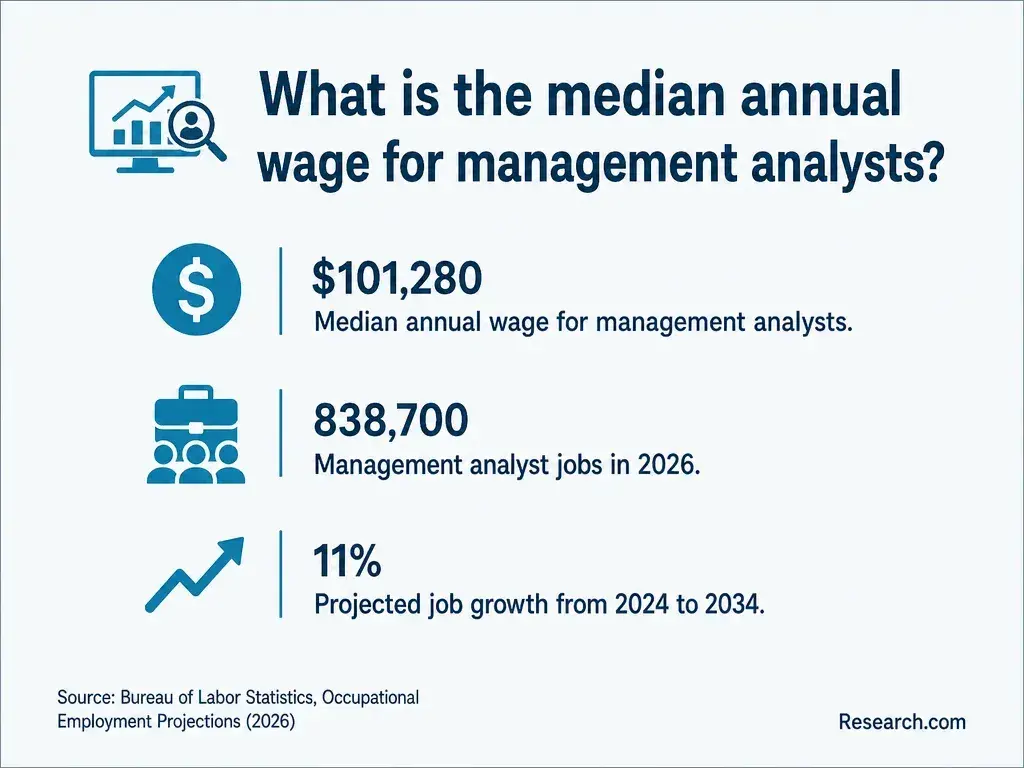
For context, the U.S. Bureau of Labor Statistics reports a $75,940 median annual wage for human resources specialists in May 2025 and projects 6% employment growth from 2025 to 2035. That median covers workers across experience levels; it is not an entry-level offer or a predicted return on a second degree.
Before borrowing, compare local postings for roles you could realistically pursue now with postings for roles that require the business skills you would gain. Note which ask for experience you still lack. Then weigh that potential change against your personal completion estimate, lost work time, and financing costs. Online business administration program cost-and-time comparisons can help form a shortlist, but no program's advertised value establishes your future earnings.
Do Business Administration Careers Require Licenses or Certifications?
Many general administrative, coordination, and business-support jobs do not require an occupational license. Requirements change when you move into regulated work: a business administration degree alone does not establish eligibility to practice as a CPA or hold a financial-services license. Voluntary HR or project management certifications have their own eligibility rules and are separate from an academic concentration.
Check actual job postings and, where applicable, the relevant licensing board or certifying organization before choosing courses. If your target role needs broad business knowledge rather than a separate credential, quick-completion business degree pathways may be worth comparing - but verify what remains after your first degree is evaluated. If it requires a specific license, plan around that credential's rules first; a faster second bachelor's may not meet them.
Other Things You Should Know About Business Administration
Possibly. Ask whether it offers the business degree to second-degree students and whether its current catalog or readmission rules would govern your new coursework.
Schools calculate transfer, institutional, and major GPAs differently. Ask the registrar which grades count toward admission, academic standing, and graduation.
Only if the program permits it and approves the duties and supervision. Employment alone does not award internship credit; ask for the approval criteria before relying on your job.
No. If you complete the new institution's requirements, the business degree is an additional credential. Confirm how the school records and awards second degrees.
- Federal Pell Grants | studentaid.gov https://studentaid.gov/understand-aid/types/grants/pell
- Cost of Attendance (Budget) | 2025-2026 Federal Student Aid Handbook https://fsapartners.ed.gov/knowledge-center/fsa-handbook/2025-2026/vol3/ch2-cost-attendance-budget
- Degree Requirements | Paul Merage School of Business https://merage.uci.edu/programs/undergraduate/degree-requirements.html
- College of Business Administration | UW-La Crosse Catalog https://catalog.uwlax.edu/undergraduate/businessadministrationcba/
- College of Business Administration - Academic Catalog https://catalog.uic.edu/ucat/colleges-depts/business-administration/
- Program: Business Administration B.S. | csustan.edu https://catalog.csustan.edu/preview_program.php
- Tuitions & Fees | shsu.edu https://catalog.shsu.edu/undergraduate/financial-information/tuition-fees/
- Degree Credit and Residency Requirements | Empire State University https://catalog.sunyempire.edu/undergraduate/academic-policies-procedures/degree-credit-residency-policy/
- Second Bachelor's - UF Online - University of Florida https://ufonline.ufl.edu/apply/admissions-requirements/second-bachelors/
- Eligibility Requirements - Office of Student Financial Aid https://financialaid.iastate.edu/getting-started/qualifying-for-aid/eligibility-requirements/