2027 Online BS in Business Administration vs. a BS in Interdisciplinary Studies: Which Route Fits Your Career Plan?
Audited and Verified:
Our Editorial and Data Verification Process
Research.com uses government datasets, official education statistics and primary institutional information to support its career and degree guides. Our review process checks factual accuracy, occupational definitions, source dates and the requirements associated with the credentials discussed.
How This Article Was Fact-Checked
Our editorial team verifies salary estimates, employment projections, education requirements and program information against original data providers and official organizations. Salary figures are checked against the relevant occupational definitions and reporting periods. Information about licensure, accreditation and required in-person training is reviewed separately.
Fact-checked and verified on:

Co-Founder and Chief Data Scientist
Choosing between these degrees is especially consequential if you already have college credits or work experience: the program that looks most relevant to your career may not be the one that gets you there efficiently. An online BS in Business Administration offers a defined business curriculum, while a BS in Interdisciplinary Studies may let you combine subjects and apply more prior coursework.
This comparison is for students finishing a bachelor's degree or moving toward a business role. It shows how to weigh career preparation against credit applicability, cost, scheduling, and the evidence employers will want to see.
Key Things You Should Know
- Choose business administration when your target role calls for a recognizable foundation in accounting, finance, marketing, operations, and management - and the remaining major requirements fit your budget and timeline.
- Choose interdisciplinary studies when its approved course plan makes better use of your credits and lets you build a coherent combination of subjects for a specific goal; flexibility alone is not a career strategy.
- Check the role, not just the degree name: U.S. Bureau of Labor Statistics projections show 18% employment growth for logisticians from 2025 to 2035, but relevant coursework and experience - not either bachelor's title by itself - determine your competitiveness.
What Is the Difference Between Business Administration and Interdisciplinary Studies?
A BS in Business Administration is organized around required business subjects. A BS in Interdisciplinary Studies combines coursework from multiple fields under an approved plan; its exact structure varies substantially by school. Both are bachelor's degrees, but neither title tells you how many of your existing credits will satisfy graduation requirements.
The distinction is most useful when you compare what each program requires you to study after admission - not just the credits it accepts.
| Decision factor | BS in Business Administration | BS in Interdisciplinary Studies |
| Academic structure | Defined business core; possible formal concentration | Approved combination of disciplines, often with an integrating project or coursework |
| Best fit | Broad preparation for business functions | A cross-functional goal or prior credits spanning several subjects |
| Main risk | Prior credits may count only as electives, leaving substantial business coursework | A flexible plan may lack the functional depth a target employer expects |
An interdisciplinary degree is not automatically the faster option. Compare its official audit with the business audit; faster undergraduate completion pathways are useful to investigate only after you know which required courses remain.
Which Degree Offers Better Career Opportunities: Business Administration or Interdisciplinary Studies?
Neither degree wins across all careers. Business administration usually offers the clearer academic match for general business operations, marketing coordination, and administrative work. Interdisciplinary studies can be equally purposeful when its course plan connects an existing field - such as technology or healthcare - with business and you can explain that combination through projects or experience.
Start with the job you want and identify its recurring tasks. If postings emphasize budgeting, financial statements, and operations, check whether the interdisciplinary plan includes enough of those subjects. If they emphasize a specialized function, a dedicated degree may be stronger than either broad option. For example, someone committed to logistics should compare both degrees with fast-track supply chain bachelor's programs, then verify the actual curriculum and transfer evaluation.
Employers also assess experience. A customer-service worker moving into operations coordination may be able to demonstrate process and stakeholder skills already; a candidate seeking an analyst role may need stronger quantitative work samples regardless of degree title.
Is an Online Business Administration or Interdisciplinary Studies Degree Worth It?
Either can be worthwhile if it closes a real qualification or skills gap at a manageable total cost. A business administration degree may justify additional required courses when they supply knowledge you need for your target function. An interdisciplinary degree may be the better investment when it applies more existing coursework while still letting you acquire and demonstrate those skills.
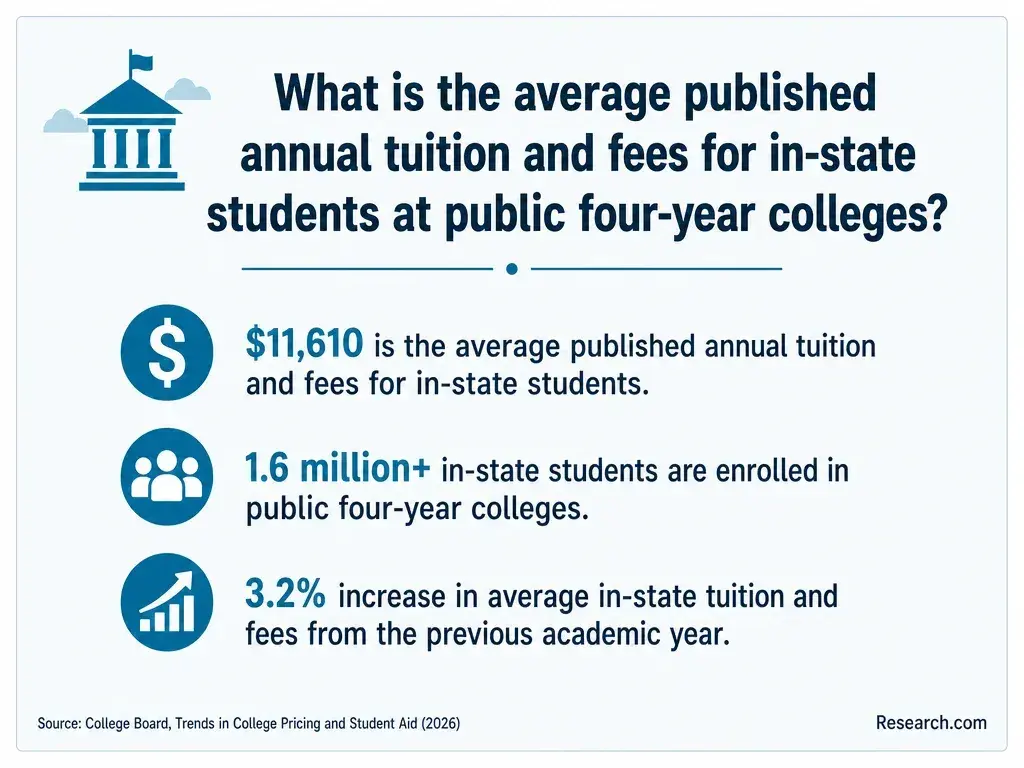
Compare remaining tuition and fees, not advertised program price alone. Include required courses that do not transfer, books and software, possible travel, borrowing costs, and the earnings or family time affected by your schedule. Then ask whether a bachelor's is necessary for the next role: someone who already has one may benefit more from targeted business courses, a certificate, or relevant work experience.
Use business administration college costs and potential career outcomes as comparison context, not a promise of personal return. Neither degree guarantees a promotion or salary increase.
Online and campus programs can lead to the same type of degree, but delivery changes the practical demands. Online courses may reduce commuting while still requiring scheduled discussions, group meetings, proctored exams, presentations, or an internship. Campus courses offer face-to-face contact but require travel and fixed attendance times.
For a working student, the decisive question is whether required courses run when you can take them - not simply whether the program is labeled "online." Request a sample course schedule and ask about live sessions, time zones, assessment rules, campus visits, and part-time sequencing. If continuing to work is essential, compare those details when considering how to study business administration without leaving your job.
Business administration programs commonly require accounting, finance, economics, marketing, management, and quantitative or operations coursework. A formal concentration may add depth, but its availability and required courses depend on the school. Introductory coverage does not establish professional expertise in every business function.
Interdisciplinary studies depends more heavily on the approved course plan. You might combine organizational behavior, communication, and data analysis, for example, but should confirm that the combination has enough depth for your goal. A culminating project can help explain the connection among fields; it is not a substitute for missing technical preparation.
If leading teams is your specific objective, compare the proposed coursework with three-year organizational leadership bachelor's options. Examine what each teaches about budgets and operations as well as leadership, and remember that coursework alone does not confer managerial experience.
Requirements vary by institution. Applicants generally need evidence of secondary education or prior college study; transfer and degree-completion tracks may have additional credit or academic-standing rules. A business major may also require particular mathematics or introductory courses before entry to the major or progression through it. Interdisciplinary studies programs may require an approved study plan rather than accepting any combination of electives.
Ask admissions whether you qualify, then ask the transfer office or adviser for a separate evaluation showing how each prior course applies to general education, the major, electives, and residency requirements. Accepted credit is not the same as a satisfied requirement. Admission and financial-aid eligibility are separate decisions, too; if aid matters, investigate FAFSA-eligible online business administration colleges and confirm your own eligibility with the school's financial-aid office.
The remaining required credits, course sequence, transfer evaluation, and pace determine completion time. A business program can take longer if earlier coursework does not satisfy its core; an interdisciplinary program can take longer if its required integrating courses are offered infrequently. "Accelerated" may describe shorter terms without reducing the work required.
Obtain a term-by-term plan for each degree and a written estimate that separates tuition from fees and other required expenses. Check whether part-time study changes aid, whether employer reimbursement arrives after you pay, and whether taking an extra term adds charges. A list of fastest online business bachelor's programs in the US can identify options to examine, but only a school's evaluation and course schedule can support your personal completion estimate.
Either degree may support applications for roles such as operations coordinator, marketing coordinator, HR assistant, or project coordinator when its coursework and the applicant's experience match the work. More specialized analyst or management roles often require additional functional knowledge or experience. An interdisciplinary graduate should be ready to explain the relevance of their particular course combination; a business graduate should be ready to demonstrate applied skills beyond the degree title.
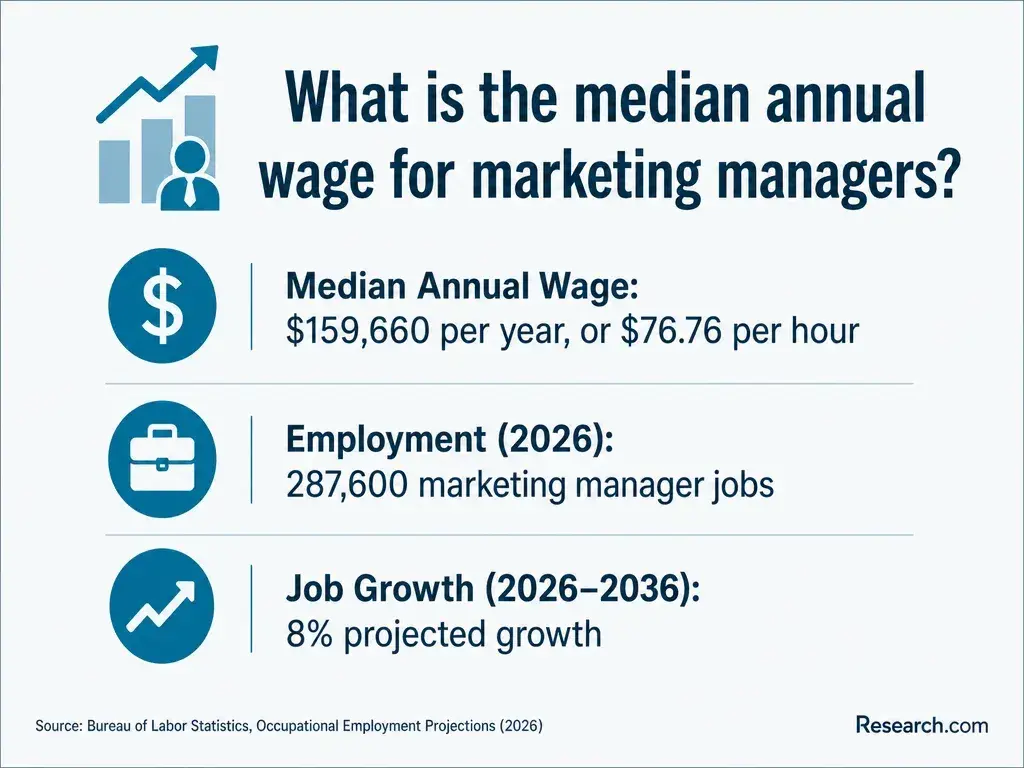
For perspective, the U.S. Bureau of Labor Statistics reports a May 2025 median annual wage of $75,940 for human resources specialists. That is an occupation-wide median, not an expected starting salary for graduates of either program. Compare local job postings and their experience requirements before using any occupational wage to assess your options.
If supply chain work is the goal, compare the required skills in local postings with both degree plans and with shorter online supply chain degree pathways. A more focused route may be preferable when your skill gap is specific.
Neither bachelor's degree automatically awards an occupational license or professional certification. Requirements depend on the job and the issuing body. Accounting licensure, for example, has state-specific education and examination rules that a general business degree should not be assumed to meet. Other business credentials may require experience, an examination, or both.
For an HR goal, compare degree coursework with the skills requested in actual openings before paying for an additional credential. You can also compare human resources degree pathways if a dedicated HR curriculum would address gaps that either broad bachelor's leaves open. Verify certification rules directly with the relevant credentialing organization before selecting courses.
How Can You Choose an Accredited and Reputable Online Program?
Verify institutional accreditation through the recognized accreditor and confirm that it covers the institution offering your degree. Some business schools also hold AACSB, ACBSP, or IACBE accreditation; check the accreditor's stated scope rather than assuming every program at the institution is covered. Business-specific accreditation and institutional accreditation are distinct.
Before enrolling, request the catalog requirements, a formal credit evaluation, a realistic course sequence, and written costs for your expected enrollment pace. Ask how online students access faculty, advising, career services, and approved internships or capstones. If a workplace project is part of your plan, confirm academic approval and permission to use employer information.
Ranked US college pathways in online business can provide candidates for this review, but rankings cannot establish which degree will apply more of your credits or prepare you better for your particular role. Make the final choice from the verified degree audits and the skills your target jobs require.
Other Things You Should Know About Business Administration
Possibly. Ask the adviser to show how the switch would reclassify completed courses and change your remaining requirements before submitting a change-of-major request.
Not necessarily. Diploma wording and transcript notation vary by institution; request examples or the school's written credential policy if the distinction matters to you.
Often, but each graduate program sets its own admissions and prerequisite rules. Check the requirements of programs you may apply to rather than assuming either undergraduate major qualifies you automatically.
Usually not without meeting separate major, credit, and institutional requirements. Ask for a dual-degree evaluation before planning around overlapping courses.
- Credit for Prior Learning | Transfer Credit Ohio https://transfercredit.ohio.gov/students/student-programs/Prior-Learning-Assessments
- Fast Facts: Tuition costs of colleges and universities (76) | ed.gov https://nces.ed.gov/fastfacts/display.asp
- Accreditation in the U.S. | ed.gov http://www.ed.gov/laws-and-policy/higher-education-laws-and-policy/college-accreditation/accreditation-in-the-us
- What is Interdisciplinary Studies? - American Military University https://www.amu.apus.edu/area-of-study/arts-and-humanities/resources/what-is-interdisciplinary-studies/
- What Jobs Can You Get With a Business Degree? | snhu.edu https://www.snhu.edu/about-us/newsroom/business/what-jobs-can-you-get-with-a-business-degree
- Tuition and Financial Aid - Undergraduate Admission | University of San Diego (USD) https://www.sandiego.edu/admission-and-aid/undergraduate/tuition-and-financial-aid/
- Online Bachelor's Degree in Business Administration | OU Online https://online.ou.edu/program/bs-in-business-administration/
- Bachelor of Interdisciplinary Studies | Sullivan University https://www.sullivan.edu/business-administration/interdisciplinary-studies
- Demonstrate Your Degree with Capstones and Culminating Projects | Columbia University School of Professional Studies https://sps.columbia.edu/school/sps-student-experience/demonstrate-your-degree-capstones-and-culminating-projects
- Can You Work Full-Time and Go to School? A Practical Guide | Whitworth Online https://online.whitworth.edu/news-articles/can-i-go-to-school-and-work-full-time/