2027 Choosing a BS in Business Administration When You Want a Business Degree but Are Unsure About Management
Audited and Verified:
Our Editorial and Data Verification Process
Research.com uses government datasets, official education statistics and primary institutional information to support its career and degree guides. Our review process checks factual accuracy, occupational definitions, source dates and the requirements associated with the credentials discussed.
How This Article Was Fact-Checked
Our editorial team verifies salary estimates, employment projections, education requirements and program information against original data providers and official organizations. Salary figures are checked against the relevant occupational definitions and reporting periods. Information about licensure, accreditation and required in-person training is reviewed separately.
Fact-checked and verified on:

Co-Founder and Chief Data Scientist
You can want a business degree without wanting to supervise a team. A BS in Business Administration can be a sensible choice if you want to explore several business functions before committing to one, but its breadth is less useful when you already know you need specialized training.
This guide is for prospective students and early-career employees weighing that trade-off. It explains what the degree teaches, which non-management roles it may support, and what to check before spending time and money on a program.
Key Things You Should Know
- A BS in Business Administration teaches management concepts, but it does not require you to pursue a management job; compare its electives and applied work with the functions you actually want to try.
- For context, the U.S. Bureau of Labor Statistics reports a May 2025 median annual wage of $78,760 for market research analysts—an occupation-wide figure, not a starting salary for business graduates.
- Before enrolling, check whether the degree's broad core leaves enough room for relevant projects or a formal concentration, and compare your remaining credits and total cost with a specialized degree or shorter training path.
What is a BS in Business Administration, and is it right for non-managers?
A Bachelor of Science in Business Administration is an undergraduate degree covering how organizations make financial, operational, marketing, and personnel decisions. Studying management is not the same as becoming a manager: understanding budgets, teams, and workflows also helps employees who analyze problems or coordinate work without supervising anyone.
The degree is a strong fit if you are interested in business but want time to test functions through electives, projects, and relevant work. It is a weaker fit if your target role clearly calls for deeper accounting, information systems, or another specialty than the program offers. A BBA or BA in Business may serve a similar goal, but compare actual course requirements rather than assuming the titles mean the same thing.
The most useful comparison is between the preparation each path offers and the evidence you could show an employer afterward:
| Path | Best fit | Main limitation to check |
| BS in Business Administration | You want broad preparation and room to explore functions. | Electives and projects may not provide enough depth for a specific role. |
| Specialized bachelor's degree | You have a clear target, such as accounting or supply chain work. | Required courses may leave less room to change direction. |
| Targeted courses or employer training | You already have a degree or relevant experience and need a defined skill. | Training may not satisfy an employer's bachelor's-degree requirement. |
If project coordination is already your clear goal, compare the curriculum and total price of budget-friendly online project management programs before choosing a broader degree.
What careers can you pursue with a business administration degree besides management?
Business administration graduates can pursue individual-contributor and coordination roles, but a degree alone does not qualify someone for every job below. Start with the tasks you want to perform, then look for openings at the experience level you can realistically meet.
These examples show how different non-management paths call for different evidence of readiness:
| Possible role | Typical work | Useful evidence beyond coursework |
| Marketing coordinator | Supports campaigns, reporting, and customer research. | A campaign analysis or supervised marketing project. |
| Operations or project coordinator | Tracks schedules, processes, vendors, or deliverables. | Spreadsheet work, process documentation, and reliable follow-through. |
| Human resources assistant or specialist | Supports recruiting, employee records, or HR programs; specialist jobs may require relevant experience. | HR coursework and experience handling sensitive information appropriately. |
| Procurement or supply chain staff | Supports purchasing, inventory, or supplier coordination. | Operations coursework and experience with relevant systems or data. |
If procurement or logistics becomes your clear target, compare the specialized curriculum of the fastest online supply chain bachelor's programs with the supply chain courses available in a general business degree. "Fastest" is only useful if the remaining requirements fit your credits and schedule.
What do you learn in a BS in Business Administration program?
Most programs combine accounting, economics, finance, marketing, operations, organizational behavior, quantitative reasoning, and business communication. A management course may teach you how organizations assign responsibility or evaluate performance; those concepts also help a non-manager work effectively across teams.
Look beyond the course names. If you are considering marketing, check whether you can interpret customer data and present a campaign recommendation. For operations, look for process analysis and spreadsheet assignments. For finance-related work, check the depth of accounting and quantitative prerequisites. An internship, approved workplace project, or capstone can help you demonstrate these skills, but neither a course nor a project establishes specialist expertise by itself.
Check whether a concentration is formally recorded, which courses it requires, and whether they add credits or delay graduation. If the available electives lean heavily toward supervising staff and that does not interest you, compare a specialist pathway or fast-track undergraduate organizational leadership study only if leadership itself is your intended focus.
Delivery mode alone does not determine a degree's value. For a non-management career goal, the more useful questions are whether the institution is appropriately accredited, whether you can access relevant courses and support, and whether the format lets you complete substantial work rather than merely fit classes around your calendar.
Ask for sample course schedules and assessment policies. An online program may still require live meetings, timed exams, group presentations, internships, or campus visits. Compare access to faculty, career services, employer connections, and applied projects as well as flexibility. If you will study while employed, degree options for working business administration students can provide a starting set of programs to examine against your actual weekly availability.
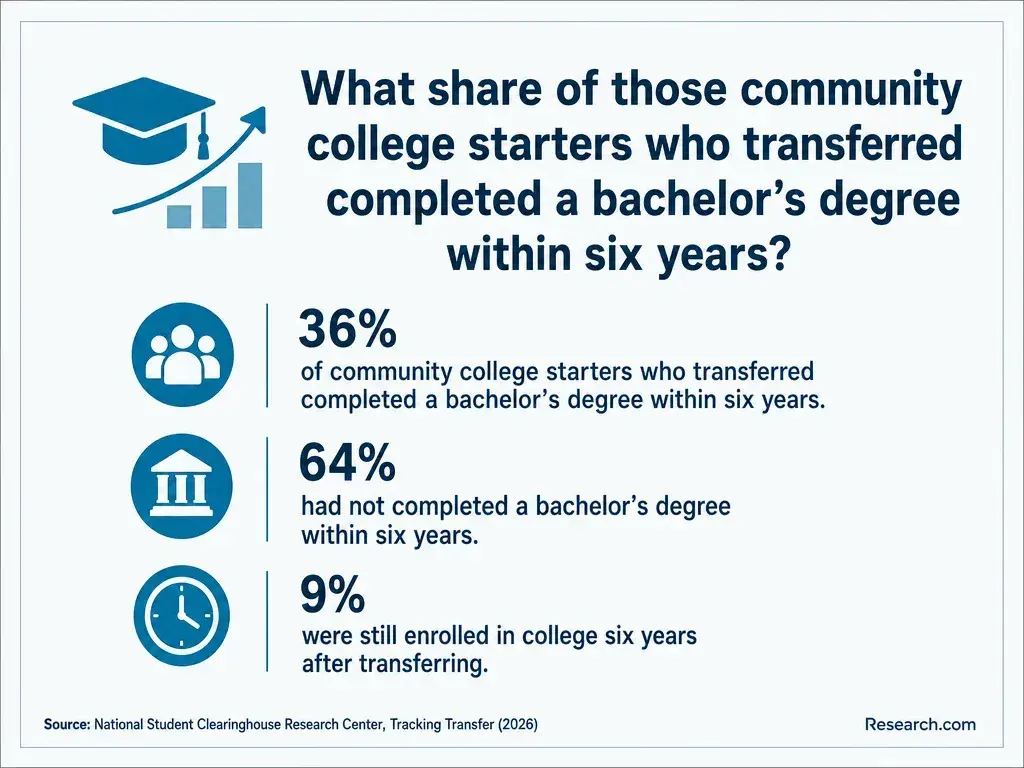
Requirements vary by institution and by whether you apply as a first-year or transfer student. Schools commonly review a high school credential or previous college transcripts; some business majors have additional GPA, mathematics, accounting, or economics requirements. An introductory course may be required before entering the major rather than before entering the university.
If you have college credit, request an official evaluation showing not just what transfers but what satisfies general education, the business core, and any concentration. Prior work outside business does not necessarily prevent admission, and accepted credits do not necessarily replace required business courses. Students considering an HR-focused alternative can compare human resources bachelor's credit transfer options, then ask each institution for its own evaluation.
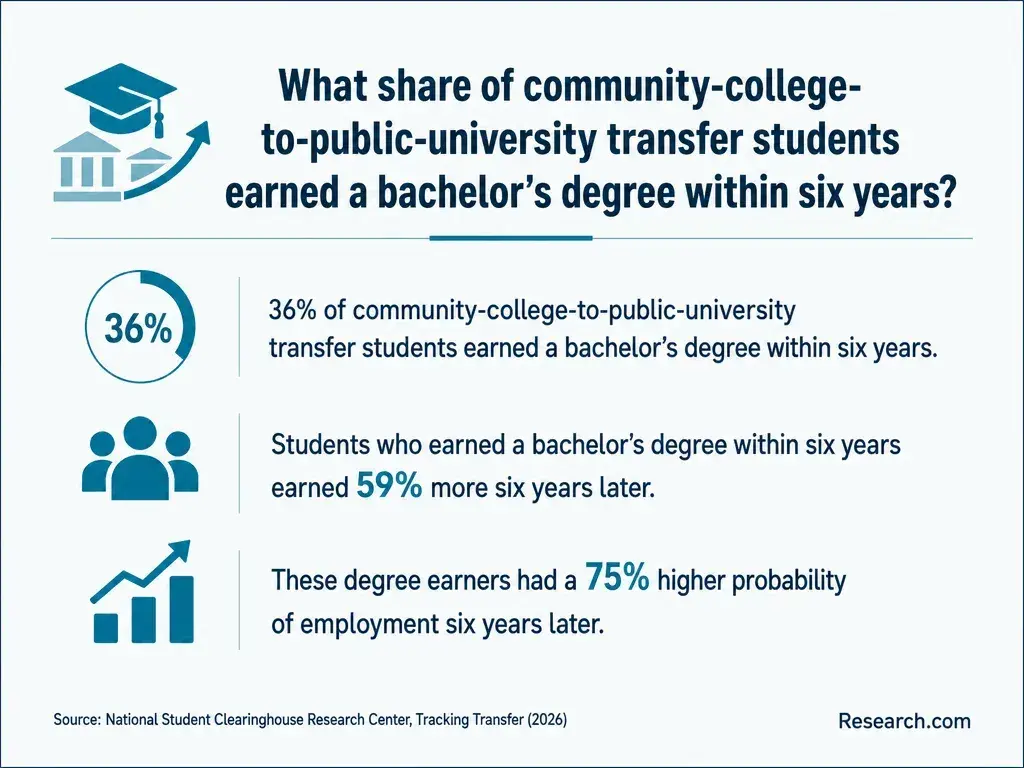
A bachelor's degree is commonly planned as four years of full-time undergraduate study, but your remaining time depends on accepted credits, course sequencing, enrollment pace, and when required classes are offered. Transfer students should rely on an approved degree audit, not an advertised completion time.
Compare the cost of finishing, not just a school's tuition rate. Include required credits, fees, books and software, possible travel or proctoring, and the cost of taking fewer work hours. Ask whether aid or employer reimbursement applies to your enrollment pattern and when reimbursement arrives. A business administration degree affordability duration and value guide can help frame comparisons, but your own audit and financial-aid offer determine the relevant numbers.
First, confirm the institution's current accreditation with the accreditor and the school. Then check whether any claimed AACSB, ACBSP, or IACBE business accreditation covers the school or specific program you would attend. Institutional accreditation and business accreditation have different scopes; neither proves that graduates obtain particular jobs.
For quality, request the current catalog and ask how often your intended electives run, who advises students changing concentrations, and what internship or capstone support is available. When comparing cheaper business administration study with FAFSA-based aid, verify each program's current accreditation, aid eligibility, and requirements directly before treating it as affordable for you.
There is no single salary for a BS in Business Administration: pay follows the occupation, responsibilities, experience, employer, and location. The U.S. Bureau of Labor Statistics reports a May 2025 median annual wage of $75,940 for human resources specialists. That is the midpoint for workers in that occupation, not an offer a new graduate should expect.
Use occupation figures to compare possible directions, then examine entry-level postings in your area for actual pay and requirements. A management salary is particularly misleading if you do not intend to manage—or have not yet gained the experience a management job requires. If cost is central to your decision, compare lower-tuition online business administration programs on total remaining cost rather than assuming a future salary will offset borrowing.
Job outlook is reported for occupations, not for everyone holding a particular degree. The U.S. Bureau of Labor Statistics projects 7% employment growth for market research analysts from 2025 to 2035. That suggests a growing occupation, but it does not show how many openings will suit an applicant without research, data, or industry experience.
Read several local job postings before choosing electives: note the tools, work samples, and experience employers request. If you are considering fast-paced American business bachelor's degrees, check that the schedule still allows time to build the experience your target occupation expects.
Do business administration careers require licenses or professional certifications?
Many coordination, marketing, and operations jobs do not require an occupational license, although employers may prefer particular skills or experience. Requirements change when the work itself is regulated: a business administration degree does not grant CPA licensure, a financial-services license, or another professional credential. Verify the rules for the specific occupation and state before selecting courses on the assumption that they satisfy eligibility requirements.
Voluntary certifications can matter later in a career, but their eligibility rules may include experience that a bachelor's degree cannot replace. If project work is your goal, distinguish a project management degree from a professional certification; online undergraduate project management credit acceptance is a separate question from certification eligibility.
Other Things You Should Know About Business Administration
Often, but the school controls the policy. Ask an adviser whether changing would affect completed credits, course sequencing, or your graduation date before declaring a concentration.
That varies by institution. Confirm how the school formally records the concentration; an elective cluster may not appear as a separate credential.
Yes, if the program permits introductory electives or a relevant project before you declare a concentration. Check prerequisite chains so an exploratory course does not prevent you from taking later required classes on time.
Not necessarily. Management hiring requirements vary by employer and role, and demonstrated responsibility may matter more. Consider graduate study only after identifying a specific opportunity it would help you pursue.
- Definitions | Transfer Credit Ohio https://transfercredit.ohio.gov/educational-partners/educational-partner-initiatives/articulation-transfer-policy-policy/articulation-transfer-policy-definitions
- Your financial path to graduation | consumerfinance.gov https://www.consumerfinance.gov/paying-for-college/your-financial-path-to-graduation/
- Frequently Asked Questions | National Advisory Committee on Institutional Quality and Integrity https://sites.ed.gov/naciqi/frequently-asked-questions/
- 10 Key Subjects Taught in a Bachelor of Business Administration Program | Carson-Newman University https://www.cn.edu/cps-blog/10-key-subjects-taught-in-a-bachelor-of-business-administration-program/
- What Can You Do With a Business Administration Degree? | snhu.edu https://www.snhu.edu/about-us/newsroom/business/what-can-you-do-with-a-business-administration-degree
- Business Management vs. Business Administration: Which Degree Is Right for You? | Cal Lutheran https://www.callutheran.edu/programs/articles/business-management-vs-business-administration/
- Types of Business Degrees: Your Complete Guide | UWA Online https://online.uwa.edu/news/types-business-degrees/
- 10 Key Business Administration Skills for Every Role | University of the Cumberlands https://www.ucumberlands.edu/blog/business-administration-skills-for-every-role
- Entry-Level Jobs With a Business Administration Degree | Warner Pacific University http://www.warnerpacific.edu/blog/top-entry-level-jobs-ba-business-administration/
- 11 Types of Business Degrees and Career Pathways | National University https://www.nu.edu/blog/types-of-business-degrees/