2027 Choosing a BS in Business Administration: How to Check a Program Guarantee with Conditions You Must Meet
Audited and Verified:
Our Editorial and Data Verification Process
Research.com uses government datasets, official education statistics and primary institutional information to support its career and degree guides. Our review process checks factual accuracy, occupational definitions, source dates and the requirements associated with the credentials discussed.
How This Article Was Fact-Checked
Our editorial team verifies salary estimates, employment projections, education requirements and program information against original data providers and official organizations. Salary figures are checked against the relevant occupational definitions and reporting periods. Information about licensure, accreditation and required in-person training is reviewed separately.
Fact-checked and verified on:

Co-Founder and Chief Data Scientist
A "program guarantee" can make a BS in Business Administration sound like a low-risk choice. Its value depends on what the school actually promises—and what you must do to qualify. For prospective students comparing completion timelines, tuition terms, or career support, the difference between an advertisement and an enforceable written policy matters.
This guide shows you how to identify the promised benefit, check its conditions against your circumstances, and get answers in writing before you commit.
Key Things You Should Know
- A program guarantee is only as useful as its written benefit, eligibility rules, exclusions, and remedy if the school does not deliver.
- Check the catalog and guarantee terms for your enrollment term; admission, transferred credit, and access to courses are separate decisions.
- A career promise is not a salary promise: the U.S. median for human resources specialists was $75,940 in May 2025, but that occupation-wide figure does not describe new business graduates' earnings.
What Does a Business Administration Degree Guarantee Typically Include?
A business administration program guarantee is a school-specific written commitment, not a standard feature of a BS degree. It might concern a tuition rate, access to required courses, a completion timetable, admission after specified preparation, or additional support if a student cannot finish as planned. Career services are sometimes advertised alongside these promises, but access to coaching or interviews is different from a guaranteed job.
Read the stated benefit and the remedy together. The distinctions below help separate a meaningful commitment from language that merely describes a program goal:
| Claim you may see | What the written terms need to clarify |
| Finish within a stated period | Required starting credits, course load, course availability, and what happens if a required class is unavailable |
| Tuition or price guarantee | Which charges are covered, how long the rate lasts, and whether fees or repeated courses are excluded |
| Admission or transfer guarantee | Admission to the institution versus the business major, and whether accepted credits satisfy degree requirements |
| Career guarantee | The exact service or outcome promised, qualifying job criteria, deadlines, and the remedy for an unmet promise |
For a timeline claim, shorter undergraduate business programs across the US can provide comparison points. A short advertised duration, however, is not itself a guarantee that you can graduate on that schedule.
What Conditions Must Students Meet for a Business Degree Guarantee?
Conditions commonly attached to guarantees include enrolling continuously, taking a specified course load, following an approved degree plan, meeting academic-standing rules, registering by deadlines, and completing prerequisites on time. A career-related offer may also require documented applications or participation in career services. Do not assume these conditions are universal; obtain the policy that applies to your program and enrollment term.
Before paying a deposit, use this sequence to test whether you can realistically keep the guarantee:
- Ask for the complete policy, including definitions, exclusions, claim deadlines, and the remedy—not just the admissions page.
- Have an adviser map the required course sequence to your intended work schedule and ask who is responsible if a required class is not offered.
- If you are transferring, obtain a degree audit showing where credits apply; an estimate of credits accepted does not establish your remaining requirements.
- Request written answers about interruptions, part-time enrollment, changing concentrations, failed courses, and any required internship or capstone.
A faster format may make a continuous enrollment condition harder to meet. When reviewing accelerated bachelor's program comparisons, ponder on the required weekly work and course sequence with the guarantee's terms, not just the advertised graduation date.
How Can You Verify a Business Administration Program's Accreditation?
Accreditation does not validate every marketing claim, but it is an essential independent check on the institution offering the guarantee. Confirm the school's current institutional accreditation through the accreditor's directory and the U.S. Department of Education's accreditation database. Match the school name and campus or online entity to the institution that will award your degree; ask the school about any discrepancy.
Then check any claimed business-specific accreditation directly with AACSB, ACBSP, or IACBE. Determine whether the accreditation covers the relevant business unit and the named undergraduate program. Institutional accreditation and business-specific accreditation have different scopes, and neither guarantees graduation, employment, or a particular salary.
An application-fee claim is separate from accreditation. If you are considering application-cost-free online school options, verify both the current fee policy and the accreditor's listing before applying.
A BS in Business Administration commonly combines general education with accounting, economics, finance, marketing, management, operations, quantitative methods, and business law or ethics. Schools differ in prerequisites, elective choices, and whether a capstone or internship is required. The curriculum matters to a guarantee because a required course offered infrequently—or a prerequisite taken out of sequence—can change your completion date.
Check the catalog for your entry term and distinguish the business core from a formal concentration. An elective in supply chain management does not by itself create a supply chain concentration. If that function is your goal, compare the BS curriculum and applied opportunities with fast-track supply chain bachelor's programs; a specialized pathway may fit better, but its advertised pace needs the same scrutiny.
Admission requirements vary by institution and by applicant type. First-year applicants may need secondary-school records; transfer applicants generally need transcripts from prior colleges. A business major can also have separate entry requirements or prerequisites even after the institution admits you. Tests, minimum grades, and prerequisite subjects must be checked against the specific school's current policy rather than assumed.
For a conditional-admission guarantee, ask when outstanding requirements must be completed and whether you may take business-core courses before then. Transfer applicants should request an official evaluation that separates credits accepted from credits applied to general education, the major, and electives. If an HR-focused alternative is under consideration, compare credit acceptance at online HR schools without assuming the same courses will satisfy a general business degree.
Many bachelor's degrees are designed around roughly four years of full-time study, but your actual timeline depends on applicable prior credit, prerequisites, enrollment pace, residency rules, and course availability. A completion guarantee based on entering with an associate degree may not apply to an applicant whose credits transfer mainly as electives.
For cost, calculate tuition using the school's charging method, then add required fees, materials, technology, travel, and any repeated or extra courses. Ask whether a tuition guarantee freezes the per-credit rate, total program price, or only selected charges—and whether it ends if you pause enrollment. Compare that written coverage with an individualized degree audit and aid offer. For help framing business administration tuition budgets using federal student aid, remember that aid eligibility and the final amount awarded require separate confirmation.
An online BS in Business Administration can provide the same named degree as a campus pathway when the institution awards that degree through both formats. Its value for your decision depends less on the classroom location than on accreditation, curriculum, support, applied work, and whether you can meet the guarantee's attendance and pacing rules.
Ask whether online courses require live meetings, timed exams, group presentations, internships, or campus visits. Confirm that every required course is available online often enough for the promised schedule. When you compare low-cost online business administration pathways, include any technology or proctoring charges and check whether the quoted price assumes continuous full-time enrollment.
A BS in Business Administration can support applications for roles such as operations coordinator, marketing coordinator, HR assistant, procurement staff member, or project coordinator. Each has different tasks and hiring standards. The degree provides broad preparation; it does not automatically confer a management position or satisfy an employer's experience requirement.
Evaluate a career-related guarantee against the role you actually want. Ask whether a "qualifying job" must be full-time, in business, within a particular location, or above a stated pay threshold. For a supply chain target, shorter supply chain degrees and career value offer a more relevant comparison than a general promise of business employment. Coursework plus a documented internship or work project may strengthen an application, but placement still depends on qualifications and hiring conditions.
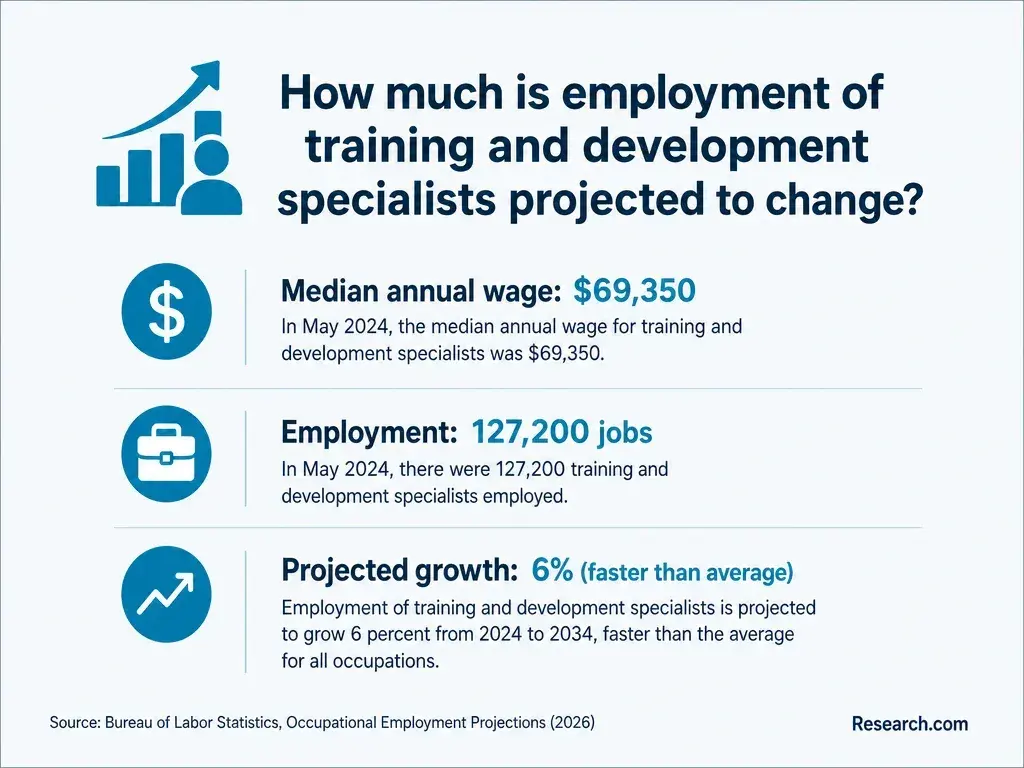
No occupation-wide salary figure can establish what graduates of a particular BS program will earn. For context, the U.S. Bureau of Labor Statistics reports a $75,940 median annual wage for human resources specialists in May 2025. That figure covers workers across experience levels and employers, not newly hired business graduates.
BLS projects 6% employment growth for human resources specialists from 2025 to 2035. A favorable occupational outlook may indicate opportunities, but it cannot verify a school's placement promise. Ask the program for outcomes specific to its business graduates, including the graduating cohort, response rate, definition of employment, and whether online students are included. When comparing American business schools offering online degree study, use consistently defined outcomes rather than treating a ranking or a career-services offer as proof of placement.
Do Business Administration Careers Require Licenses or Certifications?
Most general business roles do not require a license solely because someone holds a BS in business administration. Some target activities do have separate rules: CPA licensure is governed by state boards, and certain financial-services roles require applicable registration or licenses. Voluntary HR and project-management certifications have their own eligibility criteria. A concentration or accelerated course does not replace those requirements.
If a school suggests its degree prepares you for a credential, ask whether it promises only relevant instruction or claims to satisfy specific eligibility requirements. Verify the latter with the responsible licensing board or certifying organization. The same distinction applies when using an accelerated business college program guide: a shorter route to a degree does not shorten an external credential's experience or examination requirements.
Other Things You Should Know About Business Administration
Policies can change, but the effect on enrolled students depends on the written terms and applicable rules. Keep the policy for your entry term and ask which version governs your claim.
Do not rely on it when making an enrollment decision. Ask the school to identify the controlling written policy and confirm any individual exception in writing.
A program guarantee may not provide the remedy you expect. Ask about teach-out arrangements and contact your loan servicer or the relevant education agency to learn whether any separate relief applies to your circumstances.
Request the denial and policy basis in writing. Compare them with your records, then use the institution's stated appeal or complaint process before considering an external complaint route.
- Accreditation in the U.S. | ed.gov http://www.ed.gov/laws-and-policy/higher-education-laws-and-policy/college-accreditation/accreditation-in-the-us
- Eligibility Requirements | Federal Student Aid https://studentaid.gov/understand-aid/eligibility/requirements
- School-Determined Requirements | 2024-2025 Federal Student Aid Handbook https://fsapartners.ed.gov/knowledge-center/fsa-handbook/2024-2025/vol1/ch1-school-determined-requirements
- Academic Standards | Central Piedmont Community College https://www.cpcc.edu/admissions-financial-aid/financial-aid/academic-standards
- Business Administration, B.A. | Fresno Pacific University https://www.fresno.edu/undergraduate/program/business-administration-ba
- Registration, Enrollment, and Withdrawal - UNC Catalog https://catalog.unc.edu/policies-procedures/registration-enrollment-withdrawal/
- Registration Requirements | 26-27 Graduate School Bulletin https://graduateschool.bulletins.duke.edu/policies/academic/registration
- Earn your associate degree in business administration | Franklin University https://www.franklin.edu/degrees/associates/business-administration/general
- Academic Regulations - Northern Illinois University https://catalog.niu.edu/content.php