2027 How to Choose Between an MSW and a DSW

Co-Founder and Chief Data Scientist
Choosing between an MSW and a DSW is really a choice about the kind of social work career you want to build. An MSW is the standard graduate degree for becoming a licensed practitioner, moving into clinical roles, and working directly with clients, families, schools, hospitals, and community agencies. A DSW is a practice doctorate for experienced social workers who want to lead programs, shape policy, teach, consult, or solve complex organizational problems.
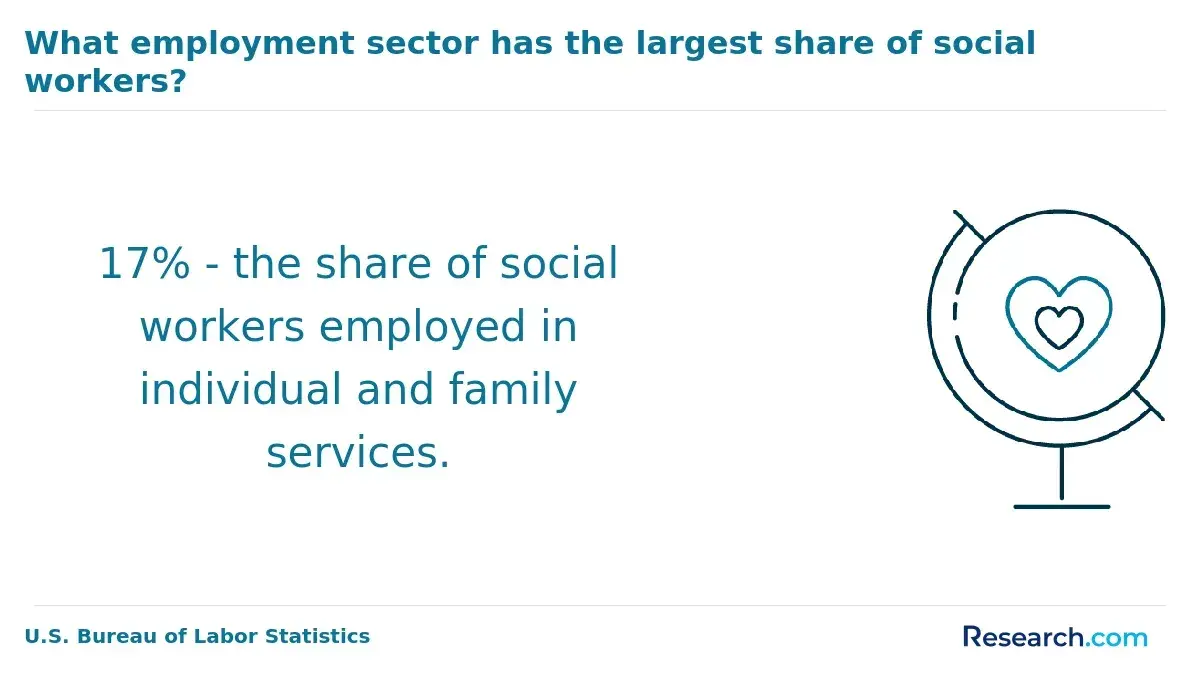
According to the U.S. Bureau of Labor Statistics (2025), more than 810,900 social workers were employed across the United States in 2024, serving in healthcare, education, and community settings. As demand continues across these areas, the right degree can affect licensure options, career mobility, salary potential, and how much time and money you invest in graduate education.
This guide compares the MSW and DSW in practical terms: what each degree is designed for, how long each takes, what admissions committees expect, which careers each can support, how online options differ, and when a DSW may or may not be worth pursuing after an MSW.
What are the benefits of pursuing MSW or DSW degrees?
- An MSW builds a solid foundation in clinical practice and social advocacy, preparing graduates for licensure and direct service roles in healthcare, education, or community agencies.
- A DSW focuses on advanced leadership, policy innovation, and research application, ideal for seasoned professionals seeking executive or academic positions.
- Both degrees offer distinct yet complementary pathways that enhance credibility, open new career opportunities, and deepen one’s ability to create lasting social change.
What is the main difference between an MSW and a DSW?
The main difference is level and purpose. The Master of Social Work is a professional graduate degree that prepares students for social work practice, including many clinical and community-based roles. The Doctor of Social Work is a practice doctorate intended for experienced social workers who want advanced leadership, teaching, consulting, policy, or high-level clinical practice responsibilities.
According to the Council on Social Work Education (CSWE, 2024), 303 accredited MSW programs reported a total enrollment of 83,610 students, reflecting continued national demand for graduate-level social work education. In comparison, practice doctorate programs such as the DSW enrolled an average of 109 students, emphasizing their more specialized, research-driven, and leadership-oriented focus.
| Degree | Best fit | Primary purpose | Typical outcome |
| MSW | Students entering professional social work or seeking clinical licensure | Build direct practice, assessment, intervention, advocacy, and fieldwork skills | Eligibility for many social work roles and, with state requirements met, clinical licensure pathways |
| DSW | Experienced MSW-level professionals | Develop advanced practice leadership, applied research, policy, teaching, and organizational change skills | Preparation for executive, academic, consulting, or advanced practice leadership roles |
An MSW is usually the better fit if your goal is to become a practicing social worker, qualify for licensure, or move into clinical or community service work. Core MSW training commonly includes:
- Clinical and direct practice preparation: Students learn assessment, intervention planning, counseling approaches, case management, and client advocacy.
- Human behavior and social systems: Coursework connects individual needs with family, community, institutional, and policy environments.
- Social policy and justice: Students examine public welfare systems, inequality, ethics, and program delivery.
- Supervised field education: Programs commonly include 900–1,200 supervised hours in applied settings.
- Licensure preparation: Graduates often use the MSW as the academic foundation for becoming Licensed Clinical Social Workers (LCSWs), depending on state rules.
A DSW is not simply “more MSW.” It is designed for social workers who already understand practice and want to influence systems, organizations, education, or specialized areas of care. DSW programs often emphasize:
- Advanced leadership: Students study administration, supervision, strategic planning, and organizational change.
- Clinical innovation: Coursework may deepen expertise in specialized interventions, complex cases, and practice improvement.
- Applied scholarship: Many programs use a capstone project instead of a traditional dissertation, focusing on a real practice, policy, or organizational problem.
- Teaching and training: Graduates may be prepared to teach MSW-level students or train practitioners in agency settings.
- Flexible doctoral access: Many working professionals consider online DSW programs because they need to balance doctoral study with full-time practice or leadership roles.
Which is better for career advancement — MSW or DSW?
Neither degree is automatically “better” for every social worker. The MSW is better for entering or advancing in licensed practice, clinical service, school social work, healthcare, child welfare, and community-based roles. The DSW is better for experienced professionals who want to move beyond direct service into executive leadership, teaching, consulting, policy development, or advanced program design.
For many people, the MSW produces the fastest career return because it is the degree most commonly tied to professional practice and clinical licensure pathways. MSW graduates often move into roles such as:
- Clinical Social Worker: Provides assessment, therapy, crisis intervention, and treatment planning in settings such as mental health agencies, hospitals, and outpatient programs.
- School Social Worker: Supports students, families, and educators by addressing barriers related to behavior, attendance, trauma, disability, housing, or family stress.
- Program Coordinator: Helps manage social service programs, supervise service delivery, track outcomes, and coordinate community partnerships.
- Case Manager: Connects clients to housing, healthcare, benefits, counseling, and other supports while monitoring progress toward service goals.
- Mid-career practitioner: Uses the MSW to qualify for more specialized, better-defined, or supervisory roles after gaining field experience.
The DSW becomes more valuable when your advancement goals are less about obtaining your first professional role and more about shaping practice at a higher level. DSW holders may pursue positions such as:
- Director of Social Services: Leads departments, budgets, compliance efforts, staffing plans, and service strategy across multiple programs.
- University Professor: Teaches social work courses, mentors graduate students, and contributes to practice-based scholarship.
- Policy Advisor: Develops, reviews, or evaluates social welfare policies for agencies, nonprofits, advocacy organizations, or government bodies.
- Clinical Administrator: Oversees clinical quality, supervision, interdisciplinary teams, and program improvement initiatives.
- Thought leader: Graduates from the best DSW programs may publish, present, or lead discussions on practice innovation and systems change.
A practical way to decide is to ask what is blocking your next step. If the barrier is licensure eligibility or access to clinical roles, the MSW is usually the necessary credential. If the barrier is credibility for senior leadership, teaching, consulting, or organizational change, a DSW may be the stronger advancement tool.
How long does it take to complete an MSW vs. a DSW program?
An MSW usually takes less time than a DSW. Full-time MSW students typically graduate in two years, while advanced-standing students with a BSW may finish in one. A DSW typically takes three to four years, although program format, enrollment pace, capstone expectations, and work responsibilities can affect completion time.
The MSW timeline depends heavily on whether you enter a traditional or advanced-standing track:
- Traditional MSW: Around 60 credit hours completed over 24 months.
- Advanced Standing: Reduces coursework to 30–39 credits for BSW holders.
- Online flexibility: The cheapest online MSW programs may offer asynchronous coursework for students who need to continue working.
- Field placement: 900 to 1,200 hours of supervised practice required.
- Accelerated tracks: Some universities offer 12 to 18-month completion options.
The DSW timeline is longer because students are working at the doctoral level and are often completing applied research or a capstone while maintaining professional responsibilities. Common DSW features include:
- Credit hours: Usually between 42 and 60 credits beyond the MSW.
- Applied research: Students complete a capstone based on organizational impact or practice improvement.
- Cohort model: Many programs use a structured peer group to support collaboration and accountability.
- Flexible scheduling: Online DSW programs may offer weekend, evening, or low-residency formats.
- Executive tracks: Some programs are designed for social work leaders balancing full-time careers.
Time should be evaluated alongside opportunity cost. An MSW may require intensive field hours that affect work schedules. A DSW may allow continued employment but demands sustained writing, leadership projects, and doctoral-level analysis over several years.
What are the admission requirements for MSW and DSW programs?
MSW admissions focus on readiness for graduate social work education. DSW admissions focus on advanced professional experience, leadership potential, and the ability to complete doctoral-level applied scholarship. In short, MSW programs admit future practitioners, while DSW programs typically admit experienced practitioners preparing for advanced roles.
MSW admission requirements commonly include:
- Bachelor’s Degree: From an accredited institution, with a BSW preferred for advanced-standing admission.
- GPA Standards: Typically 3.0 or higher.
- Recommendation Letters: Often from professors, supervisors, volunteer coordinators, or professionals who can speak to academic ability and service readiness.
- Statement of Purpose: Explains why the applicant wants to enter social work, which populations or issues interest them, and how the program fits their goals.
- Field readiness: Some online MSW programs assess prior volunteer, human service, or community experience.
DSW applicants are usually expected to show that they already have a strong foundation in social work practice. Common requirements include:
- MSW Degree: From a CSWE-accredited program.
- Professional Licensure: Most applicants hold LCSW or equivalent.
- Minimum Experience: 3 to 5 years of post-MSW practice.
- Research Proposal: Required for some universities, especially when the program wants to assess the applicant’s capstone direction or scholarly interests.
- Writing Sample: Demonstrates whether the applicant can analyze practice problems, use evidence, and communicate at a doctoral level.
Applicants should also look beyond minimum requirements. For MSW programs, confirm whether the school supports field placements in your area and whether its accreditation aligns with your licensure goals. For DSW programs, review faculty expertise, capstone expectations, residency requirements, and whether the curriculum matches your leadership or teaching goals.
What career paths can you pursue with an MSW compared to a DSW?
An MSW most often leads to direct practice, clinical practice, case management, school-based services, healthcare social work, and community program roles. A DSW is more commonly used to pursue senior leadership, applied research, higher education, consulting, policy reform, and high-level program evaluation.
MSW graduates often work close to clients and communities. Their roles may include:
- Medical Social Worker: Supports patients and families in hospitals, clinics, hospice, rehabilitation, or other healthcare settings.
- Child Welfare Specialist: Works with children, parents, courts, schools, and agencies to promote safety and family stability.
- Mental Health Therapist: Provides counseling, assessment, treatment planning, and crisis support, subject to state licensure requirements.
- Probation Officer: Works within justice systems to support rehabilitation, compliance, and community reintegration.
- Community Organizer: Builds coalitions, mobilizes advocacy, and works on issues such as housing, public health, food access, and neighborhood services.
DSW graduates are more likely to move into roles that affect programs, institutions, policy, or the profession itself. Possible career paths include:
- Chief Clinical Officer: Oversees clinical strategy, quality assurance, supervision, and treatment models across facilities or service lines.
- Research Director: Leads data-driven social policy analysis, program assessment, or applied practice research.
- Professor of Social Work: Educates and mentors graduate students while contributing to curriculum, scholarship, and professional training.
- Consultant: Advises agencies, nonprofits, schools, or healthcare organizations on equity, ethics, trauma-informed care, compliance, or program improvement.
- Program Evaluator: Measures the outcomes of social initiatives and recommends improvements based on evidence and stakeholder needs.
The overlap matters. An MSW holder can still become a supervisor, manager, private practitioner, or agency leader with experience and licensure. A DSW does not replace professional judgment, management experience, or state credentialing. It is most useful when paired with a clear career direction that requires advanced authority or specialized expertise.
How much do MSW and DSW graduates earn?
Social work salaries vary widely by role, setting, state, licensure, experience, and employer type. According to the U.S. Bureau of Labor Statistics (2024), the median annual wage for social workers was about $61,330, reflecting a broad range of professional roles across healthcare, education, and community services.
Education can influence earning potential, but it does not guarantee a specific salary. ZipRecruiter (2025) data shows that the average Master of Social Work (MSW) salary is around $88,723 per year, while the average Doctor of Social Work (DSW) salary can reach as high as $112,500 annually. These figures should be read as broad indicators, not promises, because compensation depends heavily on job title, responsibility level, region, licensure, and sector.
MSW graduates often earn stable incomes through clinical practice, case management, healthcare roles, school systems, nonprofits, government agencies, or administration. Examples include:
- Healthcare Social Worker: Around $66,000 annually, focusing on patient support, care coordination, and hospital discharge planning.
- School Social Worker: Typically $60,000, addressing student well-being, family outreach, crisis response, and school-community coordination.
- Clinical Counselor: Average of $70,000 in private or outpatient practice.
- Geographic impact: The highest paying social work jobs by state often include California, New York, and Massachusetts due to cost of living and demand.
- Experience bonus: Senior MSWs or clinical supervisors can exceed $80,000 in metropolitan areas.
DSW graduates often seek roles with broader scope, such as executive leadership, academic appointments, policy work, or specialized consulting. These positions may pay more because they involve organizational responsibility, advanced expertise, budget authority, or institutional strategy. Examples include:
- University Faculty: Earns between $90,000–$110,000 annually, depending on tenure and research contributions.
- Executive Director: Typically $100,000–$130,000 in large nonprofit or healthcare organizations.
- Policy Advisor: Ranges from $95,000–$120,000, influencing government or agency reform.
- Clinical Director: Around $105,000, overseeing multidisciplinary behavioral health teams.
- Private Consultant: May exceed $130,000 when advising on program development or clinical training.
Before choosing a degree based on salary, compare tuition, debt, lost work time, licensure costs, and the salary range for the exact roles you want in your state. A lower-cost MSW can be a strong investment for licensed practice, while a DSW may pay off best when it directly supports a move into leadership, teaching, consulting, or specialized administration.
Is a DSW worth it after earning an MSW?
A DSW can be worth it after an MSW if it clearly supports your next professional goal. It is most valuable for social workers who want senior leadership, teaching, consulting, policy influence, program evaluation, or advanced clinical authority. It may not be worth the cost and time if your main goal is to provide direct clinical services and you can already do that with an MSW, supervised experience, and the appropriate license.
Remaining at the MSW level can be the more practical choice for professionals who want strong practice credentials without the added commitment of doctoral study. The MSW can support:
- Clinical autonomy: LCSWs can maintain independent private practices, depending on state rules and scope of practice.
- Strong job growth: 6% projected increase from 20024 to 2034 (U.S. BLS, 2025).
- Career satisfaction: Many professionals value the direct impact of working with clients, families, and communities.
- Cost efficiency: MSW programs generally require less time and tuition than doctoral programs.
- Accessible entry: Online and flexible MSW options can make graduate education more manageable for working students.
The DSW is more compelling when your goals extend beyond individual practice. It may be worth considering if you want:
- Organizational leadership: Preparation for executive roles that involve staffing, budgets, compliance, quality improvement, and strategic planning.
- Educational authority: Stronger preparation to teach, train, mentor, or develop curriculum in social work settings.
- Higher pay potential: Top leadership, consulting, and academic positions frequently surpass six figures.
- Scholarly recognition: Opportunities to publish, present, and contribute to professional conversations about practice innovation.
- Professional prestige: A doctoral credential can signal advanced commitment, specialized expertise, and readiness for systems-level work.
A useful test is to identify three jobs you would pursue after the DSW and check whether the degree is required, preferred, or simply nice to have. If most target roles value experience and licensure more than a doctorate, the DSW may be optional. If the roles consistently call for doctoral-level preparation, teaching experience, applied research, or senior leadership expertise, the degree may be a strategic investment.
Can you get a DSW online, and how does it compare to an online MSW?
Yes. Both MSW and DSW programs are available online, but they serve different students. Online MSW programs are designed for students preparing for professional practice and, often, licensure pathways. Online DSW programs are designed for experienced practitioners who already hold an MSW and want advanced leadership, teaching, consulting, policy, or applied research roles.
Technology has made remote graduate education more accessible, but students should still evaluate accreditation, field placement support, residency requirements, faculty access, and state licensure alignment. According to the Pew Research Center (2021), as of February that year, 91% of U.S. adults reported owning a smartphone or having access to the internet, creating a digital environment where graduate-level education can thrive regardless of location.
Online MSW programs usually mirror on-campus curricula while giving students more scheduling flexibility. Common features include:
- Accredited learning: Programs may meet CSWE standards needed for many licensure pathways.
- Interactive tools: Courses may combine live class meetings, recorded modules, discussion boards, simulations, and digital case materials.
- Field placement support: Schools may help coordinate local internships near students, although placement availability varies.
- Part-time options: Flexible pacing can help students who work or have caregiving responsibilities.
- Accessible tuition: Many online MSW programs offer scholarships and grants, though total cost should be compared carefully.
Online DSW programs usually assume students are already practicing professionals. They often focus less on entry-level field training and more on applied leadership, systems improvement, and doctoral projects. Common features include:
- Hybrid residencies: Some programs include short on-campus intensives for networking, advising, presentations, or skill development.
- Capstone delivery: Projects often address real-world policy, clinical, administrative, or organizational challenges.
- Faculty mentorship: Students may work closely with senior faculty on applied scholarship and professional direction.
- Global collaboration: Online cohorts can connect practitioners across states and countries.
- Flexible schedule: Programs are often structured for professionals in full-time leadership or practice positions.
| Factor | Online MSW | Online DSW |
| Typical student | Future or early-career social worker | Experienced MSW-level practitioner |
| Main focus | Practice preparation, field education, and licensure readiness | Leadership, applied research, teaching, policy, and systems change |
| Major requirement to verify | CSWE accreditation and field placement support | Capstone structure, faculty fit, residencies, and career relevance |
| Best for | Students seeking entry or advancement in professional social work practice | Professionals aiming for executive, academic, consulting, or advanced practice leadership roles |
What skills do you gain from an MSW vs. a DSW program?
An MSW builds the core skills needed to assess needs, support clients, deliver interventions, navigate systems, and practice ethically. A DSW builds on those abilities by developing advanced leadership, applied research, teaching, policy, and organizational change skills. The difference is not just difficulty; it is scope.
MSW graduates typically develop practice-ready competencies such as:
- Counseling techniques: Use of cognitive-behavioral, trauma-informed, strengths-based, and other evidence-informed approaches.
- Cultural competence: Ability to work effectively and respectfully with diverse populations, identities, communities, and lived experiences.
- Program design: Skills for creating, managing, and improving social service initiatives.
- Crisis intervention: Capacity to respond to emergencies, safety concerns, grief, trauma, and acute client distress.
- Ethical decision-making: Application of professional codes, boundaries, confidentiality rules, and mandated responsibilities in complex cases.
DSW programs deepen skills for professionals who need to guide teams, evaluate systems, train others, and improve practice at scale. Doctoral-level skill areas may include:
- Strategic planning: Designing long-term programs, service models, and organizational goals.
- Advanced research: Evaluating interventions through data analytics, evidence review, and applied inquiry.
- Organizational ethics: Building equitable workplace policies and improving decision-making across agencies or institutions.
- Teaching excellence: Developing graduate-level curriculum, training practitioners, and mentoring future social workers.
- Advocacy and policy: Influencing state and national legislation, agency standards, and systems-level reforms.
The MSW is about becoming an effective practitioner. The DSW is about becoming a practitioner-leader who can improve programs, train others, evaluate outcomes, and influence how services are delivered.
How do MSW and DSW degrees affect licensure and clinical practice?
The MSW is the key academic credential for most clinical social work licensure pathways. The DSW can strengthen professional authority and leadership credibility, but it usually does not replace the MSW or remove state requirements for supervised experience, examinations, and continuing education. Licensure rules vary by state, so students should always verify requirements with the appropriate state board before enrolling.
The MSW commonly supports licensure steps such as:
- LMSW Licensure: Entry-level credential after MSW completion in many jurisdictions.
- LCSW Eligibility: Advanced clinical license following supervised hours and other state requirements.
- Interstate Recognition: Most U.S. states accept CSWE-accredited MSWs, although license transfer rules differ.
- Supervision Path: Licensed and experienced graduates may eventually supervise future clinicians, depending on state regulations.
- Continuing Education: Ongoing education is typically required for maintaining state licensure.
The DSW is not usually required for clinical licensure, but it can enhance advanced practice and leadership roles in clinical settings. It may support:
- Leadership credentials: Stronger credibility for executive, director, and senior administrative positions.
- Educational licensure: Preparation to teach accredited courses or train social work professionals, depending on institutional requirements.
- Clinical oversight: Capacity to direct multidisciplinary teams, improve care models, and guide quality improvement.
- Policy advocacy: Stronger preparation to influence practice regulations, agency standards, and systemic reform.
- Research contribution: Ability to shape evidence-based care through applied scholarship, program evaluation, and practice innovation.
If your main goal is to become a licensed clinician, focus first on a CSWE-accredited MSW and your state’s post-graduate supervision and exam rules. If you are already licensed or experienced and want broader influence in administration, education, policy, or advanced practice leadership, a DSW may add value beyond licensure.
Other Things You Should Know About an MSW and a DSW Degree
In 2027, MSW graduates typically find entry-level roles in social work, while DSW graduates are positioned for leadership, academic, and advanced clinical roles. Understanding these career pathways is essential in deciding which degree aligns better with your career goals.
Yes, many accredited programs for both degrees are offered fully online or in hybrid formats while meeting professional standards. For example, online MSW programs and online DSW programs follow the same rigorous curricula and field-practice requirements as on-campus versions.
In 2027, DSW programs typically require applicants to hold an MSW from an accredited institution, have relevant work experience in social work, and provide professional references. Some programs may also require a personal statement and a resume detailing professional achievements.
Most CSWE-accredited MSW programs require at least 900 hours of supervised field education, and many require more in advanced standing or specialized tracks. These placements are completed in agencies, hospitals, schools, or community settings and are a key requirement for clinical licensure preparation.
References
- CSWE (2024). 2022–2023 The State of Social Work Education in the United States. Retrieved from https://www.cswe.org/getattachment/61b4f594-6109-43f7-9acd-49b6e9cd5131/cswe_2022-2023-summary-of-the-us-annual-survey-of-social-work-programs.pdf/
- Pew Research Center (2021). Home broadband adoption, computer ownership vary by race, ethnicity in the U.S. Retrieved from https://www.pewresearch.org/short-reads/2021/07/16/home-broadband-adoption-computer-ownership-vary-by-race-ethnicity-in-the-u-s/
- U.S. BLS (2025). Social Workers. Retrieved from https://www.bls.gov/ooh/community-and-social-service/social-workers.htm
- ZipRecruiter (2025). Doctorate Social Work Salary. Retrieved from https://www.ziprecruiter.com/Salaries/Doctorate-Social-Work-Salary
- ZipRecruiter (2025). Master Social Work Salary. Retrieved from https://www.ziprecruiter.com/Salaries/Master-Social-Work-Salary#Yearly