2027 Choosing a BS in Business Administration for Business Roles in Franchise Networks
Audited and Verified:
Our Editorial and Data Verification Process
Research.com uses government datasets, official education statistics and primary institutional information to support its career and degree guides. Our review process checks factual accuracy, occupational definitions, source dates and the requirements associated with the credentials discussed.
How This Article Was Fact-Checked
Our editorial team verifies salary estimates, employment projections, education requirements and program information against original data providers and official organizations. Salary figures are checked against the relevant occupational definitions and reporting periods. Information about licensure, accreditation and required in-person training is reviewed separately.
Fact-checked and verified on:

Co-Founder and Chief Data Scientist
Franchise networks need people who can support individual locations while working within shared brand standards. If you are considering a BS in Business Administration for that work, the key decision is whether a program builds useful skills in operations, finance, marketing, and coordination - and gives you a way to demonstrate them.
This guide is for prospective students, current franchise employees, and career changers. It explains which roles are realistic at graduation, what to compare across programs, and when experience or targeted training may be a more direct route.
Key Things You Should Know
- A BS in Business Administration can prepare you for franchise operations, field support, and business-function roles, but a degree alone does not qualify you to manage multiple locations.
- Compare programs by operations and accounting coursework, applied projects, relevant work access, and total cost - not by whether they advertise a "franchise" focus.
- The May 2025 median wage for general and operations managers was $105,770, but that occupation-wide figure is not an expected starting salary for a new graduate.
What is a BS in Business Administration for Franchise Careers?
A BS in Business Administration is an undergraduate degree covering how organizations manage money, people, customers, and operations. Franchise work gives those subjects a particular setting: a franchisor develops and supports a brand system, while a franchisee operates a business under a franchise agreement. Some franchisees run one location; others operate several.
There is no need for a degree to have "franchise" in its title to be relevant. A strong general business program, paired with experience at a franchisor or franchisee, may be more useful than a narrow elective with little applied work. A BS, BBA, or management degree may cover similar ground, but the actual curriculum matters more than the label.
If you already work in a network, flexible online study for business administration career growth may let you connect coursework to responsibilities you already hold; confirm that your employer and school permit any proposed workplace project.
What careers can a business administration graduate pursue in franchise networks?
Start with the employer and the work, not the word "manager" in a job posting. Franchisors, franchisees, and multi-unit operators hire for different responsibilities. The comparison below shows plausible routes, not positions awarded automatically with a degree.
| Role or route | Typical work | What usually strengthens an application |
| Operations or field-support coordinator | Track location needs, organize training or visits, and follow up on operating standards | Location experience, spreadsheets, documentation, and communication |
| Franchise development or marketing coordinator | Support inquiries, campaigns, reporting, or approved local marketing | Sales support, marketing projects, and careful handling of prospect data |
| Location or multi-unit manager | Oversee staffing, service, costs, and performance across assigned operations | Demonstrated supervisory and operating results, often gained before or alongside the degree |
| Corporate functional specialist | Work in HR, purchasing, analytics, finance, or training for a network | Function-specific coursework and experience; some jobs require specialized credentials |
An employee moving from location operations into field support can document brand-standard audits, training, and process improvements. A career changer may need an entry-level coordinator role first. For an HR-specific route, colleges accepting credits toward human resources study offer a more focused comparison than assuming every general business curriculum provides the same HR preparation. Only the receiving college can determine how prior credits apply.
What coursework prepares students for franchise management and operations?
The most useful courses connect network-wide rules to decisions made at individual locations. Accounting and managerial finance help students read operating statements and distinguish revenue from profit; marketing addresses customer experience and the limits of local campaigns; operations and supply chain cover inventory, purchasing, quality, and process consistency. Organizational behavior, HR, business law, statistics, and spreadsheets support staffing, communication, and performance review.
Look beyond course names. An assignment that compares staffing needs with service demand, or evaluates an inventory process using appropriately obtained data, is stronger evidence of readiness than a list of classes alone. Ask whether relevant electives are offered often enough to fit your graduation plan and whether a claimed concentration appears on the official degree record.
If procurement or distribution interests you more than location operations, compare the business curriculum with tuition and time comparisons for supply chain students; a specialized program may provide more functional depth, though transfer and remaining requirements determine its value to you.
Online study can make a degree feasible for someone working at a franchise location, particularly if commuting conflicts with shifts. Campus study may make scheduled collaboration, employer visits, and local recruiting easier. Neither format guarantees access to a franchise internship or a suitable capstone.
Check the weekly reality before choosing: required live meetings, group-project schedules, exam proctoring, internship hours, and any campus visits. Ask whether courses needed for your concentration run online in the terms you need. Short-term classes toward a bachelor's degree may shorten the calendar, but condensed deadlines can be difficult alongside peak trading periods; they do not necessarily reduce total tuition or workload. Choose the format in which you can reliably complete applied work, not simply the one advertised as most flexible.
First, verify that the institution holds recognized institutional accreditation. That is distinct from business-school or programmatic accreditation. AACSB, ACBSP, and IACBE accredit within their respective scopes; a school's claim does not establish that its particular BS in Business Administration is covered. Check the accreditor's listing and the institution's stated scope rather than relying on a program-page logo.
Accreditation is an important screening factor, not evidence that graduates obtain franchise jobs. Also compare the curriculum, faculty access, career support, and whether the school can explain outcomes for the students and program you are considering. For online options, accredited online business administration study with aid eligibility can be a starting comparison; confirm each school's current eligibility and your own financial-aid status directly before budgeting.
Requirements depend on whether you apply as a first-year student, transfer student, or returning student. Schools commonly request prior academic transcripts, and some business majors have separate entry or progression requirements. Mathematics, statistics, accounting, or economics may be prerequisites, recommended preparation, or courses completed after admission - check the specific catalog rather than assuming they must all be finished first.
If you have college credit, request an official evaluation showing which courses satisfy general education, the business core, and any concentration. Accepted elective credit does not necessarily replace a required accounting or operations course. Ask admissions about application requirements and deadlines; fee-free online university applications may reduce the cost of comparing options, but an application-fee policy says nothing by itself about program fit or total tuition.
A full-time bachelor's pathway is often planned across four academic years, but a transfer student's remaining time depends on the official degree audit, required course sequence, and enrollment pace. Do not estimate completion from the number of credits a school accepts alone: credits must also satisfy the right requirements, and schools may require courses taken through the awarding institution.
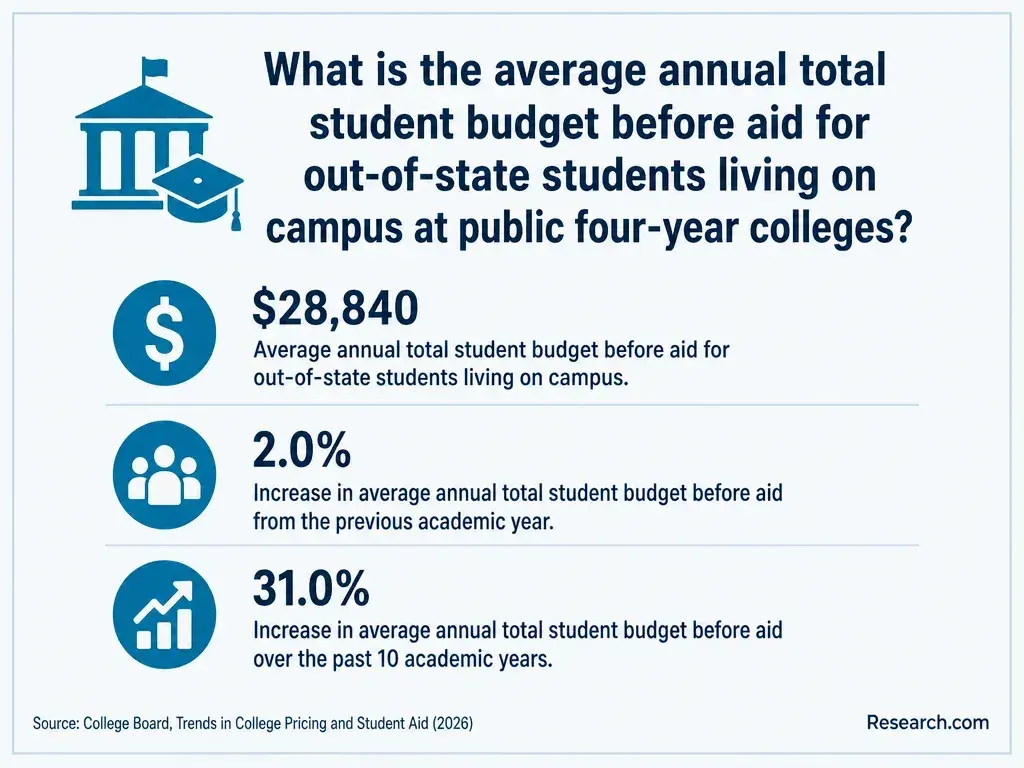
For a useful cost comparison, obtain each school's current tuition and mandatory fees, then add books, software, travel or proctoring costs, and the cost of any extra terms. Compare aid offers and borrowing separately from the advertised price. Compare the least expensive business administration schools only after checking how many credits each would still require from you. A lower per-credit price can be outweighed by repeated coursework or a delayed graduation date.
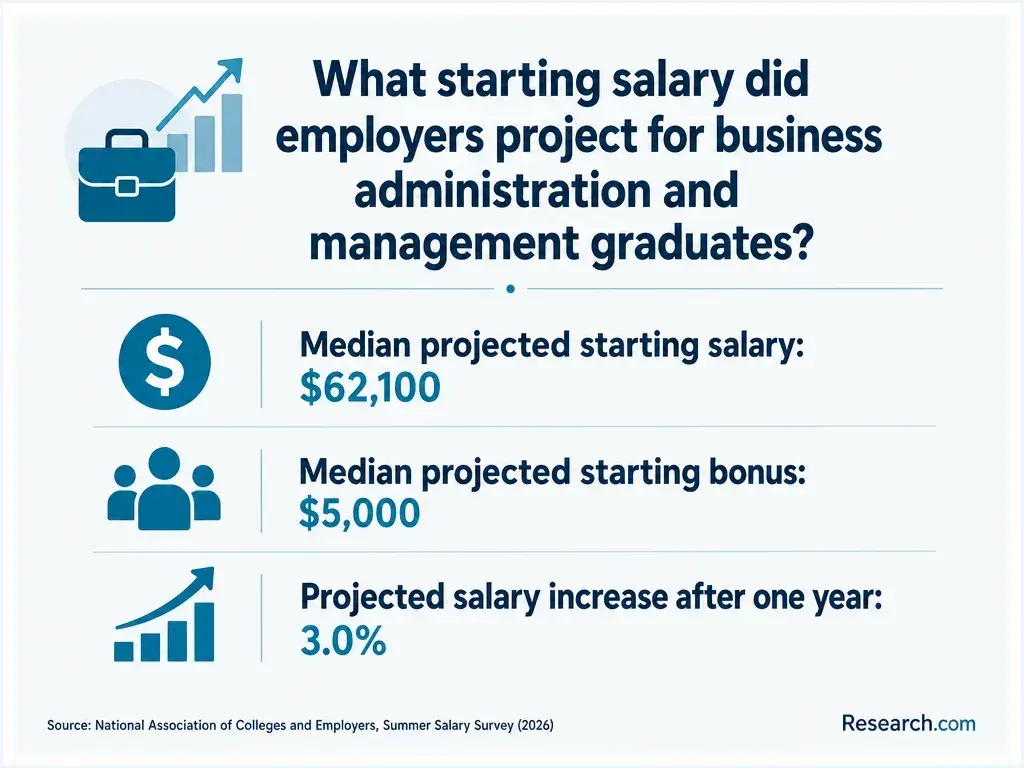
There is no single salary for a "franchise business graduate." Pay depends on the occupation, employer, location, responsibilities, and experience. The U.S. Bureau of Labor Statistics reports a $105,770 median annual wage for general and operations managers in May 2025. That is an occupation-wide median covering experienced workers across industries - not a starting wage for a new BS graduate or a franchise-specific pay figure.
For an entry-level comparison, use actual postings for coordinator or specialist jobs in your target market, including their required experience and compensation structure. Compare those opportunities with the cost of finishing school rather than treating a management median as a return-on-investment forecast. Resources that compare cost-to-finish for shorter business administration programs can help frame the education side of that calculation, but your credit evaluation and financial-aid offer remain decisive.
Franchise networks do not correspond to one federal occupational category, so no single national growth rate describes all their jobs. The outlook depends on the function you pursue. As one example, the Bureau of Labor Statistics projects 18% U.S. employment growth for logisticians from 2025 to 2035. That supports exploring supply-chain work where it fits your interests; it does not predict hiring at a particular franchise brand or guarantee an opening for a new graduate.
Read postings from franchisors, franchisees, and suppliers separately. Note whether they seek location experience, travel for field support, analytical tools, or supervisory results. If those postings consistently emphasize distribution and inventory rather than broad operations, fast undergraduate routes into supply chain management may be worth comparing with a general business degree. Verify the courses and time remaining before switching paths.
Which certifications or professional standards benefit franchise professionals?
A voluntary credential can complement, but does not replace, evidence that you can perform the job. The International Franchise Association's Certified Franchise Executive designation is intended for franchise professionals; check its current eligibility, coursework, and assessment requirements before treating it as an immediate postgraduation option. Food-service safety credentials may matter for applicable restaurant roles, with requirements varying by jurisdiction and employer.
For someone already employed in a network, employer training on operating standards, systems, and compliance may be more immediately useful than an additional academic credential. If the obstacle is a bachelor's requirement for advancement, faster-paced business degree study options address a different need than a professional certification. Ask the target employer which qualification it recognizes, then weigh that answer against the time, expense, and experience each path requires.
Other Things You Should Know About Business Administration
A degree is not generally a prerequisite to buying a franchise. Opening one is a separate investment decision involving the franchise agreement, required funding, operating obligations, and professional review of the franchise disclosure document.
Possibly, if the college offers an approved prior-learning or work-based credit process. Employment alone does not award credit; ask the school what evidence and assessment it requires.
Some field-support and development roles involve location visits, while other corporate jobs may be primarily office-based or remote. Confirm the territory, travel frequency, and schedule in the specific posting.
Only with appropriate permission. Follow your employer's confidentiality rules and the school's requirements; use public, simulated, or properly anonymized information when you cannot disclose operating data.
- A Consumer's Guide to Buying a Franchise | Federal Trade Commission https://www.ftc.gov/business-guidance/resources/consumers-guide-buying-franchise
- The Value of Accreditation | AACSB https://www.aacsb.edu/educators/accreditation/value-of-accreditation
- Top Excel Skills Employers Look For in Business Graduates | SCU https://www.scu.edu/business/blog/business-concepts/excel-skills/
- What is a business administration degree? | Northwest Media Center https://www.nwmissouri.edu/media/news/2025/07/what-is-a-business-administration-degree.htm
- The Franchise Business Model: Everything You Need to Know | Tulane University School of Professional Advancement https://sopa.tulane.edu/blog/franchise-business-model-everything-you-need-know
- Finance Courses & Operations Skills for Business Careers | Edgewood College https://online.edgewood.edu/blog/finance-and-operations-courses-business-careers/
- 11 Types of Business Degrees You Can Pursue in 2026 | University of North Dakota https://und.edu/blog/types-of-business-degrees.html
- Franchise Manager Job Description [Updated for 2026] | indeed.com https://www.indeed.com/hire/job-description/franchise-manager
- The Differences Between Single-Unit and Multi-Unit Franchise Ownership | MSA Worldwide https://msaworldwide.com/basics-of-franchising/the-differences-between-single-unit-and-multi-unit-franchise-ownership/