2027 Is an Online BS in Business Administration the Right Next Step for Training Coordinators?
Audited and Verified:
Our Editorial and Data Verification Process
Research.com uses government datasets, official education statistics and primary institutional information to support its career and degree guides. Our review process checks factual accuracy, occupational definitions, source dates and the requirements associated with the credentials discussed.
How This Article Was Fact-Checked
Our editorial team verifies salary estimates, employment projections, education requirements and program information against original data providers and official organizations. Salary figures are checked against the relevant occupational definitions and reporting periods. Information about licensure, accreditation and required in-person training is reviewed separately.
Fact-checked and verified on:

Co-Founder and Chief Data Scientist
Training coordinators already know how to organize learning. Moving into training strategy, HR operations, or broader business roles can require a different set of skills, and sometimes a bachelor's degree.
An online BS in Business Administration may help, but its value depends on the role you want, the experience you already have, and what finishing the degree would cost. This guide connects coursework to training work, compares alternatives, and shows what to verify before enrolling so you can choose a practical next step rather than a credential based on its title alone.
Key Things You Should Know
- An online BS in Business Administration is most useful when a training coordinator needs a bachelor's degree for advancement and wants broader budgeting, operations, analytics, or management preparation, not just stronger instructional-design skills.
- Training and development specialists had a $69,280 median annual wage in May 2025, and U.S. employment is projected to grow 11% from 2025 to 2035. Those occupation-wide figures are not a predicted salary or job offer for degree holders.
- Before enrolling, compare an official transfer-credit evaluation, remaining degree cost, required live attendance, and relevant projects against a targeted HR, instructional-design, or employer-training option.
Is an online BS in Business Administration right for training coordinators?
It can be the right next step if a bachelor's degree is limiting your opportunities and your target role requires business judgment beyond scheduling courses or administering a learning platform.
Training coordinators may already manage registrations, vendors, communications, records, and deadlines. A business degree can help them explain training costs, improve processes, analyze results, and work with HR and operational leaders.
Start with job postings for the role you actually want. If they call for a bachelor's degree plus experience coordinating programs, a flexible degree-completion path may address a real gap.
If they emphasize instructional design, facilitation, or a particular learning technology, a focused course and a strong work sample may be more direct. If your goal is a dedicated HR position, compare HR curricula and career directions before choosing a broad business major.
A BS is not automatically preferable to a BBA or a specialized bachelor's degree. Compare required courses and applied work, not labels. Nor does completing any of these degrees by itself qualify you to manage a team: employers will still assess your responsibility, results, and ability to lead people.
What careers can training coordinators pursue with a business administration degree?
The most plausible next move builds on work you can already document. The table distinguishes adjacent roles from transitions that usually require additional functional experience; job titles and requirements vary by employer:
| Possible direction | What carries over from training coordination | What else to demonstrate |
| Training and development specialist | Program scheduling, learner support, and training records | Needs assessment, instructional decisions, and evaluation |
| HR specialist or HR operations role | Onboarding support and employee communication | HR processes, employment-law awareness, and confidential record handling |
| Project or operations coordinator | Timelines, stakeholder follow-up, and vendor coordination | Budgets, risk tracking, process measures, and project outcomes |
| Training manager | Knowledge of delivery and program logistics | Staff leadership, strategy, resource decisions, and a record of results |
For a project-focused move, compare business coursework with project management undergraduate transfer pathways. A coordinator who can show a completed schedule, documented risks, stakeholder updates, and lessons learned has stronger evidence than someone relying on a degree title alone.
Moving into a specialist or coordinator role is generally a more defensible immediate target than applying directly for management. Look for opportunities at work to own a defined improvement project, with your supervisor's approval, and record what you were responsible for without disclosing employee information.
What does an online business administration bachelor's degree teach?
A business administration bachelor's typically combines general education with accounting, finance, marketing, management, operations, economics, and quantitative coursework.
For training coordinators, the payoff is learning to connect a training program to organizational decisions: What does it cost? Which operational problem is it meant to address? What evidence would show whether it helped?
Useful assignments might include building a budget from clearly stated assumptions, mapping an onboarding process, or interpreting aggregate training measures.
Such classroom work demonstrates analysis, not proven workplace impact. If HR is your goal, check the depth of courses covering staffing, employee relations, and HR systems. If the program advertises an HR concentration, confirm that it is an official curriculum designation rather than a few electives.
Many business programs and online universities with no application charge offer projects, simulations, or capstones, but their requirements differ. Ask whether you can propose a training-related project, who approves it, and whether your employer permits the use of any workplace information. Do not upload identifiable learner or employee records to a course platform without authorization.
Online study can remove a commute, which matters when training sessions and enrollment deadlines already shape your workday. It does not necessarily remove scheduled obligations.
Some courses have live meetings, timed exams, team presentations, or fixed weekly deadlines; campus programs may offer easier face-to-face access to faculty and local recruiting.
Compare formats using your actual work calendar. Ask for recent syllabi from required courses, not just a general promise of flexibility. Check whether exams require proctoring, whether group meetings can occur outside work hours, whether any visit or internship is required, and how often required courses run. An asynchronous lecture is of limited help if a mandatory team meeting conflicts with the training sessions you coordinate.
Use online business degree rankings for US college applicants to identify programs to investigate, then confirm each program's current scheduling and student-support policies directly. Delivery format alone says little about whether its assignments fit your job.
Requirements depend on the institution and whether you apply as a first-year, transfer, returning, or second-degree student. Schools commonly request records of prior education and may set GPA or prerequisite rules. Admission to the university, admission to the business major, and application of transfer credits toward graduation are separate decisions.
For a working coordinator with prior college study, request an official evaluation showing where accepted credits apply: general education, business core, electives, or a concentration.
Ask whether accounting, mathematics, economics, or statistics must be completed before particular upper-level courses. If you already hold a bachelor's degree, ask about second-degree policies before assuming you need another full undergraduate program.
Review what to check before applying for a business administration degree, then obtain requirements for your intended enrollment term from the school. A preliminary credit estimate is not a final degree audit.
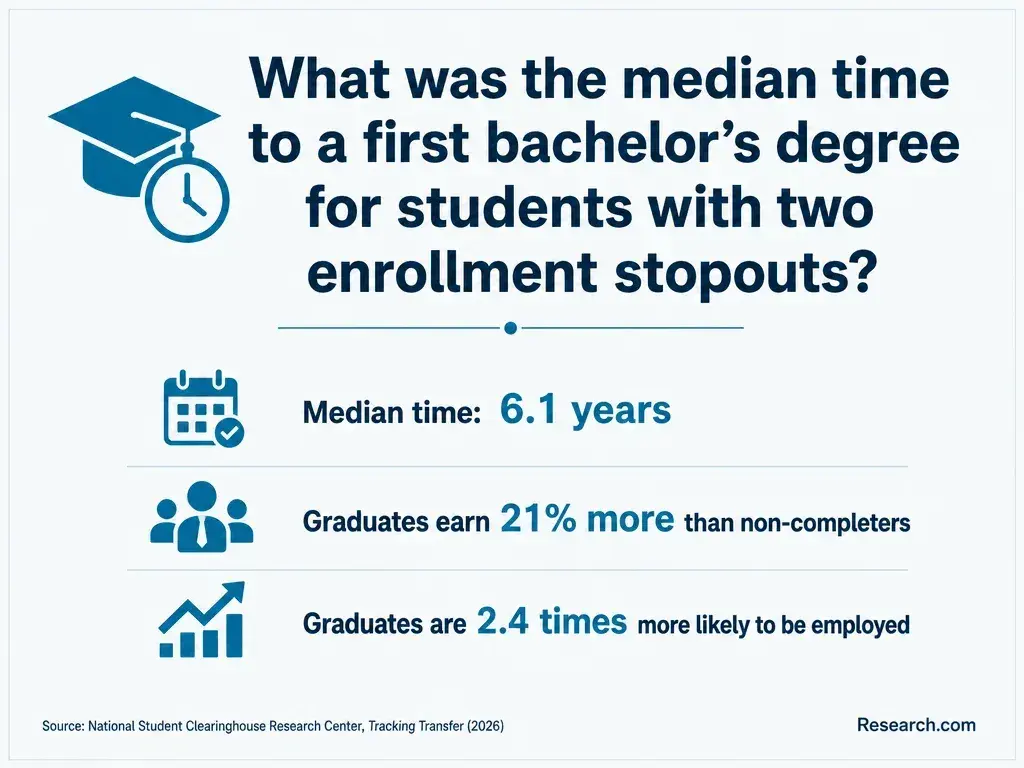
Completion time depends less on the word "online" than on applicable prior credits, remaining requirements, course sequence, and how many courses you can sustain while working. A fast-paced calendar may shorten the time between terms while leaving the same coursework - and the same pressure during busy training periods.
Ask an adviser to map your remaining courses by term, including prerequisites, required electives, and any capstone. Then compare that map with your organization's busiest onboarding or compliance-training cycles.
If a leadership-focused alternative appears faster, evaluate shorter study timelines for leadership bachelor's students against your transfer evaluation and career goal. A shorter advertised timeline is not a personal graduation guarantee.
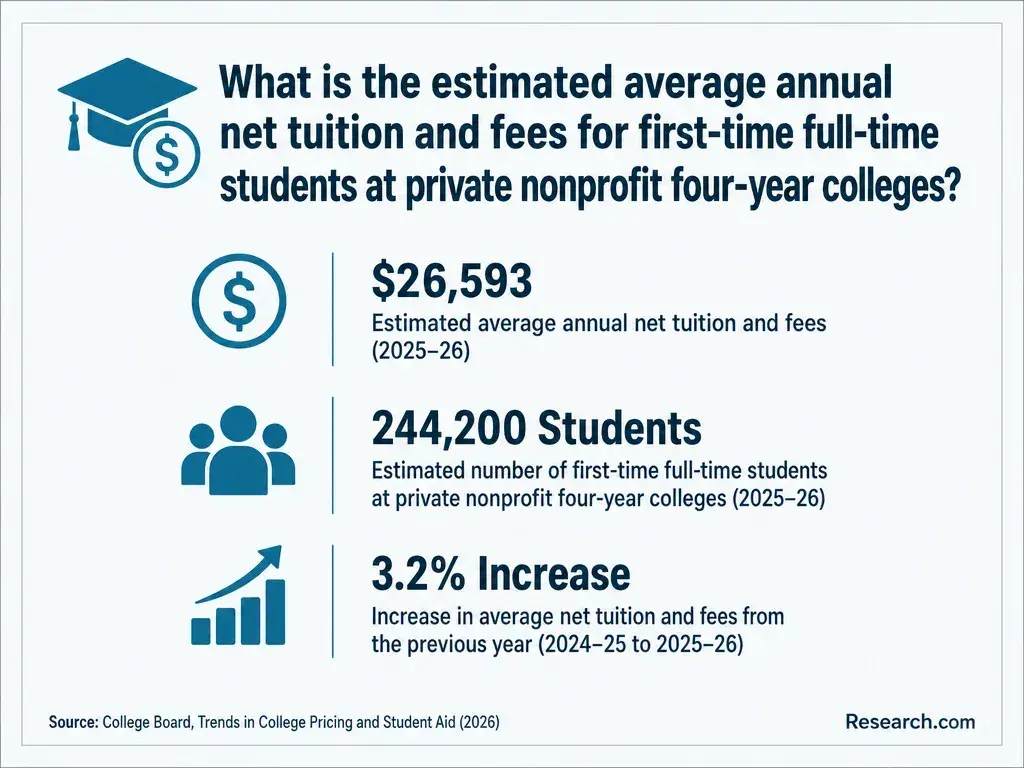
The useful figure is your estimated cost to finish, not the advertised tuition rate. Request a written breakdown of tuition for remaining required courses, mandatory fees, books and software, exam or proctoring charges, and any travel. Check whether taking fewer courses changes the rate or extends fees across more terms.
Compare that estimate with grants, scholarships, federal aid for which you qualify, and any employer education benefit. Employer reimbursement may arrive only after you pay and complete a course; grade rules, annual caps, and repayment terms can affect your cash flow. Loans reduce the amount due immediately but add borrowing costs.
Financial aid planning for low-cost business administration degrees can help frame the comparison. Do not count transfer savings or employer payment until the school and employer confirm them for your circumstances.
First, verify that the institution holds recognized institutional accreditation and that the exact online degree is offered under the policies you are reviewing.
Then check whether any claimed AACSB, ACBSP, or IACBE business accreditation covers the relevant school or program. Institutional and business-specific accreditation have different scopes; neither guarantees a job outcome.
For a training coordinator, the stronger comparison also includes an official degree audit, access to HR or operations electives, faculty feedback on applied work, required-course availability, career support, and online assessment rules.
Ask how the school handles a job-related scheduling disruption and whether a workplace project needs advance academic approval.
When comparing budget-friendly online business schools, apply the same remaining-credit and fee assumptions to each. The school with the lowest published tuition may not be the least expensive one for you to finish.
The Bureau of Labor Statistics does not publish a salary specifically for training coordinators with a BS in Business Administration. Its training and development specialist occupation is a useful, though imperfect, reference: the U.S. median annual wage was $69,280 in May 2025.
That median covers workers across experience levels, employers, and locations; it is not an entry-level wage or an estimate of what earning the degree will add to your pay.
Judge the financial case against actual positions you could seek, including their degree requirements and posted pay, rather than assuming an immediate promotion.
Compare likely opportunities at your current employer with the amount you would need to spend and borrow. Resources that compare cost-to-finish for shorter business administration programs can help narrow options, but an individual return depends on your credits, costs, and career progression.
Which certifications help training coordinators advance their careers?
A certification is most useful when it addresses a skill gap named in your target job postings. Depending on the work, that might mean a training-and-development credential, an HR certification, or a project-management credential. Each has its own eligibility, assessment, and renewal rules; a business degree does not automatically confer one.
If you mainly need to improve facilitation, instructional design, or use of a learning system, targeted training plus a permitted work sample may be more efficient than a bachelor's degree.
If employers consistently require a bachelor's degree, a short credential may complement it but not replace it. In that case, compare accelerated online pathways for business students only after checking the workload and your remaining requirements.
Before paying for any credential, compare its published eligibility rules with your experience and ask whether employers for your intended role actually request it. Choose the qualification that closes a documented gap, not the one with the most recognizable initials.
Other Things You Should Know About Business Administration
Not necessarily. Compare the missing skills and employer requirements with the cost of a second degree, a certificate, or targeted coursework. Ask schools how their second-degree rules affect the courses you would need.
Some schools assess prior learning, but employment alone does not award credit. Ask whether the program offers an assessment process, what evidence it requires, and which degree requirement any awarded credit would satisfy.
Only if your employer's policies and the school permit the proposed use. A fictional case or properly authorized, de-identified data may be safer; removing names alone may not adequately protect employees.
That depends on the institution. Ask how the degree name appears on its diploma and transcript, and confirm that the online program awards the credential you intend to pursue.
- Accreditation in the U.S. | ed.gov http://www.ed.gov/laws-and-policy/higher-education-laws-and-policy/college-accreditation/accreditation-in-the-us
- Your financial path to graduation | consumerfinance.gov https://www.consumerfinance.gov/paying-for-college/your-financial-path-to-graduation/
- Accreditation Process | AACSB https://www.aacsb.edu/educators/accreditation/accreditation-process
- Business Administration Bachelor's Degree Online | The Pennsylvania Institute of Technology https://www.pit.edu/programs/b-s-business-administration/
- Certificate vs. Degree: Which Is Right for You? | UC San Diego Division of Extended Studies https://extendedstudies.ucsd.edu/news-events/extended-studies-blog/certificate-vs-degree-making-the-right-education-decision
- Maximize Your College Transfer Credits | Explore 4 Ways | UMass Global https://www.umassglobal.edu/blog-news/4-ways-transfer-students-can-maximize-college-credits-prior-experience
- Online Business Degree | AACSB Accredited - Online Programs | Adelphi University https://onlineprograms.adelphi.edu/programs/bs-bachelor-business/
- Online Bachelor's Degree in Business Administration | Purdue Global https://www.purdueglobal.edu/degree-programs/business/bachelor-business-administration/
- How to Become a Learning and Development Coordinator | Western Governors University https://www.wgu.edu/career-guide/education/learning-development-coordinator-career.html
- Career Spotlight: Training and Development Manager | Excelsior University https://www.excelsior.edu/article/career-spotlight-training-development-manager/