2027 BS in Business Administration with a Accounting Focus vs. a Standalone Accounting Degree
Audited and Verified:
Our Editorial and Data Verification Process
Research.com uses government datasets, official education statistics and primary institutional information to support its career and degree guides. Our review process checks factual accuracy, occupational definitions, source dates and the requirements associated with the credentials discussed.
How This Article Was Fact-Checked
Our editorial team verifies salary estimates, employment projections, education requirements and program information against original data providers and official organizations. Salary figures are checked against the relevant occupational definitions and reporting periods. Information about licensure, accreditation and required in-person training is reviewed separately.
Fact-checked and verified on:

Co-Founder and Chief Data Scientist
If you want to work in accounting, the word "accounting" on a program page is not enough to tell you whether the degree fits your goal. A BS in Business Administration with an accounting concentration may offer broader business preparation, while a standalone accounting degree may provide more required accounting courses.
That difference matters especially if you plan to pursue CPA licensure. This comparison helps prospective and returning students examine curricula, state requirements, career options, and total completion costs before choosing a program.
Key Things You Should Know
- For CPA plans, compare required accounting courses against your state board's rules; neither degree title establishes licensure eligibility.
- A standalone accounting degree usually makes accounting coursework central to the major, while a business administration concentration may leave more room for other business subjects.
- The U.S. median annual wage for accountants and auditors was $83,680 in May 2025; that occupation-wide figure is not a starting salary for either degree.
What is the difference between an accounting concentration and an accounting degree?
A BS in Business Administration with an accounting concentration is a business administration degree with an officially defined group of accounting requirements. The diploma generally names business administration as the degree; whether the concentration appears on the transcript or diploma depends on the school. A standalone accounting degree, such as a BS in Accounting, makes accounting the major itself.
Both can include business law, economics, finance, and management. The meaningful difference is not the label alone but how many accounting courses are required, which topics they cover, and whether you can fit additional courses into the degree. A concentration can suit someone seeking accounting fluency alongside operations or management work. A dedicated major may be the more direct route into accounting-specific recruiting, provided its courses match the employer's or licensing board's expectations.
If your goal is advancement in a broader business role rather than accounting practice, compare the concentration with other career advancement study options in business administration. An informal set of accounting electives is not necessarily an official concentration.
Which degree is better for CPA licensure and accounting careers?
A standalone accounting degree is often the simpler starting point for a prospective CPA because its required sequence may cover more of the accounting subjects a state board specifies. It is not automatically CPA-qualifying. A business administration graduate can also pursue licensure if their full academic record - including any additional courses - meets the applicable requirements.
CPA rules are set by state boards and can change. Check the board for the state where you intend to seek a license for its rules on total education, accounting and business subjects, the examination, supervised experience, and any ethics requirement. Do not rely on a general claim that every candidate must follow the same credit-hour route: some jurisdictions have adopted alternative education-and-experience pathways. Ask a program adviser for a course-by-course comparison with the board's rules, then confirm unresolved questions with the board.
Also separate school eligibility for federal aid from professional eligibility. Resources on accredited business administration programs and federal student aid can help you investigate financing, but aid eligibility does not mean an accounting concentration satisfies CPA coursework rules.
What careers can you pursue with each degree option?
Either pathway can support applications for accounting assistant, accounts payable, payroll, or other finance-support work. For staff accountant or audit-associate positions, employers may look more closely at intermediate accounting, auditing, tax coursework, internships, and CPA plans than at the degree title alone. A business administration concentration may also fit roles that combine budget tracking with operations or administrative coordination.
The following comparison describes potential fit, not guaranteed access to a job. Employer requirements and your experience remain decisive.
| Goal | Business administration with accounting concentration | Standalone accounting degree |
| Accounting support or small-business operations | Combines accounting knowledge with a broader business core | Provides an accounting-centered foundation that can also serve these roles |
| Staff accounting, audit, or tax entry | Possible if the transcript has the courses employers seek | Often offers a more direct accounting course sequence |
| Operations or administrative work involving budgets | Broader required business study may be useful | Can fit, particularly with relevant work experience |
For a career changer, an existing operations or customer-facing background may make the broader route attractive. If you are comparing accounting with people-focused work instead, consider how prior college coursework toward an HR bachelor's might apply before committing to either accounting pathway.
Both pathways commonly begin with financial and managerial accounting. A standalone major is more likely to require a longer sequence in such areas as intermediate accounting, auditing, taxation, accounting information systems, and advanced accounting. A business administration concentration may require some of these while reserving more credits for management, marketing, finance, or operations. Actual catalogs - not typical patterns - control.
Compare courses by content and sequence, not just their names. If intermediate accounting requires prerequisites you cannot take until a later term, the apparent flexibility of a concentration may not help you finish sooner. If your target is audit or tax, check whether those courses are required, merely offered as electives, or unavailable in your preferred format. Ask whether internships or applied accounting projects are available and what supervision they require.
Returning students should also compare how previously completed math, economics, and introductory accounting courses apply. A school may accept a course as an elective without counting it toward the major; a review of business administration admissions coursework and credit requirements is a starting point, but the receiving school's degree audit determines applicability.
Neither degree title establishes accreditation status. First verify the institution's recognized accreditation. Then check whether a business-school accreditor - such as AACSB, ACBSP, or IACBE - covers the school or the particular program, according to that accreditor's published scope. Do not assume that accreditation of a business school means every accounting program holds separate accounting accreditation.
Accreditation can help you assess academic oversight, but it does not replace a transcript review for CPA requirements, and it does not prove placement outcomes. When using online business school comparisons across the United States, verify each candidate's current accreditation record and accounting curriculum directly with the institution and relevant accreditor.
Delivery format changes how you attend and complete work, not the need to master accounting material. An online program may reduce travel but still impose scheduled exams, live meetings, group assignments, or fixed weekly deadlines. Campus study may offer easier access to in-person recruiting and faculty while requiring a commute. Either format can offer internships, but their availability and eligibility rules vary.
If you work while studying, request sample schedules for the required accounting courses, not just introductory business classes. Confirm exam-proctoring rules, software access, instructor support, and whether upper-level courses run each term. A shorter calendar shown in lists of bachelor's programs for faster completion does not by itself mean fewer credits, less weekly work, or a lower total bill.
Schools set their own admission rules. Some admit students directly to a major; others require admission to the institution followed by a separate business-school application or prerequisite courses. A standalone accounting major may have progression rules for its accounting sequence, while a business administration concentration may have its own declaration requirements. Neither pattern is universal.
Ask admissions for the current rules that apply to your applicant status, then ask the department when you may begin intermediate accounting. If you have college credits, obtain a written evaluation showing which ones satisfy general education, business core, accounting, and residency requirements. Application cost is a separate consideration: a guide to online colleges without application fees can help identify possibilities, but confirm the fee and program-specific admission rules before applying.
A conventional full-time bachelor's plan is often organized around four academic years, but your actual timeline depends on accepted credits, credits applied to the chosen major, course availability, and enrollment pace. The two options can have the same overall degree-credit requirement yet differ in how many accounting courses you still need. A concentration that requires extra post-graduation courses for your CPA goal may ultimately take longer or cost more than a dedicated accounting major.
Compare remaining cost to reach your goal, not just advertised tuition. Request an individualized degree audit and estimate tuition for remaining required credits, mandatory fees, books, software, and any travel or proctoring. Then price any accounting courses needed beyond graduation and consider lost work hours. Use the same assumptions for both schools; neither a transfer estimate nor an advertised per-credit price establishes your final cost. Lists of lower-priced college options for business majors can narrow a search, but a personalized audit is necessary to compare completion costs.
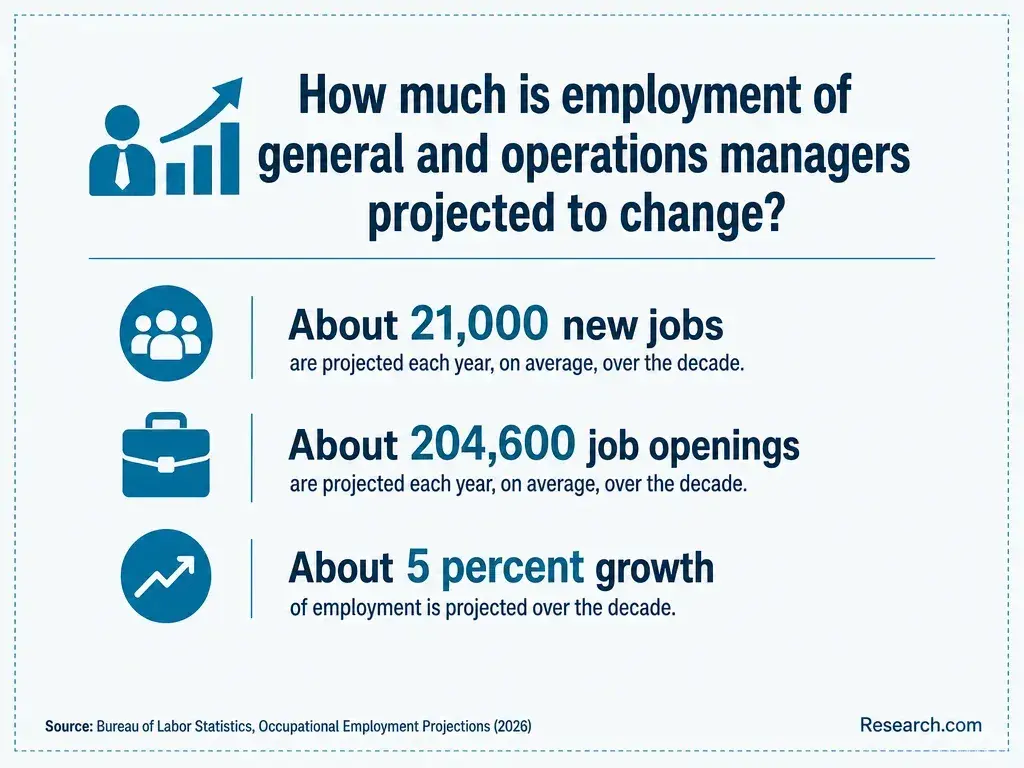
The U.S. Bureau of Labor Statistics reports a $83,680 median annual wage for accountants and auditors in May 2025 and projects 5% employment growth from 2025 to 2035. These figures describe the occupation across experience levels and educational backgrounds - not earnings or job offers for new graduates of either program. Local employers, internship experience, accounting skills, and licensure can all affect an individual's prospects.
Use the occupation data to judge whether accounting is a promising direction, then compare actual entry-level postings in your target area. If you are weighing accounting against project work, compare job requirements and education costs as well as wages; information on FAFSA grants and scholarships for project management students may inform the financing side of that alternative, not accounting salary expectations.
Which accounting program should you choose for your career goals?
Lean toward a standalone accounting degree if you expect to pursue public accounting, audit, tax, or CPA licensure and its required sequence closely matches your intended state board's rules. Consider the business administration concentration if you want accounting capability within a broader operations or business career - or if its specific course plan meets your accounting goal with fewer remaining requirements.
Before enrolling, make a side-by-side degree audit for both programs and mark every accounting course required for your target job or license. Obtain written answers on transfer applicability, course rotation, internship access, and the cost of any courses you would still need after graduation. The recommendation can reverse if the concentration offers the stronger accounting sequence, the standalone major delays completion, or one school applies substantially more of your prior coursework.
If your intended work is primarily project coordination rather than accounting, compare both choices with project management degrees with prior-credit pathways. The best credential is the one whose remaining coursework and practical opportunities fit the role you actually want.
Other Things You Should Know About Business Administration
Not necessarily. Schools differ on whether concentrations appear on diplomas, transcripts, both, or neither. Ask the registrar how your completed credential will be recorded.
Often you can apply to change majors, but approval and course availability vary. Request a revised degree audit first; accounting prerequisites or residency rules could change your graduation date.
No. A concentration is an officially defined focus within a major, while a minor is a separately designated secondary field. Check the catalog for the exact requirements and transcript notation.
Not for every accounting job. A bachelor's degree and relevant skills can support entry into many roles. Additional study may be useful if your target position or state licensing requirements call for coursework your bachelor's plan does not include.
- Education Requirements | texas.gov https://www.tsbpa.texas.gov/applicants/education/
- CPA Exam Requirements | psu.edu https://harrisburg.psu.edu/business-administration/accounting-bs/cpa-exam-requirements
- Business Administration: Option in Accounting, B.S. | calstatela.edu https://ecatalog.calstatela.edu/preview_degree_planner.php
- Accounting and Information Systems | rutgers.edu https://catalogs.rutgers.edu/generated/rbs_2425/pg141.html
- Course Descriptions | Sacred Heart University https://www.sacredheart.edu/academics/colleges--schools/college-of-business--technology/departments--schools/accounting--information-systems/course-descriptions/
- The Value of Accreditation | AACSB https://www.aacsb.edu/educators/accreditation/value-of-accreditation
- Every Type of Accounting Degree Explained https://www.accounting.com/degrees/overview/
- From Accounting Major to CPA: The Credit Gap to Know | CPA Credits: The Best Way to 150 https://www.cpacredits.com/resources/accounting-major-to-cpa/
- Accounting: Major vs. concentration | collegeconfidential.com https://talk.collegeconfidential.com/t/accounting-major-vs-concentration/1259262