2027 Online BS in Business Administration vs. a BS in Engineering Management: Which Route Fits Your Career Plan?
Audited and Verified:
Our Editorial and Data Verification Process
Research.com uses government datasets, official education statistics and primary institutional information to support its career and degree guides. Our review process checks factual accuracy, occupational definitions, source dates and the requirements associated with the credentials discussed.
How This Article Was Fact-Checked
Our editorial team verifies salary estimates, employment projections, education requirements and program information against original data providers and official organizations. Salary figures are checked against the relevant occupational definitions and reporting periods. Information about licensure, accreditation and required in-person training is reviewed separately.
Fact-checked and verified on:

Co-Founder and Chief Data Scientist
If your goal is to coordinate projects or improve operations, both degrees may look relevant - but they prepare you for different settings. An online BS in Business Administration usually offers broad preparation across business functions. A BS in Engineering Management generally places management work in a technical context and may require substantially more math and science.
For working adults, transfer students, and career changers, that difference affects admission, completion time, and the jobs for which you can make a credible case. This comparison will help you choose based on your target role, existing preparation, and the requirements of actual programs.
Key Things You Should Know
- Choose business administration for flexibility across business functions; favor engineering management when you want to manage technical operations and can meet its quantitative requirements. Neither degree guarantees a management job.
- The U.S. median annual wage for project management specialists was $102,320 in May 2025, but that occupation-wide figure is not a starting salary for graduates.
- Before enrolling, compare written transfer-credit evaluations, required courses, delivery obligations, and total remaining cost, not degree titles or advertised completion times alone.
How does an online BS in Business Administration compare with a BS in Engineering Management?
A BS in Business Administration studies how organizations use money, people, information, and processes. A BS in Engineering Management applies management methods to technical products, systems, projects, or operations. The second degree is not necessarily an engineering degree: its math, science, design, and engineering content depend on the program.
This comparison shows where the distinction is likely to matter most. Use it to screen curricula, then confirm each school's actual requirements.
| Decision factor | BS in Business Administration | BS in Engineering Management |
| Primary focus | Broad organizational and commercial decisions | Management decisions involving technical work or systems |
| Typical preparation | Accounting, economics, operations, marketing, and management | Quantitative and technical coursework alongside management and operations |
| Best fit | Students seeking options across business functions or industries | Students targeting technical operations, manufacturing, or engineering-adjacent projects |
| Key limitation | May offer limited technical depth | May be less adaptable to nontechnical business roles and harder to enter without prerequisites |
If you want project work without a technical curriculum, compare the actual courses in both degrees with accredited project management programs with low tuition. A narrower alternative can be useful, but only if its content matches your intended industry and responsibilities.
Which degree offers better career opportunities and earning potential?
Neither degree consistently pays more on its own. Engineering management may strengthen your candidacy for roles where employers value technical fluency; business administration may leave more room to move among functions. Your prior experience, industry, location, and demonstrated work usually matter more than the difference between these degree titles.
The Bureau of Labor Statistics reports a May 2025 median annual wage of $102,320 for project management specialists. That median covers workers across experience levels and educational backgrounds; it should not be treated as an offer a new graduate can expect. Compare it with job postings for roles you could realistically enter, not just with senior-level titles.
For a return-on-investment decision, weigh likely entry roles against remaining tuition, time away from work, and borrowing. A comparison of how to evaluate price duration and outcomes of business administration degrees can help frame that calculation, but request school-specific completion and career-outcome evidence before relying on it.
What careers can you pursue with each bachelor's degree?
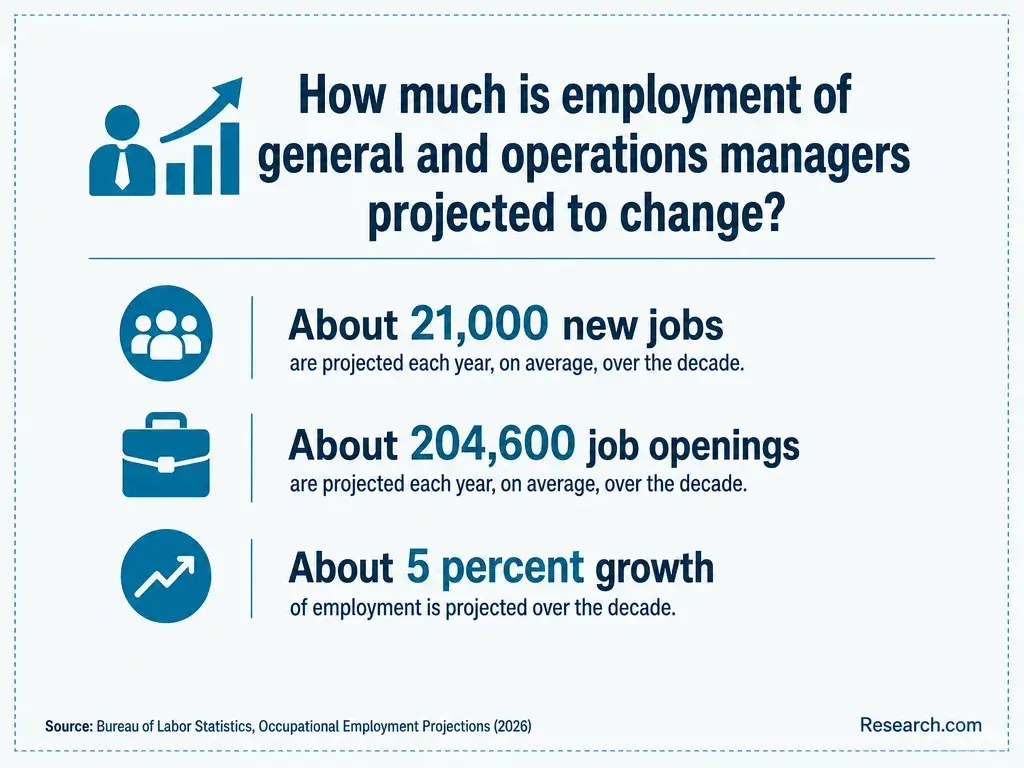
Business administration graduates can pursue operations coordinator, purchasing assistant, sales operations, HR, or marketing support roles, depending on their electives and experience. Engineering management graduates may pursue production planning, quality coordination, technical project coordination, or operations roles in technical organizations. In either route, a coordinator or analyst position is often more realistic than immediate responsibility for an engineering team or major budget.
Match the degree to the work you want to show an employer. For example, an aspiring HR specialist needs evidence of HR processes and communication; an aspiring manufacturing project coordinator needs familiarity with technical schedules, specifications, and operational constraints. If HR is your specific destination and you already have college credit, transfer pathways into online human resources programs may deserve comparison with a general business degree. Transfer acceptance and application to major requirements are separate decisions.
Business administration commonly combines accounting, finance, marketing, economics, organizational behavior, statistics, and operations. An official concentration may add depth, but a few electives do not necessarily constitute a concentration. Look for assignments that produce evidence of your skills, such as a documented process analysis or financial model.
Engineering management commonly adds subjects such as calculus or other higher-level math, physical science, engineering fundamentals, systems thinking, quality, and technical project or operations management. Requirements vary markedly: check whether technical courses involve design work, laboratories, or prerequisite chains rather than assuming the degree is simply business administration with engineering terminology.
If supply chain is your target, compare each program's actual logistics, analytics, and operations courses with accelerated degree planning for supply chain undergraduates. A specialized route may be more direct if neither general curriculum provides the depth you need.
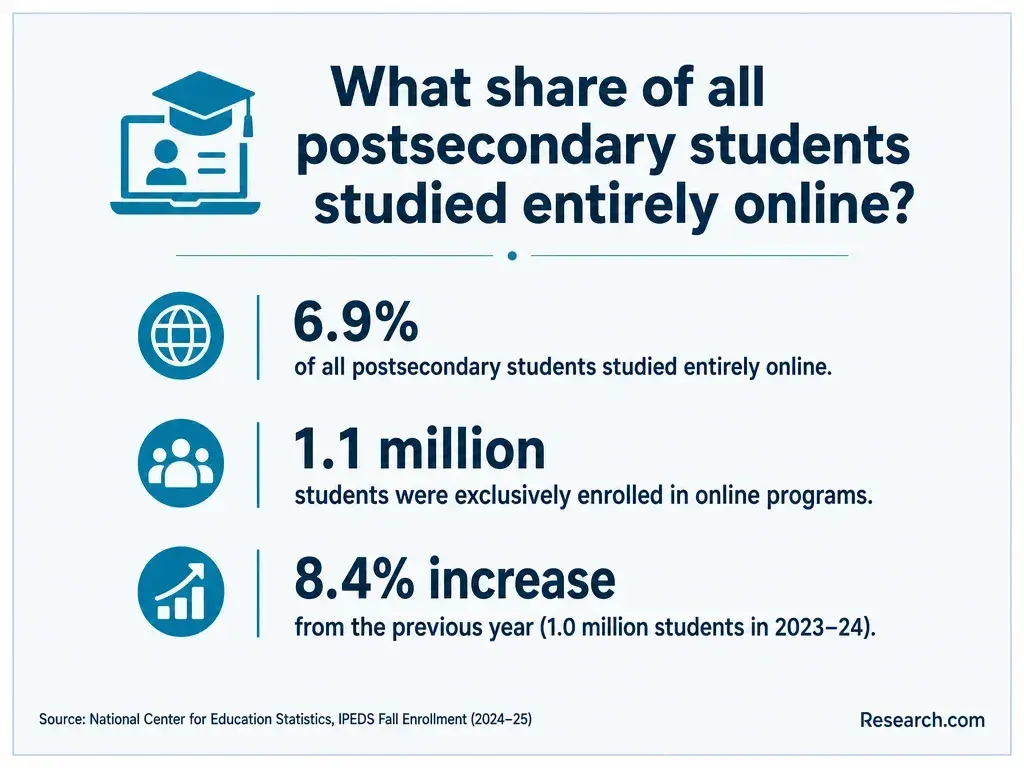
Online study can reduce commuting and make it easier to continue working, but it does not mean self-paced study. Ask whether classes require live meetings, proctored exams, group presentations, scheduled labs, or campus visits. These obligations may be especially consequential in engineering management if technical courses have hands-on components.
Campus programs may offer easier access to laboratories, faculty, and local recruiting, while online programs may be practical for students who cannot relocate. Neither format guarantees an internship or employer contact. Compare required attendance and support services with your weekly schedule; bachelor's programs for faster completion are worth considering only if the course load is sustainable and required classes are available when needed.
First-year applicants typically need qualifying secondary-school credentials; transfer applicants usually submit prior college transcripts. Programs may set separate GPA, math, or major-entry requirements. Engineering management is more likely to depend on a defined sequence of quantitative or technical prerequisites, while business administration may require introductory accounting, economics, or statistics before upper-level study. Only the institution can confirm its current rules and whether a prior course satisfies them.
If you have college credit, request two answers in writing: whether you are admitted and how each accepted credit applies to the degree. A waived application charge is a smaller consideration than lost major credit, although colleges with no upfront application payment can help you identify options to investigate.
Both are bachelor's degrees, but your remaining requirements, not the label, determine your completion time. Engineering management prerequisites may create a longer sequence for a student with little math or science preparation. A student with relevant technical coursework might face the opposite result. Part-time study, course availability, residency rules, and accepted credits can change either timeline.
Ask each school for an individualized degree audit and a cost estimate covering remaining tuition, mandatory fees, books or software, required travel, and likely enrollment terms. Compare per-credit and per-term pricing carefully, and include any income you would forgo by reducing work hours. Lists that help you find inexpensive online business administration colleges are a starting point, not a substitute for your own remaining-cost estimate.
Check the institution's accreditation status and whether its accreditor is recognized by the U.S. Department of Education. Institutional accreditation is important for federal student aid eligibility and commonly affects credit-transfer decisions, although another school still decides what credit it will accept.
Then check program-level claims separately. Business accreditation through AACSB, ACBSP, or IACBE may cover a particular business school or set of programs; engineering-related accreditation, including ABET where applicable, has its own program-specific scope. Do not assume either kind covers the named degree. Ask the school for the exact program listing, and use information on accredited business administration programs and federal student aid as a starting point for further verification.
The degrees themselves do not generally require an occupational license. A business administration degree does not grant a CPA license or a project-management certification. Engineering management also should not be assumed to qualify a graduate for professional engineer licensure; state rules and the specific engineering education and experience involved control that pathway.
Some employers value voluntary project, quality, or supply chain credentials, but eligibility may depend on experience and an examination. If your goal is project coordination rather than a licensed engineering role, compare credential requirements and relevant experience with applying previous coursework to a project management degree before committing to another full bachelor's program.
How can you choose a reputable online degree program?
Begin with your target job and the requirements in relevant postings. Then ask each school for its current curriculum, a written transfer evaluation, a sample course schedule, required live or in-person activities, total remaining charges, and evidence of student support. Confirm that any advertised concentration, internship, or technical project is actually available to online students.
Speed is useful only if it preserves the preparation you need. When considering shorter undergraduate business programs across the US, check how the estimate treats transfer credits, course sequencing, and part-time enrollment. Choose business administration if its breadth and workable schedule support your likely next role; choose engineering management if the technical curriculum and its prerequisites are justified by the work you intend to do.
Other Things You Should Know About Business Administration
Yes, particularly in commercial or administrative functions. For technical operations roles, expect to build industry knowledge through relevant work, projects, or additional study.
Possibly. Ask for a new degree audit first: credits that count as electives in one major may not satisfy the other's prerequisites or core.
Yes. If you already hold a bachelor's degree, targeted coursework, employer training, or a suitable graduate program may address your skill gap more directly. Check admission prerequisites and employer expectations.
Not necessarily. Diploma wording and transcript notation are institution-specific; ask the registrar for the policy that applies to your program.
- Basic Requirements for Licensure | texas.gov https://pels.texas.gov/lic_basic.htm
- Accreditation in the U.S. | ed.gov http://www.ed.gov/laws-and-policy/higher-education-laws-and-policy/college-accreditation/accreditation-in-the-us
- What Is Supply Chain Management? A Guide to Careers, Salaries & Certifications | UW-Stout Polytechnic https://www.uwstout.edu/programs/bs-supply-chain-management/what-is-supply-chain-management-guide
- Does an MBA Require an Undergrad Business Degree? | AACSB https://www.aacsb.edu/insights/articles/2017/11/do-i-need-an-undergraduate-business-degree-to-get-my-mba
- What's the Difference Between Business Administration and Business Management? | Husson University https://www.husson.edu/online/blog/2022/02/business-administration-vs-business-management
- Engineering Management Degree: Careers & Salary Outlook | Arkansas State University Online https://degree.astate.edu/online-programs/undergraduate/engineering/bs-engineering-management/what-is-an-engineering-manager/
- What Can You Do With a Business Administration Degree? | snhu.edu https://www.snhu.edu/about-us/newsroom/business/what-can-you-do-with-a-business-administration-degree
- What is Engineering Management? | Michigan Technological University https://www.mtu.edu/business/undergraduate/engineering-management/what/
- Engineering Management, BSE - ASU degree programs https://degrees.asu.edu/bachelors/major/ASU00/ESEMGBSE/engineering-management
- Online Bachelor's Degree in Business Administration | usnews.com https://www.usnews.com/education/online-education/business-administration-management-bachelors-degree