2027 BS in Business Administration Decision Guide: An Applied Project Portfolio or Preparation for Professional Exams
Audited and Verified:
Our Editorial and Data Verification Process
Research.com uses government datasets, official education statistics and primary institutional information to support its career and degree guides. Our review process checks factual accuracy, occupational definitions, source dates and the requirements associated with the credentials discussed.
How This Article Was Fact-Checked
Our editorial team verifies salary estimates, employment projections, education requirements and program information against original data providers and official organizations. Salary figures are checked against the relevant occupational definitions and reporting periods. Information about licensure, accreditation and required in-person training is reviewed separately.
Fact-checked and verified on:

Co-Founder and Chief Data Scientist
A BS in Business Administration may give you room to build work samples, prepare for a professional exam, or do some of both. Those choices serve different purposes: a portfolio shows how you approach business decisions, while an exam can support a separate credential with its own eligibility rules. This guide is for students planning electives, capstones, and early-career goals. It explains how to choose a path that fits the role you want without mistaking coursework for professional qualification.
Key Things You Should Know
- Choose a portfolio when target roles ask you to demonstrate analysis, communication, or practical problem-solving; choose exam preparation when a specific credential matters and you can meet its separate requirements.
- A strong portfolio contains a small number of clearly attributed, permissible work samples - not claims of results you cannot verify. A business degree alone does not confer a professional certification or license.
- Check the target occupation before investing in either path: the U.S. Bureau of Labor Statistics projects 7% growth for market research analysts from 2025 to 2035, but that outlook does not establish demand for any particular portfolio or credential.
What Is a BS in Business Administration?
A BS in Business Administration is an undergraduate degree combining general education with business subjects such as accounting, marketing, management, operations, and quantitative analysis. Its breadth can support a portfolio spanning several functions. It does not, by itself, provide the focused coursework, supervised experience, or examination eligibility required for every professional credential.
A BBA or specialized bachelor's degree may cover similar ground but have different requirements. Compare actual course plans rather than degree initials. If your goal is specifically people leadership, shorter study timelines for leadership bachelor's students offer a useful alternative to examine; check whether their narrower curriculum still supports your intended projects or credential prerequisites.
What Can You Do With a Business Administration Degree?
Graduates may pursue roles such as operations coordinator, marketing coordinator, HR assistant, or project coordinator. These jobs differ in daily tasks, and employers may value different evidence: a process map for operations, a research brief for marketing, or a carefully documented schedule for project coordination. Relevant work or internship experience can strengthen either a portfolio or an exam-focused plan.
For an HR target, compare the degree's people-management courses with education options for future HR professionals. A general business project might demonstrate communication and analysis, but it will not substitute for knowledge of employment practices or automatically qualify you for an HR credential. Likewise, graduation does not normally mean immediate responsibility for staff or major budgets.
Is a BS in Business Administration Worth It?
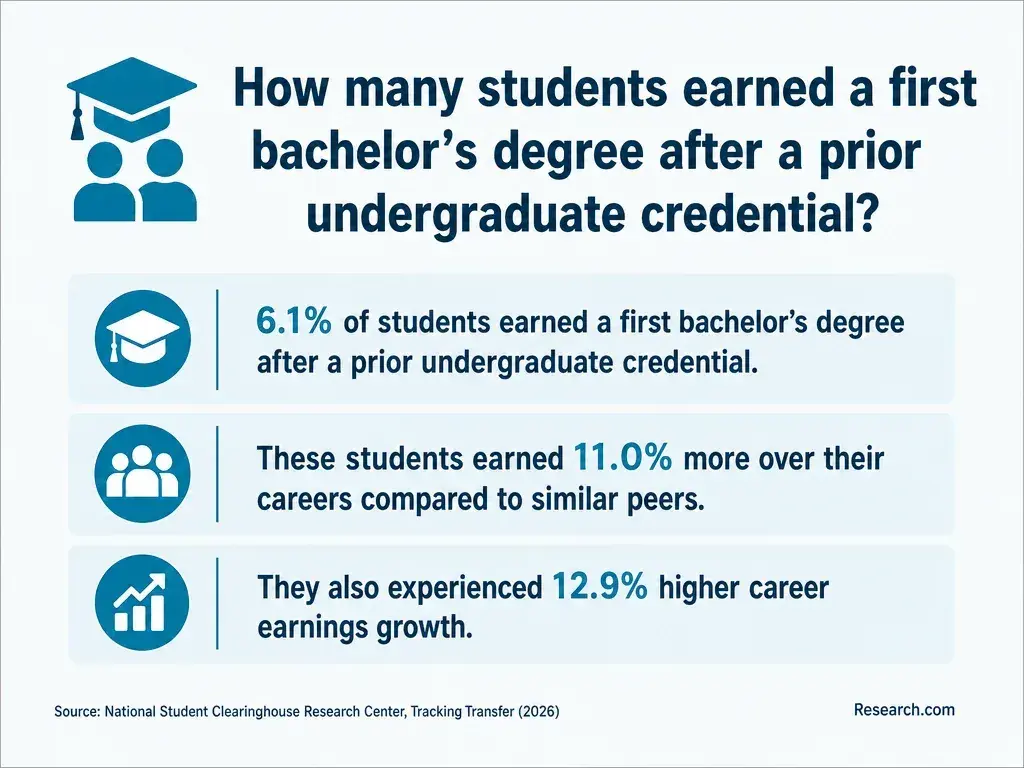
Its value depends on the gap between your current qualifications and the role you want. If employers require a bachelor's degree, finishing one may remove a hiring barrier. If you already have a degree and need a specific skill or credential, targeted coursework, supervised experience, or exam preparation may be more direct than another bachelor's program.
Within a BS, the portfolio-versus-exam decision is best made from job requirements backward. Portfolio work is particularly useful when you need examples to discuss in interviews. Exam preparation is more compelling when employers name a credential and you meet, or have a credible plan to meet, its eligibility requirements. For a cost comparison, use online business administration program cost-and-time comparisons as a starting point, then obtain a school-specific estimate of remaining courses and fees. Neither a portfolio nor a credential promises higher pay.
Core courses can supply the building blocks for applied work: accounting helps you interpret costs, statistics helps you assess evidence, and operations or marketing courses help you frame a decision. Exam preparation demands a different check: whether the curriculum covers the topics and academic credits specified by the credentialing body. A course with a relevant title may still be insufficient for that purpose.
The distinction is easier to see when you compare what each path produces. The table describes typical outputs, not guaranteed features of any program.
| Path | What it can demonstrate | Important limit |
| Applied portfolio | How you define a problem, analyze evidence, and explain a recommendation | A sample is not proof that an organization implemented it or achieved results |
| Exam-oriented coursework | Knowledge relevant to a named credential's subject matter | Course completion is not exam passage or confirmation of eligibility |
| Combined approach | Subject knowledge alongside a practical example | Both activities need adequate time; one cannot stand in for the other |
Ask an adviser which required courses, electives, and capstones leave room for your choice. An accelerated calendar may compress the time available to revise a substantial project; use accelerated bachelor's program comparisons to identify formats worth investigating, then request their actual assignment schedules.
Choose the format that lets you complete the work your chosen path requires. Online study may suit an independent portfolio project, but group meetings, presentations, proctored exams, and capstone deadlines may still occur at fixed times. Campus study may make faculty feedback and team projects easier to arrange, though commuting can reduce time available for work or exam study.
When reviewing accelerated online business degree programs, ask whether the capstone allows individual or employer-based work, how feedback and revisions are scheduled, and whether exam preparation is part of the curriculum or an additional commitment. Do not assume that an online or accelerated program is self-paced.
First, verify that the institution holds recognized institutional accreditation. Then check whether its business school or the specific program is covered by any claimed AACSB, ACBSP, or IACBE accreditation; their scopes are not interchangeable. Programmatic accreditation can inform a school comparison, but it does not certify your portfolio or establish eligibility for a separate professional exam.
Other selection factors still matter, including project supervision, course availability, and total application costs. Lists of schools with zero-cost college applications may help you identify candidates, but verify each school's current accreditation, fee policy, and capstone rules directly before applying.
Admission usually involves proof of prior education and any institution-specific academic requirements. Entry to the university, entry to the business major, and permission to take an upper-level capstone can be separate decisions. Transfer students should also distinguish credits a school accepts from credits it applies to business requirements.
Review qualifying for a business administration college program, then send an adviser your transcripts and intended career goal. Ask which accounting, statistics, or other courses must precede the project or exam-relevant electives you want. If you already hold a bachelor's degree, ask about second-degree rules before assuming another BS is the best route.
Completion time depends on accepted transfer work, the courses still required, enrollment pace, and when prerequisites and capstones are offered. Price the full path - not just advertised tuition - including fees, software, possible travel, and any separate exam-preparation or credential fees. If an employer reimburses education costs, check whether it covers degree courses, exam fees, or both, and when payment arrives.
Compare a portfolio-focused and exam-focused plan against the same degree audit. A project may use an existing capstone slot, whereas exam preparation may require additional courses or study materials; the reverse is possible if a portfolio option adds credits. If project management is your target, compare grants for project management undergraduates when evaluating related degree pathways, but confirm your own aid eligibility and remaining program cost with each school.
Use occupation-specific figures, not a broad "business graduate salary." For example, the U.S. Bureau of Labor Statistics reports a May 2025 median annual wage of $78,760 for market research analysts. That is an occupation-wide median, not an expected starting salary for someone with a BS or a portfolio. Your relevant experience, location, employer, and ability to perform the role's tasks matter.
Compare openings in your target area for the evidence they request. If you need to enter the job market sooner, accelerated business bachelor's school comparisons can help you investigate possible completion schedules. A faster degree may change when you can apply, but it does not change an occupation's median wage or replace relevant experience.
Does a Business Degree Prepare You for Professional Exams?
It can provide useful foundations, but the answer depends on the named exam. CPA licensure is governed by state accountancy boards and has education and other requirements beyond a general business degree. Project management and HR credentials are administered under their respective organizations' eligibility rules. Do not choose courses on the assumption that a business major automatically makes you eligible.
To decide how to use your remaining coursework, first identify a credential appearing in jobs you want. Check its official education, experience, exam, and renewal rules; then ask the program to map its courses against those rules in writing. If the gap is substantial, compare targeted training or a more specialized degree rather than forcing unrelated electives into the BS. For a project-management pathway, low-cost project management schools and aid options offer an alternative degree comparison, not proof of exam eligibility.
If you choose the portfolio route, scope one deliverable around a decision a reader can understand: state the question, identify permissible data, show your method and assumptions, present a recommendation, and explain limitations. Seek faculty approval for academic requirements and employer permission before using workplace material. Redact confidential information, label simulated data, and describe your individual contribution. Revise the piece after feedback; present it as an analysis or proposal unless implementation and results are independently verifiable.
Other Things You Should Know About Business Administration
Check your course and employer policies first. Disclose permitted assistance, verify every claim and calculation, and keep enough of your own reasoning visible for a reviewer to assess your work.
Yes, if sharing is allowed and you clearly identify your contribution. Do not present teammates' analysis, designs, or findings as yours.
It can be, if you accurately explain the objective, your role, what the evidence showed, and what you would change. Avoid implying that a proposed improvement was implemented.
No. Keep confidential or restricted work private, and share only material you have permission to disclose. A redacted sample or a project using openly available data may be safer.
- Professional Engineer License | wa.gov https://brpels.wa.gov/licensing/engineering/professional-engineer-license
- Students & Recent Graduates | U.S. Office of Personnel Management https://www.opm.gov/policy-data-oversight/hiring-information/students-recent-graduates/
- Estimate your college cost | usa.gov https://www.usa.gov/estimate-college-cost
- Understanding College Costs | studentaid.gov https://studentaid.gov/resources/prepare-for-college/students/choosing-schools/consider-costs
- Exam ready: Who uses college admissions test prep and does it work? | Brookings https://www.brookings.edu/articles/exam-ready-who-uses-college-admissions-test-prep-and-does-it-work/
- Bachelor of Science in Business Administration | Purdue University Global Academic Catalog https://catalog.purdueglobal.edu/undergraduate/business-information-technology/business-administration-bs/
- What are the top skills employers look for and how can I work on them? - BC Knowledge for Students https://students.brooklyn.edu/knowledge-base/what-are-top-skills-i-can-work-on/
- BA vs. BS in Business Administration | New England College https://www.nec.edu/news/ba-vs-bs-business-administration
- Master of Science in Project Management | BU MET https://www.bu.edu/met/degrees-certificates/ms-project-management/
- Career Readiness Competencies | Career Connections Center https://career.ufl.edu/gain-experience/career-readiness-competencies/