2027 Business Analytics vs. Management Information Systems for a Business Administration BS: Which Fits?
Audited and Verified:
Our Editorial and Data Verification Process
Research.com uses government datasets, official education statistics and primary institutional information to support its career and degree guides. Our review process checks factual accuracy, occupational definitions, source dates and the requirements associated with the credentials discussed.
How This Article Was Fact-Checked
Our editorial team verifies salary estimates, employment projections, education requirements and program information against original data providers and official organizations. Salary figures are checked against the relevant occupational definitions and reporting periods. Information about licensure, accreditation and required in-person training is reviewed separately.
Fact-checked and verified on:

Co-Founder and Chief Data Scientist
Choosing between business analytics and management information systems (MIS) changes the problems you will learn to solve - and the work you can show employers after graduation. Within a BS in Business Administration, analytics usually emphasizes interpreting data for decisions; MIS focuses on how organizations design, use, and improve information systems. If you are choosing a concentration or planning a degree-completion path, this comparison will help you match courses, projects, and career preparation to your goals without assuming either option guarantees a particular job.
Key Things You Should Know
- Choose business analytics if you want to investigate business questions with data, statistics, and dashboards; choose MIS if you want to improve the systems and processes that collect, move, and protect that data.
- Compare required courses and projects, not labels: a BS in Business Administration concentration may offer less technical depth than a specialized analytics or information systems degree.
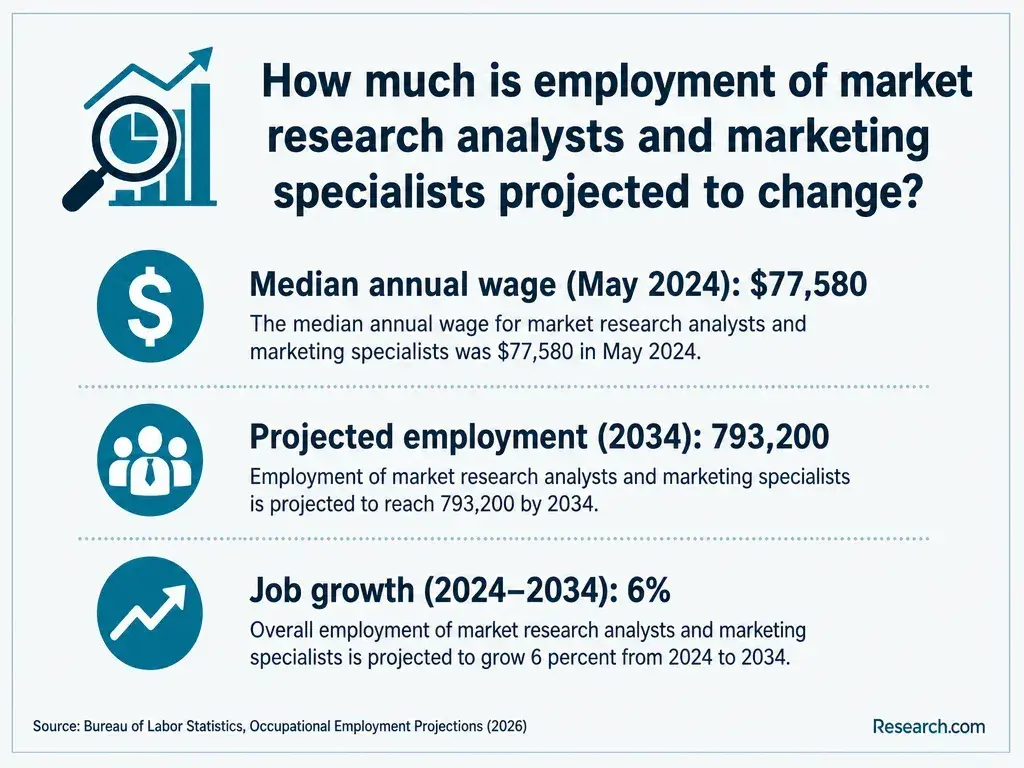
- Occupation-wide pay is not a graduate starting salary. The U.S. Bureau of Labor Statistics reports a May 2025 median of $78,760 for market research analysts, one possible analytics-related occupation.
What Is the Difference Between Business Analytics and Management Information Systems?
Business analytics uses data, quantitative methods, and business context to describe performance, investigate patterns, and inform choices. Management information systems examines the people, processes, databases, and applications that make organizational information available and useful. They overlap: an analyst needs reliable systems, while an MIS professional must understand what information decision-makers need.
Consider a retailer with inconsistent inventory reports. An analytics student might examine stockout patterns and build a forecast, noting missing or unreliable records. An MIS student might map how transactions reach the inventory system and propose changes to data entry, integration, or reporting. Neither project proves that a proposed change will improve results without implementation and evaluation.
If your main interest is purchasing and inventory operations rather than analysis or systems, a supply chain major may be more direct. You can compare supply chain degrees by cost and length before committing to either concentration.
Which Major Fits Your Career Goals in Business Administration?
Start with the work you want to perform, then check whether the degree awards a formal major, a concentration within business administration, or only a group of electives. Those credentials can appear differently on a transcript, and their course depth varies by school.
This comparison connects common interests to the better initial fit. It is a guide to selecting coursework, not a promise of job eligibility.
| Your preferred work | Likely better fit | What to verify |
| Testing business assumptions and explaining trends | Business analytics | Statistics, data preparation, and applied analysis requirements |
| Improving how employees use applications and share information | MIS | Systems analysis, databases, and implementation projects |
| Working across both reporting and technology teams | Either | Available electives, internships, and cross-functional projects |
Choose analytics if you enjoy quantitative uncertainty and can explain what data cannot establish. Choose MIS if you prefer translating operational needs into system requirements and working through adoption, access, and workflow issues. If your primary goal is to coordinate projects rather than analyze data or develop systems, examine low-cost project management schools and aid options as a separate pathway.
What Careers Can You Pursue With Business Analytics or MIS?
Business analytics can support applications to reporting analyst, operations analyst, or market research roles. MIS can support applications to business systems analyst, application-support, or technology-project coordination roles. Titles are inconsistent across employers: read the tasks and software requirements in actual postings rather than relying on a concentration name.
An entry-level analytics applicant might show a reproducible analysis that defines a business measure, cleans data, and explains limitations. An MIS applicant might show a documented workflow, requirements summary, database exercise, or user-focused system proposal. Use public, synthetic, or properly authorized data; do not put confidential workplace records in a portfolio.
Career progression depends on experience as well as coursework. For example, project management specialist work involves coordinating schedules, resources, and stakeholders; the BLS projects 7% U.S. employment growth for that occupation from 2025 to 2035. That outlook does not mean an MIS graduate will enter the occupation immediately. Students bringing previous college work to this goal can also investigate project management undergraduate transfer pathways.
Both options commonly sit alongside a business core that includes accounting, management, marketing, and quantitative coursework. The distinction is in the upper-level requirements and what students must produce. Confirm the current catalog: similar course titles can conceal very different assignments and prerequisites.
The typical emphasis below helps you inspect a program's course sequence. Individual programs may combine these subjects or offer them only as electives.
| Curriculum feature | Business analytics emphasis | MIS emphasis |
| Methods | Statistics, forecasting, visualization, and decision models | Systems analysis, databases, process design, and technology management |
| Typical assignment | Analyze a dataset and communicate a qualified recommendation | Document user needs and propose or evaluate a system workflow |
| Key prerequisite to check | Statistics and quantitative course sequencing | Introductory information systems or database sequencing |
Check which courses are required rather than merely offered, and whether a capstone can address your target function. If you mainly want to manage employee records, staffing processes, or HR operations - not business data or systems broadly - consider whether you could finish an HR bachelor's using previous college credits instead.
Analytics students may practice spreadsheet modeling, querying and preparing data, visualization, basic statistical reasoning, and communicating uncertainty. MIS students may practice requirements gathering, process mapping, database concepts, access controls, testing, and explaining technology changes to business users. Neither concentration makes every graduate a data scientist, software engineer, or cybersecurity specialist.
For either path, look for assignments that require you to define the business decision before choosing a tool. A polished dashboard is weak evidence if its measures are misleading; a technically plausible system proposal is weak if it ignores users, privacy, or implementation constraints. Ask whether you can leave with work samples that document assumptions, revisions, and your own contribution.
If statistics or introductory business courses are missing from your record, check the program's required credits before entering business administration study. A school may admit you before every concentration prerequisite is complete while still requiring those courses before upper-level enrollment.
Yes. Schools may offer online BS in Business Administration programs with analytics or MIS concentrations, as well as separate online degrees in those fields. Verify the exact credential and whether every required concentration course - not just the business core - can be completed online.
Online does not necessarily mean self-paced. Ask about live meetings, group-system projects, software access, remotely proctored exams, internship rules, and how often required courses run. An employed student may find an asynchronous analytics course manageable but struggle with a fixed-time team project, or the reverse. If speed matters, compare the actual course sequence with accelerated online business degree programs; shorter terms do not automatically reduce workload or total cost.
Requirements vary by institution and by whether you apply as a first-year or transfer student. Schools generally evaluate prior academic records for admission; entry to an upper-level business concentration may additionally depend on completed introductory business, mathematics, or statistics courses. MIS and analytics prerequisites are not interchangeable, so request each program's current degree map.
For a transfer or returning student, distinguish accepted credits from credits that satisfy the business core, concentration, and residency requirements. Send transcripts for an official evaluation and ask an adviser to identify remaining prerequisites before estimating graduation time. Admission also does not determine your aid award: compare school-specific costs and eligibility, including affordable accredited business administration programs accepting FAFSA, through each institution's financial-aid office.
A bachelor's degree is commonly designed around four years of full-time undergraduate study, but the time you need depends on applied transfer credits, enrollment pace, prerequisites, and course availability. A concentration that uses existing business electives may not add credits; one with a long prerequisite chain or infrequently offered courses may delay completion even if the total credit requirement looks similar.
Request a term-by-term plan for both options, including the first available date of every required upper-level course. Compare remaining credits and tuition charges, not advertised completion time alone. If your interest is specifically supply chain operations and speed is decisive, supply chain undergraduate programs with shorter terms offer another format to investigate - but confirm how your credits would apply before assuming a faster finish.
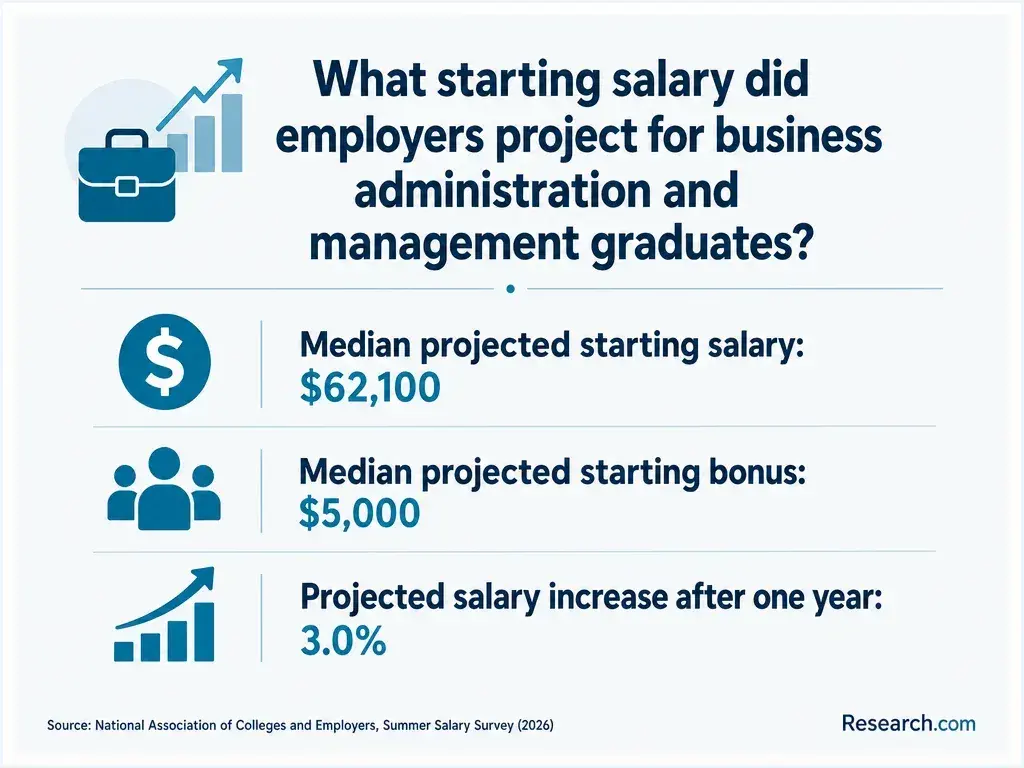
There is no single reliable salary for graduates of either concentration. Pay depends on the occupation, location, industry, prior experience, and responsibilities; an occupation-wide median includes established workers and is not an entry-level offer.
For context, the BLS reports a May 2025 median annual wage of $78,760 for U.S. market research analysts, an occupation that can use analytics skills. It reports $102,320 for project management specialists, a possible later or adjacent path for someone working with information systems. Neither figure isolates business administration graduates or establishes that one concentration pays more. Compare local job postings and your likely entry role against the full business administration tuition time commitment and career value before treating a salary figure as a return on your degree.
How Do You Choose an Accredited Business Analytics or MIS Program?
First, confirm the institution's accreditation with a recognized accreditor and verify its status directly with the accreditor or the U.S. Department of Education. Then check whether any claimed AACSB, ACBSP, or IACBE accreditation covers the relevant business school or program. Institutional accreditation and specialized business accreditation have different scopes; neither guarantees employment.
Compare the current catalog and a written degree audit for each option. Look for required analytical or systems courses, prerequisite bottlenecks, software access, project supervision, online attendance rules, total remaining cost, and career support relevant to your target role. US rankings of online business degree programs can help create a shortlist, but use verified course plans and policies to make the final choice.
Pick analytics when you want to turn trustworthy data into qualified business recommendations. Pick MIS when you want to improve how information systems support people and processes. If one program offers substantially better applied work or accepts more credits toward requirements, that practical difference may outweigh its label.
Other Things You Should Know About Business Administration
Often, yes, through approved electives, a minor, or a second concentration if the school permits it. Ask whether courses can count toward both and whether the combination adds credits or delays graduation.
Not necessarily. Expectations vary: some programs teach introductory programming or database queries, while others assume prior preparation. Review prerequisites and sample assignments rather than relying on the degree title.
No. Business analytics applies data methods to organizational decisions; data science programs may require substantially more programming, mathematics, and model development. Compare required courses if you want a technical modeling role.
It can prepare you for some business-facing technology roles, but IT jobs vary widely. Check postings for the specific role: infrastructure, software development, and security positions may require technical training beyond an MIS concentration.
- College of Business Administration - Academic Catalog https://catalog.uic.edu/ucat/colleges-depts/business-administration/
- Department of Management Information Systems | Speech-Language-Hearing Center https://uca.edu/ubulletin2019/colleges-departments/college-of-business/department-of-management-information-systems/
- Business Analytics vs. Information Systems - UC Online https://www.online.uc.edu/blog/business-analytics-vs-information-systems-whats-the-difference.html
- Multiple Use of Courses | Office of the Registrar https://registrar.arizona.edu/support-services/graduation-services/degree-candidacy/multiple-use-courses
- Data Analytics vs. Business Analytics: Key Differences | SIUE https://online.siue.edu/degrees/undergraduate/bsba/gen-program/business-analyst-career-guide/
- How to compare universities: A checklist of 8 key points | IE https://www.ie.edu/uncover-ie/how-to-compare-universities/
- Orfalea College of Business | Cal Poly Academic Catalog https://catalog.calpoly.edu/business/
- Program: Business Analytics and Information Systems B.S. | usf.edu https://cloud.usf.edu/catalog/undergrad/business-analytics-and-information-systems-bs
- Differences in Majors, Minors, Concentrations, and Certificates - Goldey-Beacom College https://www.gbc.edu/academics/differences-in-majors-minors-concentrations-and-certificates/
- Program: Business Analytics - Finance Concentration (BS) https://catalog.udel.edu/preview_program.php