2027 Paying for an Online BS in Business Administration: Flat-Rate Tuition Versus Per-Credit Tuition
Audited and Verified:
Our Editorial and Data Verification Process
Research.com uses government datasets, official education statistics and primary institutional information to support its career and degree guides. Our review process checks factual accuracy, occupational definitions, source dates and the requirements associated with the credentials discussed.
How This Article Was Fact-Checked
Our editorial team verifies salary estimates, employment projections, education requirements and program information against original data providers and official organizations. Salary figures are checked against the relevant occupational definitions and reporting periods. Information about licensure, accreditation and required in-person training is reviewed separately.
Fact-checked and verified on:

Co-Founder and Chief Data Scientist
A flat tuition rate can look like the cheapest way to finish an online BS in Business Administration until work, family obligations, or a required course slow your pace. Per-credit tuition may look more expensive but cost less if you can transfer substantial coursework or study part time.
This guide explains how each model is billed, what changes the total, and which questions to ask before enrolling. You'll be able to compare offers using the credits you actually need and a schedule you can realistically sustain.
Key Things You Should Know
- Flat-rate tuition is usually the better value only when you can complete enough applicable required credits in each paid term; an extra term can erase the apparent savings.
- Per-credit tuition ties the bill more closely to remaining coursework, which can favor transfer students and those taking a lighter course load.
- For a bachelor's degree often requiring about 120 semester credits, compare approved credits remaining, expected paid terms, mandatory fees, and aid, not the advertised rate alone.
What Is Flat-Rate Tuition for an Online Business Administration Degree?
Flat-rate tuition charges a set amount for an eligible enrollment period rather than charging separately for every credit within that period. A school might bill by semester or shorter term and specify a minimum or maximum course load.
Some subscription-style programs allow students to complete additional approved work during a paid period, but their assessment and progression rules differ from conventional classes.
The potential advantage is a lower effective cost per credit when you complete more required coursework in each term. The risk is paying for another term if prerequisites, course availability, assignment deadlines, or personal obligations limit your pace. A flat rate does not necessarily mean unlimited courses, self-paced study, or a fixed price through graduation.
If a faster schedule is central to the savings estimate, examine online business study with accelerated terms alongside each school's actual course calendar and workload. Shorter terms alone do not establish that you can finish more credits in a paid period.
How Does Per-Credit Tuition Work for an Online Business Degree?
Under per-credit tuition, the school charges for each credit you enroll in. A required course with more credits costs more in tuition than one with fewer credits at the same rate. Some institutions instead quote a per-course price; confirm the course's credit value before comparing it with a per-credit offer.
This model makes a lighter schedule easier to price and can be attractive when approved transfer credits leave relatively few requirements. It does not make delays free: repeating a course, taking prerequisites that do not satisfy degree requirements, or facing a rate increase can raise the final bill. Term-based fees may also continue even when you enroll in only one course.
A list of schools can help you identify candidates, but comparing the least expensive business administration schools is only a starting point. Request a personalized degree audit and current tuition schedule before treating any published rate as your completion cost.
Which Tuition Model Costs Less for an Online BS in Business Administration?
Flat-rate tuition tends to win when you can reliably complete a substantial load of required courses each term. Per-credit tuition tends to win when you need fewer credits or must spread coursework across a longer period. Compare the same degree requirements and a realistic schedule, not each school's fastest advertised pathway.
The table shows what enters a like-for-like tuition estimate. It excludes fees and aid, which you should add separately.
| Model | Tuition estimate | What most changes the result |
| Flat rate | Expected paid terms × tuition per term | Credits completed in each term; additional terms |
| Per credit | Required credits remaining × tuition per credit | Approved transfer credit; required repeats or extra courses |
To find your break-even point, divide the flat tuition for one term by the per-credit rate. That gives the number of credits you would need to complete during that term for the tuition charges to be equal, assuming the courses meet your degree requirements.
Then compare full-program estimates after mandatory fees, grants, scholarships, and employer payments. Loans help with cash flow but remain a cost to repay, potentially with interest.
If speed matters, comparing American fast-paced business bachelor's degrees can surface scheduling options. Use the pace you can sustain, not the shortest published timeline, in your cost calculation.
Employer Confidence in Online vs. In-Person Degree Skills, Global 2024

Tuition is only part of the amount billed or spent. Ask each school for an itemized estimate covering the courses and terms in your degree plan. The charges below can affect the comparison differently: a per-term fee grows with time enrolled, while a per-course fee grows with the number of courses taken.
- Institutional charges: Online-learning, technology, student-service, registration, graduation, and course-specific fees, including whether they apply each term or each course.
- Learning and assessment: Textbooks, access codes, required software, equipment, and any proctoring charges.
- Completion-related spending: Travel for a required visit, internship-related costs, or paid time away from work, if applicable.
Check when charges become nonrefundable and whether books or fees are covered by your aid or employer benefit. If you are weighing a more specialized degree instead, you can find budget-conscious project management degrees, but compare their mandatory charges and required credits on the same basis as the BSBA.
Transfer credit reduces cost only when it satisfies a requirement you would otherwise pay to complete. A school may accept a course as an elective while still requiring its own accounting, statistics, business-core, or concentration course. It may also require a minimum number of credits completed at the institution.
Ask for a written evaluation that separates accepted credits from credits applied to general education, the business major, electives, and residency requirements. Compare the resulting required credits remaining at each school.
For a flat-rate program, also check whether the remaining courses can be scheduled efficiently; a small number of courses spread across multiple terms may be costly.
Students choosing between business administration and an HR-focused route can also review online HR bachelor's programs accepting transfer credits. Transfer policies and the requirements those credits fulfill may differ even when the degree titles sound related.
Many US bachelor's programs require about 120 semester credits, but the catalog and your approved degree audit control the requirement at a particular school. Completion time depends on how many applicable credits you bring, how many courses you can take at once, and when required courses are offered.
For cost planning, map every remaining requirement to a term before assuming you can take a heavier flat-rate load. Prerequisite chains, capped enrollment, group projects, live sessions, and capstone timing may prevent an otherwise plausible schedule.
If you work or provide care, compare a sustainable pace with the faster one: finishing earlier can save term charges, but not if the plan makes a repeat or withdrawal more likely.
Considering a different business-oriented major to finish sooner? Online organizational leadership programs for quicker graduation may offer another path, but compare their approved transfer evaluations and required courses rather than assuming the degree will be shorter for you.
A BSBA generally combines broad business study, such as accounting, finance, marketing, management, operations, and quantitative decision-making, with general education and electives.
Exact requirements vary. Some schools offer formal concentrations; others offer only elective choices. Neither an elective cluster nor a course title automatically becomes a separately awarded credential.
Curriculum affects tuition because prerequisites and specialization choices affect which credits you still need. If your goal is supply chain work, inspect the operations courses and applied assignments in the BSBA before paying for a concentration.
You can also examine shorter bachelor's pathways in supply chain management as a distinct degree option; its transfer fit and total cost may differ from a general business degree.
Applicants commonly need evidence of secondary-school completion or prior college study, and transfer applicants generally must provide official transcripts.
A school may have separate admission standards for the institution and the business major, including GPA or prerequisite requirements. Tests, deadlines, and rules for prior learning vary; admission does not guarantee that previous courses will satisfy the degree.
Before paying an application or enrollment fee, ask admissions whether you qualify to enter, then ask the transfer or advising office which documents it needs for a course-by-course evaluation. If you are comparing related majors, compare transfer policies at online project management colleges separately; approval for admission and approval of credits are different decisions there, too.
Verify the institution's accreditation through the US Department of Education's accreditation database or the accreditor's own directory, checking the institution's current status and location.
Then check whether a claimed business accreditation, such as AACSB, ACBSP, or IACBE, actually covers the school or program you are considering. Institutional accreditation and specialized business accreditation are different claims.
For a tuition comparison, quality also includes whether required online courses run often enough to support your cost estimate. Ask for the current catalog, a sample course rotation, policies on leave and withdrawals, access to advising, and details of any live attendance, proctored exams, internship, or campus requirement.
If you are exploring online degrees with accelerated terms, verify those obligations before assuming an accelerated calendar will reduce paid terms.
What Careers, Salaries, and Job Outlook Follow an Online Business Administration Degree?
A BSBA can support applications for roles in operations, sales support, HR, marketing, and project coordination, depending on your experience and skills. Employers assess role-specific evidence, such as spreadsheet work, communication, relevant projects, or prior employment, not the degree title alone. Management roles commonly require substantial experience beyond undergraduate coursework.
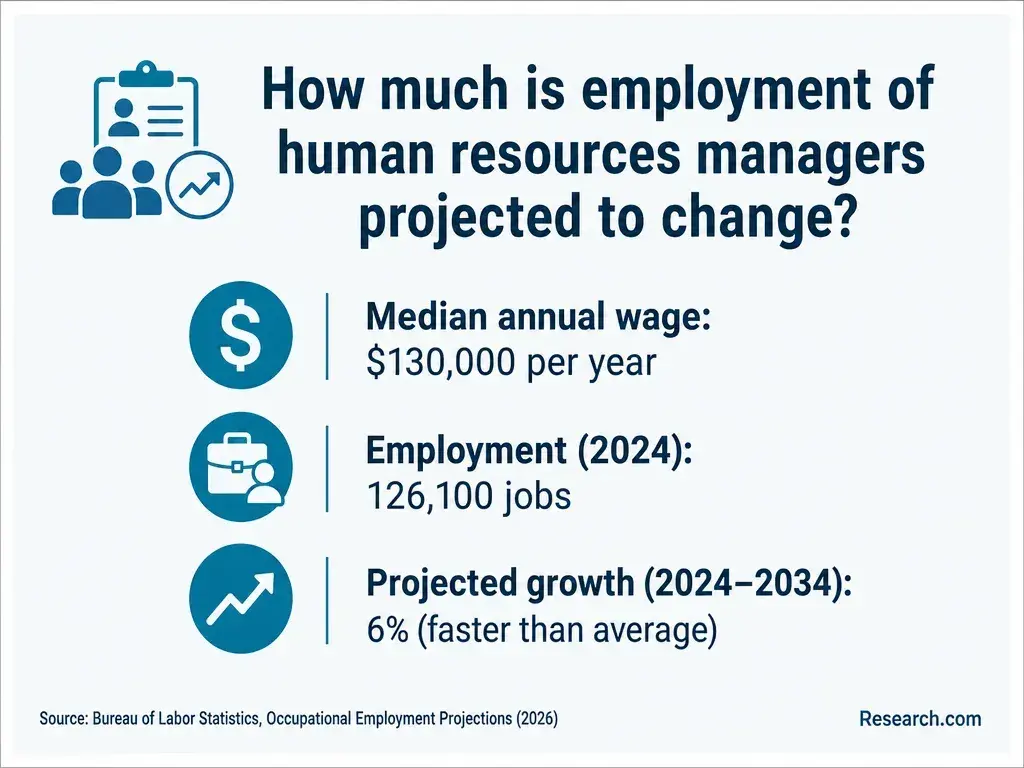
For context, the US Bureau of Labor Statistics reports a May 2025 median annual wage of $75,940 for human resources specialists and projects 6% employment growth from 2025 to 2035. Those are occupation-wide figures, not starting pay or an outcome promised to BSBA graduates.
If supply chain is your target, examine supply chain degree duration and salary considerations alongside relevant job requirements before paying for either a broad or specialized degree.
Use career outcomes cautiously when judging tuition value: compare the actual roles you could pursue with your current experience, and do not assume a future salary increase will cover borrowing or an extra term.
Other Things You Should Know About Business Administration Programs
No. A conventional program can charge flat tuition while retaining scheduled courses and deadlines. Competency-based programs assess demonstrated mastery under their own academic and billing rules. Ask how progress is measured before comparing prices.
Possibly, if the institution and program are eligible and you meet aid requirements. Ask the financial-aid office how your enrollment intensity, academic progress, and payment periods affect your award; a tuition model does not establish eligibility by itself.
The school's refund schedule governs institutional charges, while separate rules may require a return of federal aid. Review both policies and their deadlines before enrolling, especially if your work schedule may change.
That depends on your employer's policy. Confirm eligible schools and courses, grade requirements, payment timing, caps, and any obligation to repay the benefit if you leave your job. Reimbursement after a term may still leave you responsible for the upfront bill.
- Federal Pell Grants | studentaid.gov https://studentaid.gov/understand-aid/types/grants/pell
- Pell Grant Enrollment Intensity and Cost of Attendance | ed.gov https://fsapartners.ed.gov/knowledge-center/fsa-handbook/2025-2026/vol7/ch3-pell-grant-enrollment-intensity-and-cost-attendance
- Semester Course Load and Student Performance - PMC - NIH https://pmc.ncbi.nlm.nih.gov/articles/PMC7568764/
- Program Integrity Questions and Answers - Retaking Coursework | U.S. Department of Education http://www.ed.gov/laws-and-policy/higher-education-laws-and-policy/program-integrity-information-questions-and-2
- Determining How Students are Billed | Tuition Rates and Fees https://www.tuition.pitt.edu/about/determining-how-students-are-billed
- Flat-Rate Tuition Frequently Asked Questions | Transfer to Wayne State University https://wayne.edu/registrar/flat-rate-faq
- Tuition & Fees | Bursar | Chicago State University https://www.csu.edu/financialoperations/bursar/tuition/
- Financial Aid for Repeated Coursework: Financial Aid Impact | nyit.edu https://catalog.nyit.edu/financial_aid_undergraduate/repeated_coursework
- Momentum: The Academic and Economic Value of a 15-Credit First-Semester Course Load for College Students in Tennessee https://ccrc.tc.columbia.edu/publications/momentum-15-credit-course-load.html
- Tuition & Fees | University College Online Degree Programs https://basbls.uc.uiowa.edu/future-students/tuition-fees