2027 Online BS in Business Administration vs. a Degree Completion Program in Professional Studies: Which Route Fits Your Career Plan?
Audited and Verified:
Our Editorial and Data Verification Process
Research.com uses government datasets, official education statistics and primary institutional information to support its career and degree guides. Our review process checks factual accuracy, occupational definitions, source dates and the requirements associated with the credentials discussed.
How This Article Was Fact-Checked
Our editorial team verifies salary estimates, employment projections, education requirements and program information against original data providers and official organizations. Salary figures are checked against the relevant occupational definitions and reporting periods. Information about licensure, accreditation and required in-person training is reviewed separately.
Fact-checked and verified on:

Co-Founder and Chief Data Scientist
If you have college credits and work experience but no bachelor's degree, the fastest route to graduation may not be the best route to your next job. An online BS in Business Administration offers a defined business curriculum; a degree completion program in professional studies may let you combine prior learning with interdisciplinary coursework. For returning students, career changers, and employees seeking advancement, the choice depends on which credits actually satisfy graduation requirements and what skills the target role demands. This comparison shows how to test both paths before committing your time and money.
Key Things You Should Know
- Choose the business administration BS when your target role calls for substantial accounting, finance, marketing, operations, or analytics preparation; choose professional studies when your existing expertise and a more flexible curriculum better serve a defined career goal.
- Compare approved degree audits, not advertised transfer limits: accepted credits may count only as electives, leaving different major requirements, costs, and completion dates.
- Neither degree guarantees a management job or salary. The U.S. Bureau of Labor Statistics reports a $75,940 May 2025 median annual wage for human resources specialists, an occupation-wide figure rather than an expected wage for new graduates.
What Is the Difference Between an Online BS in Business Administration and Professional Studies?
An online BS in Business Administration is a bachelor's degree organized around business requirements. A degree completion program in professional studies is generally designed for students bringing prior college learning and may draw from several applied fields. Neither label guarantees a particular curriculum, transfer policy, or pace.
The comparison below identifies the differences most likely to affect a returning student's decision. Individual schools may structure either degree differently.
| Decision point | Business administration BS | Professional studies completion program |
| Academic focus | Defined general business core, sometimes with a formal concentration | Interdisciplinary or applied curriculum shaped by program rules and available options |
| Prior-credit fit | Business prerequisites and core courses may limit where unrelated credits apply | May offer more room for varied prior coursework, subject to an official audit |
| Career signal | Clearly identifies undergraduate business study | Requires the student to explain the relevant coursework and experience behind the broader title |
| Main risk | More required courses than an advertised transfer total suggests | Too little depth in the business function needed for the next role |
Professional studies is not automatically a faster version of a business degree. If an interdisciplinary option appeals to you, shorter online bachelor's pathways in organizational leadership offer another comparison - but verify the actual course requirements rather than relying on a program's advertised duration.
Which Degree Path Best Fits Your Career Goals and Work Experience?
Start with the work you do now and the responsibilities you want next. An employee moving from customer service into marketing operations may benefit from the business BS's marketing, analytics, and budgeting courses. An experienced nonprofit coordinator seeking broader administrative responsibility may find that professional studies builds more efficiently on existing work - provided its electives address the skills missing from that role.
The recommendation can reverse when an official degree audit arrives. A business BS may be the stronger academic match but require substantially more remaining coursework; a professional studies program may graduate you sooner but leave a finance or analytics gap that you must address through work, targeted courses, or training. If continuing to work is essential, flexible online study for business administration career growth is a useful comparison point. Check live meetings, group projects, and assignment deadlines before treating "online" as schedule flexibility.
Ask a target employer - or examine several relevant job postings - whether the degree must be in business, whether any bachelor's degree satisfies a hiring requirement, and which tasks require demonstrated experience. A degree can remove an education barrier without replacing a record of supervising people, managing budgets, or delivering projects.
Are Online Business Administration and Professional Studies Degrees Accredited?
Accreditation attaches to an institution or a defined academic unit or program, not to "online" delivery as a category. Before enrolling in either path, confirm the institution's current accreditation with its accreditor and confirm that the online degree is awarded by that institution. This matters for transfer, financial-aid eligibility, and employers or graduate schools that set accreditation requirements.
Some business schools also hold AACSB, ACBSP, or IACBE accreditation. Its scope must be checked: a university's business programs may be covered while a professional studies degree housed elsewhere is not. Business-specific accreditation is a separate consideration from institution-level accreditation, not proof of job placement. When using online business school comparisons across the United States, verify the named degree and accreditation scope directly before treating programs as equivalent.
A business administration BS typically develops a connected foundation in accounting, finance, marketing, management, operations, and quantitative decision-making. A concentration may add depth, but an elective cluster is not necessarily a formally awarded concentration. Read required course descriptions: a general business core alone may provide limited preparation for specialized accounting or data-intensive work.
Professional studies programs vary more. One may emphasize organizational leadership and communication; another may allow substantial coursework in technology, human resources, or business. That flexibility is valuable when you can connect courses to a specific skill gap, but it can produce an unfocused transcript if you choose only for convenience. For an HR goal, compare actual employment-law, HR operations, and data coursework with education options for future HR professionals. Neither introductory business classes nor an HR-focused elective automatically confers professional certification.
In either program, look for assessed work you can discuss with an employer: a documented process analysis, a budget with stated assumptions, or a presentation based on appropriately obtained data. A classroom simulation is evidence of learning, not proof that you produced results for an organization.
A business administration BS may admit first-time and transfer students, while a degree completion program may require previous college credits or a particular academic standing. Admission to the university, admission to a major, acceptance of transfer credits, and application of those credits to graduation requirements are separate decisions. Schools set their own rules for each.
Request an evaluation using official transcripts from every institution attended. If you studied outside business, ask whether previous mathematics, statistics, economics, accounting, and communication courses meet specific requirements or count only as electives. An applied associate degree or military learning may receive credit without satisfying the business core. For a focused check of possible entry requirements, review business administration admissions eligibility rules, then obtain the receiving school's written determination. A non-business background alone does not establish ineligibility.
The meaningful timeline is the number of required courses remaining after evaluation, plus when those courses are offered. A professional studies program may use more prior credits, yet a required capstone or limited course rotation can still delay graduation. A business BS may have a longer sequence if accounting or quantitative prerequisites must be completed before advanced courses.
Ask each adviser for a term-by-term plan showing remaining general education, major, elective, residency, and capstone requirements. Then check whether that plan works at a course load you can sustain alongside employment or caregiving. When you compare fast-track business bachelor's schools, check whether the published pace assumes full-time enrollment, summer courses, or transfer credits that your own audit has not approved.
Without named schools and approved credit evaluations, there is no reliable price for either route. Compare total cost to graduation, not tuition per credit alone: the lower-rate program can cost more if fewer prior credits apply or required courses extend enrollment.
Request a written estimate from each school that separates the major cost drivers. These items matter because they can affect both the final bill and what you must pay before reimbursement or aid arrives.
- Tuition for every remaining required course, based on the school's actual credit or term pricing
- Mandatory technology, assessment, and graduation fees, plus books or software
- Financial aid and employer benefits for which you are eligible, including payment timing and conditions
- Potential extra terms, reduced work hours, or travel for any in-person requirement
Use online business administration degrees at lower prices to identify candidates, then recalculate costs using your own degree audit. Confirm aid eligibility and satisfactory academic progress rules with each school's financial-aid office; do not count an unapproved transfer award or employer payment as a saving.
Either accredited bachelor's degree may satisfy a general degree requirement for some business-support roles. Coursework and experience determine which applications are credible. Someone with customer-facing experience might pursue marketing or sales coordination; an employee who has handled scheduling and vendors might target operations or project coordination. HR assistant and specialist pathways call for relevant HR knowledge and professional judgment, not simply a bachelor's title.
A business administration BS can make the academic connection to business functions clearer. A professional studies graduate may need to show that connection through a coherent course plan, relevant employment, and work samples. If HR is the target and you already have transferable credits, HR bachelor's programs with flexible transfer pathways are worth comparing with both generalist options. For a substantial career change, assess whether an internship, supervised project, or entry-level function-specific role is feasible; graduation alone does not establish readiness to manage staff or major budgets.
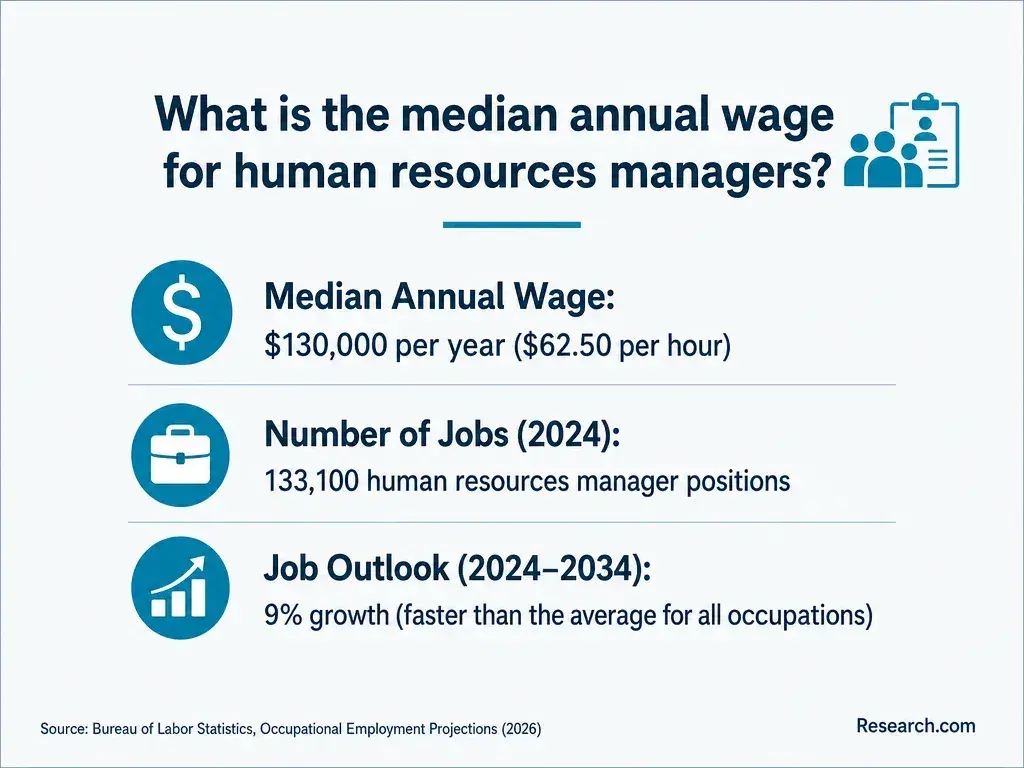
Neither degree has a single defensible salary figure. U.S. Bureau of Labor Statistics occupation data describe workers across experience levels, industries, and locations - not the starting pay of graduates from either program. For human resources specialists, the BLS reports a $75,940 median annual wage in May 2025 and 6% projected employment growth from 2025 to 2035. Those figures suggest an occupation to investigate, but they cannot predict whether an applicant will qualify for a particular HR opening or what that employer will pay.
Compare compensation for the specific role and location you intend to pursue, then weigh likely entry requirements against your remaining education cost. The same caution applies to project-related roles: occupation-wide pay is not an automatic return on a new degree. If you are considering that specialty, compare costs and financial aid packages for online project management bachelor's students alongside the business and professional studies options before borrowing.
Do Business Careers Require Licenses or Professional Certifications?
Many business coordination and general administration jobs do not require a government-issued license, but requirements change with the work performed. Public accounting, certain financial-services activities, and other regulated functions can have separate state or federal rules. A business administration or professional studies bachelor's degree does not, by itself, establish eligibility for those activities or for a voluntary professional designation.
For HR or project work, employers may value relevant certifications, but eligibility can depend on experience, education, or an examination set by the certifying organization. If project coordination is your immediate goal, compare job requirements and economical project management education online with shorter training options. First determine whether you need a bachelor's credential, a function-specific skill, documented project experience, or some combination; buying another credential without that distinction can add cost without closing the hiring gap.
Other Things You Should Know About Business Administration
That depends on the institution. Ask the registrar for the exact diploma wording and official transcript designation rather than assuming online and campus students receive identical documents.
Potentially. MBA programs set their own admission and prerequisite rules. Check the graduate program's requirements, particularly if your professional studies coursework includes little accounting or quantitative business study.
Name the relevant courses, projects, and work responsibilities in your résumé and interviews. Connect each to tasks in the job description rather than expecting the degree title to communicate a specialization.
Only if you have permission to use the material. Remove confidential business, customer, and employee information, and check your employer's intellectual-property policies. An approved, anonymized account of your methods may be more appropriate than the original documents.
- Undergraduate Degree Fields - COE https://nces.ed.gov/programs/coe/indicator/cta
- Accreditation in the U.S. | ed.gov http://www.ed.gov/laws-and-policy/higher-education-laws-and-policy/college-accreditation/accreditation-in-the-us
- Cost of Attendance (Budget) | 2025-2026 Federal Student Aid Handbook https://fsapartners.ed.gov/knowledge-center/fsa-handbook/2025-2026/vol3/ch2-cost-attendance-budget
- 10 Best Business Degrees for High Pay and Career Growth | Pace University New York https://www.pace.edu/news/best-business-degrees-undergrad-grad
- College Credit for Students and Learners | acenet.edu https://www.acenet.edu/Programs-Services/Pages/Credit-Transcripts/Students.aspx
- Business Administration | General Studies | BABA - UF Catalog https://catalog.ufl.edu/UGRD/colleges-schools/UGBUS/BAG_BABA/
- Management, BS - College of Business at Delaware State https://business.desu.edu/departments/business-administration/management-bs
- Admissions Requirements - National University https://catalog.ncu.edu/content.php
- 11 Types of Business Degrees and Career Pathways | National University https://www.nu.edu/blog/types-of-business-degrees/
- How Do Transfer Credits Work When You Go Back to School? | Whitworth Online https://online.whitworth.edu/news-articles/how-do-transfer-credits-work-when-you-go-back-to-school/