2027 From Customer Success to Business Operations: When Does a BS in Business Administration Make Sense?
Audited and Verified:
Our Editorial and Data Verification Process
Research.com uses government datasets, official education statistics and primary institutional information to support its career and degree guides. Our review process checks factual accuracy, occupational definitions, source dates and the requirements associated with the credentials discussed.
How This Article Was Fact-Checked
Our editorial team verifies salary estimates, employment projections, education requirements and program information against original data providers and official organizations. Salary figures are checked against the relevant occupational definitions and reporting periods. Information about licensure, accreditation and required in-person training is reviewed separately.
Fact-checked and verified on:

Co-Founder and Chief Data Scientist
Customer success professionals already solve operational problems: they coordinate handoffs, spot recurring service issues, and use customer data to improve retention. Moving into business operations, however, may require stronger evidence of budgeting, process design, and cross-functional decision-making.
This article helps you decide whether a BS in Business Administration fills those gaps, which roles it may support, and when a smaller investment could be more useful. It also shows you what to verify about programs, cost, and career outcomes before enrolling.
Key Things You Should Know
- A BS in Business Administration makes the most sense when operations roles you want require a bachelor's degree and your experience does not yet show sufficient financial, analytical, or process-management skills.
- If your target is an adjacent operations coordinator or customer success operations role, a documented process-improvement project and targeted training may be a faster first step than a full degree.
- For context, the U.S. Bureau of Labor Statistics reports a $102,320 median annual wage for project management specialists in May 2025, but that occupation-wide figure is not an expected starting salary for a business graduate.
What is a business administration degree, and who benefits from earning one?
A BS in Business Administration is an undergraduate degree that combines a broad business core with general education and, in some programs, electives or a formal concentration. It can help a customer success professional translate knowledge of clients and service delivery into a broader understanding of budgets, operations, marketing, management, and business data. A BBA or BA in Business may cover similar ground; compare actual requirements rather than assuming the degree titles signal a fixed difference.
The degree is most useful when you need both a bachelor's credential and business knowledge across functions. It is less compelling if you already hold a bachelor's degree, meet the hiring requirement, and need only one specific skill, such as spreadsheet modeling or workflow design. To see how curricula and formats differ, use a nationwide comparison of online business programs as a starting point, then check each school's current catalog.
When does a BS in business administration make sense for customer success professionals?
Start with the work you have done, not your title. Managing an account portfolio, reporting on renewals, coordinating escalations, or improving onboarding can provide relevant evidence for customer success operations or business operations positions. The question is whether the roles you want also call for skills or credentials you cannot yet demonstrate.
The BS is a stronger choice if several target postings require a bachelor's degree, your previous study can apply toward graduation, and the curriculum addresses identifiable gaps in accounting, statistics, operations, or management. It can also make sense if you want room to move beyond customer-facing teams into broader organizational roles. If postings emphasize a tool or process you could learn while working, test that shorter route first. For a degree designed around continued employment, examine how to study business administration without leaving your job, including deadlines and group-work obligations.
A useful decision test is to compare several real job descriptions with your résumé. Mark each requirement as already evidenced, learnable through a workplace project, or best addressed through formal study. A degree is easier to justify when the final category contains substantial, recurring requirements - not merely one preferred qualification.
What careers can a BS in business administration prepare you for?
The closest transition is often into customer success operations, revenue operations support, or an operations coordinator role. These jobs may involve documenting workflows, maintaining reporting definitions, coordinating systems changes, and helping teams act on performance data. Your customer-facing experience is relevant, but employers may still expect proficiency with their software, data practices, and internal processes.
Other possibilities include project coordinator, administrative specialist, sales operations associate, or HR support roles. These are not interchangeable: project coordination emphasizes schedules and stakeholders, while HR work involves personnel processes and employment-related rules. If HR is the clear destination and you have prior college credit, compare a general business degree with using existing credits in a human resources degree.
Management and specialist positions generally require more than an undergraduate credential. For example, owning a department budget or directing staff calls for demonstrated responsibility and employer trust; a BS can support that progression but does not confer it at graduation.
Business operations turns recurring problems into repeatable processes and decisions. A customer success professional might already recognize that handoffs delay onboarding. Operations work adds the ability to map that process, define a baseline measure, estimate the resources needed for a change, and present a recommendation to the people authorized to act.
Accounting and finance courses can help you distinguish revenue from profit and evaluate a proposal's costs. Statistics and analytics can help you interpret retention or workload reports without treating a simple association as proof of cause. Operations and management courses can connect those findings to process design, staffing, and implementation. The strongest evidence for a career move pairs coursework with a work sample, such as an approved, anonymized process map or dashboard explanation - not a claim of savings you have not measured.
If the target job is specifically project coordination, compare the breadth of a business degree against cost-conscious project management college options. A narrower program may offer more relevant depth, while a business administration degree may preserve more options across functions.
Requirements vary, but programs commonly combine general education with introductory accounting, economics, finance, marketing, management, business law, quantitative reasoning, and operations. Some add a capstone, internship, or formal concentration. Check whether operations, analytics, information systems, or project management courses are required, available as electives, or part of an officially designated concentration; those are different academic commitments.
For an operations transition, prioritize courses with assignments that require you to interpret data, compare costs, document a process, and defend a recommendation. If you are weighing project management as a specialization, compare the relevant courses and project management college costs after financial aid before assuming a separate degree is worth more than suitable electives within a broader BS. Neither a project management course nor a concentration automatically awards a professional certification.
Schools set their own rules for first-time and transfer applicants. They may request secondary-school records, college transcripts, and evidence that prerequisite or general-education courses have been completed. Admission to the university does not always mean immediate admission to the business major. For the school you are considering, confirm any GPA standard, mathematics or accounting prerequisites, application deadlines, and separate major-entry requirements.
If you have prior college study, request an official evaluation showing not just credits accepted but which general-education, business-core, elective, and residency requirements they satisfy. Customer success experience may strengthen an application, but it does not automatically earn academic credit. Use an overview of business administration degree entry requirements to prepare questions, then rely on the institution's admissions office and degree audit for your case.
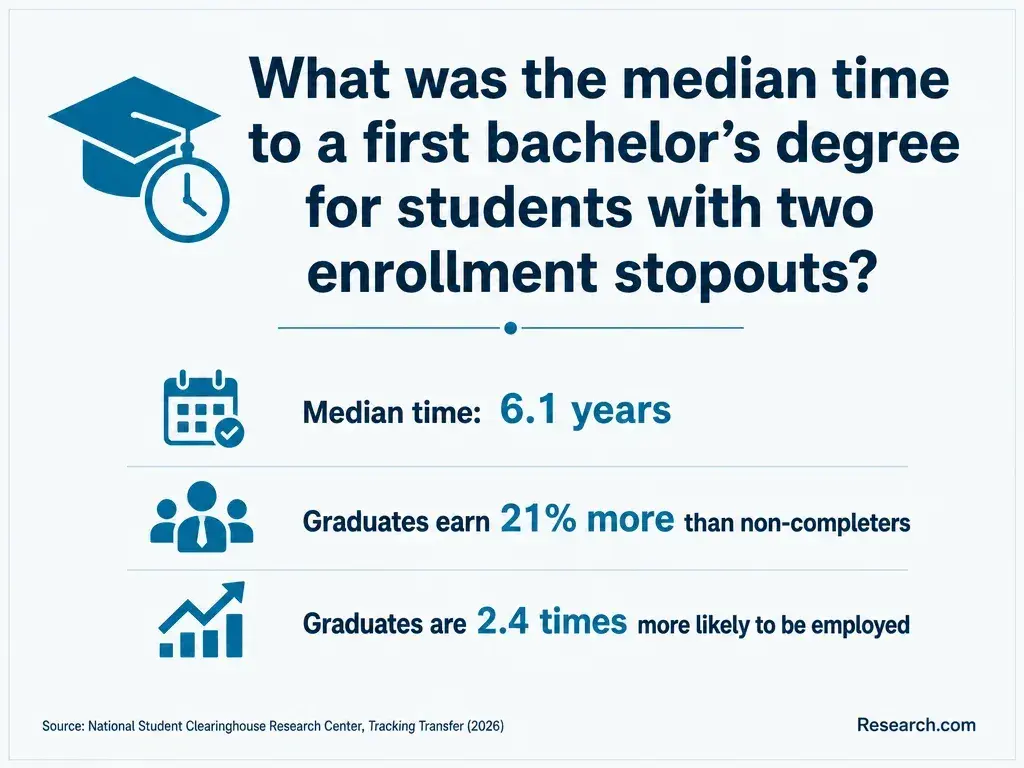
A bachelor's program is commonly designed around four years of full-time undergraduate study. Your remaining time may be much shorter or longer depending on applicable transfer credit, prerequisites, part-time enrollment, and when required courses are offered. An accelerated calendar does not necessarily reduce the amount of coursework. If speed is important, compare accelerated business programs against your available study hours and the school's written graduation plan.
For cost, compare remaining required credits × the applicable tuition rate, then add mandatory fees, materials, technology or proctoring charges, and any travel. Subtract only aid or employer benefits for which you have confirmed eligibility. That approach is more useful than comparing advertised per-credit prices when schools would apply your existing coursework differently.
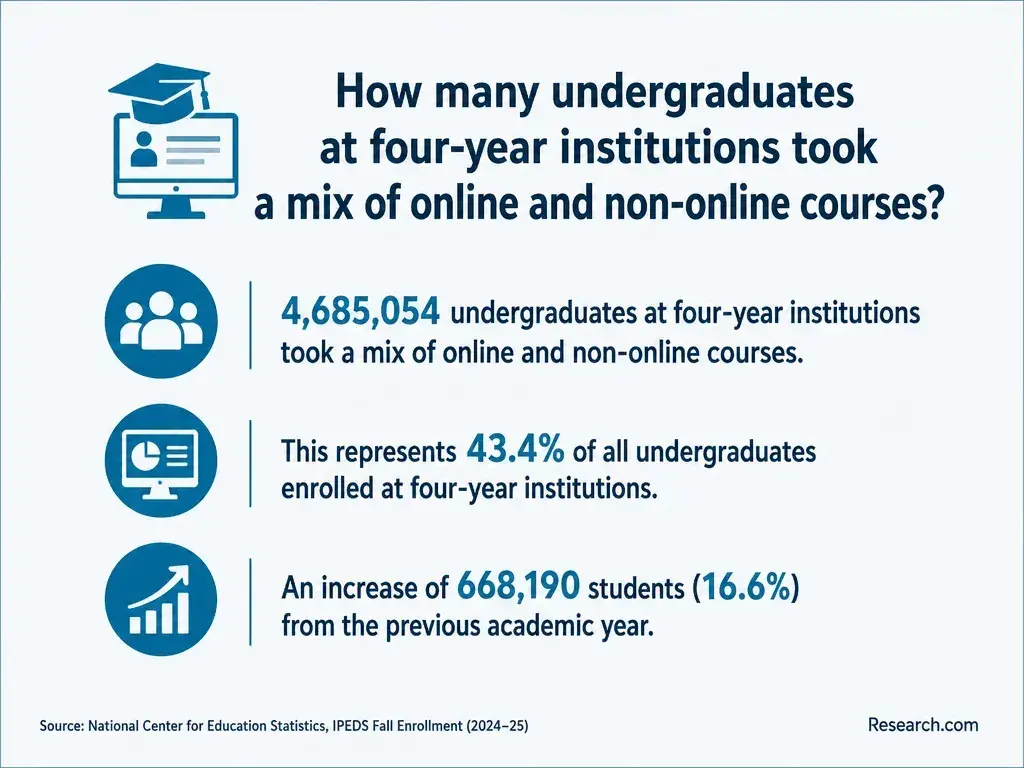
An online BS can be a credible route when it is awarded by an appropriately accredited institution and meets the same documented academic requirements as the school's stated program. Delivery mode alone does not establish quality - or flexibility. Ask whether classes require live meetings, proctored exams, team presentations, scheduled internships, or campus visits, and whether the courses you need are offered at a workable pace.
For someone employed in customer success, online study can make continued work possible, but the value of that arrangement depends on the schedule you can sustain. Check faculty access, career support, and how applied assignments accommodate employed students. When comparing economical online college programs in business, examine these academic and scheduling conditions alongside tuition rather than treating a low advertised price as sufficient evidence of fit.
First, verify the institution's current accreditation and the accreditor's recognized status through the relevant official directories. Then check any claimed business accreditation - such as AACSB, ACBSP, or IACBE - against that accreditor's directory and confirm its scope covers the school or program you are considering. Institutional accreditation and business-specific accreditation answer different questions; neither guarantees a particular job outcome.
For this career move, quality also means access to courses and evidence you can use. Ask an adviser for the current degree map, course rotation, transfer evaluation, and rules for any internship or capstone. Ask career services what support is available to working students seeking operations roles. A business bachelor's ranking focused on completion speed may identify programs to investigate, but confirm that the stated timeline applies to your credits and enrollment pace.
What salary and job outlook can business administration graduates expect?
There is no single salary or job-growth rate for BS in Business Administration graduates. Pay depends on the occupation, location, industry, and responsibilities you obtain - not the degree title alone. The U.S. Bureau of Labor Statistics reports that project management specialists had a median annual wage of $102,320 in May 2025 and projects 7% employment growth from 2025 to 2035. Those figures describe the occupation as a whole, including experienced workers; they should not be used as a forecast of your first operations salary.
For a realistic return-on-investment estimate, compare pay ranges in postings for roles you could plausibly enter with and without the degree. Weigh any likely difference against net education cost, study time, and opportunities to gain operations experience while enrolled. Students trying to keep that net cost down may want to start by researching low-tuition business administration schools accepting FAFSA, since federal aid eligibility and sticker price both shape the final investment. If a hiring manager values a process-improvement record more than an additional credential for your target role, building that record may deserve priority.
Other Things You Should Know About Business Administration
Possibly, if a school offers prior-learning assessment and your experience meets its evidence and credit rules. Employment alone does not automatically award credit.
If the relationship supports it, ask about a bounded operations task you could take on and who would review the work. Clarify your current duties before committing to a project outside your role.
Only with the required employer and academic permissions. Otherwise, use public or synthetic data and avoid exposing customer details, internal metrics, or proprietary workflows.
Usually not: MBA programs generally require a completed bachelor's degree for admission. If you already have one, compare the MBA's cost and career relevance with targeted undergraduate courses or professional training.
- BA vs BS: Which is the Better Business Degree? - UC Online https://www.online.uc.edu/blog/ba-vs-bs-which-is-the-better-business-degree-uc-online.html
- What Employers Really Care About: Degree, Skills, Or Experience? | Florida National University https://www.fnu.edu/degree-skills-experience-employers-value/
- What Can You Do with a Business Administration Degree? | American InterContinental University https://www.aiuniv.edu/blog/what-can-you-do-with-a-business-administration-degree
- What can you do with a business administration degree? | University of Phoenix https://www.phoenix.edu/articles/business/what-can-you-do-with-a-business-administration-degree.html
- Business Administration vs. Management: Key Differences and Career Fit | post.edu https://post.edu/blog/business-administration-vs-management/
- Transferable Skills in Business Administration Across Industries | The College of Westchester https://www.cw.edu/blog/how-business-administration-courses-build-transferable-skills-across-multiple-industries/
- What Jobs Can You Get With a Business Degree? | snhu.edu https://www.snhu.edu/about-us/newsroom/business/what-jobs-can-you-get-with-a-business-degree
- Entry-Level Jobs With a Business Administration Degree | Warner Pacific University http://www.warnerpacific.edu/blog/top-entry-level-jobs-ba-business-administration/
- What Can You Do With a Business Administration Degree? | American Military University https://www.amu.apus.edu/area-of-study/business-administration-and-management/resources/what-can-you-do-with-a-business-administration-degree-exploring-options/
- Customer Success vs. Account Management: Roles and Overlap | Gainsight Software https://www.gainsight.com/blog/customer-success-vs-account-management/