2027 BS in Business Administration Math Planning: Math Placement Before Admission to the Business Major
Audited and Verified:
Our Editorial and Data Verification Process
Research.com uses government datasets, official education statistics and primary institutional information to support its career and degree guides. Our review process checks factual accuracy, occupational definitions, source dates and the requirements associated with the credentials discussed.
How This Article Was Fact-Checked
Our editorial team verifies salary estimates, employment projections, education requirements and program information against original data providers and official organizations. Salary figures are checked against the relevant occupational definitions and reporting periods. Information about licensure, accreditation and required in-person training is reviewed separately.
Fact-checked and verified on:

Co-Founder and Chief Data Scientist
A math placement result can determine whether you start a business administration major on schedule or spend an extra term completing prerequisites. That distinction matters especially if you are transferring credits, returning to college, or planning a finance or analytics concentration.
This guide separates admission to the university from admission to the business major, explains how schools place students into math courses, and shows what to confirm before registering. The goal is a realistic course plan, not an assumption that one test score defines your ability to earn the degree.
Key Things You Should Know
- Math placement is not universally required for university admission, but an unmet math prerequisite can delay entry to the business major or access to its courses.
- Business programs may require quantitative reasoning, college algebra, calculus, statistics, or a sequence, the applicable catalog and official degree audit control your plan.
- A placement result usually determines your starting course, not whether previously earned math credit satisfies a requirement. Confirm both decisions separately before enrolling.
What math do you need before entering a business administration major?
Many business majors expect readiness for a college-level quantitative course, but readiness, completed prerequisites, and admission eligibility are different things. One school may admit students to the university before they finish college algebra; another may require a specified math course and grade before they can declare or enter the business major. Statistics or calculus may come later in the degree.
Start with the admissions requirements for your intended business major, not a general description of university admission. Check the required course name, minimum grade, approved equivalents, and deadline for completion. If you studied outside business, a previous math or statistics course may help, but its title alone does not establish equivalence. Transfer students comparing specialized paths should also check whether quantitative credits apply to the major rather than only to electives; human resources bachelor's residency and transfer rules illustrate why accepted credit and fulfilled requirements need separate review.
If you are still choosing a high school or community college course, favor one that the intended university identifies as an approved prerequisite. A more advanced course is not automatically the better choice if it does not satisfy the specific requirement.
Is math placement required for admission to a business administration program?
Not necessarily. Some institutions use math placement only after admission to decide which course you may take first. Others require a qualifying placement result or completed math prerequisite before admission to the business school. A student can therefore be admitted to the university but not yet eligible to enter the business major.
Before applying, ask admissions whether placement is an application condition, a registration condition, or a condition for declaring the major. Then ask the business-school adviser which office decides whether transferred coursework meets the prerequisite. These answers may differ. If application costs are part of your decision, you can find online colleges with free admissions applications, but verify each program's math rules before treating it as an accessible option.
What math courses are required for a bachelor's in business administration?
There is no universal BS in Business Administration math sequence. Depending on the school, the degree may include quantitative reasoning or college algebra, business calculus or another calculus course, and statistics or business analytics. Accounting and finance also use quantitative skills, even when they are not classified as math courses. A finance or analytics concentration may add prerequisites beyond the general business core.
The table distinguishes common course purposes; it is not a list of requirements for every program.
| Course or skill area | Typical business use | Planning question |
| Quantitative reasoning or college algebra | Rates, formulas, graphs, and spreadsheet calculations | Does this course satisfy the major prerequisite or only general education? |
| Calculus or business calculus | Models of change and optimization | Is it required for the degree, a concentration, or neither? |
| Statistics or business analytics | Interpreting variation, samples, and business data | Which earlier math course or placement level permits enrollment? |
Read the catalog alongside your degree audit, particularly if you are transferring. A course can be accepted for credit without replacing a required quantitative course. The same distinction matters when comparing adjacent programs and online undergraduate project management credit acceptance: only the receiving institution can confirm how a course applies to its curriculum.
Placement is usually administered through the institution's testing or advising process, rather than decided by a business professor. Schools may use a placement assessment, recent coursework and grades, standardized test results, or a combination. Their accepted evidence, score rules, and expiration policies vary.
To avoid an unnecessary test or a course you have already completed, follow this sequence:
- Send official transcripts and any accepted exam records to the institution.
- Ask the testing or advising office which evidence it uses for placement and whether your records qualify for a waiver.
- Ask the business adviser whether that placement also meets the major's admission and course prerequisites.
- Review the resulting degree audit before registering, and request a formal equivalency review if a prior course appears misclassified.
Placement policies are worth comparing alongside curricula when reviewing leading US colleges for online business study. A program that accepts your application may still place you below the math course needed for its business core.
Sometimes you can enter the university, and, at some schools, declare the business major - before completing college-level math. That does not mean the BS can be finished without meeting its quantitative requirements. Other schools require the math prerequisite before major admission, so a preparatory course may be necessary first.
If your placement result is below the required course, ask whether the school offers a supported college-level course, a preparatory sequence, a retest, or another approved route. Check when the next business courses are offered: a math delay matters most when it blocks statistics, accounting, or another prerequisite chain. For the same reason, the calendar length shown in shortest online business bachelor's program rankings may not reflect your completion time if you need preparatory math.
Online delivery does not, by itself, remove math prerequisites. An online BS may use the same placement and degree requirements as its campus counterpart, or the institution may have policies specific to online students. Check the policy for the exact degree and enrollment term.
Ask how placement is completed remotely, whether an assessment requires proctoring, and whether required math courses are offered online when you need them. Also confirm whether an accelerated schedule leaves enough time to rebuild algebra skills before statistics or finance. When comparing accelerated online business degree programs, distinguish faster course scheduling from permission to skip prerequisites; they are not the same benefit.
A full-time student entering with no college credit commonly plans around four academic years for a bachelor's degree. Your actual timeline depends on accepted credits, which requirements they fulfill, math placement, course availability, and enrollment pace. Preparatory math can increase time or cost if it adds coursework without satisfying a degree requirement.
For a usable cost estimate, request an official degree audit and price the remaining required courses, not just the advertised tuition rate. Include mandatory fees, books or software, possible assessment costs, and the expense of an additional term if a prerequisite delays registration. Compare those figures across low-cost online business degree programs only after each school evaluates your credits. A lower price per course does not necessarily produce a lower completion cost.
First, verify the institution's accreditation through the accreditor's directory and confirm that the accreditor is recognized by the U.S. Department of Education or the Council for Higher Education Accreditation. Then, if the school advertises AACSB, ACBSP, or IACBE accreditation, check the business accreditor's directory for its actual scope. Institutional accreditation and business-specific accreditation are separate claims; neither substitutes for checking the named BS program and its current status.
Accreditation is relevant to your planning because credit transfer and financial-aid decisions depend on institutional and program rules, not a marketing label alone. If comparing FAFSA-accepting colleges for business administration students, verify aid eligibility with each school's financial-aid office and confirm accreditation independently. Accreditation does not guarantee that another institution will accept your math credit.
A BS in Business Administration can support applications for roles in operations, human resources, marketing, project coordination, and other business functions. Math preparation matters most when a role requires interpreting budgets, spreadsheets, or data; the degree alone does not establish experience in those tasks. An internship, relevant job, or supervised project can help you show how you have used them.
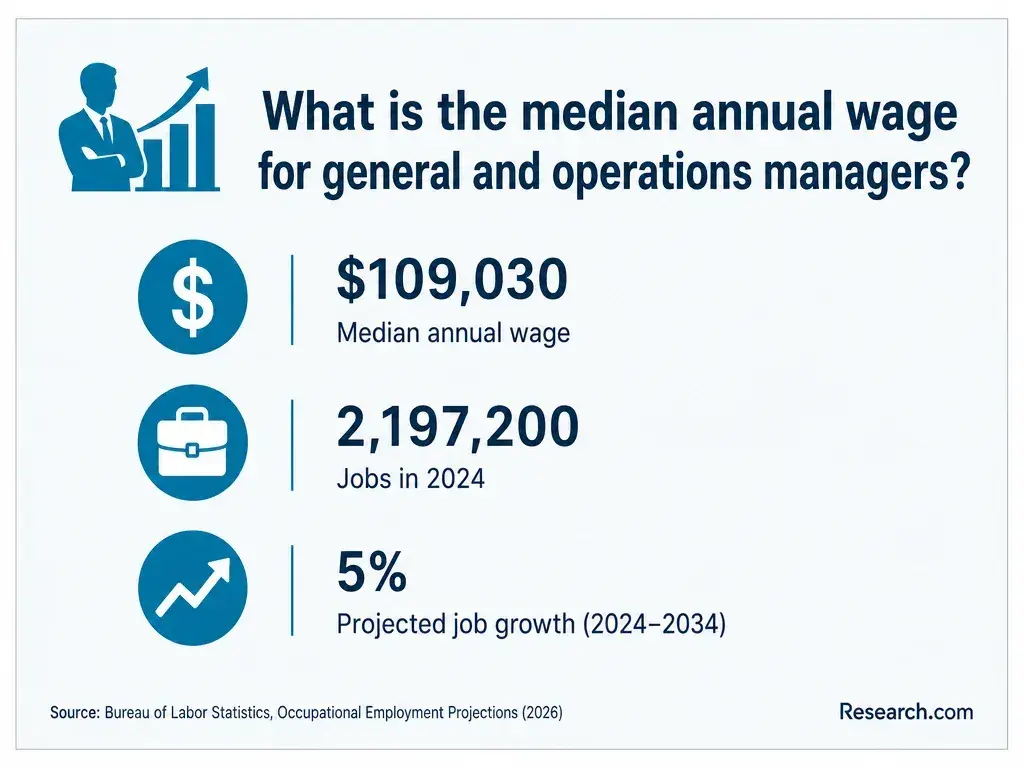
For context, the U.S. Bureau of Labor Statistics reports a $75,940 median annual wage for human resources specialists in May 2025. That is an occupation-wide median, not an expected starting salary for business administration graduates. HR specialist work also calls for function-specific knowledge, so use occupation data to investigate a target role rather than to forecast your personal return. A comparison of business administration program length and salary context is most useful after you identify the jobs you intend to pursue and their actual requirements.
Does a business administration degree require professional licensing or certification?
The general BS in Business Administration does not itself require a professional license to be awarded. Separate occupations and activities may have licensing rules, while employers may prefer voluntary certifications or particular experience. A business course or concentration does not automatically meet a credential's eligibility requirements.
Keep that distinction in mind if math placement influences a switch to a specialized program. For example, when considering budget-friendly supply chain degrees with shorter schedules, compare the actual quantitative curriculum and target jobs; do not assume the alternative eliminates math or awards a professional certification. Ask the relevant licensing board or credentialing organization - not only the degree program - about any credential you plan to pursue.
Other Things You Should Know About Business Administration
A placement assessment generally determines course eligibility rather than awarding a course grade. Confirm how your institution records the result, particularly if its process includes a credit-bearing course.
That depends on the assessment and the school's rules. Check permitted tools before test day; some systems provide an on-screen calculator only for certain questions.
Yes, institutions have processes for requesting disability-related testing accommodations. Contact the accessibility office before scheduling so you understand the documentation and approval steps.
Possibly, but some majors require a letter grade or evidence that the passing mark meets a minimum grade threshold. Request a written determination from the school evaluating the course.
- Math Placement FAQ | Department of Mathematics https://math.oregonstate.edu/undergraduate/math-placement-assessment/faq
- Placement and Course Readiness | Bucks County Community College https://www.bucks.edu/admissions/placement/
- College of Business | University of Michigan-Dearborn Catalog https://catalog.umd.umich.edu/undergraduate/college-business/
- 6. First and Second Year Math Courses - Knowledge Base https://kb.math.arizona.edu/placement/index.php
- The UW Math Placement Test - Department of Mathematics https://www.math.wisc.edu/undergraduate/placement/placement-test/
- Math Placement for Incoming Students | FIU College of Arts, Sciences & Education https://case.fiu.edu/mathstat/resources/math-placement/
- Test, Prior Learning and Transfer Credit - UNT Catalog https://catalog.unt.edu/content.php
- Credit and Evaluation - UNC Catalog https://catalog.unc.edu/policies-procedures/credit-evaluation/
- Math Placement Platform | Office of Undergraduate Education https://ugeducation.osu.edu/academic-advising/students/math-placement-platform
- Placement Testing and Exemptions - King's College https://www.kings.edu/academics/success/advisement/placement-testing.html