2027 BS in Business Administration: A Prior Learning Assessment Before Your First Term
Audited and Verified:
Our Editorial and Data Verification Process
Research.com uses government datasets, official education statistics and primary institutional information to support its career and degree guides. Our review process checks factual accuracy, occupational definitions, source dates and the requirements associated with the credentials discussed.
How This Article Was Fact-Checked
Our editorial team verifies salary estimates, employment projections, education requirements and program information against original data providers and official organizations. Salary figures are checked against the relevant occupational definitions and reporting periods. Information about licensure, accreditation and required in-person training is reviewed separately.
Fact-checked and verified on:

Co-Founder and Chief Data Scientist
If you have managed budgets, coordinated operations, completed professional training, or earned college credit elsewhere, enrolling before those experiences are evaluated could mean paying for coursework you might not need. A prior learning assessment (PLA) may award credit for demonstrated college-level learning, but the award matters only if it satisfies your BS in Business Administration requirements. This guide is for working adults and returning students preparing for their first term. It explains what evidence to gather, who decides whether credit applies, and how to compare the remaining time and cost before you commit.
Key Things You Should Know
- Request both a PLA evaluation and an official degree audit before choosing first-term courses; credit awarded as an elective may not replace a required business course.
- Document what you learned and how you demonstrated it. Years of employment or a management title alone do not establish college-level credit.
- Compare schools using remaining requirements, assessment fees, residency rules, and course availability - not the largest advertised credit award.
What is a BS in Business Administration with prior learning assessment?
A BS in Business Administration is an undergraduate degree combining general education with business subjects such as accounting, management, marketing, finance, and operations. Prior learning assessment is a school-approved process for evaluating learning acquired outside a conventional college course. It may draw on examinations, documented training, or an assessed portfolio. PLA is a way to earn credit toward the degree, not a separate degree or an automatic admission benefit.
The distinction matters for an employee who already understands purchasing or staff scheduling: the school evaluates evidence against specific course outcomes, not the importance of the job. If you need to stay employed while studying, compare PLA policies alongside online business administration degrees for employed adults. A convenient schedule cannot compensate for an assessment policy that leaves you repeating relevant coursework.
How does prior learning assessment award college credit toward a business degree?
The institution sets the assessment methods, credit limits, fees, and deadlines. An examination might establish mastery of a defined subject; a training review might rely on an established credit recommendation; a portfolio usually requires evidence tied to a course's learning outcomes and faculty or qualified assessor review. A recommendation is not the same as an award by your school.
Before your first term, use this sequence to avoid registering for a course that an approved assessment could satisfy:
- Send official transcripts and ask the transfer office which previous college courses have been accepted.
- Ask the PLA office which remaining requirements can be assessed, what evidence and fees are required, and whether an assessment can finish before registration changes are due.
- Request an adviser-reviewed degree audit showing each proposed or awarded credit as general education, business core, concentration, elective, or unused credit.
- Confirm assessment deadlines, residency requirements, and a backup course plan in case credit is denied.
Do not substitute a preliminary estimate for a posted award. This is especially important if you are comparing a general business degree with online project management degrees for transfer applicants: the receiving institution decides how each credit applies to its own curriculum.
Which accreditation should a BS in Business Administration program have?
Check that the institution holds accreditation recognized by the U.S. Department of Education or the Council for Higher Education Accreditation, and verify its current status with the accreditor. This is an institution-level check; it does not tell you how the school awards PLA credit.
AACSB, ACBSP, and IACBE accredit business education within their respective scopes. If a school claims business accreditation, confirm that the relevant business unit or program is covered rather than assuming every degree at the institution is included. Then examine the separate policies that control your decision: PLA eligibility, maximum applicable credit, business-course exclusions, and credits you must complete at the school. Apply the same distinction when reviewing accreditation and financial aid at low-cost project management schools as an alternative to general business study; a specialized program's accreditation does not establish how its credits would apply to a BS in Business Administration.
Potential evidence includes approved credit-by-exam results, assessed military or employer training, recognized professional learning, and portfolios demonstrating business-course outcomes. For example, someone responsible for inventory controls might document process maps, decisions, and a supervisor's verification for an operations assessment. A pay stub or job description alone would not demonstrate mastery of every outcome in an operations course.
The strongest evidence matches the subject, level, and scope of the required course. Some schools will assess introductory management learning but exclude advanced finance, concentration courses, or a capstone. Remove customer and employee information from portfolio materials unless you have explicit permission to use it. If your experience is mainly project coordination and your target role is project-specific, compare affordable pathways to study project management before assuming general business PLA is the most direct route.
Programs typically combine general education, a business core, electives or a formal concentration, and sometimes a capstone. The core may include accounting, economics, statistics, business law, finance, marketing, management, and operations. Exact courses and prerequisite sequences differ, so compare the catalog for your intended enrollment term with your audit.
For PLA planning, separate introductory knowledge from courses that integrate several subjects. Workplace supervision might support an assessment in management principles without replacing an upper-level strategy capstone. A concentration may also impose courses that general business electives cannot satisfy. If your goal is specifically HR, understanding human resources degree levels can help you distinguish an undergraduate HR focus from further study; neither a concentration nor prior work automatically confers a professional HR credential.
Requirements vary by institution and by entry route. A first-time applicant may need a secondary-school credential, while a transfer or returning student generally supplies official transcripts from previous colleges. A business major may have separate entry standards or prerequisite courses even after the university admits you. PLA eligibility is another decision: substantial work experience does not, by itself, establish admission or credit.
Ask admissions whether your application is for the university or directly for the business major, then ask the department when mathematics, statistics, accounting, and other prerequisites must be completed. If you are considering accelerated organizational leadership college programs instead, check their entry rules separately rather than assuming they match a BS in Business Administration.
Your completion time depends on credits that apply to the degree, required courses remaining, their availability, and how many courses you can take alongside work. PLA can reduce coursework without removing prerequisite chains, a required capstone, or institutional residency requirements. An assessment that is still pending when classes begin may not shorten the first term.
Compare the cost of completing the degree, not just the PLA fee or advertised tuition. Include assessment and transcript charges, tuition for remaining courses, required fees and materials, and any added terms caused by course scheduling. Ask financial aid how your final enrollment plan affects eligibility; an award of prior-learning credit is not itself a promise of aid or savings. To compare tuition models, review ways to reduce tuition spending on an online business administration degree, then replace advertised totals with your school-specific audit and charges.
For PLA, neither format is inherently better: the governing questions are whether the same assessment policies apply and whether remaining required courses fit your schedule. Online study may reduce commuting but still require live meetings, timed exams, group projects, or fixed deadlines. Campus study may offer easier in-person access to faculty or recruiting, but required classes may conflict with work.
Request a sample first-term schedule and ask when upper-level courses and the capstone are offered. If shorter sessions appeal to you, compare online bachelor's programs with short sessions against your available study time. A shorter course calendar does not mean less work or a faster graduation date if a required course is offered infrequently.
A business administration degree can support applications for operations coordination, procurement, marketing coordination, HR support, or project coordination, depending on your experience and demonstrated skills. It does not automatically qualify you to manage staff, practice a regulated profession, or enter a specialist role requiring deeper technical preparation.
Use the PLA process to identify strengths you can substantiate and gaps you still need to close. For example, documented purchasing experience may support procurement applications, while a student seeking supply chain analysis may need stronger spreadsheet and data skills. If that is the target function, compare the remaining BS requirements with supply chain bachelor's degrees in three years or less; a focused degree may be more useful than a broader one even when the latter accepts more prior credit.
What salary and job outlook can business administration graduates expect?
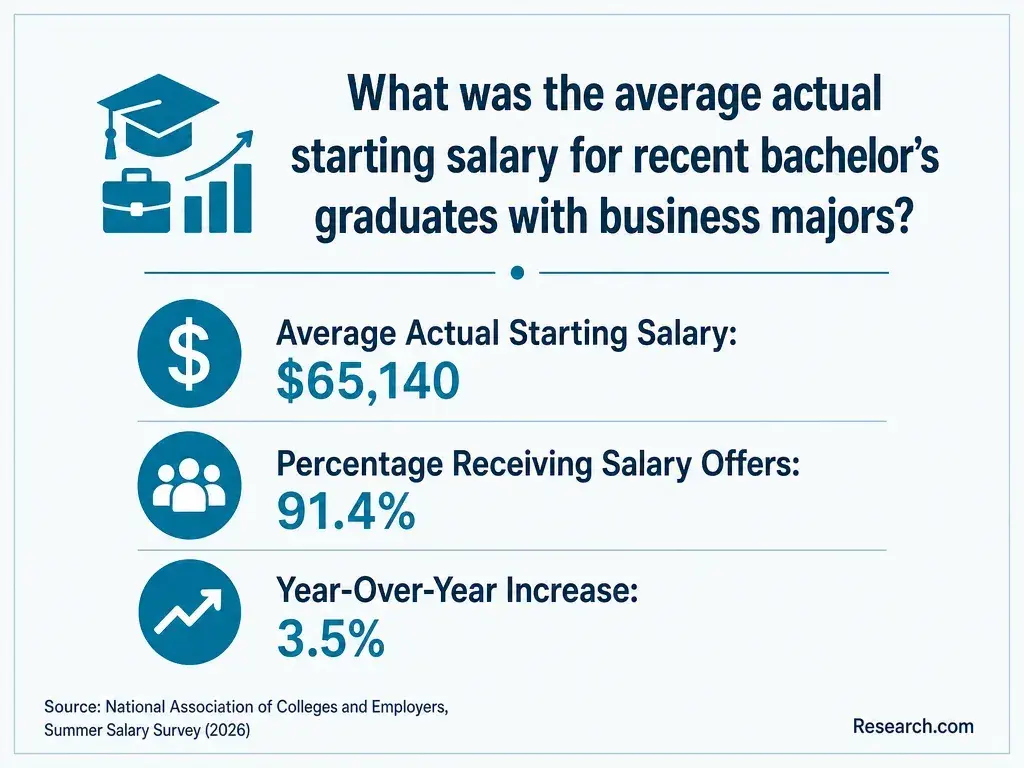
There is no single salary or growth rate for BS in Business Administration graduates. Outcomes depend on the occupation, location, employer, and prior experience. For context, the U.S. Bureau of Labor Statistics reports a May 2025 median annual wage of $75,940 for human resources specialists and projects 6% employment growth for that occupation from 2025 to 2035. Those figures cover workers across the occupation; they are not starting salaries or a forecast for everyone who earns this degree.
If PLA reduces your remaining coursework, evaluate its financial value against your actual degree-completion cost and the qualifications of jobs you intend to seek - not an occupation-wide median. Comparisons of online business administration options balancing price and duration are a starting point, but your approved audit and target employers' requirements should drive the decision.
Other Things You Should Know About Business Administration
Often, but deadlines and eligible courses vary. Ask the PLA office before registering for a course you hope to satisfy through assessment; starting it may affect your options.
That depends on how the institution records the award. Ask whether it appears as a letter grade or credit without a grade, and check any major GPA rules separately.
Not necessarily. The new institution decides whether to accept the credit and which requirement, if any, it fulfills. Keep the original assessment documentation.
Do not assume it does. Ask the financial-aid office how assessed credit is treated for enrollment status and academic progress before changing your course schedule.
- Verification of Military Experience and Training (VMET) | osd.mil https://milconnect.dmdc.osd.mil/milconnect/public/faq/Training-VMET
- Rule 3358:5-7-12 | Prior learning assessment policy. https://codes.ohio.gov/ohio-administrative-code/rule-3358:5-7-12
- Military Training Evaluation Program (MTEP) | dantes.mil https://www.dantes.mil/credit4training/
- School-Determined Requirements | 2024-2025 Federal Student Aid Handbook https://fsapartners.ed.gov/knowledge-center/fsa-handbook/2024-2025/vol1/ch1-school-determined-requirements
- Policy Protecting Students from Fees and Penalties Due to VA Payment Delay - Education and Training https://benefits.va.gov/gibill/fgib/transition_act.asp
- Credit for Prior Learning FAQs | CUNY SPS https://sps.cuny.edu/academics/credit-prior-learning/credit-prior-learning-faqs
- Prior Learning Assessment - School of Professional Studies https://sps.rowan.edu/prior-learning-credits/
- Credit for Prior Learning (CPL) Glossary | NCCCS https://www.nccommunitycolleges.edu/credit-for-prior-learning-glossary/
- Prior Learning Assessment (PLA) - UNH Catalog https://catalog.unh.edu/undergraduate/academic-policies-procedures/prior-learning-assessment/
- Credit for Prior Learning | University of Arizona Catalog https://catalog.arizona.edu/policy/courses-credit/credit/credit-prior-learning