2027 A Second BS in Business Administration After a Bachelor's in Food Science: Credits, Cost, and Alternatives
Audited and Verified:
Our Editorial and Data Verification Process
Research.com uses government datasets, official education statistics and primary institutional information to support its career and degree guides. Our review process checks factual accuracy, occupational definitions, source dates and the requirements associated with the credentials discussed.
How This Article Was Fact-Checked
Our editorial team verifies salary estimates, employment projections, education requirements and program information against original data providers and official organizations. Salary figures are checked against the relevant occupational definitions and reporting periods. Information about licensure, accreditation and required in-person training is reviewed separately.
Fact-checked and verified on:

Co-Founder and Chief Data Scientist
A food science degree can prepare you to understand products and production, but moving into purchasing, operations, marketing, or commercial leadership may expose gaps in business training. A second BS in Business Administration could fill them - if enough previous coursework applies to the new degree and the remaining cost is justified.
This guide is for food science graduates weighing that investment. It explains what to request in a credit evaluation, how to compare the full price and timeline, and when a narrower qualification or relevant work experience may serve the same goal better.
Key Things You Should Know
- A food science bachelor's may satisfy many general education requirements, but the school must determine which credits actually fulfill its business major and second-degree rules.
- Compare the cost of remaining required courses, not the advertised price of a full bachelor's; check aid eligibility before assuming a second degree will be funded like the first.
- Match education to the job: for example, the BLS reports a $82,320 median annual wage for logisticians in May 2025, but that occupation-wide figure is not an expected starting salary for a new business graduate.
Is a second bachelor's in business administration worth it after food science?
It can be worthwhile if you want a broad business foundation and employers or internal promotion policies specifically value a business bachelor's. Your food science background may be especially useful in food manufacturing, ingredient sourcing, quality-related operations, or product commercialization. The degree adds the most value when its accounting, finance, marketing, and operations courses address responsibilities you cannot readily learn through your current job.
Start with the position you want, not the degree title. A move from product development into cross-functional operations may call for budgeting and supply chain skills; a move into brand marketing may call for customer research and campaign experience. Neither requires you to discard your technical expertise. For an adjacent move, a project with a commercial team or targeted coursework may produce stronger evidence of readiness sooner than another full degree. Graduating also does not, by itself, qualify you to manage staff or budgets.
If sourcing or distribution is your destination, compare the business curriculum with shorter online supply chain degree pathways. A specialized pathway is attractive only if its remaining requirements, price, and access to relevant experience beat the general business option.
How many credits transfer toward a second business administration bachelor's degree?
There is no reliable credit total based on the words "bachelor's in food science" alone. A school may accept previous credits while applying only some of them to the new degree. It may also waive general education after a completed bachelor's yet still require specific business courses, upper-division work, and credits earned at that institution.
The distinctions below show why a transcript-level estimate is not a completion plan. Ask each school for a written second-degree evaluation against the catalog that would govern your enrollment.
| Previous work | Possible application | What to verify |
| Writing, mathematics, statistics, and general education | General requirements or specific prerequisites | Whether the first bachelor's waives a category and whether individual courses meet business prerequisites |
| Food science, chemistry, and laboratory courses | Electives or an approved substitution | Whether credits count toward graduation without replacing required business courses |
| Economics, accounting, management, or related electives | Business core or electives | Course equivalency, minimum grade, recency, and upper-division requirements |
| Prior employment or training | Potential prior-learning credit, if offered | Assessment rules and whether any awarded credit satisfies a required course |
Send official transcripts and, where equivalency is unclear, course descriptions or syllabi to the transfer office. Then ask the business adviser to identify every unmet core, concentration, prerequisite, and residency requirement in a degree audit. Compare those audits - not just advertised transfer-credit allowances - when reviewing US rankings for accelerated business bachelor's degrees. A faster format cannot eliminate courses your audit still requires.
How much does a second bachelor's in business administration cost?
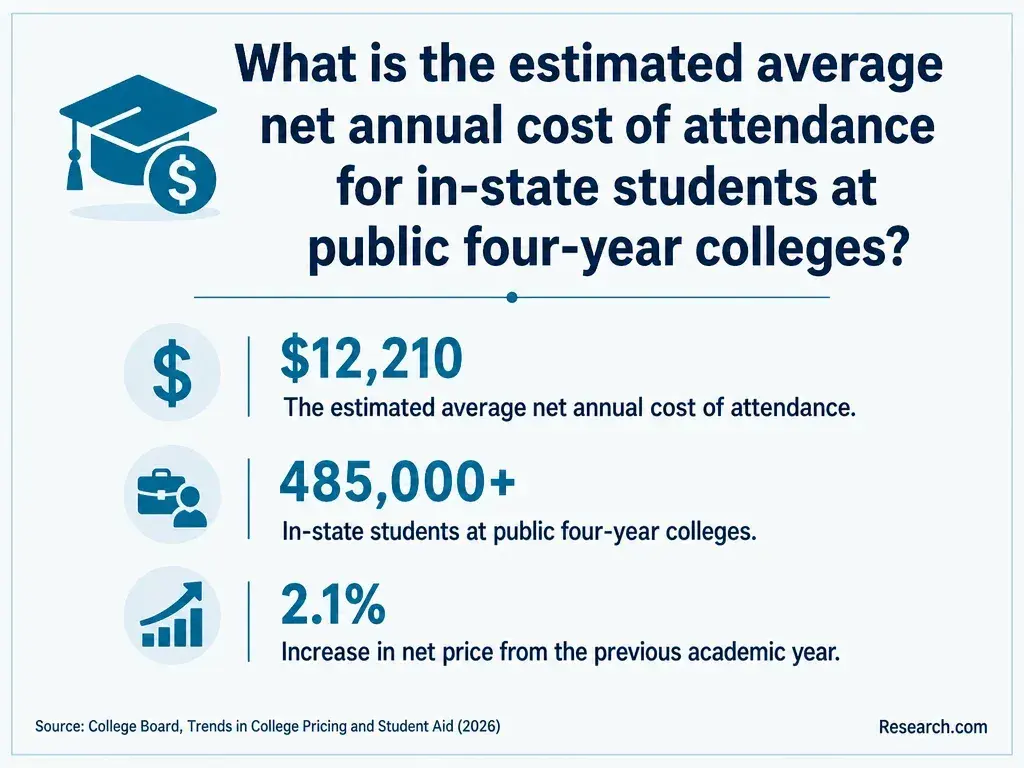
The meaningful comparison is the total price to finish at each school. Multiply its applicable tuition rate by the credits in your approved degree audit, then add mandatory fees and other costs. If tuition is charged by term rather than credit, use a realistic course schedule to estimate how many paid terms you need. Do not assume the first bachelor's makes you eligible for the same grants you previously received.
A complete estimate should separate the following charges and trade-offs so a low advertised tuition rate does not hide a more expensive route to graduation.
- Direct charges: remaining-course tuition, institutional and technology fees, books, software, and any proctoring or campus-visit costs.
- Financing and cash flow: aid available to a student who already holds a bachelor's, loan eligibility, payment timing, and any employer reimbursement conditions.
- Opportunity cost: work hours reduced for classes, an unpaid internship if required, and extra terms caused by prerequisites or infrequent course offerings.
Request an itemized estimate from financial aid using your actual second-degree classification and planned enrollment intensity. Compare it with cheaper business administration study with FAFSA-based aid, while confirming that a school's FAFSA participation does not itself establish your grant eligibility. Employer tuition assistance may help, but check annual limits, grade requirements, reimbursement timing, and repayment obligations before counting it toward your budget.
Schools commonly ask second-degree applicants for prior college transcripts and proof of a completed bachelor's. Admission to the university may be separate from entry to the business major. A program may also set its own GPA, mathematics, economics, accounting, or statistics prerequisites; your food science coursework may satisfy some quantitative requirements, but it will not automatically satisfy business-specific ones.
Before paying an application fee, ask admissions whether the program accepts second-bachelor's students, whether an online track has the same eligibility rules, and when outstanding prerequisites must be completed. Ask the business department which requirements are conditions of admission and which can be taken after enrollment. For a cost-conscious shortlist, affordable colleges for online business degrees are a starting point, not evidence that a particular school will admit you or award the credits you expect.
Requirements vary by school, but a general business core often covers financial and managerial accounting, economics, finance, marketing, management, operations, business law, and quantitative decision-making. A BS may also include statistics, information systems, or analytics. Check the actual curriculum rather than assuming a BS, BBA, and specialized business degree teach the same subjects at the same depth.
For a food science graduate, the most useful courses depend on the intended work. Managerial accounting and operations can support production-cost discussions; marketing research can support consumer-facing product decisions; procurement or supply chain electives can connect technical specifications to sourcing decisions. Verify whether a proposed concentration is officially awarded, whether its courses add credits, and whether advanced courses have prerequisites. A capstone or internship may offer practical evidence, but current workplace projects count only if the school approves them and the employer permits the work and data use.
If your goal is people operations rather than production or commercialization, compare the business curriculum with education options for future HR professionals. An HR-focused program may provide more relevant employment-law and staffing coursework than a general business elective.
Yes, some institutions offer online business bachelor's programs, but eligibility for someone who already holds a bachelor's must be confirmed with each school. "Online" describes delivery, not necessarily a self-paced schedule: courses can have live meetings, fixed deadlines, group presentations, proctored exams, or required internships.
If you work in a laboratory, plant, or rotating-shift setting, request sample course schedules and assessment policies before enrolling. Ask whether required courses run every term, whether attendance is synchronous, and whether an approved workplace project can replace an internship - without assuming it can. Business administration programs for studying around work commitments can help build a shortlist; confirm the obligations of the specific courses you would still need.
Completion time depends on the approved remaining credits, prerequisite order, course availability, and how many courses you can take alongside work. A short degree audit can still produce a long calendar timeline if a required course is offered infrequently or must be taken before a capstone.
Ask an adviser for a term-by-term plan showing each remaining requirement and its expected offering. Test that plan against your work schedule and the school's rules for part-time enrollment or time away. A guide to accelerated bachelor's study can clarify format options, but acceleration changes scheduling - not the institution's graduation requirements or the total work involved.
The best alternative follows the gap between your current experience and the target role. A second bachelor's supplies broad undergraduate coverage; it is not automatically the shortest route to one business function.
This comparison separates options by the problem each can solve. Costs and entry rules vary, so compare actual curricula and admission decisions rather than assuming the credentials are interchangeable.
| Path | Strongest fit | Main limitation to check |
| Targeted courses or certificate | A defined gap such as accounting, marketing analytics, or procurement | May not meet an employer's degree requirement or provide recruiting access |
| Relevant job assignment or mentorship | An adjacent move within a food company | Responsibilities and results must be documented; experience does not automatically earn academic credit |
| Specialized supply chain or project-management study | A clearly identified operations or project role | May cost more or require more courses than targeted training |
| MBA or specialized master's | A graduate-level goal when admission requirements, experience, and cost align | May require foundational preparation and is not a substitute for functional experience |
For project-focused work, compare certificates and employer assignments with low-cost project management degree options. Ask employers whether they need a second degree, demonstrable project coordination, or both before committing to another undergraduate program.
Your strongest prospects may combine food science knowledge with commercial responsibility. Possibilities include procurement or supply chain coordination involving ingredient specifications, operations support in food manufacturing, product or market research, and project coordination across technical and business teams. Compare postings for the tasks and experience they require; a business degree is preparation, not a direct appointment to management.
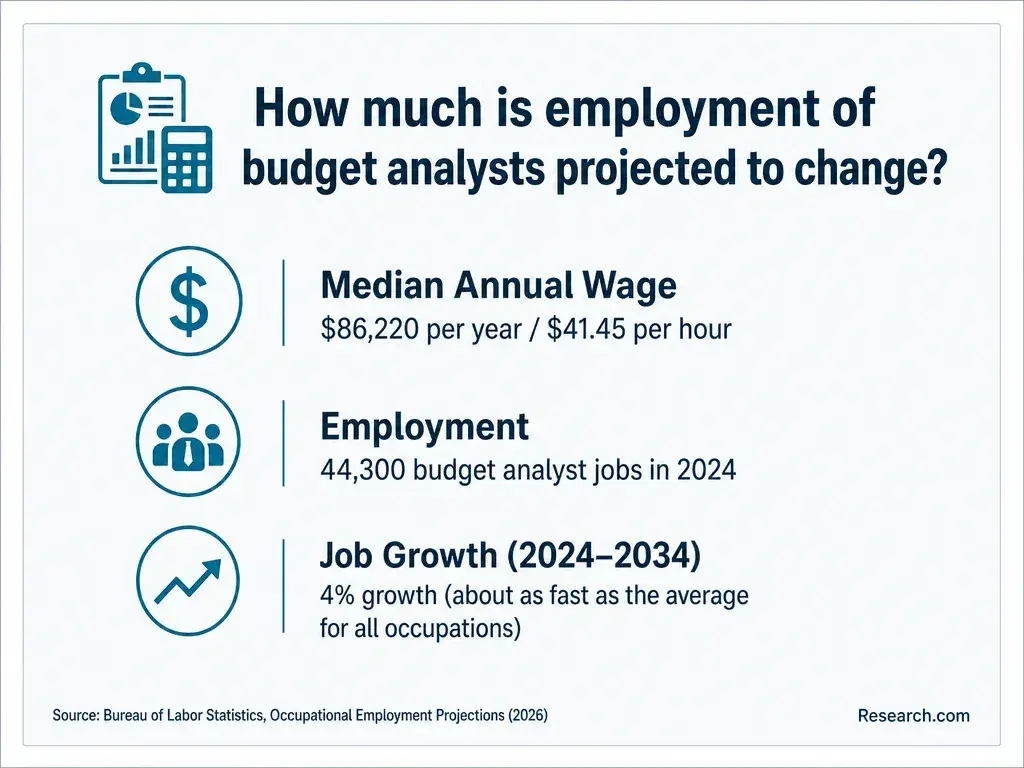
For context, the U.S. Bureau of Labor Statistics reports a $82,320 median annual wage for logisticians in May 2025 and projects 18% employment growth from 2025 to 2035. These figures describe an occupation across experience levels and industries, not the pay or job prospects guaranteed to a food scientist who earns a second bachelor's. Relevant inventory, supplier, forecasting, or production-planning experience will matter alongside coursework.
If project coordination is your intended entry point, compare job descriptions with what you can already demonstrate through supervised work. When another degree is under consideration, financial aid for online project management bachelor's degrees is part of the comparison - but first determine whether that additional degree is needed for the roles you seek.
How can you choose an accredited business administration program?
First verify the institution's recognized accreditation and the exact degree it awards. Then check whether the business school or program holds AACSB, ACBSP, or IACBE accreditation, if that matters to you, and confirm that the accreditation covers the program and location or delivery arrangement you are considering. Institutional accreditation and business-specific accreditation answer different questions; neither proves that employers will hire graduates.
For a second-degree decision, the more revealing documents are the written credit evaluation, official degree audit, current catalog, course rotation, and individualized cost estimate. Compare those documents across schools before relying on a ranking or an advertised completion speed. If you are also considering accelerated online organizational leadership school choices, verify their accreditation and curricula separately: organizational leadership and business administration are not identical degrees.
Choose only after the registrar or transfer office confirms credit applicability, the business adviser maps a feasible schedule, and financial aid explains your eligibility as a second-degree student. Those answers turn a promising program into a defensible completion plan.
Other Things You Should Know About Business Administration
Generally, students who already hold a bachelor's are ineligible for a Federal Pell Grant. Ask the financial-aid office about your specific eligibility, other aid, and employer assistance before enrolling.
Schools may calculate an institutional GPA for new coursework while retaining your earlier academic record for admission or other decisions. Ask how transfer grades, graduation honors, and minimum major GPA rules apply.
Possibly, but employment alone does not award internship credit. The program must approve the role, learning objectives, supervision, and assessment; your employer must also permit any proposed activities or use of company information.
Requirements depend on the position and employer. Business roles generally do not acquire a universal food science certification requirement merely because they are in the food industry, but jobs with specific technical, safety, or regulated duties may have separate qualifications.
- Types of Financial Aid: Grants, Work-Study, and Loans | studentaid.gov https://studentaid.gov/understand-aid/types
- Rule 3352-3-02 | Undergraduate degree requirements. https://codes.ohio.gov/ohio-administrative-code/rule-3352-3-02
- Bachelor of Science in Business Administration, Finance | UNLV https://www.unlv.edu/degree/bsba-finance
- Requirements for a Second Bachelor's Degree | iu.edu https://bulletins.iu.edu/iun/2024-2026/schools/business/undergraduate/policies/second-bachelors.shtml
- BS Business Administration | University at Albany https://www.albany.edu/business/programs/bs-business-administration
- Food Business Management (BS) | CFAES Knowledge Hub https://cfaes.osu.edu/academics/department-food-science-and-technology-fst/major/food-business-management-bs
- MBA vs. Master's Degree: Which Is Right for You? | Notre Dame de Namur University https://www.ndnu.edu/articles/business-management/mba-vs-masters-degree-which-is-right-for-you.html
- Requirements for the Bachelor of Business Administration | msutexas.edu https://catalog.msutexas.edu/preview_program.php
- College of Business Administration - Academic Catalog https://catalog.uic.edu/ucat/colleges-depts/business-administration/
- Earning a Degree | Empire State University https://catalog.sunyempire.edu/undergraduate/earning-undergraduate-degree/