2027 Choosing a BS in Business Administration When You Need an Affordable Program That Accepts a Low Transfer GPA
Audited and Verified:
Our Editorial and Data Verification Process
Research.com uses government datasets, official education statistics and primary institutional information to support its career and degree guides. Our review process checks factual accuracy, occupational definitions, source dates and the requirements associated with the credentials discussed.
How This Article Was Fact-Checked
Our editorial team verifies salary estimates, employment projections, education requirements and program information against original data providers and official organizations. Salary figures are checked against the relevant occupational definitions and reporting periods. Information about licensure, accreditation and required in-person training is reviewed separately.
Fact-checked and verified on:

Co-Founder and Chief Data Scientist
A low transfer GPA can make an affordable business degree feel out of reach, but a school's admission decision is only one part of the calculation. The cheapest advertised program may become expensive if it accepts your credits only as electives or requires you to repeat business prerequisites.
This guide is for transfer and returning students comparing BS in Business Administration programs. It explains how to identify realistic admission options, request a useful credit evaluation, and compare the cost and time left to graduation before committing.
Key Things You Should Know
- A 2.0 transfer GPA is not a universal cutoff: schools may calculate GPA differently and set separate standards for university admission and entry to the business major.
- Compare the cost of remaining required courses, not tuition alone. Accepted elective credits may leave accounting, statistics, business-core, or residency requirements unfinished.
- Ask each institution to confirm its current admission rules, institutional accreditation, transfer evaluation, and degree audit in writing before treating it as an affordable low-GPA option.
What Is a Business Administration Bachelor's Degree?
A BS in Business Administration is an undergraduate degree combining general education with subjects such as accounting, management, marketing, finance, and business analysis. The "BS" designation does not guarantee a particular amount of math or a particular concentration; the school's catalog determines what you must complete.
For a returning student, the important distinction is between getting into the university and finishing its specific BS. A BBA or BS in Management may cover similar ground but apply previous credits differently. If your goal is primarily supervising people, explore shorter organizational leadership bachelor's programs as an alternative, then compare their actual degree audits rather than their titles.
Which Accredited Business Administration Programs Accept a Low Transfer GPA?
There is no responsible universal list of accredited BS programs that will admit every applicant with a "low" GPA. A school may use all attempted college work, the most recent coursework, or a specified set of transferable courses; its business major may also have a separate entry requirement. Minimums and exception policies can change by enrollment term.
University of Maryland Global Campus and Southern New Hampshire University offer BS in Business Administration programs worth investigating. Neither should be treated as a confirmed low-GPA match without a current, applicant-specific admission decision. The comparison below shows what to establish for each candidate, including any school found through American business schools offering online degree study.
This comparison separates facts that marketing pages often combine. Request the answers from the offices responsible for admission and transfer credit.
| Program to investigate | Admission question | Accreditation and credit question |
| University of Maryland Global Campus - BS in Business Administration | How will my complete transfer record be evaluated, and is there a separate major-entry rule? | Confirm current institutional accreditation, program coverage, and how each course applies to the BS. |
| Southern New Hampshire University - BS in Business Administration | Does my GPA meet the rules for my intended term, or is another admission route available? | Confirm current institutional accreditation, any applicable business accreditation, and the official degree audit. |
Check institutional accreditation through the U.S. Department of Education's or CHEA's recognized-institution resources. AACSB, ACBSP, or IACBE recognition, if advertised, has a separate scope: verify whether it covers the relevant business unit or program. Accreditation does not establish that your GPA qualifies or that your credits satisfy the major.
How Can You Find an Affordable Business Administration Bachelor's Program?
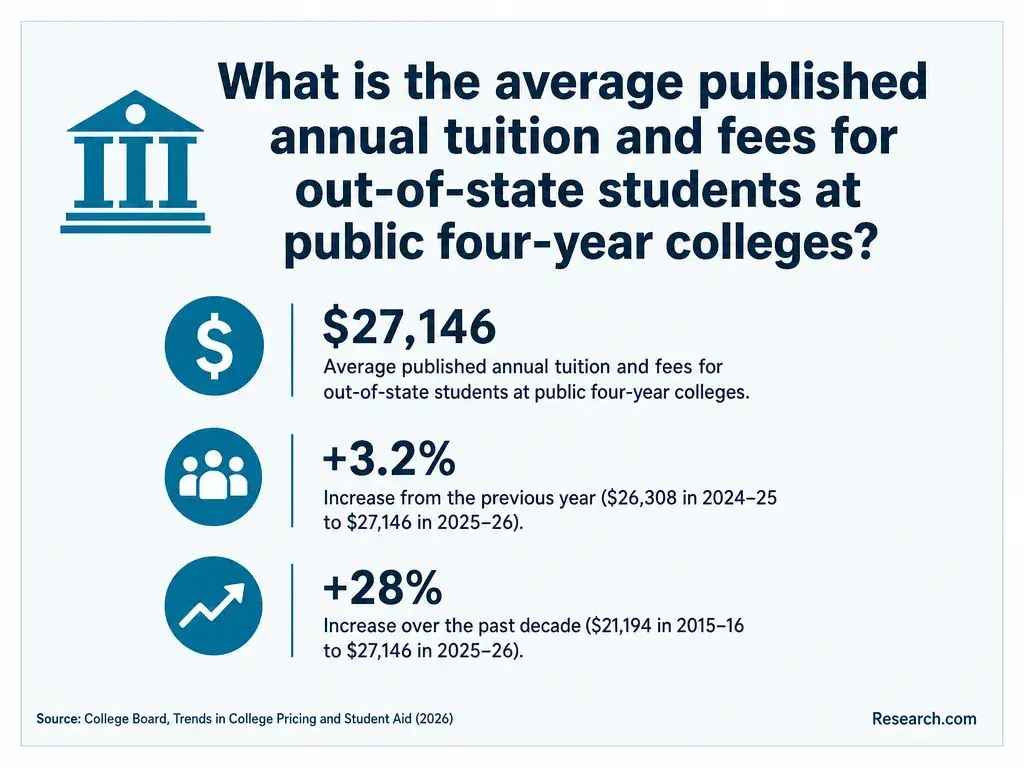
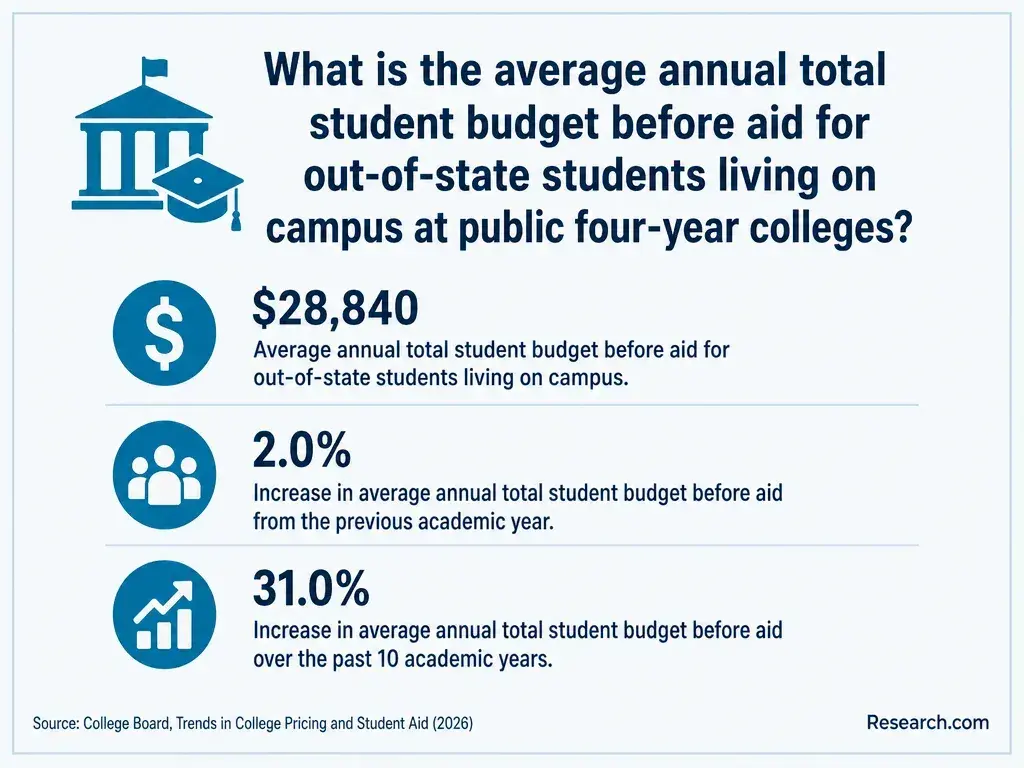
Start with public universities available at your in-state rate and reputable online options, but compare completion cost rather than the lowest advertised tuition. Collections of affordable business education options online can help build a shortlist; your transcript evaluation determines whether an option is affordable for you.
Ask each school for the same inputs: the price per credit or term; required fees, books, and software; credits applied to each degree requirement; courses still needed; and how often those courses run. Multiply the applicable price by the remaining coursework, then account for fees and likely extra terms. This is an estimate until the school completes its evaluation and confirms charges for your enrollment term.
A lower tuition rate may lose its advantage if a school requires you to retake accounting or complete more credits in residence. Also distinguish grants and employer reimbursement from loans: borrowing changes when you pay, not the underlying price. Ask the financial-aid office whether your academic record affects aid eligibility and whether your intended enrollment level qualifies.
A low transfer GPA can affect several decisions independently: admission to the institution, entry to the business major, recognition of prior courses, and eligibility for financial aid. A passing course can be accepted as credit without fulfilling the business core, while an admissions exception does not automatically waive a prerequisite.
For an accurate review, gather official transcripts from every prior college, course descriptions or syllabi for disputed equivalents, and any documentation relevant to an academic-renewal or appeal policy. Then use this sequence:
- Ask admissions which attempted courses count toward its transfer GPA and whether the business major uses a different standard.
- Ask the transfer office and business adviser to identify accepted credits by general education, prerequisites, business core, electives, and residency requirements.
- Ask whether recent successful coursework, conditional entry, or an appeal is available under the current policy; obtain the requirements and deadline in writing.
- Ask the financial-aid office to evaluate satisfactory academic progress separately from admission. General FAFSA planning for project management bachelor's students may help frame aid questions, but your business program and school control the applicable policies.
If a quantitative course transfers as an elective rather than statistics or accounting, request a formal equivalency review. The institution receiving your credits has final authority; a preliminary admissions estimate is not a graduation guarantee.
Choose the format that lets you complete the remaining required courses reliably, not the one that merely offers the most flexible-sounding schedule. Online study can reduce commuting costs, but it may still require scheduled exams, group meetings, presentations, or fixed weekly deadlines. Campus study may offer easier access to in-person advising or local recruiting but add travel and scheduling costs.
Ask for a sample schedule covering your outstanding business prerequisites and upper-level courses. Check whether each is available online in the terms you need, whether exams require proctoring, and whether a capstone or internship has a location requirement. If you are considering online degrees with accelerated terms, confirm the weekly workload and course sequence; shorter terms do not erase remaining requirements.
Most programs combine general education, introductory business prerequisites, an upper-level business core, and electives or a formal concentration. Common subjects include financial and managerial accounting, economics, statistics, marketing, finance, organizational behavior, operations, and strategy. A capstone may ask students to apply several of these areas to a case or project.
For transfer students, course placement matters more than course resemblance. An introductory accounting class from an associate program might meet a prerequisite, count only as an elective, or require a syllabus review. Check whether a chosen concentration adds courses or delays graduation because its prerequisites are offered infrequently. If supply chain work is your specific goal, compare the required operations coursework with online supply chain degrees with cost and outlook details; a general business elective does not confer a specialized degree.
Completion time depends on requirements left after the official audit, not the number of credits on your old transcript. An associate degree may cover much of general education yet leave a sequence of accounting, statistics, finance, and upper-level business courses. Residency rules, course availability, part-time enrollment, and required repeats can extend the schedule.
Ask an adviser to map your remaining courses term by term, marking prerequisites and courses offered only in particular terms. Compare that plan with your work schedule and aid eligibility before using US rankings for accelerated business bachelor's degrees to shortlist faster formats. A shorter advertised timeline applies only if your credits meet that school's requirements and its course schedule accommodates your sequence.
A BS can support applications for roles such as operations coordinator, administrative specialist, marketing coordinator, HR specialist, or project coordinator. The fit depends on your previous work, selected courses, and evidence of skills - not just the degree name. Someone with customer-service experience, for example, could pair that background with spreadsheet and operations coursework to pursue a coordinator role.
Specialized paths may demand more targeted preparation. Supply chain applicants can compare a general business curriculum with faster-paced online supply chain college study, then look at actual job postings for software, purchasing, or logistics requirements. Internships and supervised projects can provide work samples, but employment in a management role generally requires relevant experience beyond graduation.
There is no single salary for a business administration degree. Pay attaches to an occupation, location, employer, and experience level. The U.S. Bureau of Labor Statistics reports a $75,940 median annual wage for human resources specialists in May 2025. That occupation-wide median includes experienced workers; it is not a starting-salary estimate or a promised outcome for BS graduates.
Use your likely entry role and local job postings - not a manager's national median - when weighing debt against potential earnings. Business administration degree return and completion planning is most useful when paired with your own remaining-course estimate, expected borrowing, and realistic job options. If an employer requires only a few missing skills rather than a bachelor's, targeted training may be the less costly choice.
Do Business Administration Graduates Need Certifications or Licenses?
A general business administration BS does not itself grant a professional license, and many coordinator and general business roles do not require one. Other jobs have distinct rules: CPA licensure, for example, is governed by state accounting boards and has education and examination requirements that a general business curriculum may not meet. Voluntary credentials in HR or project management have separate eligibility rules set by their issuing organizations.
Check target job postings before paying for both a degree and a credential. If employers require a bachelor's, compare the verified completion cost - including online business administration degrees at lower prices - with your other eligible options. If they primarily want a specific skill or certification, ask whether a shorter course and relevant work experience would meet that requirement instead.
Other Things You Should Know About Business Administration
Yes, if the application offers an explanation or appeal process. Briefly describe the circumstances, what changed, and evidence of more recent academic readiness. An explanation does not override a published admission rule.
Often, but ask whether admission will be conditional and when final official transcripts are due. Do not assume an in-progress course will satisfy a prerequisite until the receiving school evaluates the completed grade.
Possibly. Ask whether the school evaluates your specific records or exams and where any awarded credit applies. Credit awarded as a free elective may not shorten a required business-course sequence.
Request the specific reason and ask about a formal appeal, academic renewal, or a defined period of successful coursework before reapplying. Confirm that any proposed courses would improve eligibility under that institution's actual GPA policy.
- School-Determined Requirements | 2024-2025 Federal Student Aid Handbook https://fsapartners.ed.gov/knowledge-center/fsa-handbook/2024-2025/vol1/ch1-school-determined-requirements
- Staying Eligible | Federal Student Aid https://studentaid.gov/understand-aid/eligibility/staying-eligible
- DAPIP | Homepage - Office of Postsecondary Education (OPE) https://ope.ed.gov/dapip/
- Satisfactory Academic Progress | CSU Northridge | California State University, Northridge https://www.csun.edu/financialaid/financial-aid-basics/satisfactory-academic-progress
- Transfer Admissions Requirements | Florida Atlantic University https://www.fau.edu/admissions/transfer/how-to-apply/admissions-requirements/
- Online Tuition & Cost Calculator - ASU Online https://asuonline.asu.edu/what-it-costs/
- Tuition & Fees - UF Online - University of Florida https://ufonline.ufl.edu/tuition/tuition-fees/
- Transfer GPA | UC Admissions - University of California https://admission.universityofcalifornia.edu/admission-requirements/transfer-requirements/preparing-to-transfer/transfer-gpa.html
- Transfer Toolkit - Tuition, Financial Aid, and Scholarships | NCCCS https://www.nccommunitycolleges.edu/transfer-advising-toolkit/draft-transfer-toolkit-tuition-financial-aid-and-scholarships/
- Transfer Coursework, Minimum Grade and GPA Calculation | KU https://services.ku.edu/TDClient/818/Portal/KB/Article/21421/Transfer-Coursework-Minimum-Grade-and-GPA-Calculation