2027 Is an Online BS in Business Administration the Right Next Step for Payroll Coordinators?
Audited and Verified:
Our Editorial and Data Verification Process
Research.com uses government datasets, official education statistics and primary institutional information to support its career and degree guides. Our review process checks factual accuracy, occupational definitions, source dates and the requirements associated with the credentials discussed.
How This Article Was Fact-Checked
Our editorial team verifies salary estimates, employment projections, education requirements and program information against original data providers and official organizations. Salary figures are checked against the relevant occupational definitions and reporting periods. Information about licensure, accreditation and required in-person training is reviewed separately.
Fact-checked and verified on:

Co-Founder and Chief Data Scientist
Payroll coordinators already work at the intersection of pay, records, deadlines, and employee questions. An online BS in Business Administration could broaden that experience into HR, operations, or supervisory work - but it may be more education than someone needs to advance within payroll.
This guide helps working coordinators compare the degree with targeted training, assess whether online study fits payroll cycles, and check the costs and career requirements that should drive an enrollment decision.
Key Things You Should Know
- An online business administration bachelor's degree makes the strongest case when a target role requires a bachelor's degree or broader HR, financial, or operational responsibility - not merely more payroll-system practice.
- Payroll experience remains essential: a business degree alone does not confer a payroll certification, qualify someone to supervise staff, or guarantee a raise.
- The U.S. Bureau of Labor Statistics reports a May 2025 median wage of $75,940 for human resources specialists, a possible adjacent occupation - not an expected salary for payroll coordinators or new graduates.
Is an online business administration degree right for payroll coordinators?
It may be the right next step if your goal is broader responsibility and the jobs you want value a bachelor's degree. A BS in Business Administration typically combines accounting, management, operations, and quantitative coursework. That breadth can complement the accuracy, confidentiality, and deadline management you already practice in payroll.
Start with job postings from your employer and other employers in your area. If the roles you want emphasize payroll tax knowledge, system configuration, or multistate processing, employer training or a payroll credential may be the more direct first investment. If they call for a bachelor's degree alongside budgeting, HR, or process leadership, a business degree has a clearer purpose. A BS, BBA, and specialized accounting or HR bachelor's may cover different ground; compare actual courses rather than degree initials.
Online delivery matters only if it works around pay-period deadlines. Ask about live attendance, fixed due dates, group meetings, proctored exams, and any campus visits before assuming you can study entirely on your own schedule. You can explore business administration colleges for working professionals, then verify the schedule of the courses you would actually take.
What can payroll coordinators do with a business administration bachelor's degree?
The degree can support applications for broader roles, but your next position will depend on your responsibilities, technical skills, and the employer's requirements. The comparison below separates moves that build directly on payroll from transitions that require more substantial new experience.
| Target role | Relevant payroll experience | Additional evidence employers may seek |
| Senior payroll or payroll operations role | Reconciliations, compliance checks, issue resolution, and process documentation | Complex payroll experience, systems proficiency, and evidence of improved controls |
| HR specialist or HR operations role | Employee records, pay changes, benefits deductions, and confidential communication | Recruiting, benefits, employee-relations, or HR policy experience relevant to the opening |
| Accounting or operations coordinator | Payroll entries, reporting, deadlines, and cross-team coordination | Role-specific accounting, budgeting, systems, or workflow experience |
| Project coordinator | Payroll-system changes, testing, vendor communication, and implementation schedules | Documented project responsibilities and stakeholder coordination |
A project coordinator role is more plausible if you have helped implement a payroll system than if your work has been limited to routine processing. If that is your target, find budget-conscious project management degrees to compare with a general business curriculum; neither degree substitutes for project experience.
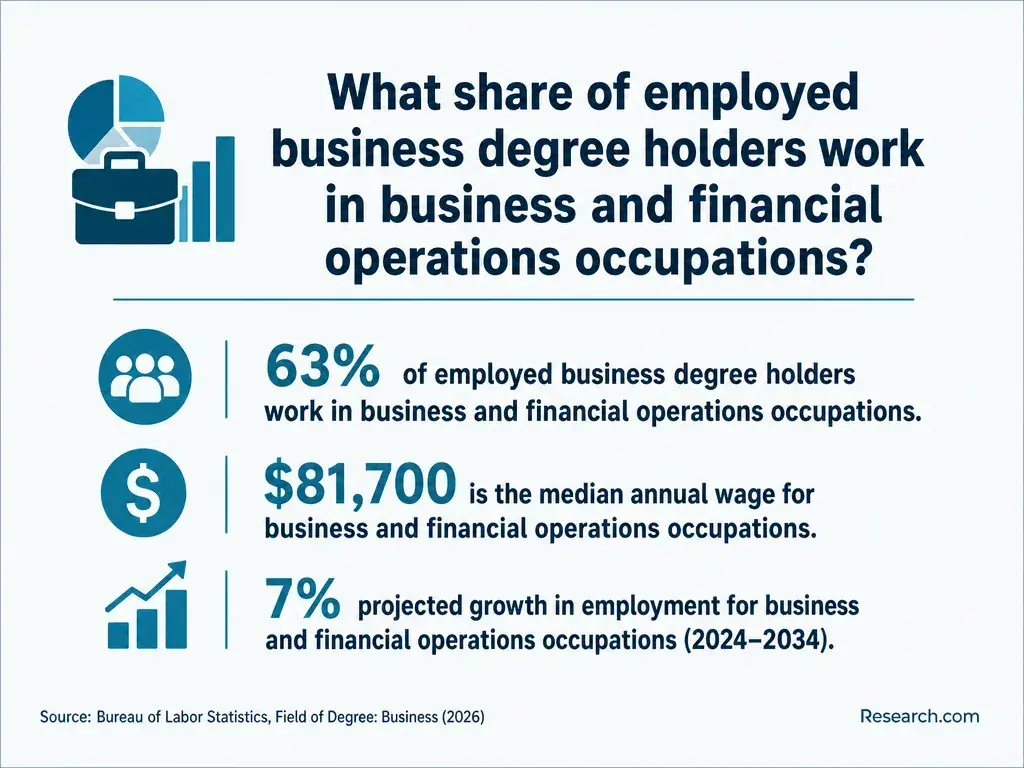
How does an online business administration degree advance a payroll career?
A useful degree helps you explain decisions beyond whether a paycheck was processed correctly. Accounting can strengthen your understanding of reconciliations and labor costs; operations courses can help you examine approval bottlenecks; and management coursework can prepare you to communicate changes across payroll, finance, and HR. Advancement still depends on demonstrating those abilities at work.
Look for an opportunity to document a real contribution, such as testing a new payroll workflow or mapping how corrections reach the general ledger. Agree on the scope with your employer, protect employee pay data, and distinguish your own contribution from the team's results. If you want to move toward HR, compare the program's offerings with HR degree coursework and entry requirements; general management electives may not provide the functional depth an HR opening expects.
Check that the institution has accreditation from an accreditor recognized by the U.S. Department of Education or the Council for Higher Education Accreditation. This is a foundational check for degree recognition and potential federal-aid eligibility; confirm the school's current status through the accreditor and the relevant federal or CHEA directory.
AACSB, ACBSP, and IACBE accreditation is a separate business-school or programmatic consideration. If a school advertises one of these, verify its current scope and whether it covers the business administration program you would enter. Neither institutional nor business accreditation guarantees that payroll coursework, transfer credits, or career services will meet your needs. Application fees are another selection detail: you can compare accredited schools with no application charge, while checking each school's present fee policy and accreditation.
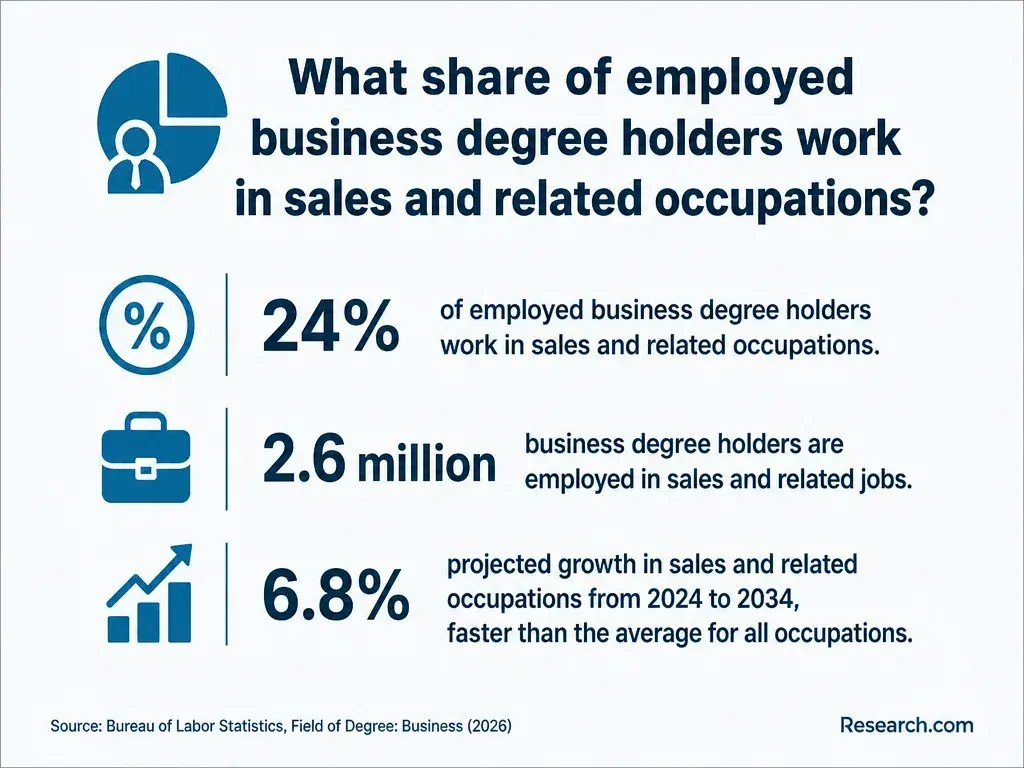
Programs commonly cover accounting, finance, management, economics, business law, statistics, information systems, and communication. For a payroll coordinator, the most valuable courses are often those that explain where payroll fits in the organization: labor-cost reporting, internal controls, employee administration, data analysis, and operational decision-making. Check the catalog for course depth; an introductory accounting class is not equivalent to an accounting major.
Electives or a formal concentration can sharpen the degree's fit. HR may suit someone moving into people operations, while accounting or information systems may better support payroll reporting or system work. If your goal is to leave payroll for a different operations function, compare that function's curriculum directly - for example, online supply chain programs balancing cost and completion time may be more relevant to procurement or logistics than a general business degree. A few electives do not necessarily constitute an official concentration.
Completion time depends on how many prior credits apply to the degree, your course load, and when required courses are offered. Accepted credits may count only as electives rather than satisfy accounting, statistics, general education, or major requirements. Request an official degree audit before estimating a graduation date, especially if you have an associate degree or previous business coursework.
Build a study plan around payroll close, year-end reporting, and other predictable peaks. Ask whether courses are offered every term, whether prerequisites create a sequence, and what happens if you need to pause. Business bachelor's rankings focused on completion speed can provide comparison candidates, but an advertised fast path may not be fast for your transfer record or work schedule.
There is no reliable single price for a payroll coordinator: the amount depends on the school's tuition structure, credits still required, fees, and financial aid. Compare written estimates for tuition, technology or proctoring charges, books and software, and any travel. Then account for borrowing costs and the possibility that a demanding term could reduce paid work hours.
Ask your employer whether tuition assistance covers this degree, when reimbursement arrives, and whether grades or continued employment affect payment. Check grants and loan eligibility with each school's financial-aid office; check FAFSA eligibility at online business administration schools as a starting point, not a promise of aid. Compare the resulting cost to finish with the cost of a payroll credential or targeted coursework if those options meet the same career goal.
Requirements vary by institution and by whether you enter as a first-year or transfer student. Schools generally ask for evidence of prior education, and some business majors have separate entry rules or prerequisite courses. Having payroll experience can strengthen an application, but it does not automatically replace mathematics, accounting, or other required coursework.
Send official transcripts and ask for both an admission decision and an evaluation showing where previous credits apply. Before committing, confirm any GPA or prerequisite rules, transfer and residency limits, and whether prior learning can be assessed for credit. This overview of credit and eligibility rules for business administration admission can help you prepare questions; the receiving institution makes the final determination.
A bachelor's degree does not establish a payroll salary. Pay varies by role, location, employer, systems expertise, and responsibility. To estimate your likely outcome, compare local postings for the specific payroll or adjacent job you could credibly pursue after graduation, rather than applying a broad business or management wage to your current position.
For context, the U.S. Bureau of Labor Statistics reports a May 2025 median annual wage of $75,940 for human resources specialists and projects 6% employment growth for that occupation from 2025 to 2035. Those figures describe an occupation that may interest some payroll coordinators; they are not a forecast of your pay or promotion prospects. Supervisory roles involve a further change in responsibility. If leadership is the goal, accelerated online organizational leadership school choices offer another curriculum to compare, but neither degree replaces demonstrated supervisory readiness.
Which payroll certifications complement a business administration degree?
Payroll-specific credentials can signal technical knowledge that a broad business degree may not teach. PayrollOrg offers the Fundamental Payroll Certification (FPC) and Certified Payroll Professional (CPP); verify each credential's current eligibility, examination rules, renewal requirements, and content directly with the certifying organization. Do not assume that earning a business bachelor's alone makes you eligible for either exam.
Choose based on the gap you need to close. If your immediate goal is stronger payroll practice or credibility in a payroll-focused opening, investigate a relevant certification and employer-supported training first. If postings for your intended next role also require a bachelor's degree, the credential and degree may serve different purposes. When weighing both at once, compare your exam-preparation time with accelerated study schedules for business majors; compressed classes may be difficult to manage during payroll close.
Other Things You Should Know About Business Administration
Possibly, if the school offers prior-learning assessment and your experience meets its documentation and academic standards. Employment itself does not automatically award credit.
Only with appropriate employer and faculty permission. Employee pay information is sensitive; an approved, anonymized example or public dataset may be safer.
That depends on the institution. Ask for its diploma and transcript policies rather than assuming online study will - or will not - be noted.
Not by itself. CPA eligibility is governed by state-specific education, examination, and experience rules; a general business curriculum may lack required accounting courses.
- Accreditation in the U.S. | ed.gov http://www.ed.gov/laws-and-policy/higher-education-laws-and-policy/college-accreditation/accreditation-in-the-us
- Online B.B.A. | Brooklyn College https://www.brooklyn.edu/management-marketing-and-entrepreneurship/online-bachelors-of-business-administration-bba/
- What Can You Do With a Business Administration Degree? | LSU Online https://online.lsu.edu/newsroom/articles/what-can-you-do-business-administration-degree/
- Online BS in Business Administration (BSBA) | Drexel University Online https://www.online.drexel.edu/online-degrees/business-degrees/bs-ba/index.aspx
- Business Administration Bachelor's Degree Online | The Pennsylvania Institute of Technology https://www.pit.edu/programs/b-s-business-administration/
- Bachelor's Degree in Business: Administration or Accounting? | Bay Path University https://www.baypath.edu/news/bay-path-university-blogs/post/bachelor-s-degree-in-business-administration-or-accounting/
- Online Business Degree | AACSB Accredited - Online Programs | Adelphi University https://onlineprograms.adelphi.edu/programs/bs-bachelor-business/
- What Can You Do With a Business Administration Degree? | American Military University https://www.amu.apus.edu/area-of-study/business-administration-and-management/resources/what-can-you-do-with-a-business-administration-degree-exploring-options/
- Online Bachelor's Degree in Business Administration | Purdue Global https://www.purdueglobal.edu/degree-programs/business/bachelor-business-administration/
- Career pathways in Payroll: From entry-level to leadership | frazerjones.com https://www.frazerjones.com/career-advice/career-pathways-in-payroll-from-entry-level-to-leadership/